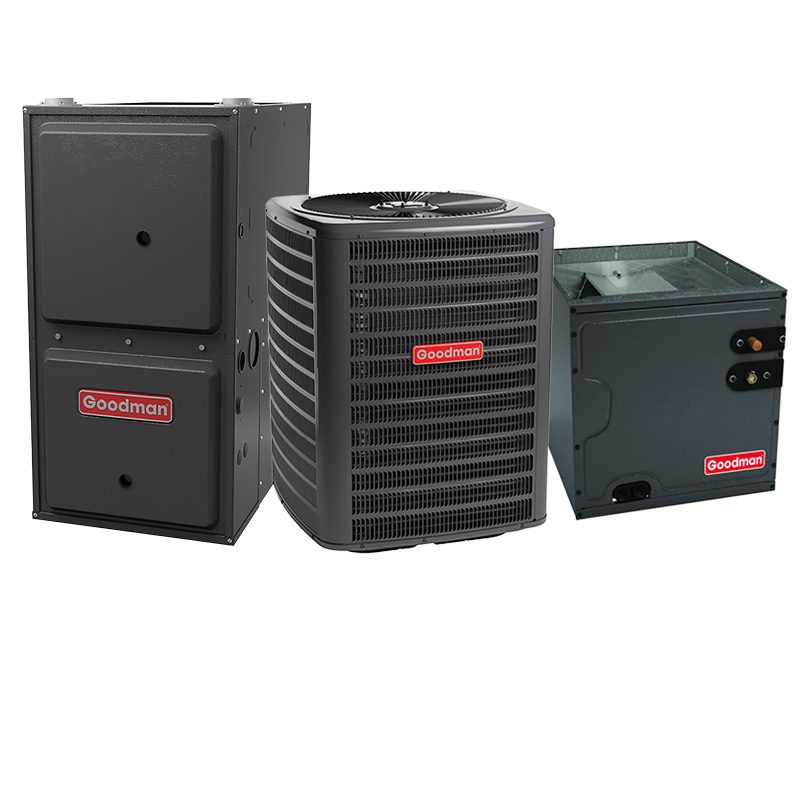
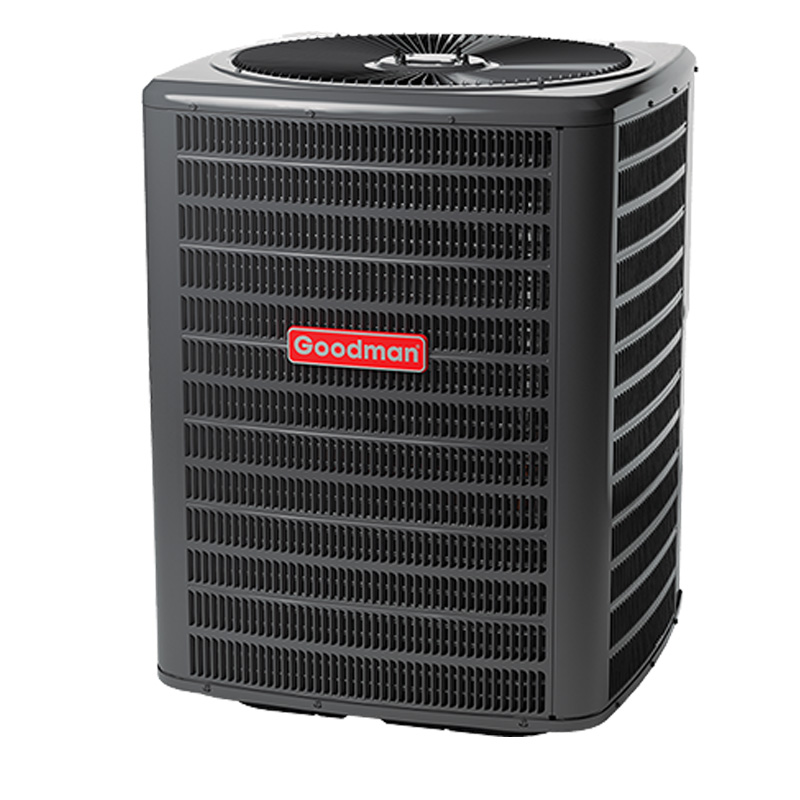
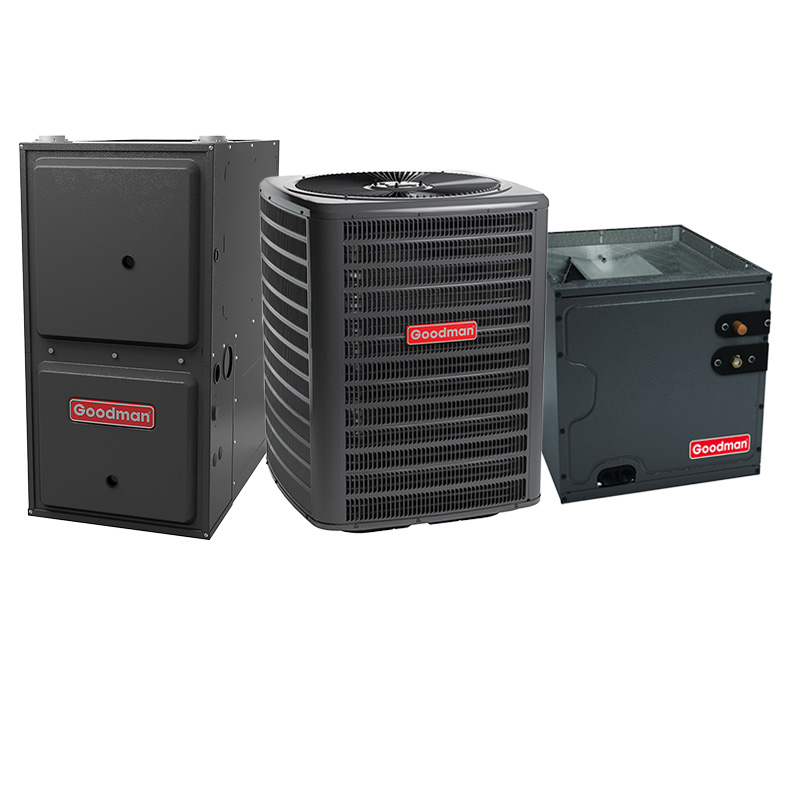
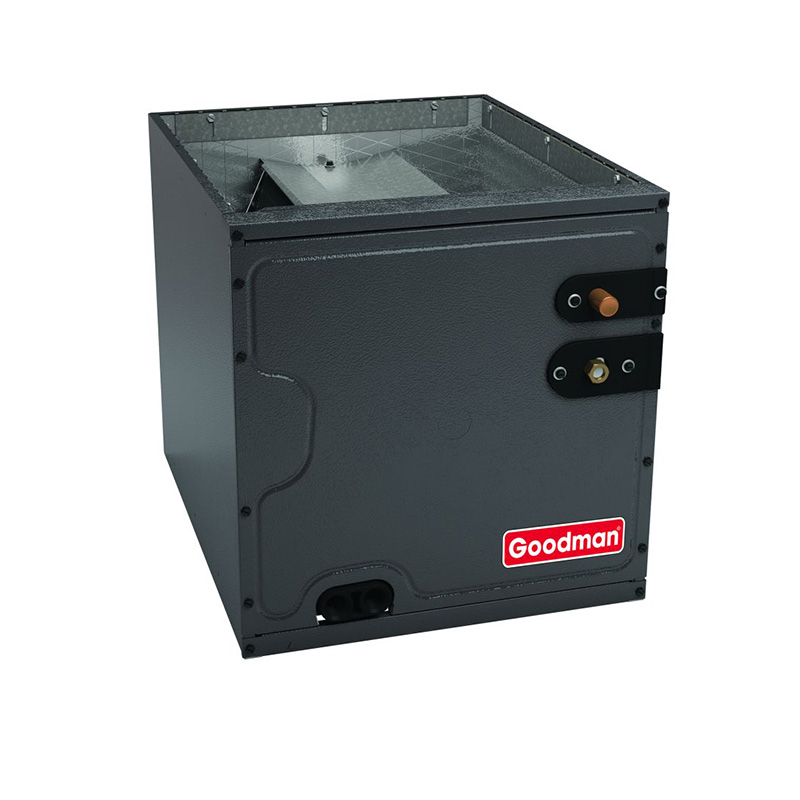
Goodman Furnace And Air Conditioner 3 Ton 14.5 SEER2 AC With 100000 BTU 96% AFUE Multi-Speed ECM Gas Furnace System – Downflow | R32
View on AC Direct see your lowest price →Check current price on AC Direct →
Key features
- 3-ton, 14.5 SEER2 air conditioner using R-32 refrigerant
- 100,000 BTU gas furnace rated at 96% AFUE for high-efficiency heating
- Multi-speed ECM blower motor reduces electricity use and improves comfort
- Downflow configuration for basements or closets where supply runs below the unit
- R-32 refrigerant carries roughly one-third the global-warming potential of R-410A
- Matched system simplifies airflow and refrigerant charge sizing for installers
About this system
This Goodman combo pairs a 3-ton, 14.5 SEER2 central air conditioner with a 100,000 BTU, 96% AFUE multi-speed ECM gas furnace in a downflow configuration, meaning the furnace sits above the supply plenum and pushes conditioned air downward. That layout is common in homes with a basement or utility closet where ductwork runs beneath the equipment. The R-32 refrigerant charge is a meaningful forward-looking choice: R-32 has roughly one-third the global-warming potential of the outgoing R-410A, and its adoption signals where the industry is heading as older refrigerants face phase-down pressure.
The furnace side of this system carries real efficiency credentials. A 96% AFUE rating means nearly all of the gas burned becomes usable heat, which translates to lower monthly heating bills compared to 80% or even 92% AFUE equipment. The multi-speed ECM blower motor runs at different speeds depending on demand, reducing electricity consumption during partial-load conditions and helping maintain more consistent indoor temperatures than a simple single-speed motor would. On the cooling side, 14.5 SEER2 clears the federal minimum for most U.S. climate regions but sits at the entry tier of the efficiency spectrum rather than the mid or premium level. Buyers in hot-summer climates who run the AC heavily from May through September may find the operating cost gap between 14.5 SEER2 and a 17 or 18 SEER2 system meaningful over a 10-to-15-year lifespan.
This bundle suits homeowners replacing aging equipment who want a significant heating efficiency upgrade without paying premium-brand prices, and who have a knowledgeable installer on the job. Goodman positions itself 15 to 25 percent below comparable Trane, Lennox, and Carrier systems, so the savings are real at purchase. The trade-off is that long-term performance depends heavily on installation quality and how proactive the owner is about maintenance, particularly capacitor and coil inspections.
This Goodman combo delivers genuinely strong heating efficiency at a price point that undercuts major competitors by a meaningful margin, making it a rational choice for budget-conscious buyers who pair it with a qualified installer and commit to regular maintenance. The 14.5 SEER2 cooling tier is adequate but not standout, and Goodman's documented failure modes — particularly capacitors, evaporator coil leaks, and compressors averaging 10 to 14 years — mean the long-term cost picture is less rosy than the upfront savings alone suggest. Go in with realistic expectations and this system can serve a household well; expect premium-brand durability and you may be disappointed after year seven.
Overall score is the average of the five ratings above.
What we like
- 96% AFUE furnace delivers high heating efficiency and meaningful gas bill savings
- Multi-speed ECM motor improves both comfort consistency and blower electricity costs
- R-32 refrigerant is a forward-compatible, lower-impact choice as R-410A phases down
- Purchase price runs 15 to 25 percent below comparable Carrier, Trane, and Lennox systems
- Matched factory bundle simplifies coil sizing and simplifies warranty documentation
Trade-offs
- Dual-run capacitors are the most commonly reported failure point, typically requiring service around or after year 5
- Evaporator coil leaks appear in a meaningful share of owner reports, adding potential repair cost mid-life
- Compressor lifespan averages 10 to 14 years, shorter than the 15 to 20 years often cited for premium brands
- 14.5 SEER2 is the entry efficiency tier; homeowners in hot climates who run the AC heavily will see higher operating costs than a 17+ SEER2 alternative
What homeowners and pros say about Goodman
Owners and dealers who review Goodman equipment online land in two fairly distinct camps. On Google dealer review pages, which average around 3.8 out of 5 stars across a range of locations, the most consistent praise centers on affordability and the straightforward installation experience for technicians familiar with the brand. Contractors who sell and service Goodman regularly tend to note that the equipment performs reliably when installed correctly and that parts are widely available and competitively priced, which keeps service calls manageable. The 96% AFUE furnace in this bundle draws particular appreciation from homeowners replacing older 80% units, who notice a real reduction in heating bills during the first winter.
The picture on longer-term ownership is more complicated. ConsumerAffairs scores Goodman at roughly 2.5 out of 5, and while that platform skews heavily toward complaints, the recurring themes are consistent enough to take seriously. Repair costs climbing after roughly year seven is the most common thread, and the specific failure modes documented in owner feedback align with that timeline: dual-run capacitor failures are the single most frequently reported issue and are generally a low-cost fix in the 300 to 600 dollar range, but evaporator coil leaks and compressor wear become more likely as the system ages. Goodman compressors are reported to average 10 to 14 years of service life, compared to the 15 to 20 years often cited for premium-tier brands. A smaller group of owners reports refrigerant leaks within the first year, which technicians typically attribute to installation or initial charge issues rather than a manufacturing defect. For this specific system, the R-32 refrigerant adds one more variable: owners should verify their service contractors are equipped to handle it before they need a repair call on short notice.
Sources: ConsumerAffairs Goodman owner reviews, AHRI Directory of Certified Product Performance, U.S. DOE appliance and equipment efficiency standards, Goodman product specification sheets.
What it costs to run
At 14.5 SEER2, cooling this 3-ton system for a typical 1200-hour cooling season at the U.S. average electricity rate of $0.17/kWh works out to roughly $506 per year in cooling, about $42 less per year than a minimum-efficiency 13.4 SEER2 unit of the same size. Your real cost depends on your climate and local rate.
Method: (36,000 BTU/hr ÷ 14.5 SEER2) × 1200 hours ÷ 1000 × $0.17/kWh. Rate source: U.S. EIA average; cooling hours: moderate-climate estimate.
How it compares
| Brand | Comparable model | SEER2 | Stage | Price position |
|---|---|---|---|---|
| Goodman | GLXS3BA36 + GCVC961005CN (this system) | 14.5 | Single-stage / Multi-speed ECM | Value pick |
| Carrier | Comfort 14 Series (24ACC4) | 14.3–14.5 | Single-stage | Typically 15 to 25 percent more than Goodman |
| Trane | XR14c Series | 14.3–15.0 | Single-stage | Typically 15 to 25 percent more than Goodman |
| Lennox | Merit ML14XC1 Series | 14.3–15.2 | Single-stage | Typically 15 to 25 percent more than Goodman |
Competitor rows are comparable single-stage units at similar efficiency; price is relative position, not a quote.
Questions about this system
Why does this system use R-32 instead of R-410A, and does that affect servicing costs?
R-32 is a lower global-warming-potential refrigerant that the HVAC industry is transitioning toward as R-410A faces regulatory phase-down. Most certified HVAC technicians can work with R-32, but you should confirm your service provider has the proper equipment and certification before scheduling any future refrigerant work, as specialized recovery tools are required.
Is a downflow furnace harder to install than an upflow model, and can it be converted?
Downflow furnaces are designed for specific duct configurations where supply air exits the bottom of the unit, common in basements and some closet installations. They are not typically interchangeable with upflow models without replacing the cabinet. Confirm your existing duct layout matches a downflow orientation before purchasing, or budget for ductwork modifications.
What are the most likely repairs I should plan for over the first 10 years?
Based on documented Goodman owner experience, dual-run capacitors are the most commonly reported failure and typically cost between 300 and 600 dollars to replace, including labor. Evaporator coil leaks are also reported in a meaningful share of long-term owner reviews and can be a more significant repair expense. Scheduling annual maintenance that includes capacitor testing can help catch the lower-cost issue early.
Does the 100,000 BTU furnace size make sense for a 3-ton cooling system?
Furnace and AC sizing are independent calculations based on different load factors — heating load, insulation, and climate for the furnace; heat gain, square footage, and humidity for the AC. A 100,000 BTU furnace paired with 3-ton cooling is common in cold-climate homes with larger square footage or significant heating loads. If you have not had a Manual J load calculation done, ask your installer to verify the sizing is appropriate for your specific home before committing.
How does the multi-speed ECM blower actually change day-to-day comfort compared to a single-speed blower?
An ECM multi-speed motor can operate at a lower speed during mild conditions and ramp up only when the full load demands it, which reduces the abrupt temperature swings that single-speed blowers can create. It also runs more quietly at partial speeds and draws less electricity during those periods. The improvement is noticeable in homes where airflow or temperature consistency has been a complaint with older equipment.
Specifications
| Cooling capacity | 3 Ton |
| Efficiency | 14.5 SEER2 |
| Furnace output | 100000 BTU |
| Furnace efficiency | 96% AFUE |
| Configuration | Downflow |
| Refrigerant | R-32 |