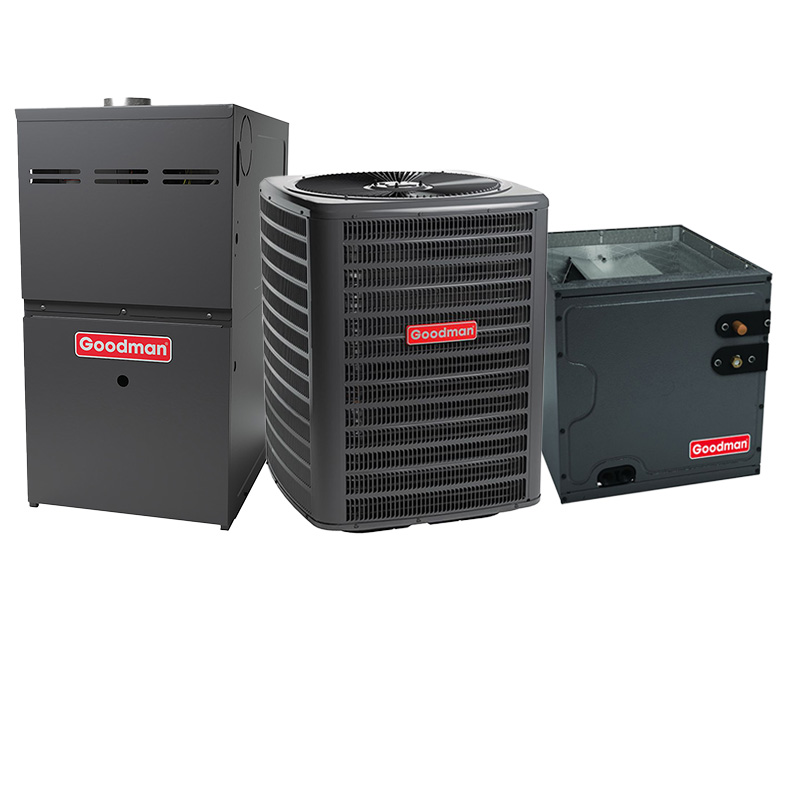
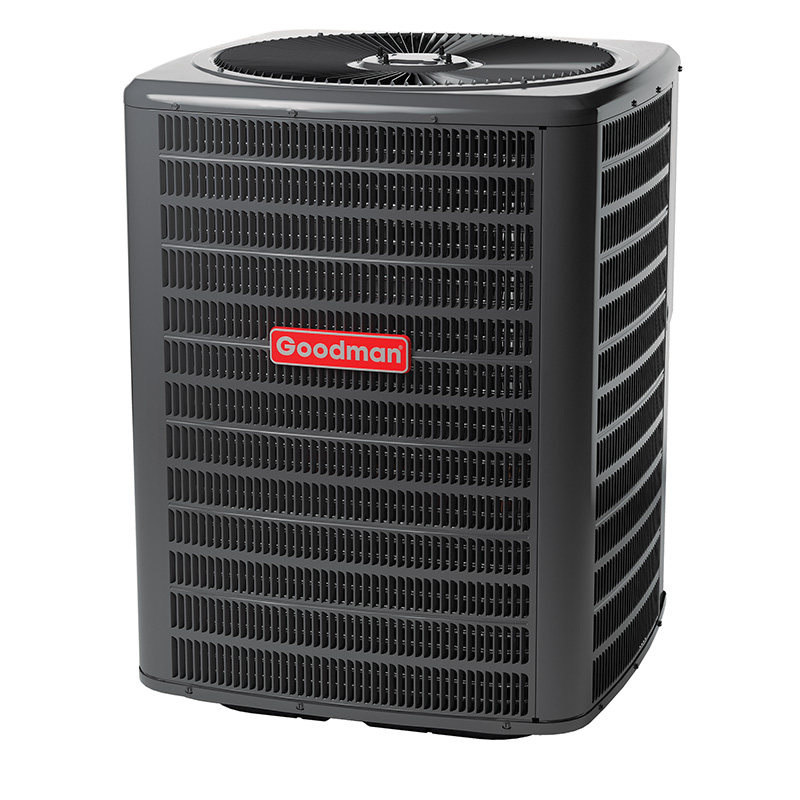
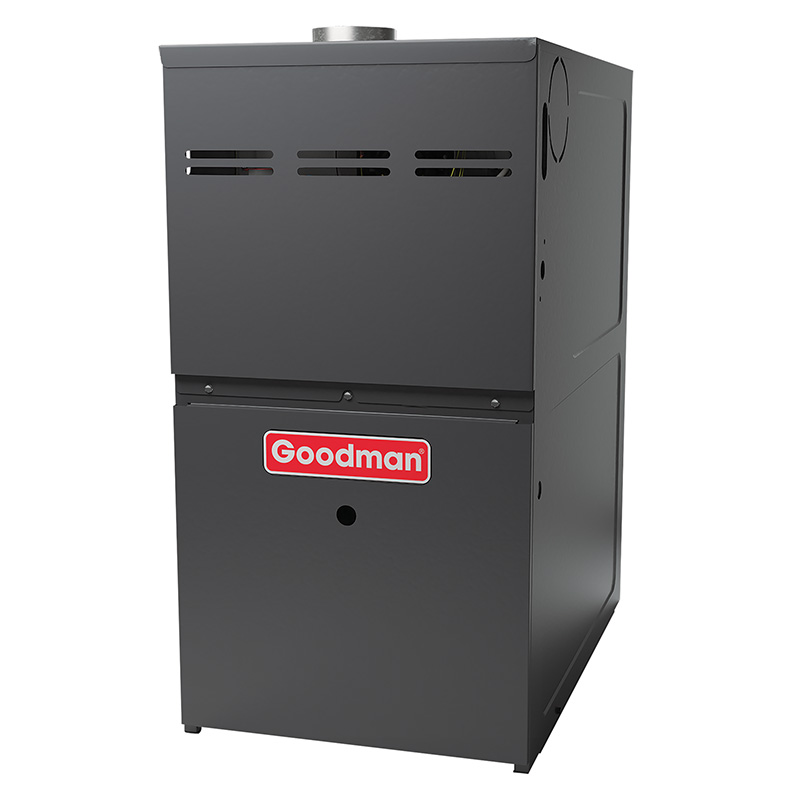
Goodman Furnace And Air Conditioner 3 Ton 15.2 SEER2 AC With 60000 BTU 80% AFUE Multi-Speed ECM Gas Furnace System – Upflow | R32
View on AC Direct see your lowest price →Check current price on AC Direct →
Key features
- 3-ton, 15.2 SEER2 cooling rated under current DOE test procedures
- 60,000 BTU output at 80% AFUE for reliable single-stage heating efficiency
- Multi-speed ECM blower motor improves airflow balance and reduces noise vs. single-speed fans
- R-32 refrigerant with lower global warming potential than R-410A
- Upflow configuration suits basement, crawlspace, or closet installations
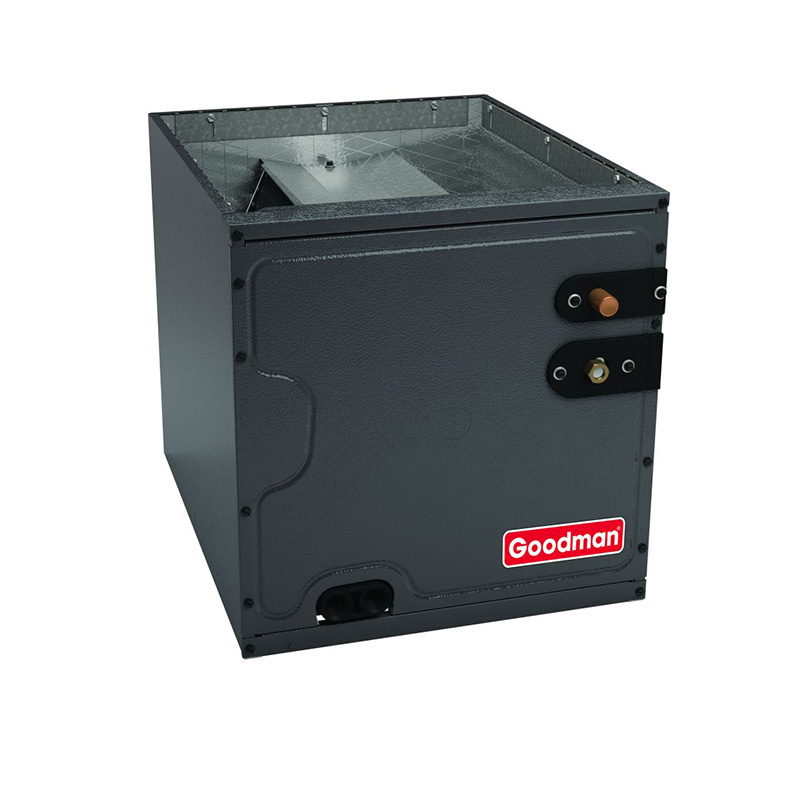
- Factory-matched coil and air handler designed to meet rated efficiency when properly installed
About this system
This Goodman bundle pairs a 3-ton, 15.2 SEER2 air conditioner with a 60,000 BTU, 80% AFUE multi-speed ECM gas furnace in an upflow configuration, making it a practical choice for single-story homes and basement-to-main-floor duct systems in the 1,400 to 1,800 square foot range, depending on local climate and insulation. The 15.2 SEER2 rating clears the federal minimum for most U.S. regions but sits at the entry level of the efficiency spectrum, meaning operating costs will be higher over time compared to 17 or 18 SEER2 systems. The multi-speed ECM blower motor is a genuine upgrade over single-speed fans, improving airflow consistency, humidity control, and quiet operation without the full cost of a fully variable-speed system.
The R-32 refrigerant is a forward-looking detail worth noting. R-32 has a lower global warming potential than the R-410A it is replacing industry-wide, and it operates at slightly higher efficiency per pound of charge. Serviceability is similar to R-410A, though technicians will confirm their equipment is rated for R-32 before charging. The 80% AFUE furnace is code-minimum in many northern states, meaning up to 20 cents of every heating dollar exits through the flue. Homeowners in cold climates who run the furnace heavily from November through March should weigh whether a 96% AFUE unit would recover its cost premium within a reasonable payback window before choosing this bundle.
This Goodman combo delivers a functional, code-compliant HVAC system at a price point 15 to 25 percent below comparable Carrier, Trane, and Lennox pairings, making it a reasonable choice when upfront budget is the primary constraint. The multi-speed ECM motor and R-32 refrigerant are genuine improvements over base-tier equipment, but the 80% AFUE furnace and entry-level SEER2 rating mean higher long-term operating costs. Reliability depends heavily on installer quality, and Goodman's ownership experience after year 7 has a documented pattern of climbing repair bills.
Overall score is the average of the five ratings above.
What we like
- Priced 15 to 25 percent below Carrier, Trane, and Lennox equivalents, reducing the upfront capital outlay
- Multi-speed ECM blower provides better humidity control and quieter operation than single-speed alternatives
- R-32 refrigerant is the current industry direction and carries a lower environmental footprint than R-410A
- Factory-matched system simplifies equipment compatibility and supports rated SEER2 performance
- Upflow configuration is widely used and straightforward for experienced installers in most residential setups
Trade-offs
- 80% AFUE means 20% of fuel is exhausted as waste heat, a real cost disadvantage in climates with long heating seasons
- 15.2 SEER2 is entry-level efficiency; monthly cooling bills will be noticeably higher than a 17 or 18 SEER2 system over a 10-plus year lifespan
- Compressor lifespan averages 10 to 14 years per documented reports, shorter than the 15 to 20 years typical of premium brands
- Dual-run capacitor failures and evaporator coil leaks are the most frequently reported repair issues, and repair frequency tends to increase after year 7
What homeowners and pros say about Goodman
On Google dealer review pages, Goodman equipment consistently earns scores around 3.8 out of 5, with affordability and availability cited most often as reasons homeowners and contractors choose it. Installers who work with these systems regularly point out that a properly commissioned Goodman unit can run without drama for a decade, but they are equally clear that skipping the start-up checklist, leaving the refrigerant charge slightly off, or pairing the unit with undersized ducts tends to surface problems faster than with premium brands. The R-32 charge and upflow configuration in this specific bundle are not unusual complications, but they do require a technician who has confirmed their recovery and charging equipment is rated for R-32 before the first service call.
The ConsumerAffairs rating for Goodman sits at roughly 2.5 out of 5, a score shaped by the self-selection of owners who go online to report problems, but the recurring pattern in those reports is worth acknowledging. Dual-run capacitor failures are the most frequently mentioned repair, typically landing in the 300 to 600 dollar range and usually resolved in a single visit. Evaporator coil leaks show up in a meaningful share of reviews and are a more expensive fix, often compounded by a labor-only warranty gap. Compressor longevity averaging 10 to 14 years, versus 15 to 20 for Carrier, Trane, or Lennox equipment, is the most consequential long-term trade-off. For homeowners who plan to sell within a decade, the upfront savings may well outweigh those risks; for those expecting to stay in the home for 15-plus years, the math deserves a second look.
Sources: ConsumerAffairs Goodman owner reviews, AHRI Directory of Certified Product Performance, U.S. DOE appliance and equipment efficiency standards, Goodman product specification sheets.
What it costs to run
At 15.2 SEER2, cooling this 3-ton system for a typical 1200-hour cooling season at the U.S. average electricity rate of $0.17/kWh works out to roughly $483 per year in cooling, about $65 less per year than a minimum-efficiency 13.4 SEER2 unit of the same size. Your real cost depends on your climate and local rate.
Method: (36,000 BTU/hr ÷ 15.2 SEER2) × 1200 hours ÷ 1000 × $0.17/kWh. Rate source: U.S. EIA average; cooling hours: moderate-climate estimate.
How it compares
| Brand | Comparable model | SEER2 | Stage | Price position |
|---|---|---|---|---|
| Goodman | GSXH503610 + GMVC8 / GMS80 Series | 15.2 | Single-stage | Value pick |
| Carrier | Comfort 14 / 15 Series (24ACC / 58SC) | 15.2 | Single-stage | Typically 15 to 25 percent more than the Goodman bundle |
| Trane | XR15 / S8X1 Series | 15.0 to 15.5 | Single-stage | Typically 15 to 25 percent more than the Goodman bundle |
| Lennox | Merit 14ACX / ML180 Series | 15.0 to 15.2 | Single-stage | Typically 15 to 25 percent more than the Goodman bundle |
Competitor rows are comparable single-stage units at similar efficiency; price is relative position, not a quote.
Questions about this system
Is 80% AFUE good enough for my area, or should I upgrade to a higher-efficiency furnace?
In mild to moderate climates where heating demand is low, 80% AFUE is often adequate and payback on a 96% unit can stretch beyond 10 years. In colder northern climates where the furnace runs for five or more months a year, a 96% AFUE furnace typically pays back the cost premium in 4 to 7 years through lower gas bills, and many northern states now require 90-plus AFUE for new installations, so confirm local code before purchasing.
What maintenance does this system need to avoid the capacitor and coil leak issues Goodman is known for?
Annual professional tune-ups that include capacitor testing and refrigerant charge verification are the most effective way to catch these before they become emergency repairs. Dual-run capacitors are inexpensive to replace proactively during a scheduled visit, and confirming a proper charge at installation reduces the risk of early coil stress. Keeping coil fins clean and ensuring adequate airflow also reduces strain on the refrigerant circuit.
Does this system work with my existing ductwork if I am replacing an older R-22 or R-410A unit?
The upflow furnace and outdoor unit can typically connect to existing ductwork if the duct system is correctly sized for 3 tons of airflow, roughly 400 CFM per ton as a baseline. However, R-32 requires that your technician's hoses, gauges, and recovery equipment are rated for the refrigerant, so confirm this before scheduling installation. A duct leakage test is strongly recommended when replacing older equipment to verify you get the rated efficiency.
How does the multi-speed ECM blower motor actually change day-to-day comfort compared to a single-speed fan?
An ECM motor ramps up gradually and can run at lower speeds for longer periods rather than blasting on at full power and shutting off. This longer, gentler air circulation reduces hot and cold spots, moves more air through the filter over time, and keeps humidity more stable. Noise levels are also noticeably lower at the reduced speeds used during mild conditions.
What does Goodman's warranty cover on this bundle, and what are the conditions I need to meet?
Goodman typically offers a 10-year parts warranty on registered equipment when installed by a licensed HVAC contractor and registered within a specified window after installation, often 60 days. Failure to register usually drops coverage to 5 years. The warranty covers parts replacement but not labor, which is a significant out-of-pocket cost if a compressor or heat exchanger fails; extended labor warranties are available through dealers and are worth pricing at the time of installation.
Specifications
| Cooling capacity | 3 Ton |
| Efficiency | 15.2 SEER2 |
| Furnace output | 60000 BTU |
| Furnace efficiency | 80% AFUE |
| Configuration | Upflow |
| Refrigerant | R-32 |