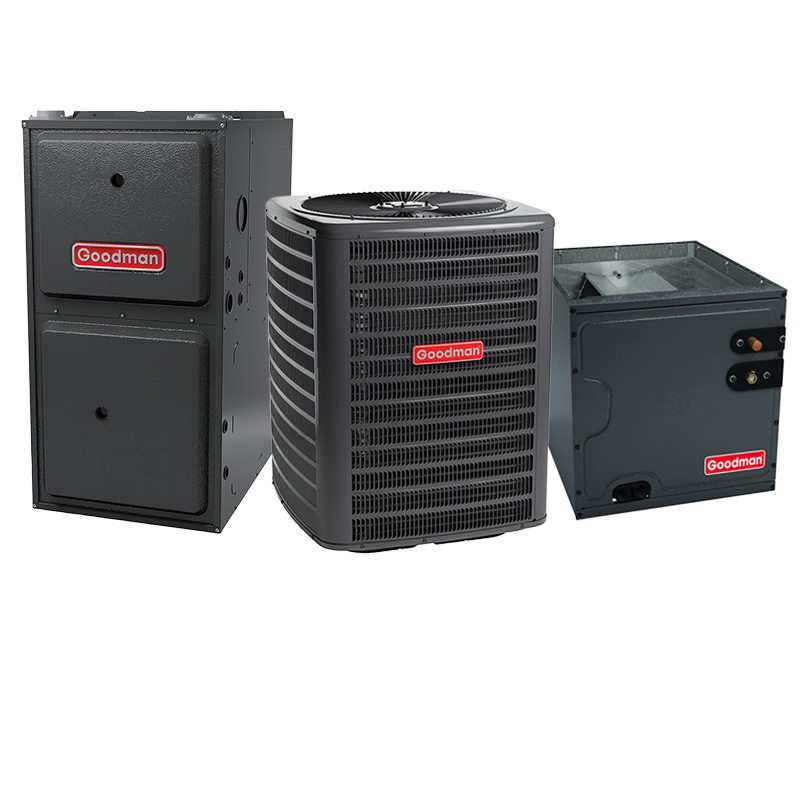
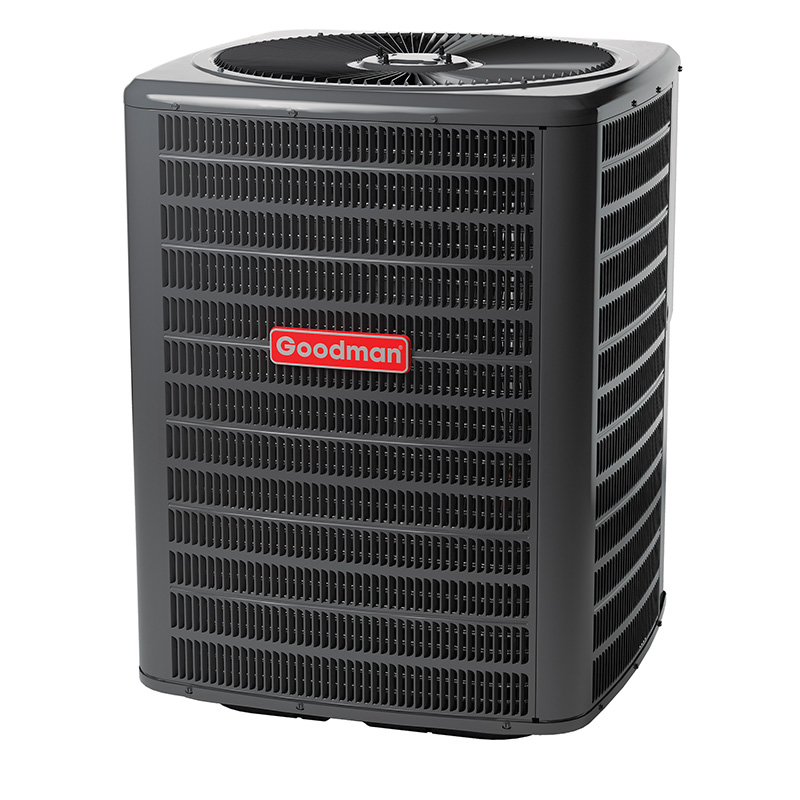
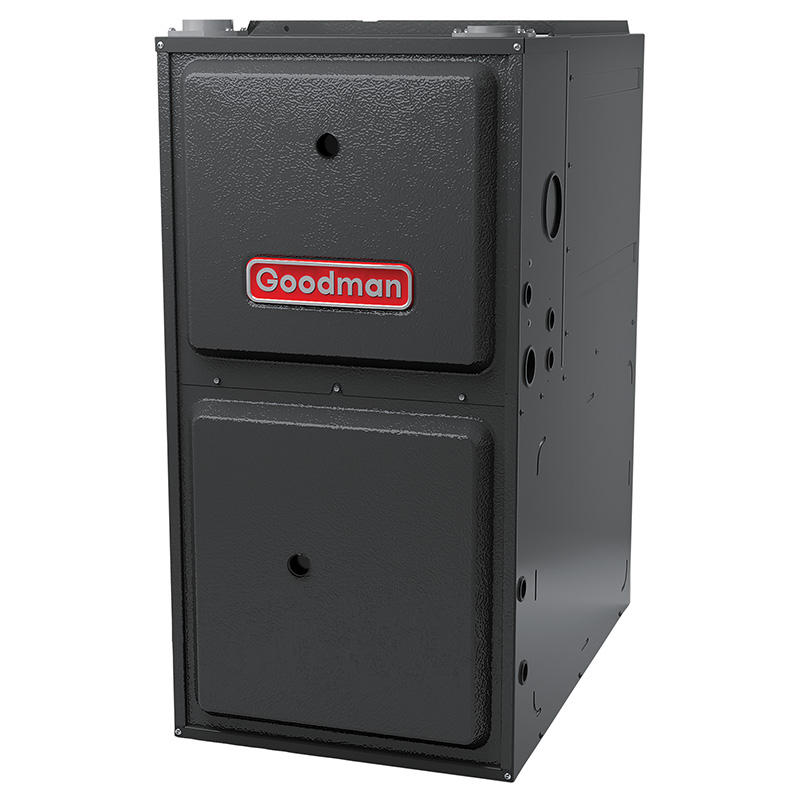
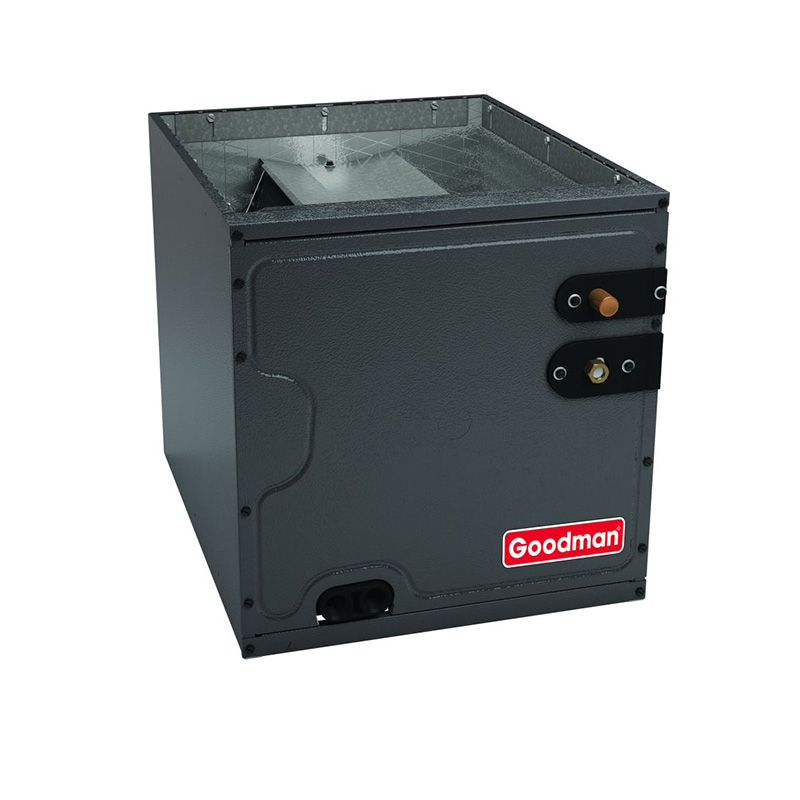
Goodman Furnace And Air Conditioner 3 Ton 15.2 SEER2 AC With 60000 BTU 80% AFUE Two Stage Multi-Speed ECM Gas Furnace System – Upflow | R32
View on AC Direct see your lowest price →Check current price on AC Direct →
Key features
- 3-ton / 15.2 SEER2 cooling, meeting current federal minimums with a small efficiency buffer
- 60,000 BTU two-stage gas furnace runs at reduced capacity most of the time for steadier temperatures
- 80% AFUE rating uses a conventional flue, simplifying installation in homes without existing condensate drainage
- Multi-speed ECM blower motor reduces fan electricity use and improves airflow consistency
- R-32 refrigerant charge: lower global warming potential than R-410A, aligns with current industry direction
- Upflow configuration designed for basement or ground-level mechanical room installations
About this system
This Goodman bundle pairs a 3-ton, 15.2 SEER2 air conditioner with a 60,000 BTU, 80% AFUE two-stage gas furnace in an upflow configuration, making it a practical fit for homes roughly in the 1,400 to 1,800 square-foot range with a basement or dedicated mechanical closet. The 15.2 SEER2 rating sits just above the federally required minimums for most U.S. regions, so you get legal compliance and a modest step up in cooling efficiency without paying for a high-efficiency premium. The R-32 refrigerant charge is a forward-looking choice: R-32 has a lower global warming potential than the R-410A it replaces and is becoming the new standard as the industry moves away from older blends.
The two-stage furnace is where this system earns real day-to-day comfort points. Running on a lower stage the majority of the time, it cycles less aggressively than a single-stage unit, which means steadier indoor temperatures, quieter operation, and better humidity control on mild days. The multi-speed ECM blower motor reinforces that by matching airflow to demand rather than running flat-out every cycle, which also trims blower electricity costs compared to a standard PSC motor. At 80% AFUE the furnace is not a high-efficiency condensing unit, so it still requires a conventional flue and does not need a secondary drain line, keeping installation straightforward in homes already set up for an 80% appliance.
This system suits budget-conscious homeowners who want two-stage comfort and a lower entry price and are willing to invest in a thorough professional installation and a service contract to manage the brand’s known maintenance profile. It is not the right pick for buyers prioritizing a worry-free, low-touch ownership experience over the next 15 to 20 years.
This Goodman bundle delivers legitimate two-stage comfort and ECM blower benefits at a price point roughly 15 to 25 percent below comparable Trane, Lennox, and Carrier systems. The trade-off is a brand track record that includes documented capacitor failures, evaporator coil leaks, and compressor longevity that averages shorter than premium competitors. For buyers who prioritize upfront cost and are prepared to budget for periodic maintenance after year seven, this system offers solid value; buyers who want a set-it-and-forget-it system should weigh the long-term cost picture carefully.
Overall score is the average of the five ratings above.
What we like
- Priced 15 to 25 percent below comparable equipment from Trane, Lennox, and Carrier
- Two-stage furnace operation improves temperature consistency and reduces on/off cycling
- ECM blower motor cuts fan electricity use compared to standard PSC motors
- R-32 refrigerant is the emerging industry standard with a lower environmental impact
- Upflow 80% AFUE design installs on conventional flue systems without condensate drain modifications
Trade-offs
- Dual-run capacitors are the most commonly reported failure point, typically around years 5 to 8
- Evaporator coil leaks appear in a meaningful share of owner reports, a cost that can run into the thousands
- Compressor lifespan averages 10 to 14 years versus 15 to 20 years for premium-brand compressors
- 80% AFUE is the lowest efficiency tier; homeowners in cold climates will see notably higher gas bills than with a 90%+ unit
What homeowners and pros say about Goodman
Homeowners who leave reviews of Goodman equipment on ConsumerAffairs give it roughly 2.5 out of 5 stars, a score shaped heavily by owners who experienced escalating repair bills after approximately year seven. The recurring frustrations center on the documented failure modes: dual-run capacitors going out in the 5-to-8-year window, evaporator coil leaks requiring expensive refrigerant work, and compressors that tend to reach end of life between 10 and 14 years rather than the 15 to 20 years owners of premium brands often report. It is worth noting that ConsumerAffairs skews toward dissatisfied owners, which inflates the negative weight of that score relative to the broader ownership experience.
Google dealer reviews tell a more balanced story, with Goodman-focused HVAC contractors averaging around 3.8 out of 5 stars across several hundred reviews per location. Affordability is the most common positive theme, and many owners in those reviews report years of trouble-free operation when the system was properly installed. HVAC technicians themselves are consistent on one point: a Goodman system installed carefully by a skilled contractor outperforms a premium-brand system installed sloppily. For this specific two-stage, ECM-motor bundle, that installer-quality factor matters even more than it does on simpler single-stage equipment, because the added controls and staging components leave more room for setup errors that only surface later.
Sources: ConsumerAffairs Goodman owner reviews, AHRI Directory of Certified Product Performance, U.S. DOE appliance and equipment efficiency standards, Goodman product specification sheets.
What it costs to run
At 15.2 SEER2, cooling this 3-ton system for a typical 1200-hour cooling season at the U.S. average electricity rate of $0.17/kWh works out to roughly $483 per year in cooling, about $65 less per year than a minimum-efficiency 13.4 SEER2 unit of the same size. Your real cost depends on your climate and local rate.
Method: (36,000 BTU/hr ÷ 15.2 SEER2) × 1200 hours ÷ 1000 × $0.17/kWh. Rate source: U.S. EIA average; cooling hours: moderate-climate estimate.
How it compares
| Brand | Comparable model | SEER2 | Stage | Price position |
|---|---|---|---|---|
| Goodman | This system (3-ton 15.2 SEER2 AC + 60K BTU 80% AFUE two-stage ECM furnace) | 15.2 | Two-stage furnace / single-stage condenser | Value pick |
| Carrier | Comfort Series (24ACC636 condenser + 58SB furnace pairing) | 15.2 | Single-stage | Typically 15 to 25 percent more than this Goodman bundle |
| Trane | XR15 condenser + S8X1 80% AFUE furnace pairing | 15.0–15.2 | Single-stage | Typically 15 to 25 percent more than this Goodman bundle |
| Lennox | Merit Series ML15XC1 condenser + ML180 80% AFUE furnace pairing | 15.2 | Single-stage | Typically 15 to 25 percent more than this Goodman bundle |
Competitor rows are comparable single-stage units at similar efficiency; price is relative position, not a quote.
Questions about this system
Will this system work as a straight replacement if my current setup already uses R-410A equipment?
Not without additional work. R-32 and R-410A are not interchangeable, and the line set, fittings, and possibly the indoor coil will need to be verified or replaced to be compatible with R-32. Always have your installer assess the existing refrigerant circuit before assuming a direct swap is possible.
Is 80% AFUE good enough, or should I upgrade to a 96% condensing furnace?
For mild to moderate climates, 80% AFUE is serviceable and keeps installation simpler since it uses a conventional flue. In colder regions where the furnace runs heavily for five or more months a year, the 10 to 16 percentage points of lost heat in an 80% unit can add up to a meaningful annual gas cost difference, and a condensing upgrade often pays back within several years.
What are the most likely repair costs I should budget for over the first ten years?
Dual-run capacitor replacement is the most commonly reported Goodman repair, typically running 300 to 600 dollars including labor. Evaporator coil leaks are a more expensive documented failure and can cost 1,500 to 2,500 dollars or more depending on the coil and refrigerant charge. Setting aside a small annual service fund after year five is a reasonable precaution.
Does the two-stage furnace actually make a noticeable difference in comfort compared to a single-stage unit?
For most homeowners, yes. Running at the lower stage roughly 80% of the time on average days, the furnace produces longer, gentler heat cycles that keep temperatures more consistent from room to room and reduce the cold-blast feeling at startup. The benefit is most noticeable in shoulder seasons when demand is modest.
How important is installer choice for a Goodman system specifically?
Very important. Technicians consistently cite installation quality as the single biggest factor in how long a Goodman system lasts and performs, and some of the first-year refrigerant leak reports in owner reviews trace back to improper charging or connection issues rather than factory defects. Choosing a licensed, experienced installer and getting a proper startup checklist is as valuable as any component upgrade you might consider.
Specifications
| Cooling capacity | 3 Ton |
| Efficiency | 15.2 SEER2 |
| Furnace output | 60000 BTU |
| Furnace efficiency | 80% AFUE |
| Configuration | Upflow |
| Refrigerant | R-32 |