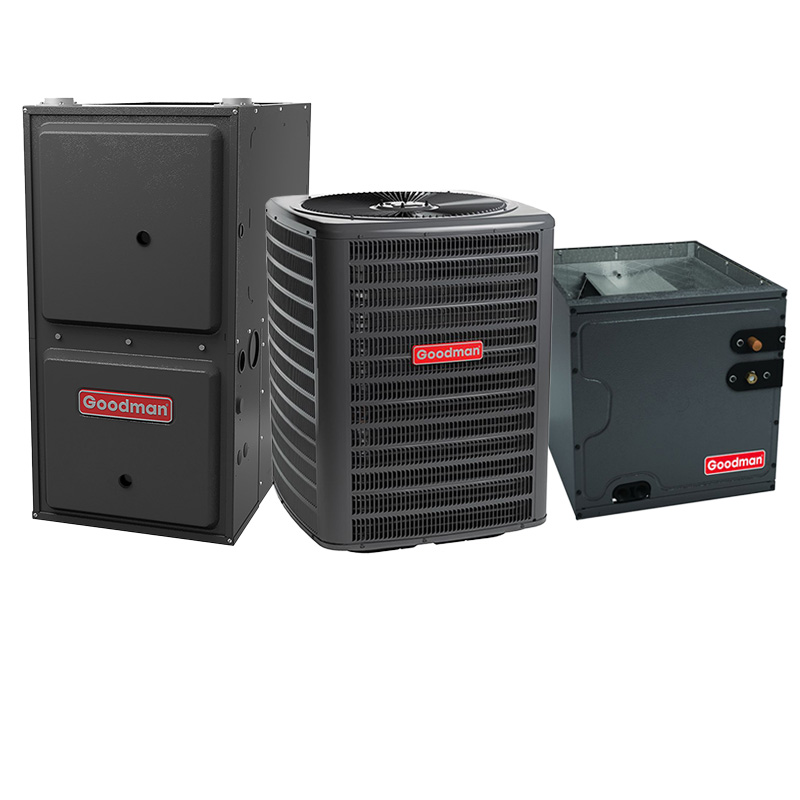
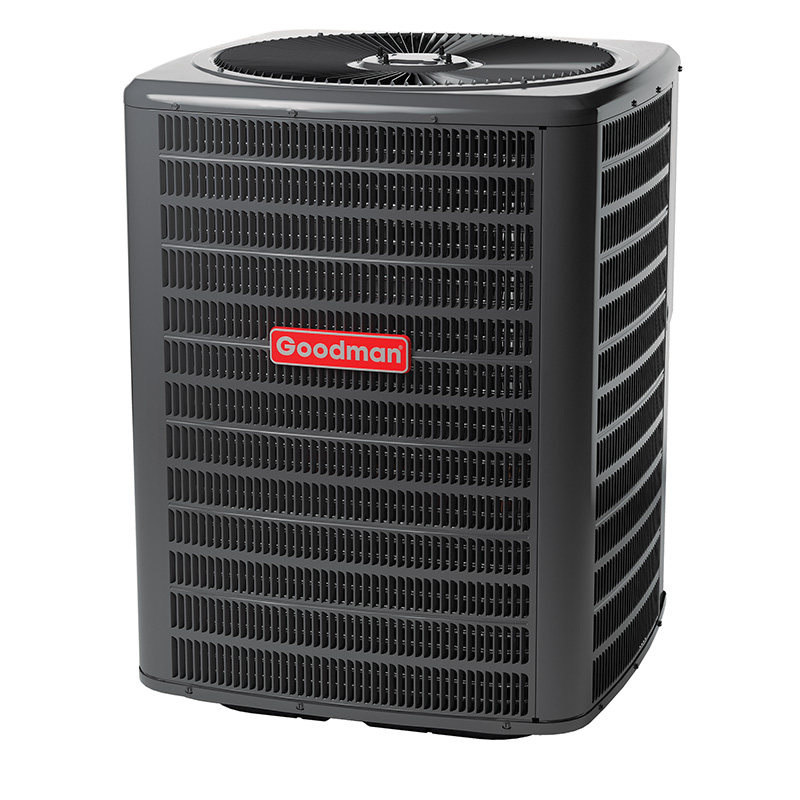
Goodman Furnace And Air Conditioner 3 Ton 15.2 SEER2 AC With 80000 BTU 80% AFUE Multi-Speed ECM Gas Furnace System – Downflow | R32
View on AC Direct see your lowest price →Check current price on AC Direct →
Key features
- 3-ton cooling capacity with 15.2 SEER2 seasonal efficiency rating
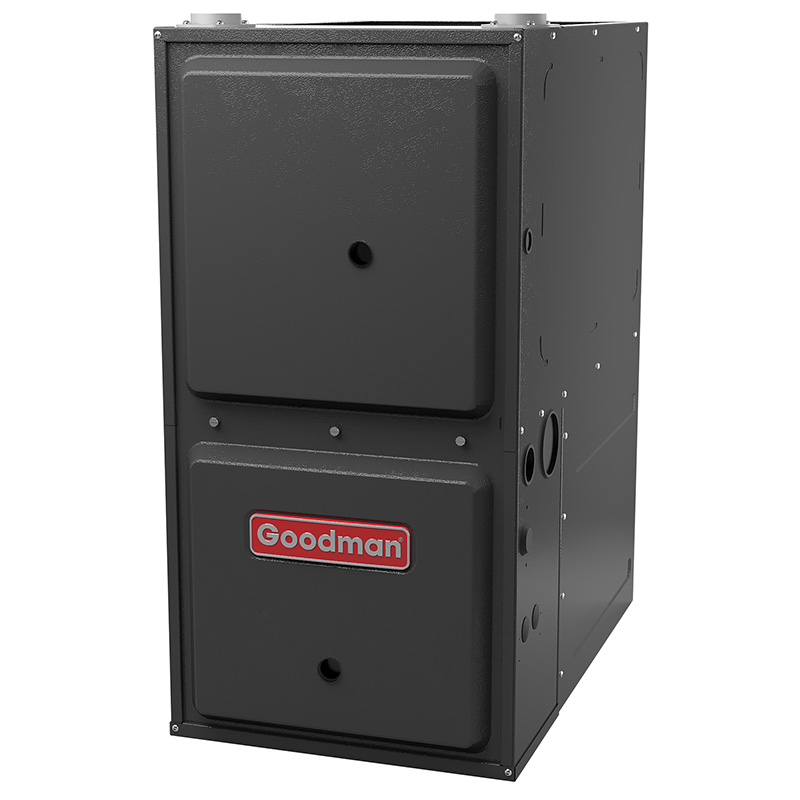
- 80,000 BTU heating output at 80% AFUE single-stage gas furnace
- Multi-speed ECM blower motor for quieter operation and better airflow control versus single-speed PSC motors
- Downflow cabinet orientation for installations where conditioned air is delivered below the unit
- R-32 refrigerant charge with lower global warming potential than R-410A
- Factory-matched system designed to meet AHRI-certified efficiency ratings as a paired assembly
About this system
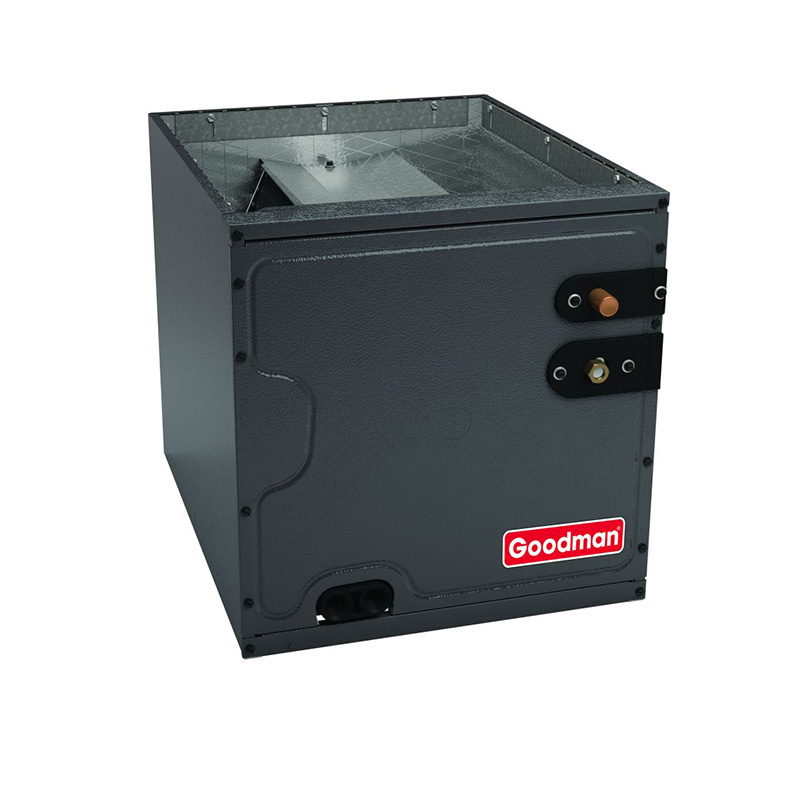
This Goodman bundle pairs a 3-ton, 15.2 SEER2 central air conditioner with an 80,000 BTU, 80% AFUE multi-speed ECM gas furnace in a downflow configuration, making it a straightforward replacement or new-construction option for homes where the air handler sits above the living space and air flows downward into the ductwork below. The R-32 refrigerant charge is a notable spec here: R-32 has a lower global warming potential than the R-410A it replaces, and it operates at slightly different pressures, so your installing technician needs to confirm compatibility with any existing line sets and verify they are rated for R-32 service before charging the system.
The 15.2 SEER2 rating clears the federal minimum efficiency thresholds that took effect in 2023 but sits at the entry tier rather than the middle or upper range of the market. In practical terms, expect modest but real energy savings over an aging 13 or 14 SEER unit, without the larger upfront premium that 17 or 18 SEER2 equipment carries. The 80% AFUE furnace is similarly entry-level on efficiency: 20 cents of every dollar in gas leaves as exhaust. Homeowners in very cold climates or with high heating loads often find that stepping up to a 96% AFUE model pays back the price difference within a few years, so the math is worth running before purchase. That said, for moderate climates or buyers prioritizing lower first cost, this combination covers the basics reliably.
This Goodman bundle offers a low entry price for a code-compliant, matched cooling and heating system, and the ECM blower motor is a genuine upgrade over basic PSC units at this price tier. The trade-offs are real though: 80% AFUE leaves efficiency on the table for cold-climate buyers, compressor longevity trends shorter than premium brands, and documented failure modes including capacitors and evaporator coil leaks mean budgeting for service calls after the first several years is wise.
Overall score is the average of the five ratings above.
What we like
- Priced 15 to 25 percent below comparable Trane, Carrier, and Lennox systems, lowering the barrier to a matched system replacement
- R-32 refrigerant is more environmentally responsible than R-410A and will not be subject to the same phase-down pressure
- Multi-speed ECM blower motor improves comfort and humidity control compared to single-speed alternatives at this price point
- Factory-matched pairing is AHRI-certified, so the stated 15.2 SEER2 efficiency is verified for this exact combination
- Downflow configuration covers a real installation need that not every brand offers at entry pricing
Trade-offs
- 80% AFUE furnace is among the least efficient gas furnaces sold today; high-heat-load homes may see higher annual gas bills than with a 95% or 96% AFUE unit
- Dual-run capacitors are the most commonly documented failure point in Goodman AC units, typically requiring a 300 to 600 dollar service call
- Evaporator coil leaks appear in a meaningful share of owner reports, a risk that climbs if the system is not installed and charged precisely
- Compressor lifespan averages 10 to 14 years in real-world reports, shorter than the 15 to 20 years reported for premium-brand compressors
What homeowners and pros say about Goodman
On consumer review channels, Goodman equipment draws a split picture that is worth understanding before buying. On ConsumerAffairs, which skews toward owners who have had problems, Goodman scores around 2.5 out of 5, and the recurring theme in those complaints is repair costs that begin climbing after roughly year seven of ownership. Capacitor replacements come up frequently and are generally low-cost fixes, but evaporator coil leaks and compressor issues are also documented failure modes that carry higher repair bills. At the dealer level, Google reviews average around 3.8 out of 5 across locations, where affordability and straightforward installs draw the most consistent praise from satisfied buyers.
HVAC technicians who work on Goodman equipment regularly tend to offer a consistent take: the equipment is functional and the parts are widely available, but install quality is the single biggest variable in how long a Goodman system lasts. A properly charged, correctly sized installation with good airflow can perform reliably for a decade or more. A rushed or imprecise install, on the other hand, accelerates the documented failure modes, particularly refrigerant issues in the early years and compressor wear over time. Compressor lifespan on Goodman units runs 10 to 14 years in practice, which is shorter than the 15 to 20 years reported for premium brands, and that gap is worth factoring into the total cost of ownership when comparing sticker prices.
Sources: ConsumerAffairs Goodman owner reviews, AHRI Directory of Certified Product Performance, U.S. DOE appliance and equipment efficiency standards, Goodman product specification sheets.
What it costs to run
At 15.2 SEER2, cooling this 3-ton system for a typical 1200-hour cooling season at the U.S. average electricity rate of $0.17/kWh works out to roughly $483 per year in cooling, about $65 less per year than a minimum-efficiency 13.4 SEER2 unit of the same size. Your real cost depends on your climate and local rate.
Method: (36,000 BTU/hr ÷ 15.2 SEER2) × 1200 hours ÷ 1000 × $0.17/kWh. Rate source: U.S. EIA average; cooling hours: moderate-climate estimate.
How it compares
| Brand | Comparable model | SEER2 | Stage | Price position |
|---|---|---|---|---|
| Goodman | GSX15 / GCVC8 Downflow Bundle (this system) | 15.2 | Single-stage | Value pick |
| Carrier | Comfort 15 (24ACC6) with 58MCA furnace | 15.2 | Single-stage | Typically 15 to 25 percent more than this Goodman bundle |
| Trane | XR15 (4TTR5) with S8X1 furnace | 15.2 | Single-stage | Typically 15 to 25 percent more than this Goodman bundle |
| Lennox | Merit 16ACX with ML180 furnace | 15.2 | Single-stage | Typically 15 to 25 percent more than this Goodman bundle |
Competitor rows are comparable single-stage units at similar efficiency; price is relative position, not a quote.
Questions about this system
My home currently uses R-410A. Can I reuse the existing copper line set with this R-32 system?
Possibly, but not automatically. R-32 operates at higher pressures than R-410A, so the existing line set must be rated for those pressures, free of any residual R-410A oil contamination, and inspected for leaks before reuse. Have your technician evaluate the line set before assuming it can carry over.
Is the downflow furnace configuration the right one for my setup?
Downflow means the furnace sits at the top of the air path and discharges conditioned air downward into the ductwork below, which is common in closet or platform installations on the main floor with ducts running through a crawl space or slab. If your ductwork is above the unit or in an attic, you need an upflow or horizontal configuration instead.
The 80% AFUE furnace is less efficient than 95% or 96% models. Is the price difference worth it for my climate?
In mild climates where the furnace runs fewer hours per year, the payback period on a high-efficiency furnace can stretch to 10 years or more, making 80% AFUE reasonable. In cold climates with long heating seasons, a 95% or 96% AFUE furnace can pay back the upgrade cost in three to six years through gas savings, so running the numbers with your local utility rates is worthwhile before finalizing your choice.
What is the most common repair I should budget for on this system over its lifetime?
Dual-run capacitors are the most frequently documented failure on Goodman AC equipment and are also one of the least expensive fixes, typically in the 300 to 600 dollar range for a service call. Evaporator coil leaks are a more serious documented issue and tend to be costlier to address, so keeping the system on a maintenance plan and catching refrigerant loss early matters.
Does Goodman's warranty cover parts and labor, and how long does it last?
Goodman's standard warranty covers parts for 10 years when the equipment is registered within 60 days of installation, but it does not cover labor costs, which are typically the larger portion of any repair bill. You would need to purchase a separate labor warranty or extended service plan through your dealer if you want labor coverage.
Specifications
| Cooling capacity | 3 Ton |
| Efficiency | 15.2 SEER2 |
| Furnace output | 80000 BTU |
| Furnace efficiency | 80% AFUE |
| Configuration | Downflow |
| Refrigerant | R-32 |