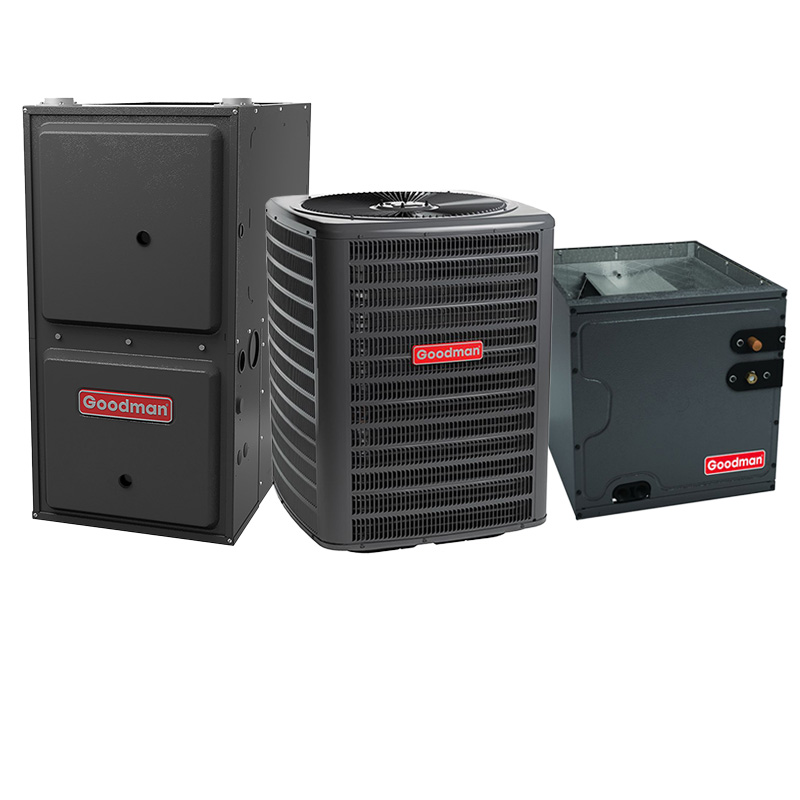
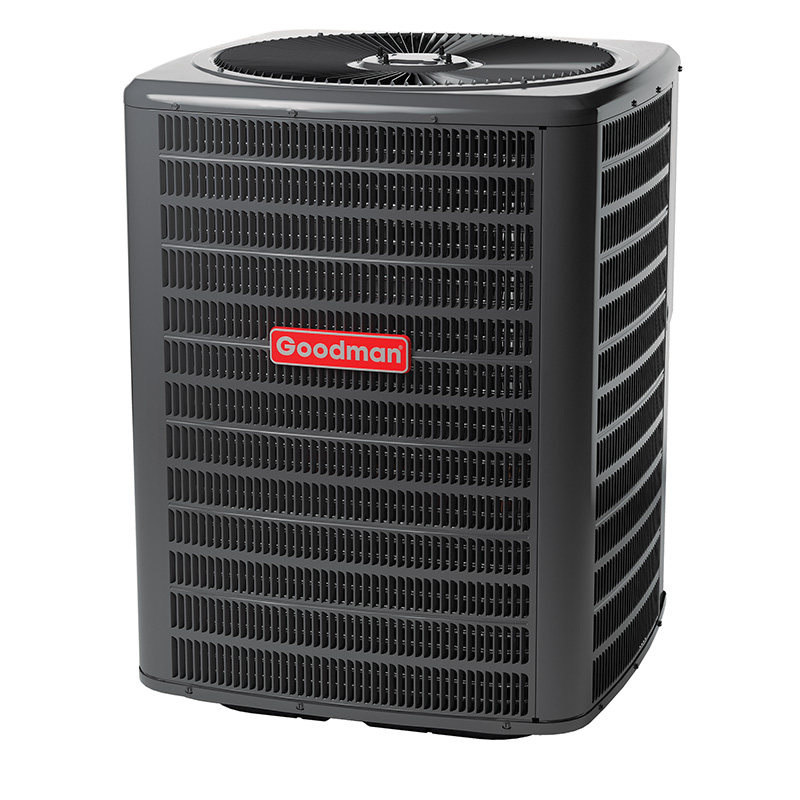
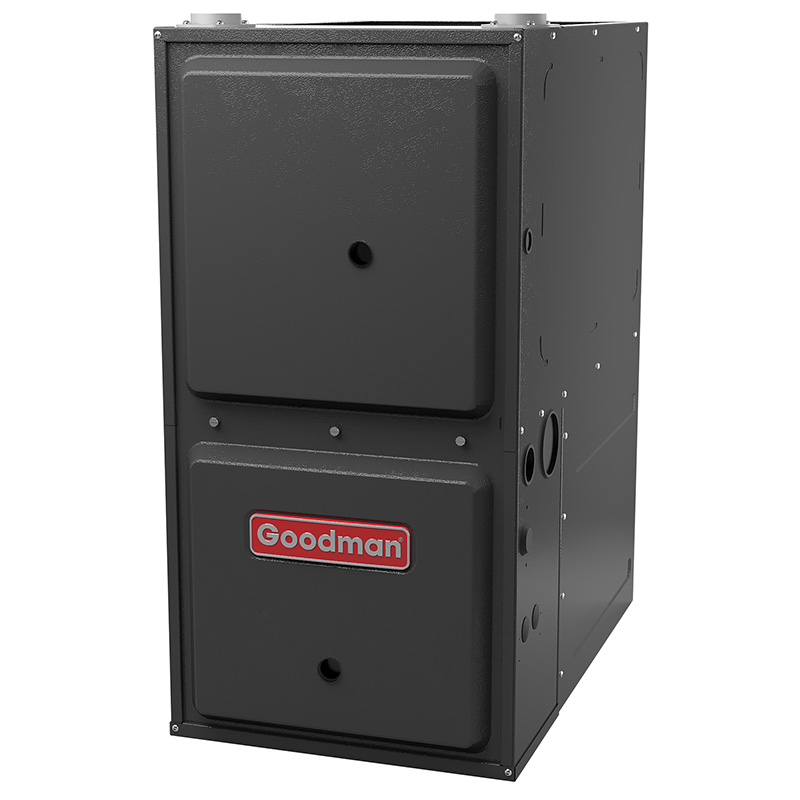
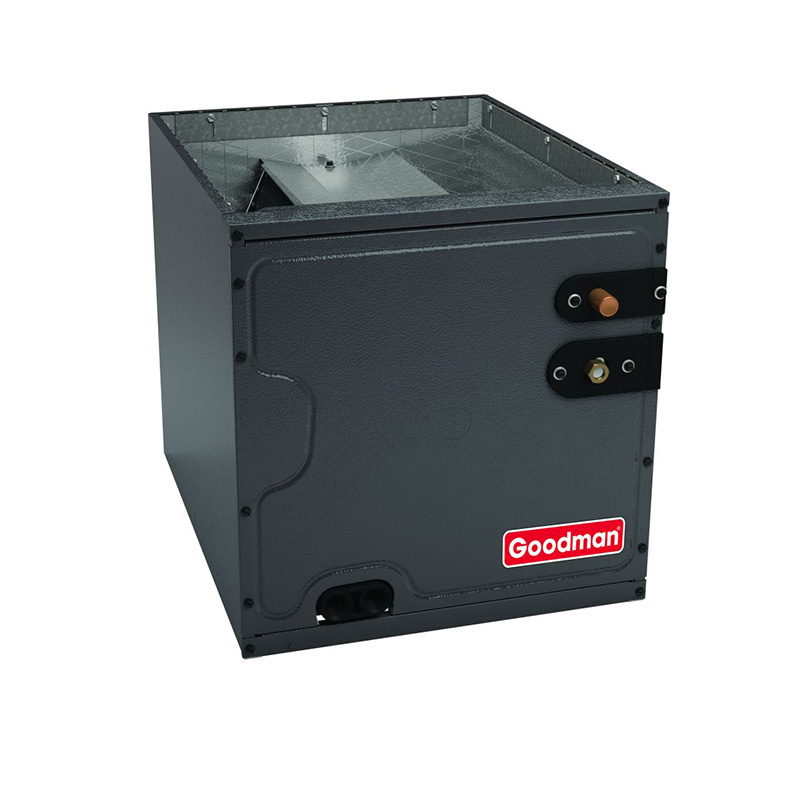
Goodman Furnace And Air Conditioner 3 Ton 15.5 SEER2 AC With 100000 BTU 80% AFUE Multi-Speed ECM Gas Furnace System – Downflow | R32
View on AC Direct see your lowest price →Check current price on AC Direct →
Key features
- 3-ton cooling capacity with 15.5 SEER2 efficiency rating
- 100,000 BTU output at 80% AFUE single-stage gas furnace
- Multi-speed ECM blower motor for lower fan energy use and better humidity control
- Downflow configuration for closet or platform installations with downward duct runs
- R-32 refrigerant with lower global warming potential than R-410A
- Matched system bundle tested and rated together for published efficiency
About this system
This Goodman bundle pairs a 3-ton, 15.5 SEER2 air conditioner with a 100,000 BTU, 80% AFUE multi-speed ECM gas furnace in a downflow configuration, making it a practical choice for homes where the air handler sits in a closet or utility space above a crawlspace or on an upper floor with ducts running downward. The system uses R-32 refrigerant, a lower-global-warming-potential refrigerant that is becoming more common as the industry moves away from R-410A. At 15.5 SEER2, efficiency sits just above the federal minimum for most northern and some southern U.S. climate zones, so operating costs will be lower than an older or entry-level system but not at the level of a two-stage or variable-capacity setup.
The ECM (electronically commutated motor) blower in the furnace is a meaningful upgrade over a standard PSC motor. ECM motors use significantly less electricity during fan-only and lower-speed operation, and they support better humidity control in cooling mode by allowing longer, slower runtimes. The 80% AFUE rating means 20 cents of every dollar spent on gas exits the flue as waste heat, which is acceptable in mild to moderate heating climates but less cost-effective in regions with harsh winters where a 96% AFUE unit would pay back its premium more quickly. Buyers in those colder zones should weigh whether the savings on upfront cost justify the higher long-term fuel bill.
This Goodman bundle delivers an honest entry-to-mid-level efficiency package at a price point that is typically 15 to 25 percent below comparable Carrier, Trane, or Lennox systems. The ECM furnace motor adds real value, but the 80% AFUE furnace and single-stage compressor mean buyers in cold climates or those wanting precise comfort control will hit the ceiling of what this system offers. Long-term ownership costs depend heavily on install quality and the readiness to address wear items like capacitors around years 7 to 10.
Overall score is the average of the five ratings above.
What we like
- Lower upfront cost than comparable Carrier, Trane, and Lennox systems by roughly 15 to 25 percent
- ECM blower motor reduces fan electricity use and improves dehumidification at part load
- R-32 refrigerant is more environmentally responsible and increasingly serviceable
- Downflow configuration suits a specific and common installation scenario well
- Matched factory bundle simplifies permitting and efficiency verification
Trade-offs
- 80% AFUE is the minimum efficiency tier and increases fuel costs meaningfully in cold climates versus 96% AFUE alternatives
- Single-stage compressor runs at full capacity or off, limiting humidity control and comfort compared to two-stage or variable systems
- Dual-run capacitor failures and evaporator coil leaks are documented recurring issues that add to long-term service costs
- Compressor longevity averages 10 to 14 years versus 15 to 20 years on premium brands, meaning replacement may come sooner
What homeowners and pros say about Goodman
Across Google dealer reviews, Goodman equipment averages around 3.8 out of 5 stars, with affordability consistently cited as the reason buyers chose the brand. That sentiment fits this system: homeowners who went in knowing they were buying a value-tier product and had it installed by a careful contractor generally report satisfaction in the early years. The picture shifts on ConsumerAffairs, where Goodman sits near 2.5 out of 5, and the recurring complaint pattern points to repair costs that start climbing around year 7. The specific issues that show up repeatedly are dual-run capacitor failures, evaporator coil refrigerant leaks, and compressor replacements that come earlier than owners anticipated, with compressor lifespan averaging 10 to 14 years compared to 15 to 20 years on premium brands.
HVAC technicians tend to frame Goodman’s reliability as install-dependent more than brand-dependent. A properly sized, correctly charged, and well-supported system using this equipment can run for a decade or more without major trouble. The same technicians note that a rushed or low-bid install, especially one that skips startup verification and refrigerant charge confirmation, is where early coil leaks and first-year refrigerant loss problems originate. For this particular bundle, the R-32 refrigerant adds a layer of consideration: the installer must be A2L certified, and not every shop has made that transition yet. Choosing a contractor who is already working regularly with R-32 equipment will reduce the chance of the first-year leak issues that a minority of owners report.
Sources: ConsumerAffairs Goodman owner reviews, AHRI Directory of Certified Product Performance, U.S. DOE appliance and equipment efficiency standards, Goodman product specification sheets.
What it costs to run
At 15.5 SEER2, cooling this 3-ton system for a typical 1200-hour cooling season at the U.S. average electricity rate of $0.17/kWh works out to roughly $474 per year in cooling, about $74 less per year than a minimum-efficiency 13.4 SEER2 unit of the same size. Your real cost depends on your climate and local rate.
Method: (36,000 BTU/hr ÷ 15.5 SEER2) × 1200 hours ÷ 1000 × $0.17/kWh. Rate source: U.S. EIA average; cooling hours: moderate-climate estimate.
How it compares
| Brand | Comparable model | SEER2 | Stage | Price position |
|---|---|---|---|---|
| Goodman | GSXH5 / GCVC8 Downflow Bundle | 15.5 | Single-stage | Value pick |
| Carrier | Comfort 14 (24ACC4) with 58SB0 80% AFUE furnace | 15.2 | Single-stage | Typically 15 to 25 percent more than this Goodman bundle |
| Trane | XR15 (4TTR5) with S8X1 80% AFUE furnace | 15.2 | Single-stage | Typically 15 to 25 percent more than this Goodman bundle |
| Lennox | Merit ML15 with ML180 80% AFUE furnace | 15.5 | Single-stage | Typically 15 to 25 percent more than this Goodman bundle |
Competitor rows are comparable single-stage units at similar efficiency; price is relative position, not a quote.
Questions about this system
Is 15.5 SEER2 efficient enough to meet current federal minimums, and will I need to upgrade soon?
15.5 SEER2 meets or exceeds the federal minimum efficiency requirements in both northern and southern U.S. regions as of 2023, so this system is compliant at installation. It is not high-efficiency by current standards, but it is not at risk of being non-compliant, and no forced upgrade is required as long as the equipment is in service.
Why does the downflow configuration matter, and how do I know if my house needs it?
Downflow means the furnace pulls return air in at the top and discharges conditioned air downward into ducts that run below the unit. This is the correct configuration for closet-mount or platform installations where supply ducts are in a crawlspace or basement below. If your existing furnace is a downflow unit, replacement with this bundle is straightforward; if it is upflow or horizontal, this system is not compatible without significant duct modification.
What are the most likely repair costs I should budget for over the first 10 years?
The most commonly reported failure on Goodman equipment is the dual-run capacitor, which typically costs between 300 and 600 dollars to diagnose and replace. Evaporator coil leaks are a second documented issue that can run considerably more depending on refrigerant recovery and coil replacement costs. Setting aside a small annual service budget and scheduling yearly maintenance substantially reduces the chance of these failures escalating.
Does R-32 refrigerant cost more to service than R-410A, and is it widely available?
R-32 is mildly flammable, which requires technicians with A2L refrigerant certification and compatible tools, and not every local HVAC company has fully equipped for it yet. Availability is improving rapidly as equipment using R-32 becomes more common, and the refrigerant itself is generally less expensive than R-410A. Confirm your service contractor is A2L certified before installation.
Should I upgrade to a 96% AFUE furnace instead of taking the 80% AFUE unit in this bundle?
In climate zones with 5,000 or more annual heating degree days, the fuel savings from a 96% AFUE furnace can offset its higher cost over five to eight years. In milder climates, the payback period stretches out and the 80% unit may be the more practical choice. Running your local utility rates and estimated annual heating hours through a simple payback calculation is the best way to decide for your specific location.
Specifications
| Cooling capacity | 3 Ton |
| Efficiency | 15.5 SEER2 |
| Furnace output | 100000 BTU |
| Furnace efficiency | 80% AFUE |
| Configuration | Downflow |
| Refrigerant | R-32 |