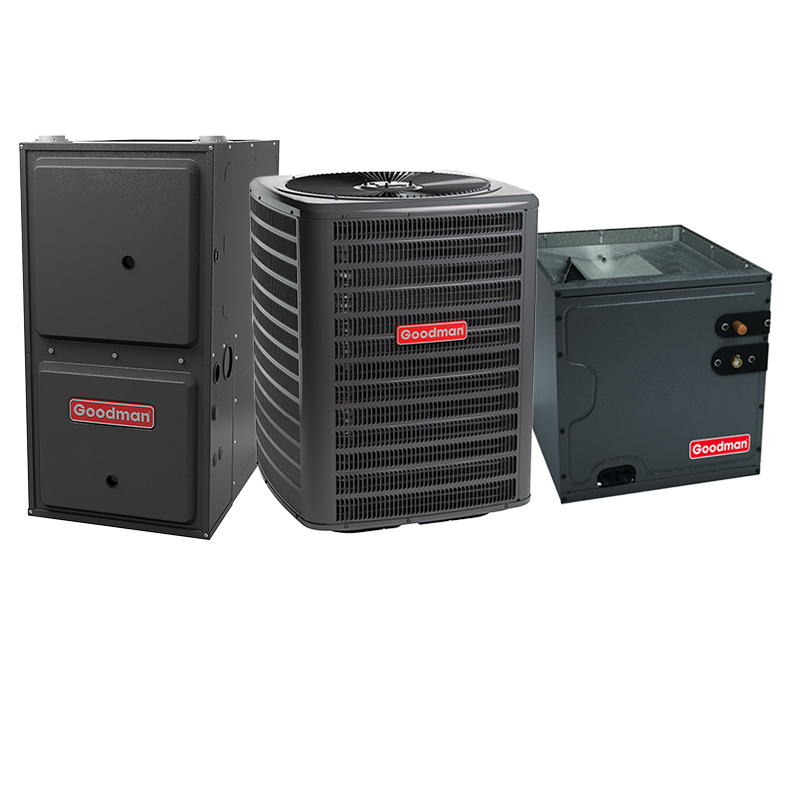
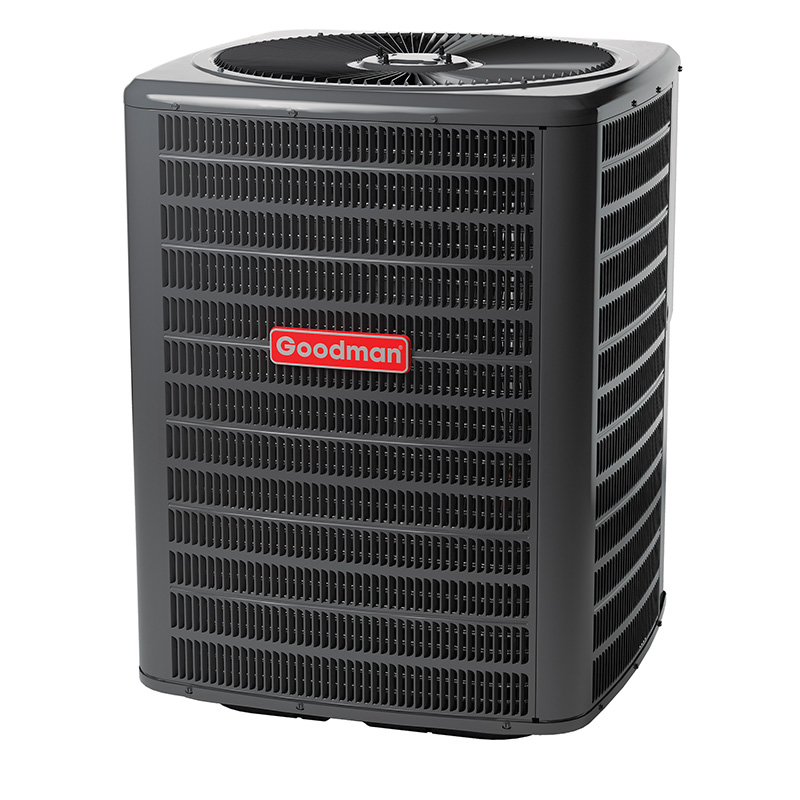
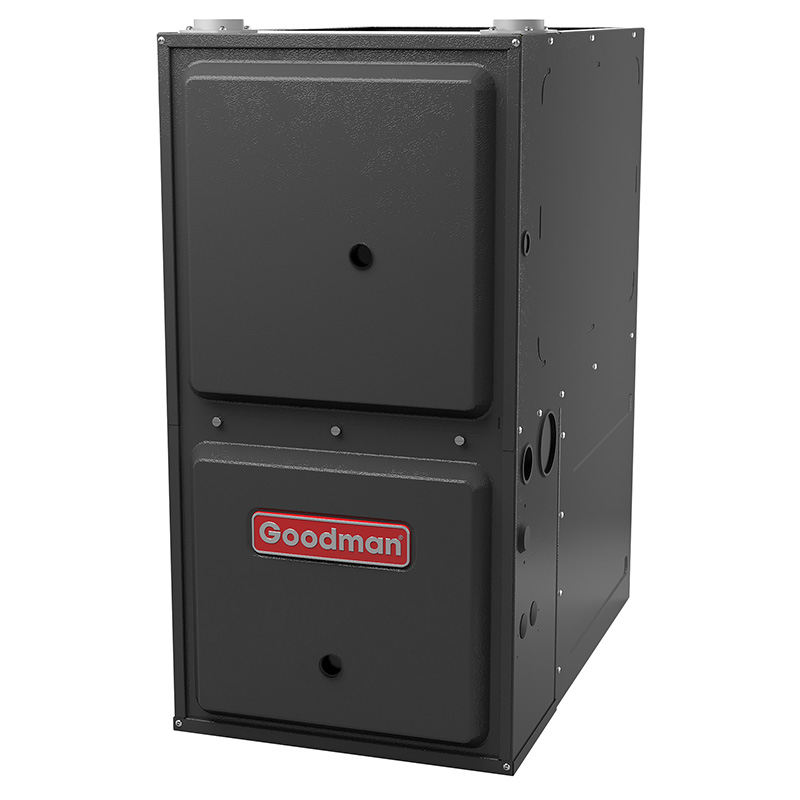
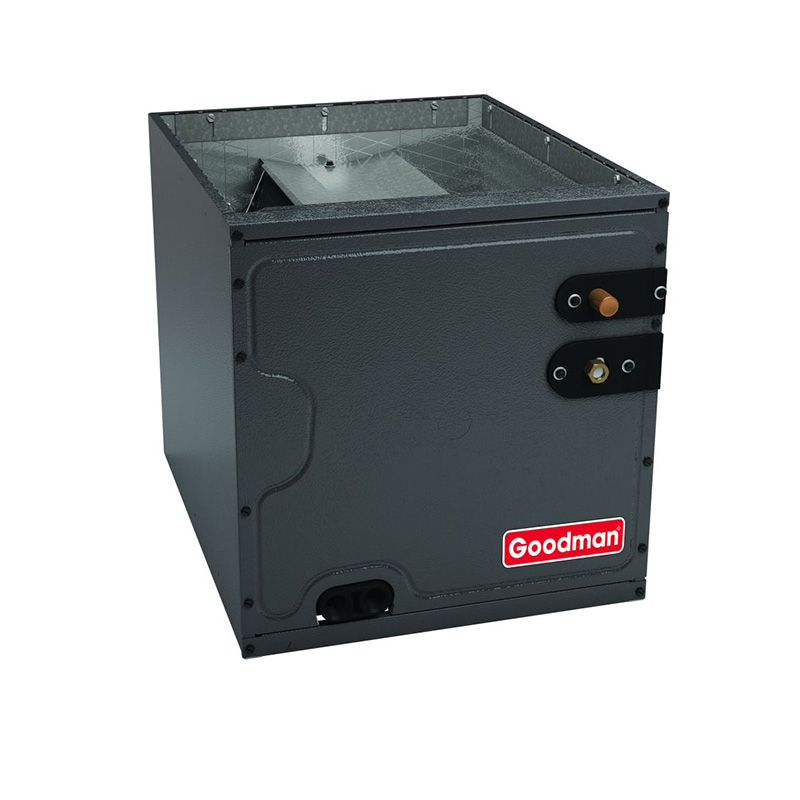
Goodman Furnace And Air Conditioner 3 Ton 15.5 SEER2 AC With 80000 BTU 80% AFUE Two Stage Multi-Speed ECM Gas Furnace System – Low NOX For California Downflow | R32
View on AC Direct see your lowest price →Check current price on AC Direct →
Key features
- 3-ton, 15.5 SEER2 cooling efficiency meets federal minimum standards with modest room to spare
- 80,000 BTU two-stage gas furnace fires at reduced capacity for most of the heating season
- Multi-speed ECM blower motor reduces electricity use compared with standard PSC motors
- 80% AFUE rating recovers 80 cents of fuel energy per dollar spent on gas
- Downflow configuration designed for closet or platform installations with under-floor duct runs
- R-32 refrigerant and Low NOx burner meet California CARB emissions requirements
About this system
This Goodman bundle pairs a 3-ton, 15.5 SEER2 air conditioner with an 80,000 BTU, 80% AFUE two-stage gas furnace in a downflow configuration, making it a practical fit for homes where the air handler sits in a closet or platform above a crawlspace with supply ducts running beneath the floor. The R-32 refrigerant charge is a forward-looking choice: R-32 has a lower global warming potential than older R-410A and is the direction the industry is heading, though it does require technicians who are current on handling procedures. The Low NOx certification satisfies California Air Resources Board rules, which means this package ships ready for installation in California without additional emission modifications.
The two-stage furnace runs on a lower firing rate the majority of the time, which shortens temperature swings and keeps the blower running longer at lower speeds for more even heat distribution. The multi-speed ECM (electronically commutated motor) blower draws significantly less electricity than a standard PSC motor and adjusts airflow to match system demand, a real benefit for comfort and utility bills over time. At 80% AFUE, however, 20 cents of every fuel dollar goes up the flue, so homeowners in colder climates or those with high heating loads may want to weigh whether a 96% AFUE unit closes the gap on a higher upfront cost within a reasonable payback window. This system is best suited to mild-to-moderate heating climates, tight budgets, or situations where the existing duct and venting infrastructure already matches an 80% single-pipe setup.
This Goodman system delivers a capable, code-compliant two-stage package at a price point that is genuinely hard to match from premium brands, and the ECM motor and two-stage burner add real comfort value beyond entry-level equipment. The honest trade-off is that Goodman's real-world longevity trails premium competitors by several years on average, and the 80% AFUE furnace is the least efficient tier available, so it suits mild climates and budget-focused buyers more than cold-climate households chasing long-term fuel savings.
Overall score is the average of the five ratings above.
What we like
- Priced roughly 15 to 25 percent below comparable Trane, Lennox, and Carrier systems
- Two-stage furnace and ECM blower improve comfort and reduce temperature swings versus single-stage equipment
- R-32 refrigerant is lower-GWP and positions the system for regulatory compatibility in coming years
- Low NOx certification ships the system ready for California installation without extra steps
- Downflow layout broadens compatibility with homes that have under-floor duct systems
Trade-offs
- 80% AFUE leaves meaningful heating efficiency on the table versus 96% alternatives, especially in colder regions
- Dual-run capacitors are the most frequently reported failure, typically appearing after year 5 to 7 and costing $300 to $600 to repair
- Evaporator coil leaks appear in a meaningful share of owner reviews, a recurring concern for long-term reliability
- Compressor lifespan averages 10 to 14 years, shorter than the 15 to 20 years documented for premium-brand compressors
What homeowners and pros say about Goodman
Homeowners who track their HVAC spending online tend to split sharply on Goodman. On complaint-heavy channels like ConsumerAffairs, the brand sits around 2.5 out of 5, where the recurring story is a system that runs fine for several years before repair costs begin climbing around year 7, often starting with a dual-run capacitor failure in the $300 to $600 range. On Google dealer reviews, the picture is somewhat better, averaging around 3.8 out of 5 across many locations, where the most repeated reason for satisfaction is straightforward: the price was lower than competing brands and the system does what it is supposed to do. Evaporator coil leaks show up enough in owner accounts to be considered a known risk rather than a fluke, and a smaller group of owners report refrigerant leaks in the first year, which technicians generally attribute to install or initial charge issues rather than unit defects.
HVAC professionals tend to hold a more measured view of this specific configuration. The two-stage furnace and ECM blower earn genuine respect among installers because they add real comfort value and are not just budget-filler specs, and the Low NOx compliance removes a friction point for California jobs. The concern pros raise most often about Goodman generally is that compressor lifespan averages 10 to 14 years, compared with 15 to 20 years for Trane, Lennox, and Carrier compressors, meaning a replacement compressor or full system swap can appear while the competition is still running. The consistent professional advice is that install quality matters more with Goodman than with premium brands, because a tight, properly charged, well-commissioned system narrows the reliability gap considerably, while a rushed or careless install can accelerate the failure timeline that drives those lower consumer ratings.
Sources: ConsumerAffairs Goodman owner reviews, AHRI Directory of Certified Product Performance, U.S. DOE appliance and equipment efficiency standards, Goodman product specification sheets.
What it costs to run
At 15.5 SEER2, cooling this 3-ton system for a typical 1200-hour cooling season at the U.S. average electricity rate of $0.17/kWh works out to roughly $474 per year in cooling, about $74 less per year than a minimum-efficiency 13.4 SEER2 unit of the same size. Your real cost depends on your climate and local rate.
Method: (36,000 BTU/hr ÷ 15.5 SEER2) × 1200 hours ÷ 1000 × $0.17/kWh. Rate source: U.S. EIA average; cooling hours: moderate-climate estimate.
How it compares
| Brand | Comparable model | SEER2 | Stage | Price position |
|---|---|---|---|---|
| Goodman | GSXH503610 + GMVC8 / GC9C8 series (this system) | 15.5 | two-stage | Value pick |
| Carrier | Comfort 15 series (24ACC6) | 15.2 | single-stage | Typically 15 to 25 percent more than this Goodman bundle |
| Trane | XR15 series (4TTR5) | 15.0 | single-stage | Typically 15 to 25 percent more than this Goodman bundle |
| Lennox | Merit 14ACX series | 15.0 | single-stage | Typically 15 to 25 percent more than this Goodman bundle |
Competitor rows are comparable single-stage units at similar efficiency; price is relative position, not a quote.
Questions about this system
Does this system require a special technician because it uses R-32 refrigerant?
R-32 is mildly flammable (A2L classification), so EPA Section 608 certification is still required, but technicians also need to be familiar with A2L handling procedures, which some older HVAC companies may not yet have adopted. Confirm your installer is trained on R-32 before booking, especially in areas where it is still uncommon.
Will this furnace work with my existing single-pipe 80% venting?
Yes, an 80% AFUE furnace uses single-pipe combustion venting, so if your current setup already has a B-vent or equivalent, this furnace can typically use the same infrastructure. A licensed technician should still verify flue sizing and condition before the new unit is connected.
What does the downflow configuration actually mean, and how do I know if my home needs it?
Downflow means the furnace pulls air in at the top and discharges conditioned air out the bottom, sending it into duct runs beneath the unit, most commonly under-floor systems in closets or raised platforms. If your current furnace pulls air from the bottom and blows up through the top, that is an upflow unit and this system would not be a direct swap.
Goodman has mixed online reviews. Should I be worried about reliability?
Goodman scores around 2.5 out of 5 on ConsumerAffairs, a channel that attracts disproportionately frustrated owners, and roughly 3.8 out of 5 on Google dealer reviews. The documented failure patterns are specific: dual-run capacitors are the most common early repair, evaporator coil leaks appear in a notable share of units over time, and compressor lifespan tends to run 10 to 14 years rather than the 15 to 20 years premium brands achieve. Many owners run these systems without major issues for a decade, but the odds of a mid-life repair are higher than with premium equipment.
Is 15.5 SEER2 going to keep my electricity bills low, or should I step up to a higher efficiency unit?
15.5 SEER2 clears the federal minimum and will outperform older 13 or 14 SEER equipment, but it sits at the lower end of the current market range. If your summers are long and your cooling load is heavy, stepping up to an 18 or 20 SEER2 variable-speed system can reduce cooling energy costs noticeably, though the upfront price difference is substantial and payback depends on your local electricity rates and how many hours the system runs each season.
Specifications
| Cooling capacity | 3 Ton |
| Efficiency | 15.5 SEER2 |
| Furnace output | 80000 BTU |
| Furnace efficiency | 80% AFUE |
| Configuration | Downflow |
| Refrigerant | R-32 |