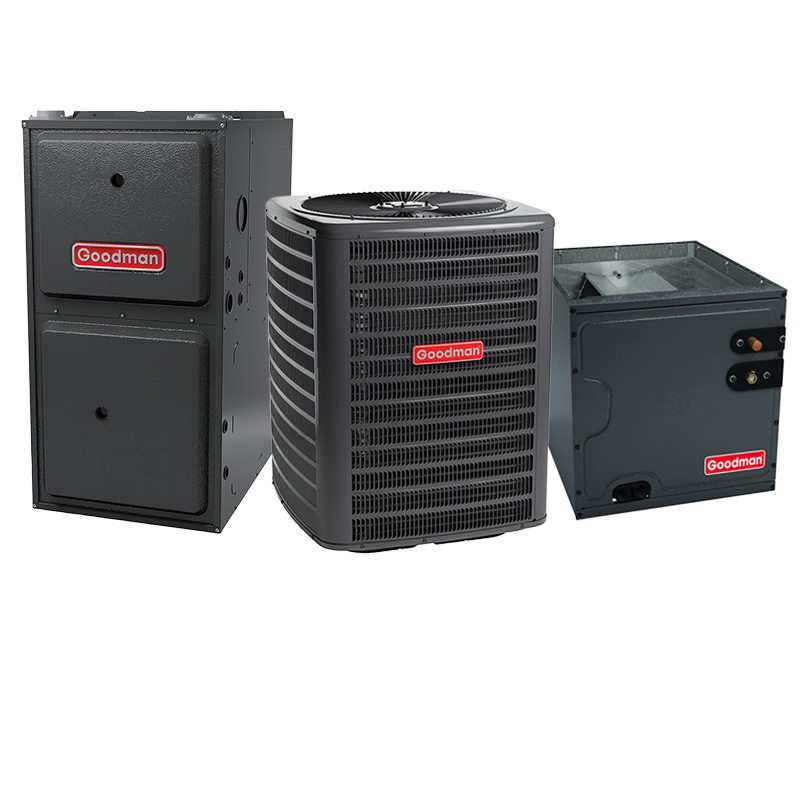
Goodman Furnace And Air Conditioner 3 Ton 16 SEER2 AC With 80000 BTU 80% AFUE Two Stage Multi-Speed ECM Gas Furnace System – Upflow | R32
View on AC Direct see your lowest price →Check current price on AC Direct →
Key features
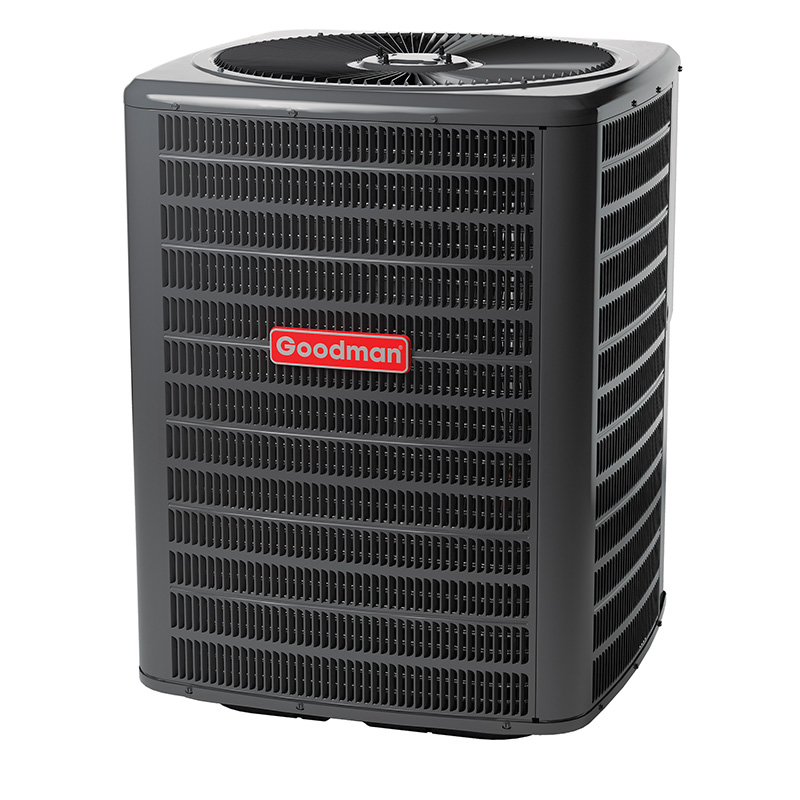
- 3-ton, 16 SEER2 air conditioner uses R-32 refrigerant with lower global warming potential than R-410A
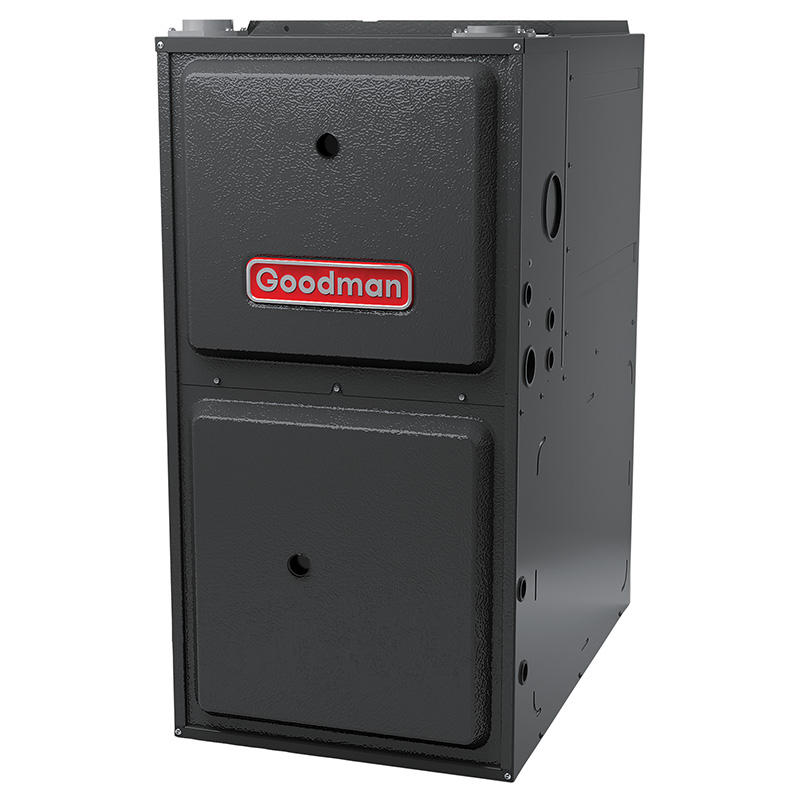
- 80,000 BTU two-stage gas furnace runs on low fire most of the time for quieter, more even heating
- Multi-speed ECM blower motor adjusts airflow to demand, improving comfort and humidity control
- 80% AFUE efficiency meets code minimums in most regions but not high-efficiency territory
- Upflow cabinet design suits basement, utility room, and closet installations with supply air moving upward
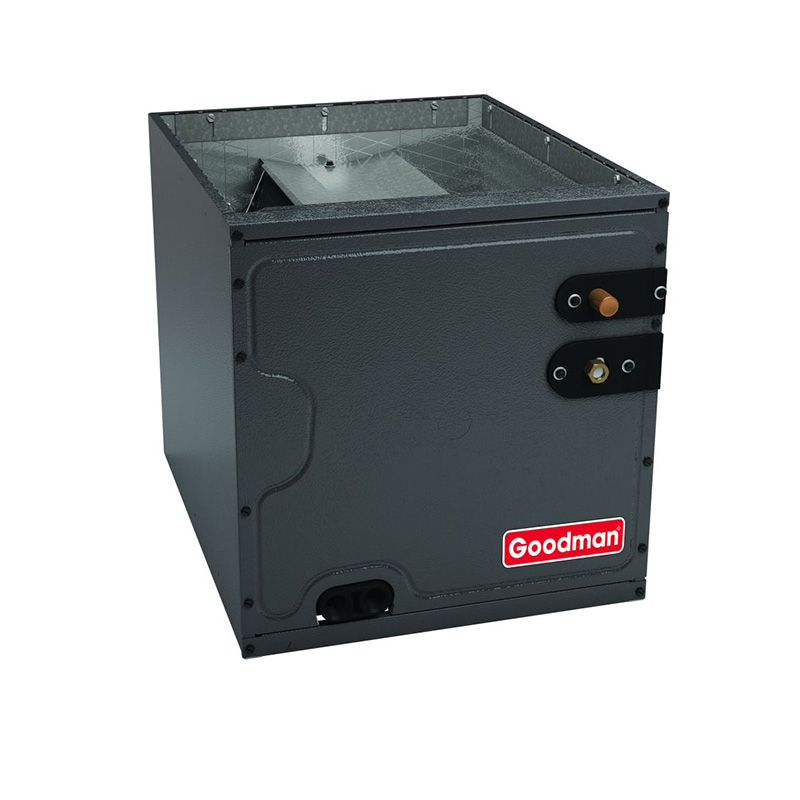
- Matched system ships as a confirmed coil-compatible bundle, simplifying permit and AHJ documentation
About this system
This Goodman bundle pairs a 3-ton, 16 SEER2 central air conditioner with an 80,000 BTU, 80% AFUE two-stage gas furnace in an upflow configuration, making it a practical choice for homes in the 1,400 to 2,000 square foot range that need a full heating and cooling replacement without stretching the budget. The 16 SEER2 rating lands in the mid-efficiency tier, comfortably clearing federal minimums for most U.S. climate zones and offering a meaningful step up from older 13 or 14 SEER equipment. R-32 refrigerant is the forward-looking element here: it has a lower global warming potential than R-410A and is becoming the industry standard, so sourcing refrigerant for future service calls should not be a concern over the system’s lifetime.
The two-stage furnace is worth paying attention to. Running on low fire the majority of the time, it cycles less aggressively than a single-stage unit, which translates to more even temperatures, quieter operation, and reduced wear on the heat exchanger. The multi-speed ECM blower motor reinforces that by matching airflow to demand rather than running at a fixed speed, which also helps with humidity control on mild cooling days. That said, 80% AFUE means one dollar in five worth of fuel exits through the flue, so homeowners in cold climates who run the furnace hard from October through April may find a 96% AFUE unit pays back the cost difference within a few years.
This Goodman system delivers a solid mid-efficiency package at a price point that is genuinely hard to match from premium brands, and the two-stage furnace with ECM blower is a real comfort upgrade over single-stage budget alternatives. The trade-off is a brand track record that shows higher repair frequency after year seven and a compressor lifespan that runs shorter than Trane or Carrier on average, so the value calculation depends on how long you plan to stay in the home and how much a future repair bill would sting.
Overall score is the average of the five ratings above.
What we like
- Priced roughly 15 to 25 percent below comparable Trane, Lennox, and Carrier systems, leaving room in the budget for quality installation
- Two-stage furnace operation reduces temperature swings and lowers noise compared to single-stage units at the same price tier
- ECM blower motor cuts fan energy use and gives the system better humidity management on part-load cooling days
- R-32 refrigerant is future-proof and widely available, avoiding the phase-out timeline that still affects some R-410A equipment
- Matched bundle simplifies contractor selection, coil compatibility verification, and efficiency documentation for permits
Trade-offs
- Dual-run capacitors are the most frequently reported failure point, typically surfacing after a few seasons and costing 300 to 600 dollars to repair
- Evaporator coil leaks appear in a meaningful share of owner reviews, which can mean refrigerant loss and costly repairs after the warranty period
- Compressors average 10 to 14 years in documented owner experience, roughly two to six years shorter than premium-brand compressors
- 80% AFUE leaves real money on the table for homeowners in cold climates; a high-efficiency furnace could recover the price gap in fuel savings within a few heating seasons
What homeowners and pros say about Goodman
On ConsumerAffairs, Goodman sits at roughly 2.5 out of 5, a score shaped by the platform’s complaint-heavy audience. The pattern that emerges there is not early catastrophic failure but an accumulation of repair costs starting around year seven: capacitor replacements, evaporator coil leaks, and the occasional compressor that gives out at 10 to 12 years rather than the 15-plus years owners hoped for. Google dealer reviews tell a more balanced story, averaging around 3.8 out of 5 across many locations, where affordability is the most consistent compliment and installation quality is the variable most often credited when a system performs well for a long stretch.
HVAC technicians who work on Goodman equipment regularly tend to echo that dealer sentiment: the equipment is fundamentally serviceable, and dual-run capacitor swaps are among the easier field repairs they perform, typically costing 300 to 600 dollars when they come up. Where pros push back is on installations where the refrigerant charge is off from the factory or the line set was not properly purged, since a minority of owners do report refrigerant leaks in the first year that trace back to those setup issues rather than anything inherent to the unit. The consistent takeaway from both owner experience and contractor feedback is that the gap between a Goodman that lasts 12 years and one that pushes 18 usually comes down to who installed it and how well it is maintained afterward.
Sources: ConsumerAffairs Goodman owner reviews, AHRI Directory of Certified Product Performance, U.S. DOE appliance and equipment efficiency standards, Goodman product specification sheets.
What it costs to run
At 16 SEER2, cooling this 3-ton system for a typical 1200-hour cooling season at the U.S. average electricity rate of $0.17/kWh works out to roughly $459 per year in cooling, about $89 less per year than a minimum-efficiency 13.4 SEER2 unit of the same size. Your real cost depends on your climate and local rate.
Method: (36,000 BTU/hr ÷ 16 SEER2) × 1200 hours ÷ 1000 × $0.17/kWh. Rate source: U.S. EIA average; cooling hours: moderate-climate estimate.
How it compares
| Brand | Comparable model | SEER2 | Stage | Price position |
|---|---|---|---|---|
| Goodman | GSXH503610 / GMVC8 Series (this system) | 16 | two-stage | Value pick |
| Carrier | Comfort 16 Series (24ACC636) | 16 | single-stage | Typically 15 to 25 percent more than this Goodman bundle |
| Trane | XR16 Series (4TTR6036) | 16 | single-stage | Typically 15 to 25 percent more than this Goodman bundle |
| Lennox | Merit 16 Series (14ACX-036) | 16 | single-stage | Typically 15 to 25 percent more than this Goodman bundle |
Competitor rows are comparable single-stage units at similar efficiency; price is relative position, not a quote.
Questions about this system
Will my existing ductwork handle a 3-ton system, or do I need modifications?
A 3-ton system moves roughly 1,200 CFM of air, and many older duct systems were undersized even for the equipment they originally served. Ask your installer to do a Manual D duct calculation before ordering; undersized ducts increase static pressure, reduce efficiency, and accelerate blower motor wear on ECM systems.
Is R-32 refrigerant easy to find for service, and is it safe for a residential technician to handle?
R-32 is increasingly common and should be available from most HVAC supply houses. It is mildly flammable (A2L classification), so technicians need specific training and equipment to handle it safely. Confirm your service contractor is R-32 certified before the first routine maintenance visit.
What does the Goodman warranty actually cover, and are there registration requirements?
Goodman typically offers a 10-year parts warranty on registered units; failing to register within a set window (often 60 days of installation) usually drops coverage to 5 years. Read the specific warranty document for this model carefully, and keep your installer's completion paperwork as proof of installation date.
How often do the dual-run capacitors on Goodman condensers actually fail, and what does the repair cost?
Capacitor failure is the most commonly reported Goodman service call, often showing up after three to six summers of operation. The part itself is inexpensive, and the repair typically runs 300 to 600 dollars including a service call. Many owners in hot climates keep a spare capacitor on hand after the first failure.
The furnace is rated 80% AFUE. Is that going to cost me significantly more to run than a 96% AFUE unit?
On an 80,000 BTU input furnace, the difference between 80% and 96% AFUE means roughly 16,000 BTU per hour exits unused with the 80% unit versus about 3,200 BTU with the 96%. In a climate where you burn 100 therms of gas per heating season the difference is modest; in a cold-climate home burning 800 or more therms per year, the fuel cost gap can pay back a higher-efficiency furnace within three to five years.
Specifications
| Cooling capacity | 3 Ton |
| Efficiency | 16 SEER2 |
| Furnace output | 80000 BTU |
| Furnace efficiency | 80% AFUE |
| Configuration | Upflow |
| Refrigerant | R-32 |