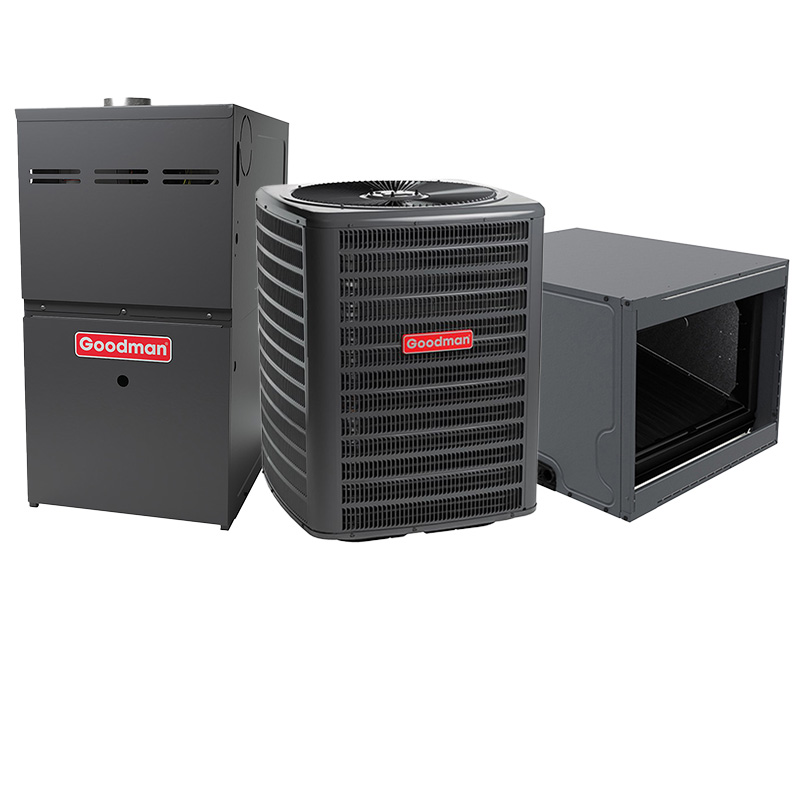
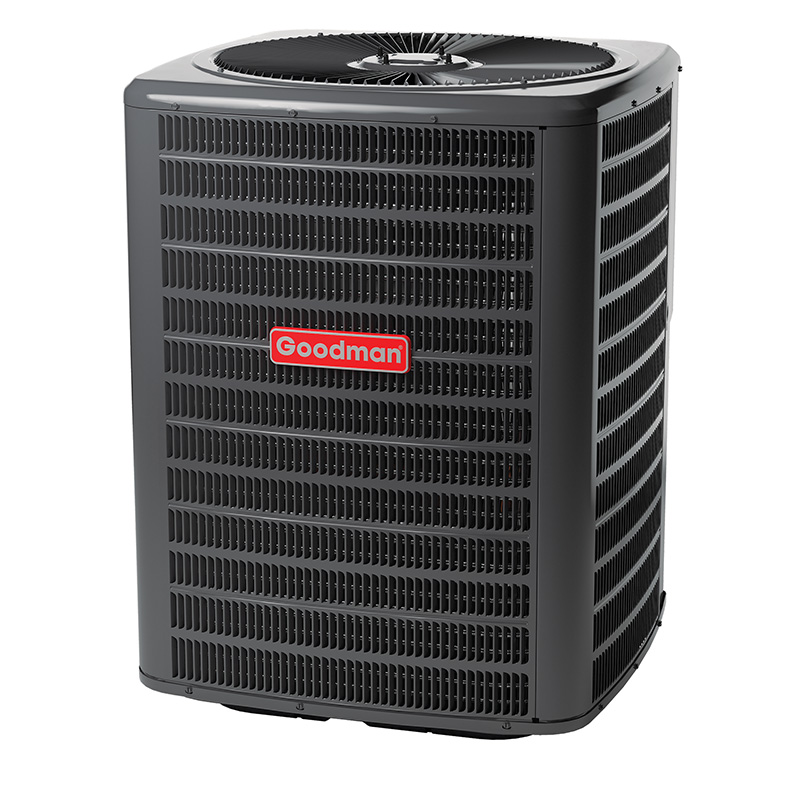
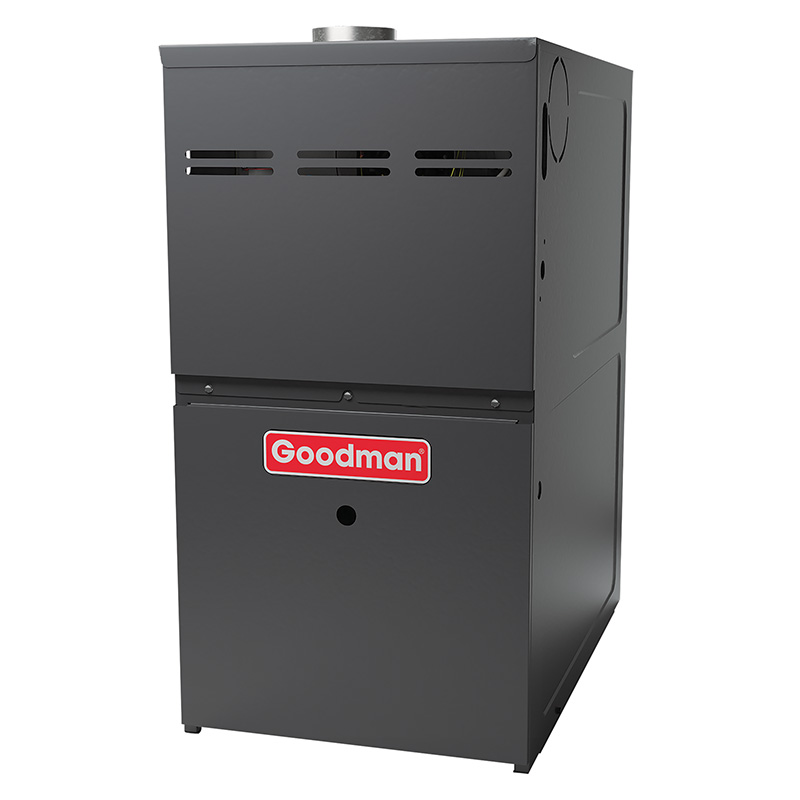
Goodman Furnace And Air Conditioner 4 Ton 14.5 SEER2 AC With 120000 BTU 80% AFUE Multi-Speed ECM Gas Furnace System – Horizontal | R32
View on AC Direct see your lowest price →Check current price on AC Direct →
Key features
- 4-ton cooling capacity with 14.5 SEER2 efficiency rating
- 120,000 BTU gas furnace at 80% AFUE with multi-speed ECM blower motor
- Horizontal configuration designed for attic, crawlspace, or side-load installations
- R-32 refrigerant with lower global warming potential than R-410A
- ECM motor improves part-load humidity removal and reduces blower energy use
- Goodman 10-year parts limited warranty with registration required within 60 days
About this system
This Goodman combination system pairs a 4-ton, 14.5 SEER2 air conditioner with a 120,000 BTU, 80% AFUE multi-speed ECM gas furnace in a horizontal configuration, making it a practical choice for attic or crawlspace installations where vertical mounting is not feasible. The R-32 refrigerant charge aligns with current low-GWP environmental standards, and the multi-speed ECM blower motor offers better humidity control and quieter part-load operation than a basic single-speed unit. At 80% AFUE, roughly one in five BTUs of gas input exits as exhaust, which is acceptable for mild-to-moderate heating climates but leaves efficiency on the table compared to 96% AFUE condensing options.
The 14.5 SEER2 rating lands this system just above the federal minimum for most U.S. regions, meaning it meets code but is not a high-efficiency standout. Homeowners in climates with long, hot summers may find the operating cost savings of a higher SEER2 unit worth the upfront premium over time. That said, the combination of ECM motor technology and a properly sized 4-ton capacity makes this a reasonable fit for larger homes in the 2,000 to 2,800 square foot range, depending on insulation, local climate, and Manual J load calculations. The horizontal orientation limits installation locations, so confirm your air handler space accommodates that orientation before purchasing.
This Goodman system offers a cost-accessible entry point for homeowners who need a large-capacity horizontal-mount system and can accept baseline efficiency rather than best-in-class performance. Installation quality and prompt component replacement will determine more about its lifespan than the nameplate specs. Buyers who prioritize long-term reliability over upfront savings should cross-shop Carrier or Trane before committing.
Overall score is the average of the five ratings above.
What we like
- Priced 15 to 25 percent below comparable Trane, Lennox, and Carrier equipment
- ECM blower motor reduces electricity use at the air handler and improves dehumidification
- R-32 refrigerant meets current low-GWP standards and is widely available for service
- Horizontal configuration fills a real installation gap that limits options from other brands
- 10-year parts warranty is competitive for a value-tier brand when registered on time
Trade-offs
- 80% AFUE means roughly 20% of fuel energy is lost as exhaust, a real cost in cold climates
- 14.5 SEER2 is just above minimum code, so cooling operating costs will be higher than mid-efficiency alternatives
- Dual-run capacitors and evaporator coil leaks are documented recurring failure points, adding service cost after year 7
- Compressor lifespan averages 10 to 14 years versus 15 to 20 years typical of premium brands
What homeowners and pros say about Goodman
Homeowners who have lived with this class of Goodman equipment tend to echo the Google dealer review average of around 3.8 out of 5, with the most consistent praise focused on how much less they paid compared to quotes from Carrier or Trane dealers. The satisfaction tends to hold up well through the first several years, with the ECM blower drawing particular appreciation for quieter overnight operation. Where the picture gets complicated is around year 7 and beyond, which is exactly the pattern reflected in Goodman’s roughly 2.5 out of 5 ConsumerAffairs score, a channel where people show up specifically to report repair bills. Dual-run capacitor failures are the most frequently mentioned issue, and while a capacitor swap typically runs 300 to 600 dollars, owners report frustration when it recurs. Evaporator coil leaks are a more serious documented concern, as a coil replacement can be expensive and requires a full refrigerant recovery and recharge.
HVAC technicians generally characterize Goodman as a workable brand whose outcome depends heavily on how well the system was sized and installed. A clean, properly charged install on a correctly sized unit tends to perform without drama for a solid stretch of years. Where pros see problems develop is on rushed installs, marginal sizing, or units that were not registered for the full 10-year parts warranty within the required 60-day window. The compressor lifespan question is real: documented averages of 10 to 14 years compare unfavorably to the 15 to 20 years typically seen in Carrier, Trane, and Lennox equipment at similar capacity. The early refrigerant leak reports that show up in a minority of owner accounts are also worth noting, as technicians point to installation or initial charge quality rather than a factory defect in most cases. The upshot is that this system rewards buyers who hire an experienced installer and budget for eventual service rather than treating the purchase as set-and-forget.
Sources: ConsumerAffairs Goodman owner reviews, AHRI Directory of Certified Product Performance, U.S. DOE appliance and equipment efficiency standards, Goodman product specification sheets.
What it costs to run
At 14.5 SEER2, cooling this 4-ton system for a typical 1200-hour cooling season at the U.S. average electricity rate of $0.17/kWh works out to roughly $675 per year in cooling, about $56 less per year than a minimum-efficiency 13.4 SEER2 unit of the same size. Your real cost depends on your climate and local rate.
Method: (48,000 BTU/hr ÷ 14.5 SEER2) × 1200 hours ÷ 1000 × $0.17/kWh. Rate source: U.S. EIA average; cooling hours: moderate-climate estimate.
How it compares
| Brand | Comparable model | SEER2 | Stage | Price position |
|---|---|---|---|---|
| Goodman | GSXH504810 + GMVM971205DN (Horizontal bundle) | 14.5 | Single-stage / Multi-speed | Value pick |
| Carrier | Comfort 14 (24ACC4) with FB4C air handler | 14.3 to 15.0 | Single-stage | Moderate premium, typically 15 to 20 percent above Goodman |
| Trane | XR14c with S9V2 80% AFUE furnace | 14.3 to 15.0 | Single-stage | Moderate to significant premium, typically 20 to 30 percent above Goodman |
| Lennox | Merit 14ACX with ML180 80% AFUE furnace | 14.3 to 15.2 | Single-stage | Moderate premium, typically 15 to 25 percent above Goodman |
Competitor rows are comparable single-stage units at similar efficiency; price is relative position, not a quote.
Questions about this system
Does the horizontal configuration mean I need a special coil or air handler, or does it come ready to mount sideways?
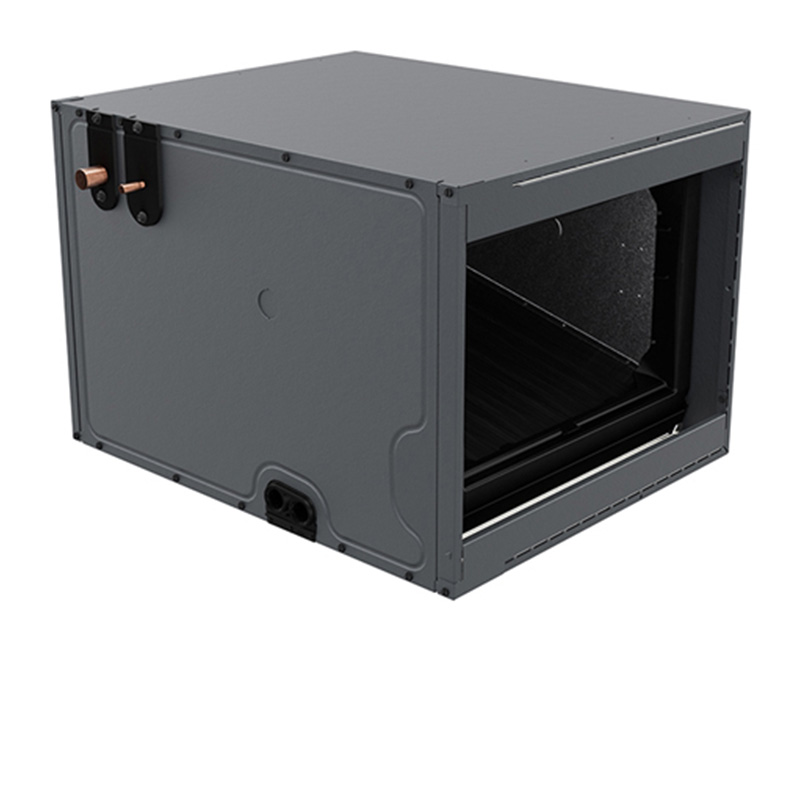
The system is configured for horizontal airflow from the factory, so it is designed to be mounted on its side in an attic, crawlspace, or closet with a side-load duct layout. Confirm with your installer that the specific coil cabinet included is rated for horizontal orientation, as mixing horizontal and vertical components can cause condensate drainage problems.
Is R-32 refrigerant easy to find for service calls, and does it cost more than R-410A?
R-32 availability is growing rapidly as the industry moves away from R-410A, and most wholesale HVAC suppliers stock it. Pricing is broadly comparable to R-410A at this point, and many technicians already carry it. The main thing to confirm is that your servicing technician has equipment rated for R-32 handling.
What does the 10-year parts warranty actually cover, and what do I have to do to activate it?
Goodman's 10-year parts limited warranty covers most internal components, including the compressor, heat exchanger, and coil, but you must register the unit online within 60 days of installation or the coverage drops to 5 years. Labor is not included, so budget for service call costs on any warranty repair.
The ConsumerAffairs reviews for Goodman look rough. Should I be worried about long-term reliability?
ConsumerAffairs skews toward complaint-heavy reviews, and Goodman's roughly 2.5 out of 5 score there reflects owners who had repair experiences, not a statistically representative sample. Google dealer reviews average around 3.8 out of 5, where affordability is the most common praise. The documented risk areas are dual-run capacitor failures, which are a relatively low-cost fix, evaporator coil leaks, and compressor longevity that averages 10 to 14 years rather than the 15 to 20 years seen in premium brands. Factoring in a service plan or setting aside a repair reserve is a reasonable approach.
With 120,000 BTU at 80% AFUE, will this furnace be oversized for my home, and does that cause problems?
At 80% AFUE, the effective output is about 96,000 BTU, which is appropriate for larger homes in cold climates but may be too large for well-insulated homes in mild regions. An oversized furnace short-cycles, which reduces efficiency, accelerates wear on the heat exchanger, and makes temperature control less comfortable. A Manual J load calculation by your installer before purchase is the right way to confirm whether 120,000 BTU input matches your actual heating load.
Specifications
| Cooling capacity | 4 Ton |
| Efficiency | 14.5 SEER2 |
| Furnace output | 120000 BTU |
| Furnace efficiency | 80% AFUE |
| Configuration | Horizontal |
| Refrigerant | R-32 |