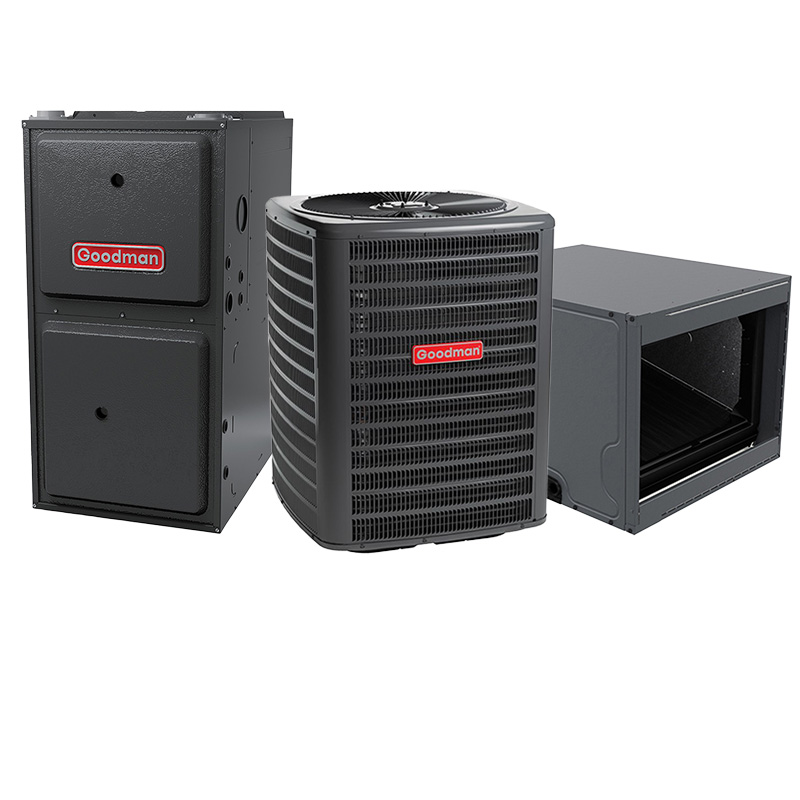
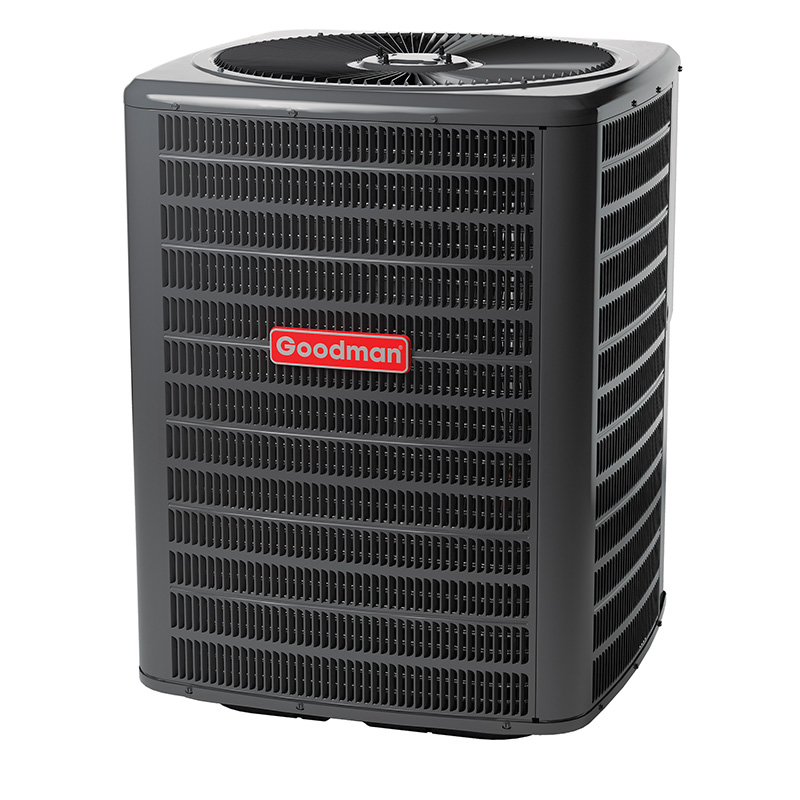
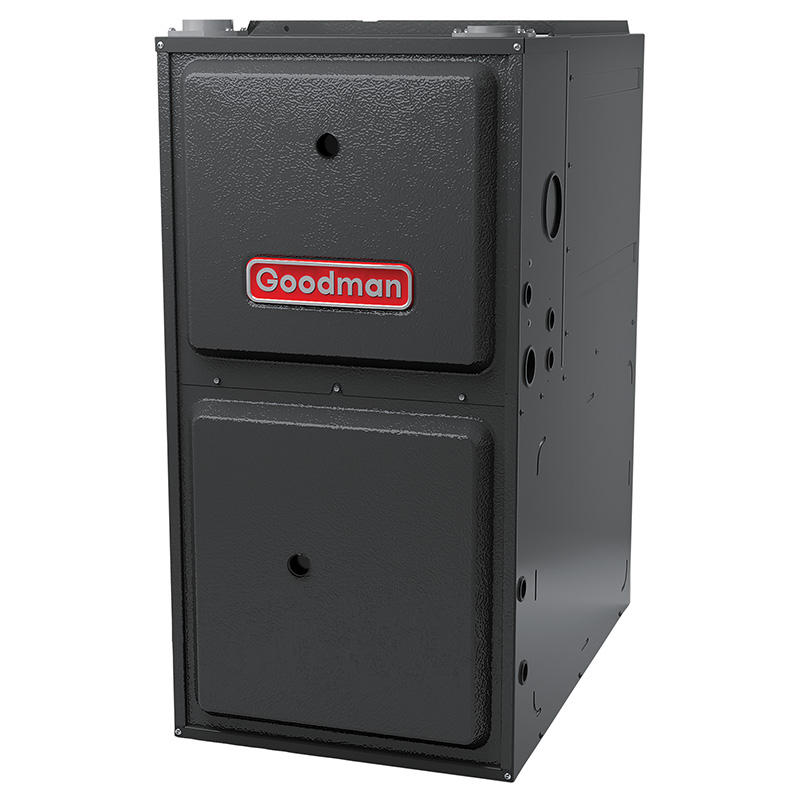
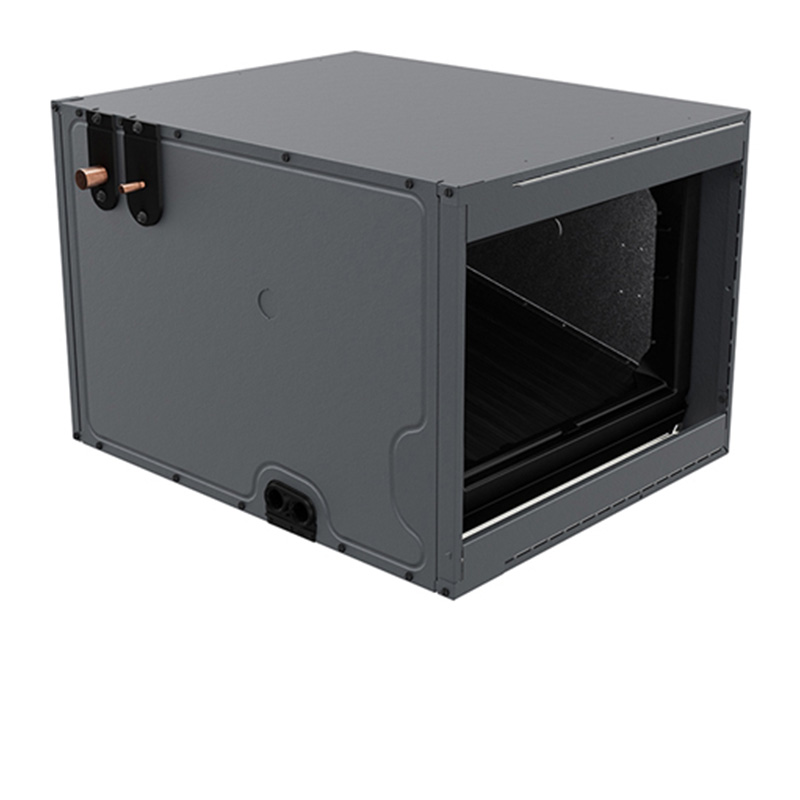
Goodman Furnace And Air Conditioner 4 Ton 14.5 SEER2 AC With 80000 BTU 80% AFUE Two Stage Multi-Speed ECM Gas Furnace System – Horizontal | R32
View on AC Direct see your lowest price →Check current price on AC Direct →
Key features
- 4-ton, 14.5 SEER2 cooling efficiency meets current federal minimum standards for most U.S. regions
- 80,000 BTU two-stage gas furnace modulates between low and high fire for steadier temps and quieter operation
- 80% AFUE heating efficiency: straightforward single-flue venting, but not high-efficiency territory
- ECM multi-speed blower motor reduces blower electricity use compared to standard PSC motors
- R-32 refrigerant: lower global-warming potential than R-410A, increasingly required by newer regulations
- Horizontal configuration designed for attic, crawl-space, or closet installs where vertical orientation is not possible
About this system
This Goodman combo pairs a 4-ton, 14.5 SEER2 air conditioner with an 80,000 BTU, 80% AFUE two-stage gas furnace in a horizontal configuration, making it a practical fit for attic or crawl-space installations where a vertical unit simply will not fit. The system uses R-32 refrigerant, a lower global-warming-potential option that is becoming more common as the industry moves away from R-410A. At 4 tons, it is sized for homes roughly in the 1,800 to 2,400 square foot range, though proper Manual J load calculations by your installer matter far more than rules of thumb.
The two-stage furnace and multi-speed ECM blower are the standout specs here. Two-stage heating means the furnace runs on a lower fire most of the time, cycling less frequently, maintaining steadier temperatures, and reducing cold-start noise. The ECM (electronically commutated motor) blower uses significantly less electricity than a standard PSC motor and allows the system to ramp airflow to match conditions rather than slamming on at full speed. Together these features push comfort and efficiency closer to what you would find on mid-tier equipment from premium brands, at a lower upfront price. The 80% AFUE rating, however, is a trade-off worth acknowledging: 20 cents of every heating dollar goes up the flue, and in colder climates a 96% AFUE furnace often pays back its price premium within a few heating seasons.
Horizontal configuration adds installation complexity. The coil, furnace, and refrigerant lineset must all be correctly oriented and supported, and the condensate drain path needs careful planning to avoid pooling. This system rewards a skilled, experienced installer more than most. Goodman’s value proposition is real, but it leans heavily on who puts it in and how well they do it.
This system delivers genuine comfort upgrades over single-stage budget equipment at a price point that undercuts Carrier, Trane, and Lennox by a meaningful margin. The two-stage furnace and ECM blower are real-world improvements, not marketing language. The honest caveat is that Goodman's long-term reliability record is below premium brands, and this system's performance ceiling will be set largely by who installs it and how carefully.
Overall score is the average of the five ratings above.
What we like
- Priced 15 to 25 percent below comparable Carrier, Trane, and Lennox systems
- Two-stage furnace operation improves comfort and reduces temperature swings vs. single-stage units
- ECM blower motor cuts fan electricity consumption and allows variable airflow matching
- R-32 refrigerant is more environmentally friendly and increasingly future-proof as regulations tighten
- 14.5 SEER2 meets or exceeds current federal regional minimums, keeping operating costs reasonable
Trade-offs
- 80% AFUE is the lowest efficiency tier available; homeowners in cold climates will pay more to heat versus a 96% unit
- Dual-run capacitors are the most commonly reported early failure on Goodman equipment, typically showing up in years 3 to 7
- Compressor lifespan averages 10 to 14 years versus 15 to 20 years seen on premium-brand compressors
- Horizontal configuration is more complex to install correctly, raising labor costs and the risk of improper setup affecting long-term reliability
What homeowners and pros say about Goodman
Homeowners who buy Goodman equipment most often praise the upfront price and point out that it can free up budget for a better installation or extended service contract. On ConsumerAffairs, where Goodman sits at roughly 2.5 out of 5, the recurring complaint is not that the system fails on day one but that repair costs start climbing after about year seven, with capacitor failures and evaporator coil leaks appearing most frequently in owner accounts. On Google dealer reviews, where the brand averages around 3.8 out of 5 across hundreds of location reviews, the narrative shifts: buyers who had a good install experience tend to rate the brand more favorably and cite the price-to-performance ratio as the main reason they chose it over a premium alternative.
HVAC technicians tend to have a pragmatic view of Goodman. Many will note that the dual-run capacitor is almost a consumable on these systems, a known failure point that typically costs $300 to $600 to fix and should almost be anticipated around the 5- to 8-year mark. Coil leaks draw more concern because they can involve refrigerant loss and a more expensive repair. Compressor longevity is also a real discussion point in the trade: Goodman compressors tend to average 10 to 14 years of reliable service, which is a shorter window than the 15 to 20 years technicians commonly associate with Trane or Carrier compressors. For this specific horizontal two-stage system, experienced installers emphasize that proper coil orientation, adequate unit support, and a correctly sloped condensate drain are non-negotiable, and that skimping on installation labor to offset equipment savings is the single fastest way to shorten the system’s life.
Sources: ConsumerAffairs Goodman owner reviews, AHRI Directory of Certified Product Performance, U.S. DOE appliance and equipment efficiency standards, Goodman product specification sheets.
What it costs to run
At 14.5 SEER2, cooling this 4-ton system for a typical 1200-hour cooling season at the U.S. average electricity rate of $0.17/kWh works out to roughly $675 per year in cooling, about $56 less per year than a minimum-efficiency 13.4 SEER2 unit of the same size. Your real cost depends on your climate and local rate.
Method: (48,000 BTU/hr ÷ 14.5 SEER2) × 1200 hours ÷ 1000 × $0.17/kWh. Rate source: U.S. EIA average; cooling hours: moderate-climate estimate.
How it compares
| Brand | Comparable model | SEER2 | Stage | Price position |
|---|---|---|---|---|
| Goodman | This system (4-ton 14.5 SEER2 / 80K BTU 80% AFUE Two-Stage ECM Horizontal R-32) | 14.5 | Two-stage furnace / multi-speed ECM | Value pick |
| Carrier | Performance 14 (24ACC4) with 58TP0 Two-Stage Furnace | 14.3-14.5 | Two-stage furnace / multi-speed | Typically 15 to 25 percent more than this Goodman system |
| Trane | XR14c (4TTR4) with S8X2 Two-Stage Furnace | 14.3-15.0 | Two-stage furnace / multi-speed | Typically 15 to 25 percent more than this Goodman system |
| Lennox | Merit 14 (14ACX) with ML196 Two-Stage Furnace | 14.3-14.5 | Two-stage furnace / multi-speed | Typically 15 to 25 percent more than this Goodman system |
Competitor rows are comparable single-stage units at similar efficiency; price is relative position, not a quote.
Questions about this system
Is 80% AFUE good enough, or should I pay more for a 96% furnace?
In mild to moderate climates with shorter heating seasons, 80% AFUE is often fine and the payback period on a 96% unit can exceed a decade. In cold-weather regions where the furnace runs hard for five or more months, the 16-point efficiency gap typically pays back within three to five years. If you are in IECC Climate Zone 5 or colder, the upgrade is worth pricing out.
What does horizontal configuration actually mean for my installation costs?
Horizontal means the furnace and air handler are laid on their side rather than standing upright, which is common in attic or crawl-space installs. It typically adds labor time because the installer must properly support the unit, orient the drain pan and condensate lines to prevent water pooling, and confirm the coil is correctly positioned. Budget for somewhat higher labor costs compared to a standard vertical closet install.
What is R-32 refrigerant and will it be expensive to service?
R-32 is a single-component refrigerant with a lower global-warming potential than R-410A. It is increasingly stocked by HVAC distributors as the industry transitions away from R-410A, so availability is improving. Unlike R-410A blends, R-32 can sometimes be topped off rather than fully recovered and recharged, which can reduce service costs if a minor leak is found.
Goodman has mixed reviews online. Should I be worried about reliability?
Goodman scores around 2.5 out of 5 on ConsumerAffairs, a channel that skews toward complaints, and around 3.8 out of 5 on Google dealer reviews where affordability is the most praised factor. The documented weak points are dual-run capacitors (a common but low-cost fix in the $300 to $600 range), evaporator coil leaks reported in a meaningful share of owner reviews, and compressor lifespan that averages 10 to 14 years rather than the 15 to 20 seen on premium brands. A small number of owners also report refrigerant leaks in year one, which is typically an installation or charge issue, not a factory defect.
Does the two-stage furnace really make a noticeable difference in day-to-day comfort?
Yes, in most homes it does. The furnace runs on low fire the majority of the time, which means longer, quieter cycles that distribute heat more evenly rather than short blasts of hot air. Combined with the ECM blower's ability to vary airflow speed, temperature swings between cycles are reduced. The difference is most noticeable on mild days when a single-stage furnace would short-cycle frequently.
Specifications
| Cooling capacity | 4 Ton |
| Efficiency | 14.5 SEER2 |
| Furnace output | 80000 BTU |
| Furnace efficiency | 80% AFUE |
| Configuration | Horizontal |
| Refrigerant | R-32 |