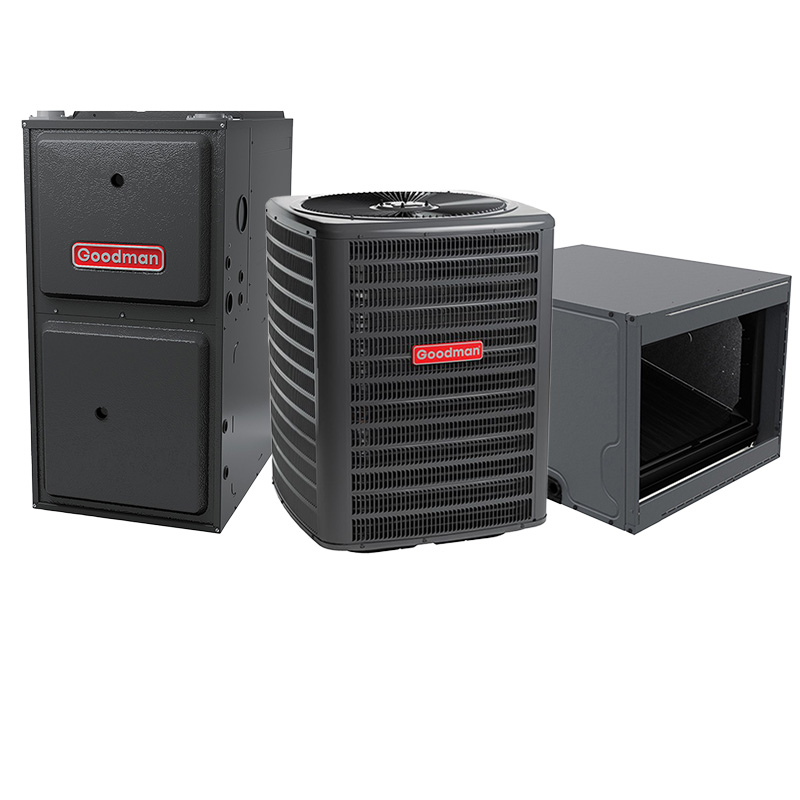
Goodman Furnace And Air Conditioner 4 Ton 14 SEER2 AC With 120000 BTU 96% AFUE Multi-Speed ECM Gas Furnace System – Horizontal | R32
View on AC Direct see your lowest price →Check current price on AC Direct →
Key features
- 4-ton, 14 SEER2 cooling meets current federal minimum efficiency standards
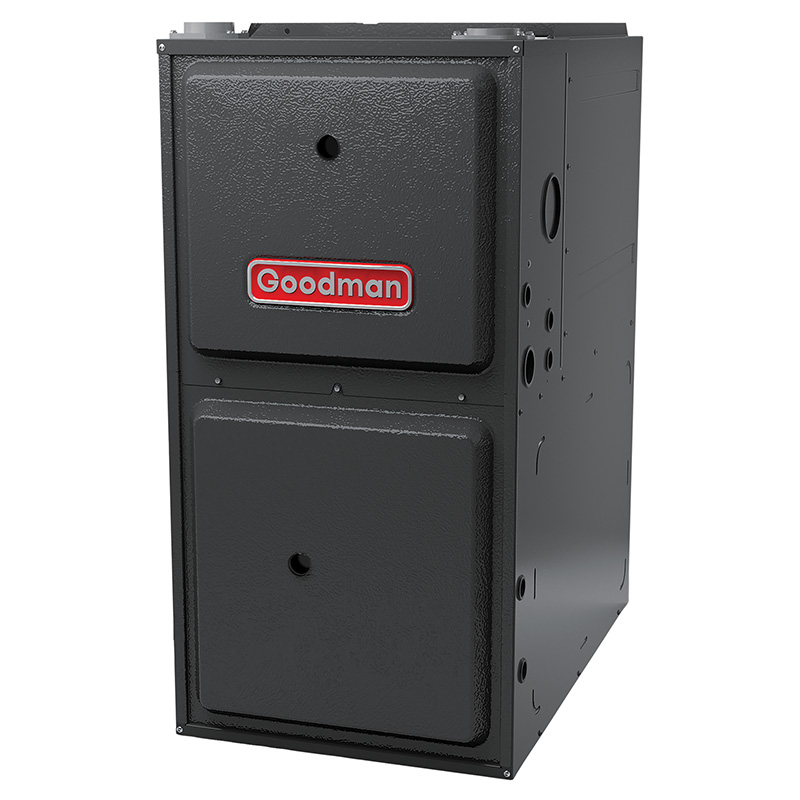
- 120,000 BTU, 96% AFUE condensing furnace recovers heat from flue gases for lower fuel bills
- Multi-speed ECM blower motor reduces electricity use and supports better humidity control
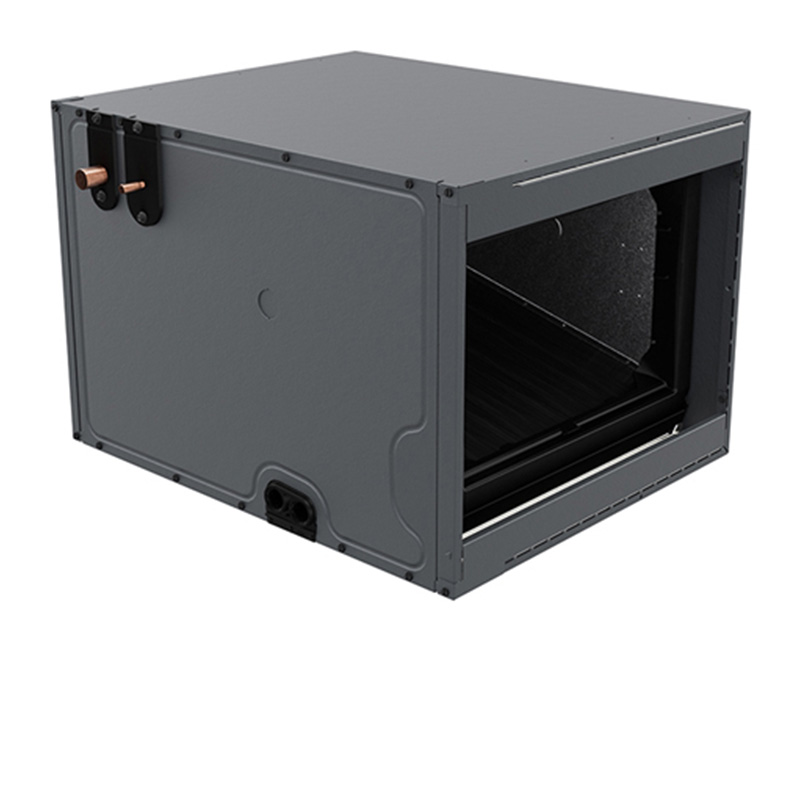
- Horizontal cabinet configuration designed for attic or crawlspace installations
- R-32 refrigerant, a lower-GWP alternative to R-410A aligned with current EPA phase-down rules
- Factory-matched system ensures coil compatibility and supports warranty compliance
About this system
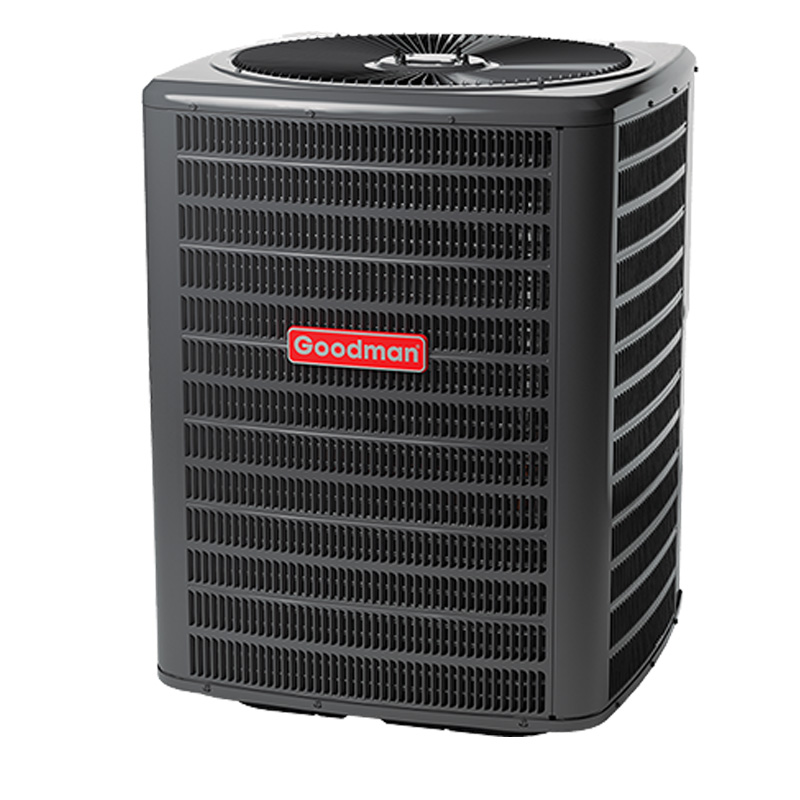
This Goodman bundle pairs a 4-ton, 14 SEER2 split-system air conditioner with a 120,000 BTU, 96% AFUE multi-speed ECM gas furnace configured for horizontal installation. The combination is aimed at larger homes, typically in the 2,200 to 3,000 square foot range depending on climate and insulation, that need serious heating muscle alongside a code-compliant, moderately efficient cooling system. The horizontal orientation makes it a direct fit for attic or crawlspace installations where upright cabinet clearance is not available.
The 96% AFUE rating puts the furnace in condensing-furnace territory, meaning it recovers heat from flue gases that a standard 80% furnace would vent outside. Over a full heating season that difference is real money, particularly in colder climates with long heating runs. The multi-speed ECM blower adjusts airflow to match demand rather than running at a single fixed speed, which reduces electricity draw on the blower motor and can improve humidity control during cooling season. The air conditioner uses R-32 refrigerant, a lower global-warming-potential replacement for R-410A that is becoming the new standard as R-410A is phased down under EPA regulations. At 14 SEER2 the cooling side meets federal minimum efficiency standards and is a practical choice for budget-conscious buyers who prioritize upfront cost over long-term energy savings.
This system is not a top-efficiency pick and it is not positioned as one. Buyers who want variable-speed compressors, 18-plus SEER2 ratings, or premium brand confidence will need to look at higher price tiers. What this bundle offers is a complete, spec-matched system at a price point that lets homeowners allocate more of their budget toward quality installation, which is, by every HVAC technician account, the factor that matters most with Goodman equipment.
This Goodman bundle delivers a legitimate 96% AFUE furnace and a code-compliant 14 SEER2 cooling system at a price point that undercuts premium brands by a meaningful margin. The trade-off is a brand track record that shows more repair events after year seven and compressor longevity that trails Carrier, Trane, and Lennox by several years on average. It is a reasonable choice for budget-focused buyers who hire a skilled installer and treat the savings as a buffer for future maintenance.
Overall score is the average of the five ratings above.
What we like
- Priced 15 to 25 percent below comparable Carrier, Trane, and Lennox systems
- 96% AFUE condensing furnace delivers genuine fuel savings in cold climates
- ECM multi-speed blower lowers blower motor electricity consumption compared to single-speed PSC motors
- R-32 refrigerant is forward-compatible with current EPA phase-down regulations
- Factory-matched components reduce the guesswork of mixing brands and support warranty coverage
Trade-offs
- Compressors average 10 to 14 years versus 15 to 20 years for premium-brand counterparts
- Evaporator coil leaks appear in a notable share of owner reviews, a documented weak point
- Dual-run capacitors are the most commonly reported failure, typically needed within the first decade
- A minority of owners report refrigerant leaks within the first year, often tied to install or charge quality
What homeowners and pros say about Goodman
Homeowners who share feedback on Goodman equipment tend to split along a predictable timeline. In the first several years, the most common theme is satisfaction with the price paid relative to what was installed, which lines up with Goodman’s Google dealer review average of around 3.8 out of 5 across dealer locations, where affordability is the most frequently cited reason for a positive rating. Problems start to surface more consistently after roughly year seven, a pattern reflected in Goodman’s ConsumerAffairs score of about 2.5 out of 5, a channel where the recurring complaint is repair costs that feel disproportionate to the age of the system. The most specific documented failure modes are dual-run capacitor failures, which are annoying but relatively inexpensive to fix, and evaporator coil leaks, which appear in a meaningful share of longer-term owner accounts and are a more costly repair. Compressor longevity is the other consistent data point: Goodman compressors tend to average 10 to 14 years, a measurable gap versus the 15 to 20 years more commonly reported for Carrier, Trane, and Lennox units. A small minority of owners also report refrigerant leaks within the first year, which technicians generally attribute to install or charge issues rather than a factory defect.
HVAC professionals are consistent in one observation about this brand: installation quality determines outcome more strongly with Goodman than with premium brands, which have tighter factory tolerances and more robust components to compensate for imperfect installs. A well-charged, correctly sized Goodman system installed by an experienced technician will outperform a carelessly installed premium brand every time, and pros who are candid about it say the budget freed up by choosing Goodman is best spent on exactly that, a skilled installer and a service plan that keeps capacitor health and refrigerant charge in check. For this specific system, the horizontal configuration adds one more layer of install complexity, since proper condensate drainage in an attic or crawlspace environment requires attention that not every installer gives it, making the choice of contractor even more consequential than usual.
Sources: ConsumerAffairs Goodman owner reviews, AHRI Directory of Certified Product Performance, U.S. DOE appliance and equipment efficiency standards, Goodman product specification sheets.
What it costs to run
At 14 SEER2, cooling this 4-ton system for a typical 1200-hour cooling season at the U.S. average electricity rate of $0.17/kWh works out to roughly $699 per year in cooling, about $32 less per year than a minimum-efficiency 13.4 SEER2 unit of the same size. Your real cost depends on your climate and local rate.
Method: (48,000 BTU/hr ÷ 14 SEER2) × 1200 hours ÷ 1000 × $0.17/kWh. Rate source: U.S. EIA average; cooling hours: moderate-climate estimate.
How it compares
| Brand | Comparable model | SEER2 | Stage | Price position |
|---|---|---|---|---|
| Goodman | 4-Ton 14 SEER2 AC + 120,000 BTU 96% AFUE Horizontal ECM Furnace (this system) | 14 | Single-stage | Value pick |
| Carrier | Comfort Series (24ACC / 58TP) | 14-15 | Single-stage | Typically 15 to 25 percent more than this Goodman bundle |
| Trane | XR14 / S9X2 | 14-15 | Single-stage | Typically 15 to 25 percent more than this Goodman bundle |
| Lennox | Merit Series (14ACX / ML196) | 14-15 | Single-stage | Typically 15 to 25 percent more than this Goodman bundle |
Competitor rows are comparable single-stage units at similar efficiency; price is relative position, not a quote.
Questions about this system
Why is this system listed as horizontal only, and can it be installed vertically?
The horizontal designation refers to the cabinet orientation of the furnace, which is built for installations where the unit lies on its side, common in attics and some crawlspaces. Installing a horizontal-configured furnace in an upright vertical position is not supported by the manufacturer and can affect condensate drainage and warranty coverage. If you need an upright installation, you need a different cabinet configuration.
What does R-32 refrigerant mean for me as a homeowner, and is it harder to service?
R-32 is a single-component refrigerant with a lower global warming potential than the R-410A it is replacing across the industry. For service, most certified HVAC technicians can handle R-32, but it is classified as mildly flammable (A2L), so technicians need to confirm their equipment and training are current. Availability is growing rapidly as the industry transitions, so finding a qualified tech in a few years should not be a major concern.
How worried should I be about the dual-run capacitor failures Goodman is known for?
Capacitor failure is the most commonly reported repair on Goodman systems, but it is also one of the cheapest and quickest fixes in HVAC, typically running in the 300 to 600 dollar range including labor. Keeping a service agreement that covers an annual tune-up allows a technician to test capacitor health before it fails on a hot summer day, which is the practical way to manage this known weak point.
Is 120,000 BTU too large for most homes, and should I worry about oversizing?
120,000 BTU is a large furnace and it is possible to oversize a system, which causes short cycling and uneven heat distribution. At the 4-ton cooling level this BTU rating can be appropriate for larger homes in cold climates, but the right answer depends on a Manual J load calculation for your specific home. Ask your installer to run the calculation before purchasing, since an oversized furnace wastes fuel and can accelerate wear.
Does Goodman's warranty require professional registration, and what does it actually cover?
Goodman typically requires the system to be registered within a set window after installation to receive the extended parts warranty, and installation must be performed by a licensed HVAC contractor. The standard registered warranty covers parts but does not cover labor, refrigerant, or diagnostic costs, which are the majority of what a real service call costs. Review the warranty certificate for this specific model to confirm coverage terms and registration deadlines.
Specifications
| Cooling capacity | 4 Ton |
| Efficiency | 14 SEER2 |
| Furnace output | 120000 BTU |
| Furnace efficiency | 96% AFUE |
| Configuration | Horizontal |
| Refrigerant | R-32 |