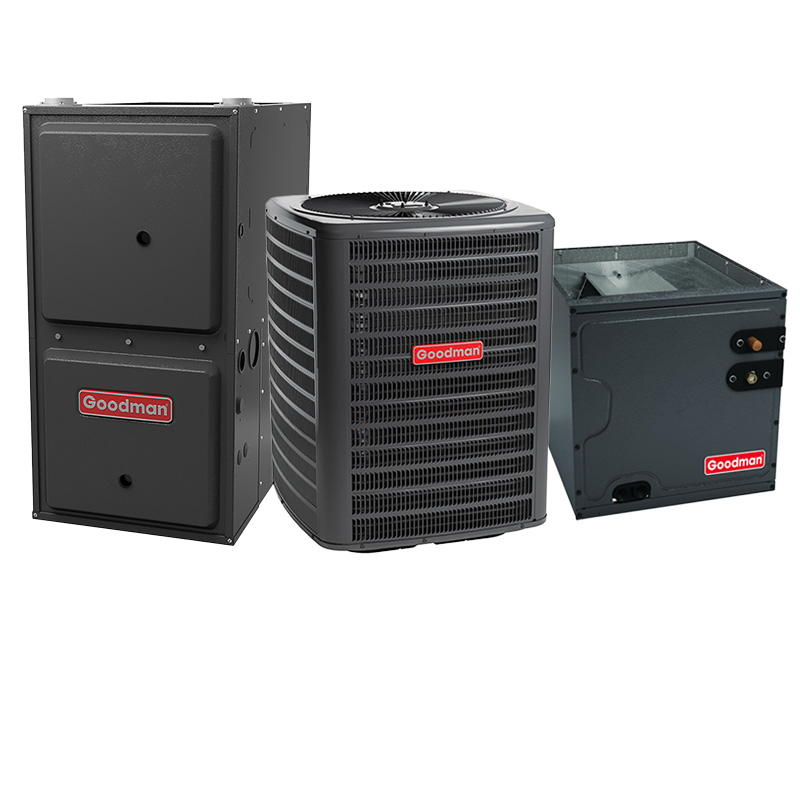
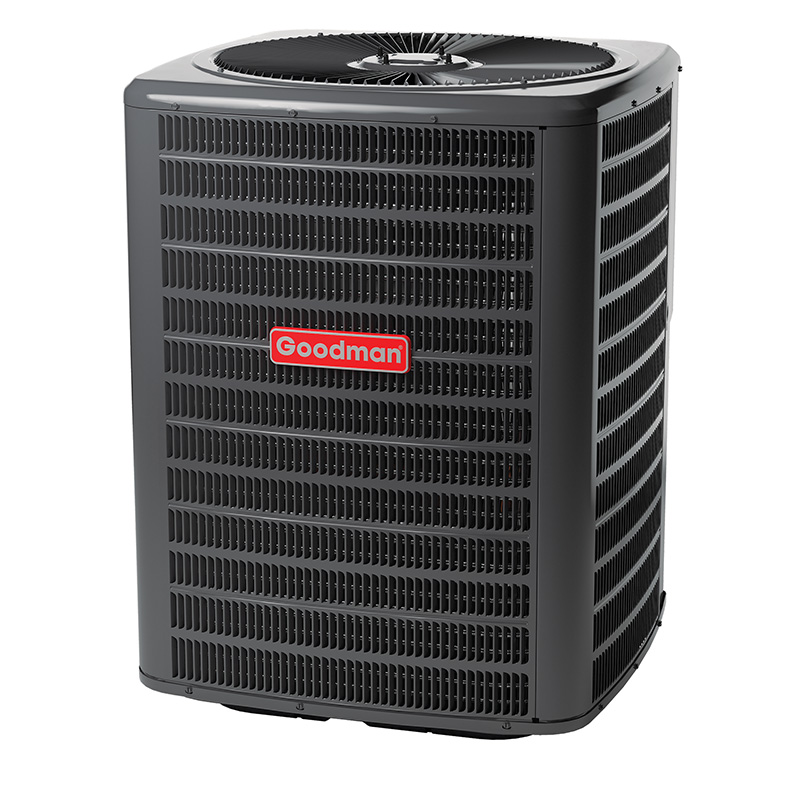
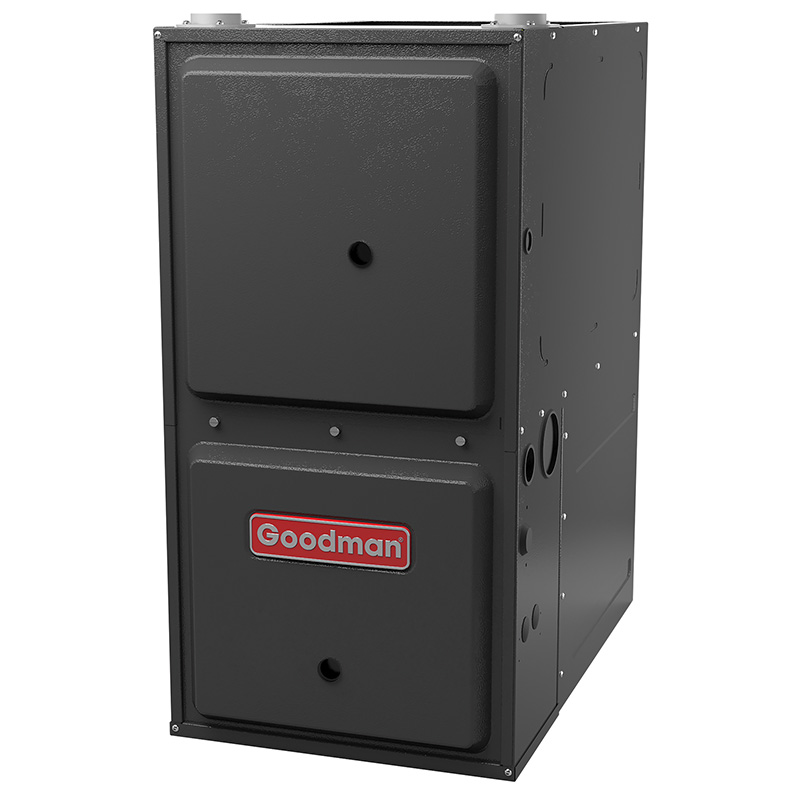
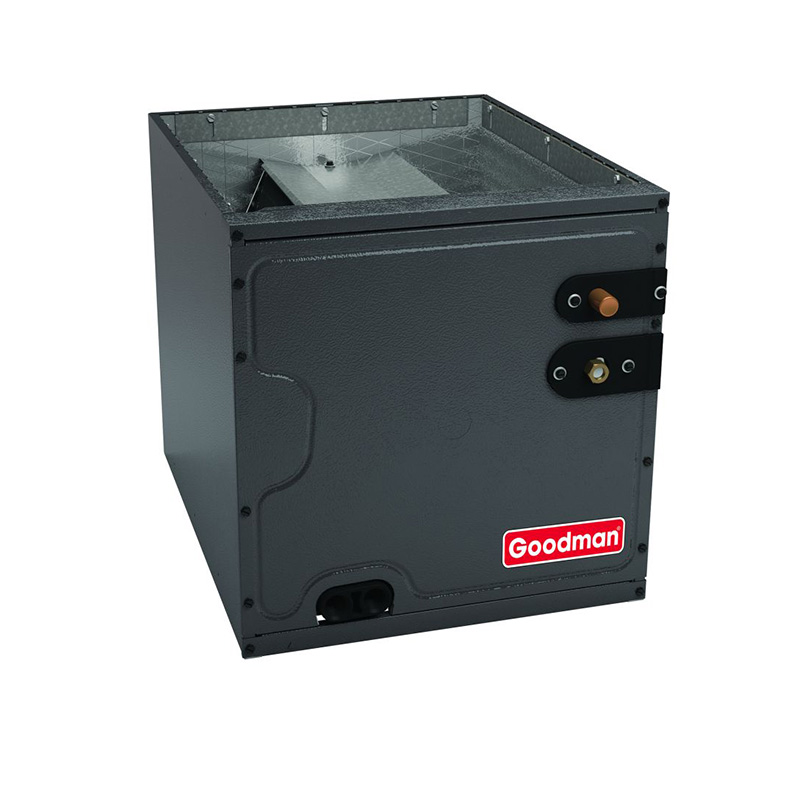
Goodman Furnace And Air Conditioner 4 Ton 15.2 SEER2 AC With 100000 BTU 80% AFUE Multi-Speed ECM Gas Furnace System – Downflow | R32
View on AC Direct see your lowest price →Check current price on AC Direct →
Key features
- 4-ton cooling capacity paired with 100,000 BTU heating output for large homes
- 15.2 SEER2 efficiency rating meets current federal minimums for most U.S. regions
- 80% AFUE single-stage gas furnace in downflow configuration for attic or upper-closet installs
- ECM multi-speed blower motor reduces electrical consumption and lowers operating noise versus PSC motors
- R-32 refrigerant charge with lower global-warming potential than R-410A
- Matched system sold as a bundle, simplifying compatibility verification for installers
About this system
This Goodman bundle pairs a 4-ton, 15.2 SEER2 central air conditioner with a 100,000 BTU, 80% AFUE multi-speed ECM gas furnace in a downflow configuration, making it aimed squarely at homes where the air handler sits in an upper-level closet, attic platform, or above a crawlspace and supply air flows downward into the ductwork below. The R-32 refrigerant charge is a notable forward-looking choice: R-32 has a lower global-warming potential than the R-410A it replaces and is increasingly the industry standard, meaning future service calls should be straightforward as the refrigerant supply chain matures.
On paper the numbers are honest mid-tier performance. A 15.2 SEER2 rating clears the federal minimum for most U.S. climate zones and will cut operating costs compared to aging R-22 or early R-410A systems, but it sits well below the 17 to 20 SEER2 range where premium variable-speed equipment operates. The 80% AFUE furnace keeps a fifth of the fuel’s energy out of the heat exchanger and up the flue, which is the standard trade-off for a lower purchase price. The ECM multi-speed blower motor is a genuine upgrade over older PSC motors: it draws less electricity during fan-only and heating cycles and tends to run more quietly at lower speeds. For a large home in a moderate climate, or a buyer replacing aging equipment without the budget for premium brands, this system covers the basics competently.
This Goodman bundle delivers functional, code-compliant performance at a price point that can run 15 to 25 percent below comparable Trane, Carrier, or Lennox equipment, making it a reasonable choice for budget-conscious buyers who have a skilled contractor lined up. The efficiency and heating specs are honest mid-tier, not standout, and long-term ownership costs depend heavily on installation quality and the willingness to maintain the system proactively after year seven when component failures become more common.
Overall score is the average of the five ratings above.
What we like
- Significantly lower upfront cost than comparable Trane, Carrier, or Lennox matched systems
- R-32 refrigerant is forward-compatible and has lower environmental impact than R-410A
- ECM multi-speed blower genuinely reduces electricity use on fan and heating cycles
- Downflow configuration covers an installation scenario that not all budget brands stock readily
- Matched bundle simplifies contractor sizing verification and coil compatibility checks
Trade-offs
- 80% AFUE loses 20% of fuel energy up the flue; a 96% AFUE unit would cut heating bills noticeably in cold climates
- 15.2 SEER2 is entry-level efficiency; variable-speed systems from premium brands reach 17 to 20+ SEER2 for more savings over time
- Documented owner reports of dual-run capacitor failures and evaporator coil leaks, with repair costs rising after roughly year 7
- Compressor longevity averages 10 to 14 years versus 15 to 20 years for premium-brand compressors, shortening the replacement cycle
What homeowners and pros say about Goodman
Among homeowners, Goodman tends to split opinion in a pattern that shows up clearly in the ratings: the brand sits at roughly 2.5 out of 5 on ConsumerAffairs, a platform where dissatisfied owners are far more likely to post than satisfied ones, and the recurring complaint thread is repair bills that mount after about year seven of ownership. On Google dealer reviews the picture is more balanced, with scores around 3.8 out of 5 across locations where affordability is the most commonly repeated reason buyers chose Goodman in the first place. For this specific 4-ton system, buyers considering it should know that the dual-run capacitor is the most commonly documented failure point on Goodman cooling equipment, typically a low-cost fix when caught early, but it points to a component quality gap compared to premium brands. Evaporator coil leaks also appear in a notable share of owner accounts, and compressor lifespan averages 10 to 14 years rather than the 15 to 20 years associated with Trane, Carrier, or Lennox compressors.
HVAC professionals who work on Goodman equipment regularly note that the brand’s performance ceiling rises or falls with how carefully the system is installed. A correctly charged, properly commissioned Goodman unit in an appropriate application can serve a household reliably for a decade or more. A rushed installation or an incorrect refrigerant charge, which has been the root cause of a minority of first-year refrigerant leak complaints, can shorten that window considerably. For this downflow-configured R-32 system, the practical advice from the trade is consistent: vet your installer as carefully as you vet the equipment, and budget for a capacitor replacement somewhere in years five through eight rather than being surprised by it.
Sources: ConsumerAffairs Goodman owner reviews, AHRI Directory of Certified Product Performance, U.S. DOE appliance and equipment efficiency standards, Goodman product specification sheets.
What it costs to run
At 15.2 SEER2, cooling this 4-ton system for a typical 1200-hour cooling season at the U.S. average electricity rate of $0.17/kWh works out to roughly $644 per year in cooling, about $87 less per year than a minimum-efficiency 13.4 SEER2 unit of the same size. Your real cost depends on your climate and local rate.
Method: (48,000 BTU/hr ÷ 15.2 SEER2) × 1200 hours ÷ 1000 × $0.17/kWh. Rate source: U.S. EIA average; cooling hours: moderate-climate estimate.
How it compares
| Brand | Comparable model | SEER2 | Stage | Price position |
|---|---|---|---|---|
| Goodman | GSXH504810 + GCVC8010 (this system) | 15.2 | Single-stage AC / Multi-speed furnace | Value pick |
| Carrier | Comfort 24ACC636 + 58TP (80% AFUE) | 15.2 | Single-stage | Roughly 15 to 20 percent higher than this Goodman bundle |
| Trane | XR15 + S8X1 (80% AFUE) | 15.2 | Single-stage | Roughly 20 to 25 percent higher than this Goodman bundle |
| Lennox | Merit ML15XC1 + ML180 (80% AFUE) | 15.2 | Single-stage | Roughly 20 to 25 percent higher than this Goodman bundle |
Competitor rows are comparable single-stage units at similar efficiency; price is relative position, not a quote.
Questions about this system
Is a downflow furnace the right configuration for my house?
Downflow furnaces discharge supply air from the bottom, so they work when the unit is installed above the living space and ducts run downward, as in an attic platform, upper-floor closet, or above a crawlspace. If your existing furnace is horizontal or upflow, this unit will not work without significant ductwork changes, so confirm the configuration with your contractor before purchasing.
What does R-32 mean for me as a homeowner, and can my existing line set be reused?
R-32 is a newer refrigerant with a lower global-warming potential than the R-410A in most current systems. It operates at similar pressures to R-410A, so copper line sets rated for R-410A are generally compatible, but your contractor must verify line set diameter, cleanliness, and condition before reuse. Never mix refrigerant types.
What are the most common repair issues Goodman owners run into, and when do they usually show up?
The most frequently reported failure is the dual-run capacitor, which is usually a straightforward repair in the 300 to 600 dollar range. Evaporator coil leaks also appear in a meaningful share of owner accounts. Compressors on Goodman equipment tend to average 10 to 14 years of service, shorter than the 15 to 20 years commonly cited for premium brands, and overall repair frequency tends to climb after approximately year seven of ownership.
Does Goodman cover parts and labor under warranty if something fails early?
Goodman's registered limited warranty typically covers parts for 10 years when registered within a set window after installation, but labor is not included, meaning a compressor or coil replacement still carries a significant service bill even under the parts warranty. Confirm current warranty terms at registration and ask your installer about extended labor coverage options.
How much does installation quality actually matter with this system?
For Goodman equipment in particular, HVAC technicians consistently identify installation quality as the single biggest factor in system longevity and efficiency. Proper refrigerant charge, correct static pressure setup, and accurate line set handling are critical. A minority of owners have reported refrigerant leaks within the first year that were traced to install or initial charge issues rather than equipment defects, so choosing an experienced, licensed contractor is especially important.
Specifications
| Cooling capacity | 4 Ton |
| Efficiency | 15.2 SEER2 |
| Furnace output | 100000 BTU |
| Furnace efficiency | 80% AFUE |
| Configuration | Downflow |
| Refrigerant | R-32 |