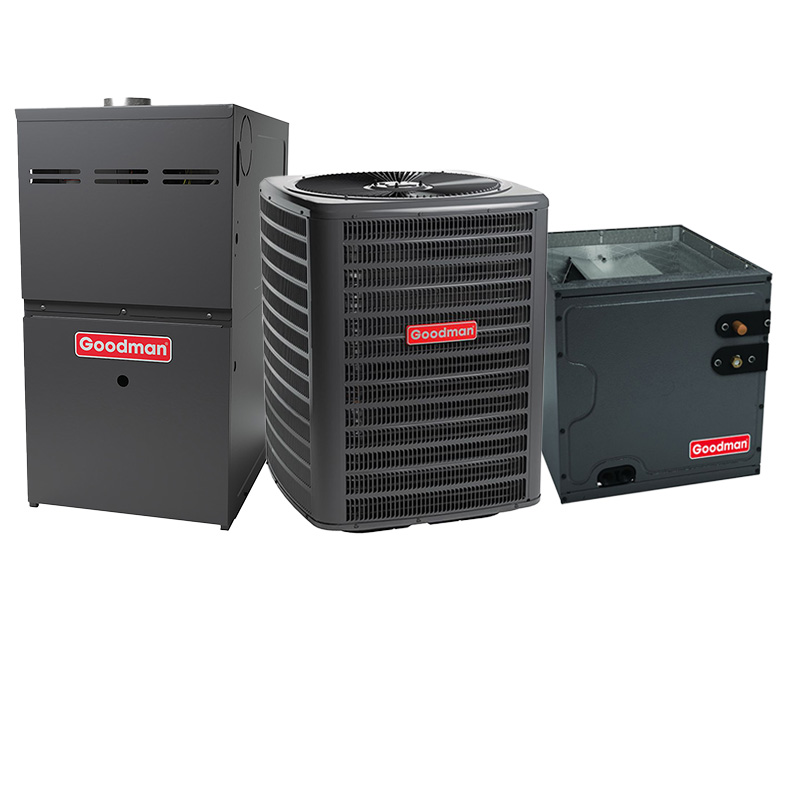
Goodman Furnace And Air Conditioner 4 Ton 15.2 SEER2 AC With 100000 BTU 80% AFUE Multi-Speed ECM Gas Furnace System – Upflow | R32
View on AC Direct see your lowest price →Check current price on AC Direct →
Key features
- 4-ton cooling capacity rated at 15.2 SEER2, meeting current federal minimum efficiency standards
- 100,000 BTU gas furnace with 80% AFUE single-stage heat output
- Multi-speed ECM blower motor for improved humidity control and lower fan energy use
- Upflow cabinet orientation for basement or ground-floor closet installations with overhead ductwork
- R-32 refrigerant, which has a lower global warming potential than R-410A
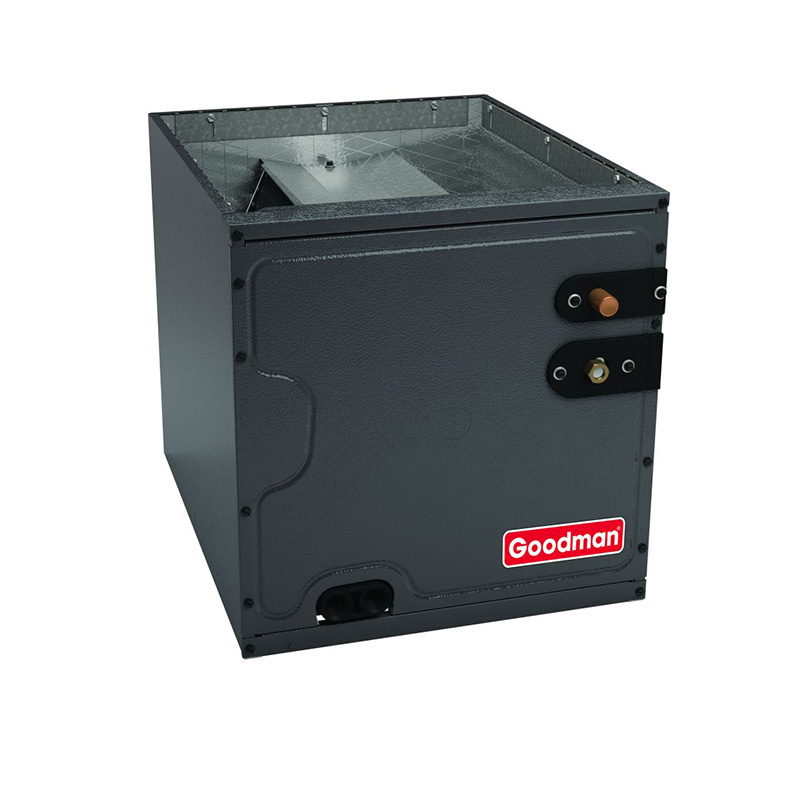
- Factory-matched coil and condenser pairing qualifies for AHRI-certified efficiency ratings
About this system
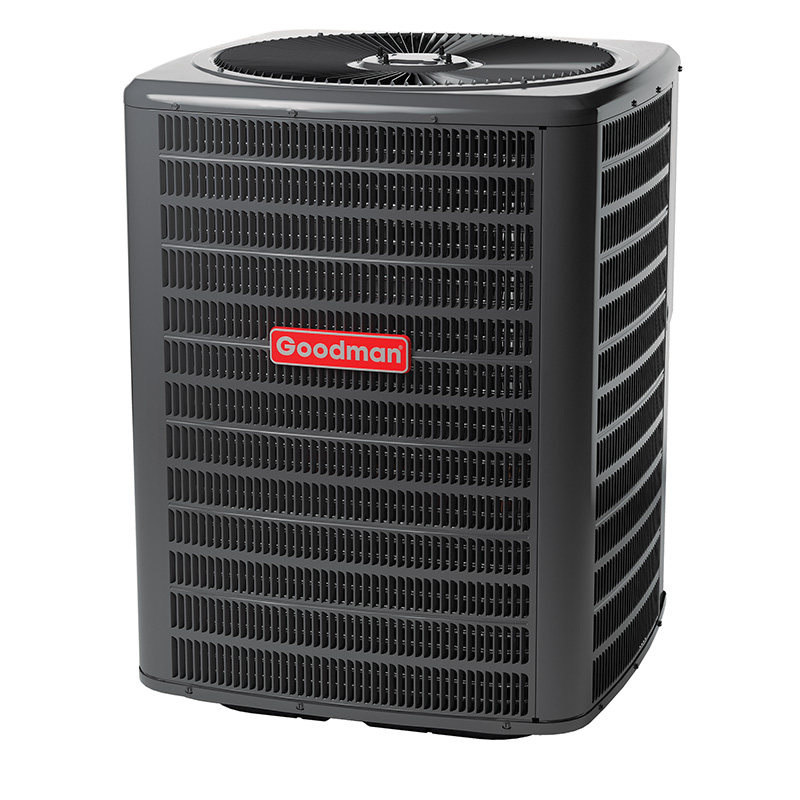
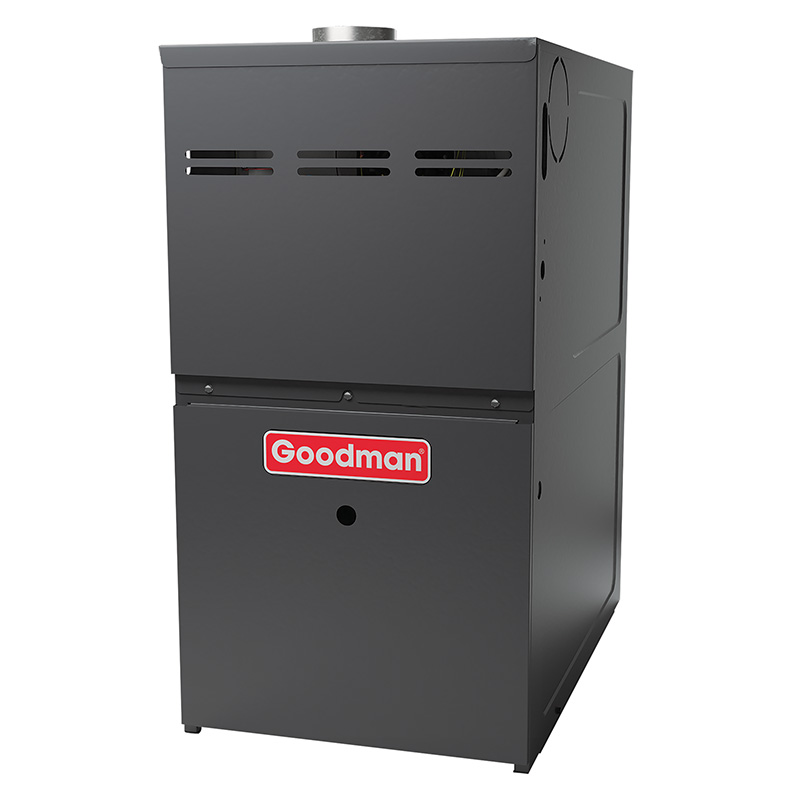
This Goodman bundle pairs a 4-ton, 15.2 SEER2 central air conditioner with a 100,000 BTU, 80% AFUE multi-speed ECM gas furnace in an upflow configuration. The pairing is sized for larger homes, typically in the 2,000 to 2,800 square foot range depending on climate zone, insulation, and duct layout. The 15.2 SEER2 rating clears the federal minimum threshold and lands in the entry-level efficiency tier, meaning operating costs will be noticeably higher than a 17 or 18 SEER2 system over a 15-year ownership window. The 80% AFUE furnace is similarly baseline: one dollar in five spent on gas is exhausted rather than converted to heat, which is worth considering if you live in a cold climate where the furnace runs hard from October through March.
The multi-speed ECM blower motor is a genuine upgrade over single-speed alternatives at this price point. It ramps airflow to match demand, which improves humidity control in summer, reduces temperature swings room to room, and cuts blower electricity consumption compared to a PSC motor. The R-32 refrigerant charge is forward-looking, as R-32 carries a lower global warming potential than the R-410A it replaces and is increasingly the industry standard. The upflow configuration means supply air exits the top of the furnace cabinet, making it the right fit for basement or closet installations where ductwork runs overhead. Slab installations or attic-mounted systems would need a different orientation.
This Goodman system is a straightforward, budget-conscious choice for homeowners who need a large-capacity replacement and want to keep upfront costs down without chasing top-tier efficiency. The ECM motor adds real comfort value at this price, but the 80% AFUE furnace and entry-level SEER2 rating mean higher utility bills compared to mid- or high-efficiency alternatives. Long-term ownership costs depend heavily on installation quality and whether you plan to stay in the home long enough to encounter the brand's known reliability patterns.
Overall score is the average of the five ratings above.
What we like
- Priced 15 to 25 percent below comparable Trane, Carrier, and Lennox equipment, reducing upfront cost on a large 4-ton system
- Multi-speed ECM blower delivers better comfort and humidity management than a basic single-speed motor
- R-32 refrigerant is a modern, lower-impact choice that aligns with industry direction
- Factory-matched system simplifies equipment selection and supports a certified AHRI efficiency rating
- Dual-run capacitor failures, the most commonly reported issue, are a low-cost, quick repair in the $300 to $600 range
Trade-offs
- 80% AFUE is the minimum efficiency tier; homeowners in cold climates will pay more in gas costs versus a 96% AFUE system over the furnace's life
- 15.2 SEER2 is entry-level cooling efficiency, and cooling bills will exceed what a 17+ SEER2 system would produce over the same period
- Compressor lifespan averages 10 to 14 years versus 15 to 20 years typical of premium brands, increasing the likelihood of a major repair or replacement before the system fully pays off
- Evaporator coil leaks appear in a meaningful share of owner reports, and a minority of owners report refrigerant issues within year one, often tied to installation quality
What homeowners and pros say about Goodman
Homeowners who have lived with Goodman equipment for several years tend to split into two camps. Those with clean installs by experienced technicians often report years of unremarkable, functional service, and affordability is the most consistent praise in dealer-level Google reviews, which average around 3.8 out of 5 across hundreds of locations. The other camp, represented heavily on ConsumerAffairs where the brand scores roughly 2.5 out of 5, reports frustration with repair bills climbing after the seven-year mark. The specific failure modes that show up repeatedly are dual-run capacitor failures, which are generally a quick and inexpensive fix in the $300 to $600 range, and evaporator coil leaks, which are a more serious and costly repair. A minority of owners report refrigerant issues within the first year, and most HVAC technicians attribute those to improper charge or line-set issues at installation rather than a defect in the equipment itself.
Pros who work on Goodman regularly tend to say the same thing: the equipment is serviceable and the parts are easy to source, but the brand’s reliability ceiling is lower than Carrier, Trane, or Lennox at a comparable age. Compressor longevity is the most cited concern, with Goodman compressors averaging 10 to 14 years in the field versus 15 to 20 years for premium-tier brands. On a 4-ton system, a compressor replacement is not a trivial repair cost. Technicians consistently point to installation quality as the factor that determines whether a Goodman unit performs closer to its best or worst potential, making contractor selection at least as important as equipment selection when you go this route.
Sources: ConsumerAffairs Goodman owner reviews, AHRI Directory of Certified Product Performance, U.S. DOE appliance and equipment efficiency standards, Goodman product specification sheets.
What it costs to run
At 15.2 SEER2, cooling this 4-ton system for a typical 1200-hour cooling season at the U.S. average electricity rate of $0.17/kWh works out to roughly $644 per year in cooling, about $87 less per year than a minimum-efficiency 13.4 SEER2 unit of the same size. Your real cost depends on your climate and local rate.
Method: (48,000 BTU/hr ÷ 15.2 SEER2) × 1200 hours ÷ 1000 × $0.17/kWh. Rate source: U.S. EIA average; cooling hours: moderate-climate estimate.
How it compares
| Brand | Comparable model | SEER2 | Stage | Price position |
|---|---|---|---|---|
| Goodman | GLXS4BA48 + GMVC8 / this bundle | 15.2 | Single-stage AC, multi-speed furnace | Value pick |
| Carrier | Comfort 14 Series (24ACC4) | 15.2 | Single-stage | Typically 15 to 25 percent more than this Goodman bundle |
| Trane | XR15 Series (4TTR5) | 15.2 | Single-stage | Typically 15 to 25 percent more than this Goodman bundle |
| Lennox | Merit 14ACX Series | 15.2 | Single-stage | Typically 15 to 25 percent more than this Goodman bundle |
Competitor rows are comparable single-stage units at similar efficiency; price is relative position, not a quote.
Questions about this system
Is a 4-ton unit actually the right size for my home, or should I get a Manual J load calculation first?
You should always get a Manual J calculation before committing to a 4-ton system. Oversizing causes short-cycling, which wears the compressor faster and leaves your home humid in summer. Undersizing means the system runs constantly without reaching setpoint. A qualified HVAC contractor can run this calculation before quoting the install.
How much more would I save on gas bills with a 96% AFUE furnace instead of this 80% AFUE unit?
The gap depends on your local gas rates and how cold your winters are, but roughly speaking, a 96% AFUE furnace converts about 20 percent more of each fuel dollar into heat. In a cold climate with a 100,000 BTU furnace running several months a year, that difference can add up to several hundred dollars annually, which may offset the higher purchase price of a high-efficiency unit within a few years.
What does the multi-speed ECM blower actually do differently compared to a standard blower?
A standard PSC blower motor runs at a fixed speed, which can cause temperature swings and inconsistent airflow. The ECM motor adjusts its speed to match the load, which improves humidity removal in summer, distributes air more evenly throughout the house, and uses meaningfully less electricity when running at lower speeds.
Goodman has mixed reviews online. Should I be worried about reliability on a 4-ton system?
Goodman carries a ConsumerAffairs score of around 2.5 out of 5, a channel known for attracting complaints, with recurring themes around repair costs after roughly year seven. Google dealer reviews average around 3.8 out of 5, where affordability draws the most praise. The brand's documented weak points are dual-run capacitor failures (usually a low-cost fix), evaporator coil leaks, and compressor lifespans that average 10 to 14 years versus 15 to 20 for premium brands. Hiring an experienced installer who checks the refrigerant charge and verifies airflow at startup reduces the risk of early failures significantly.
Does this system come with a warranty, and what do I need to do to activate it?
Goodman typically offers a 10-year parts warranty when the system is registered within a set window after installation, often 60 days. Failing to register usually drops coverage to a shorter base period. The compressor often carries its own warranty term, so read the documentation carefully and confirm registration requirements with your installer at the time of purchase.
Specifications
| Cooling capacity | 4 Ton |
| Efficiency | 15.2 SEER2 |
| Furnace output | 100000 BTU |
| Furnace efficiency | 80% AFUE |
| Configuration | Upflow |
| Refrigerant | R-32 |