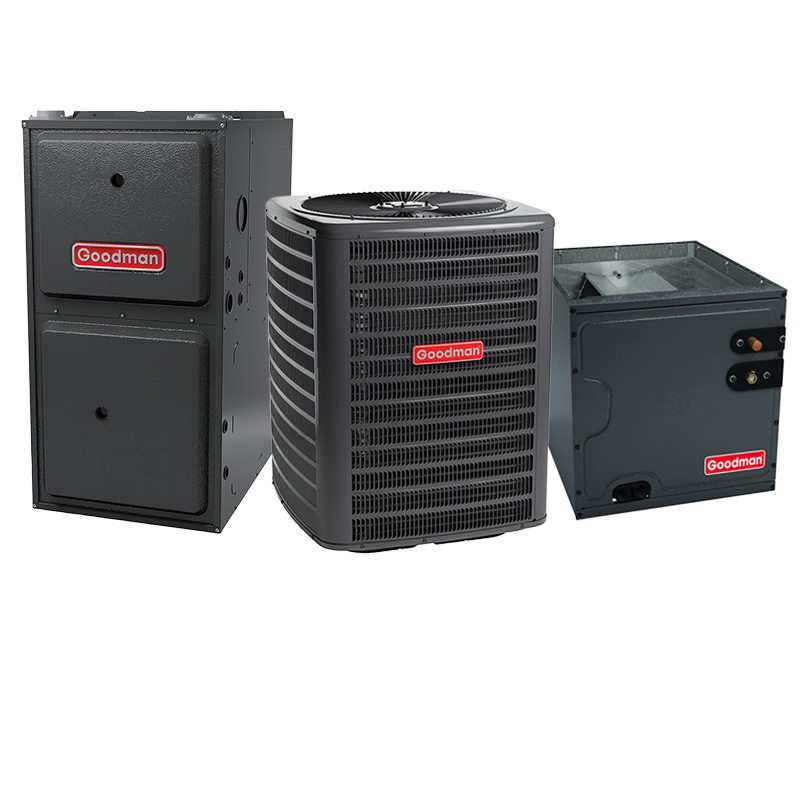
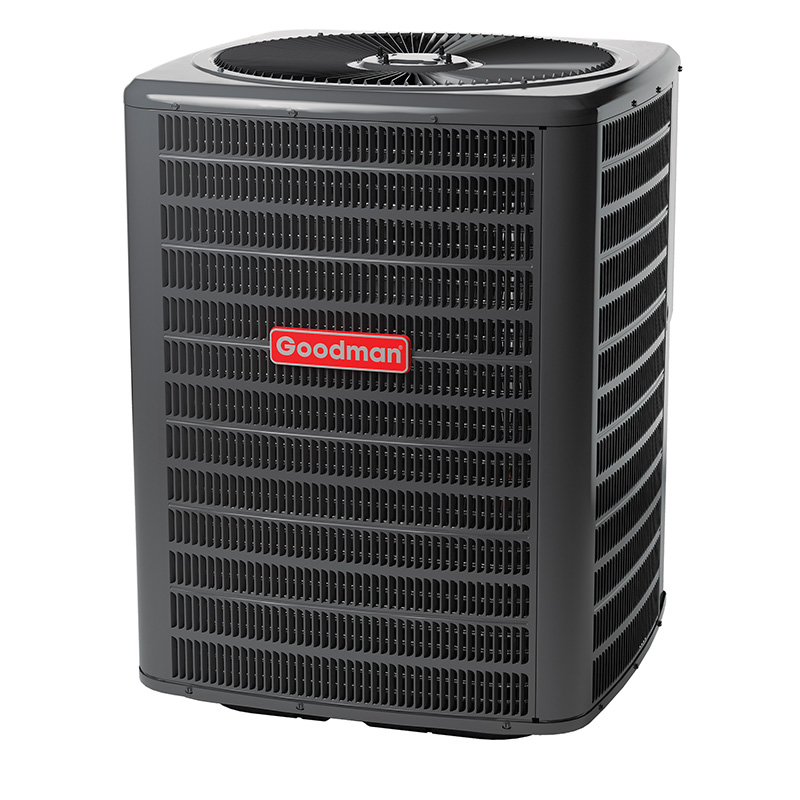
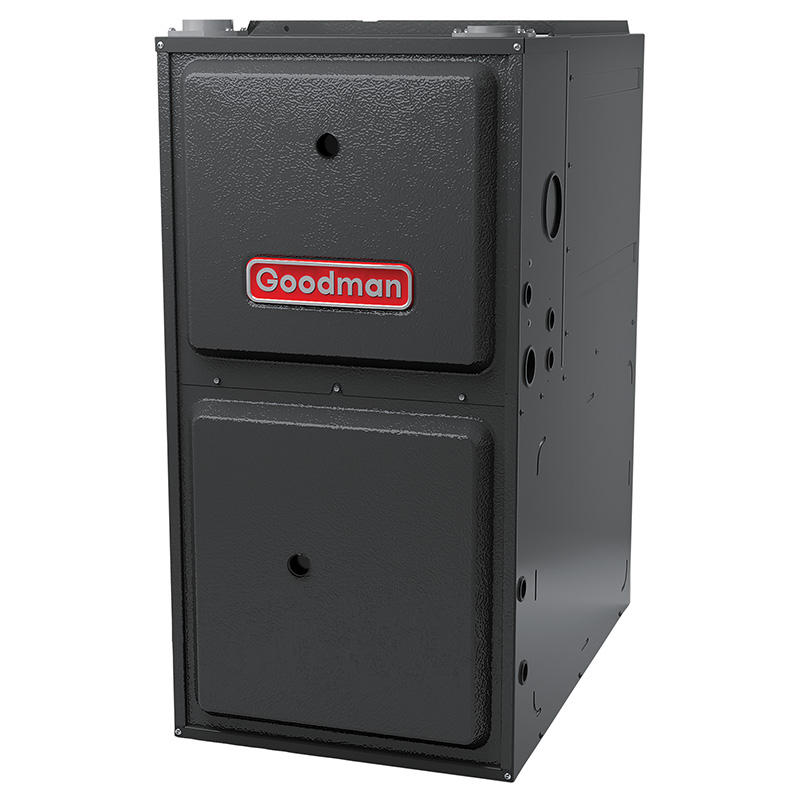
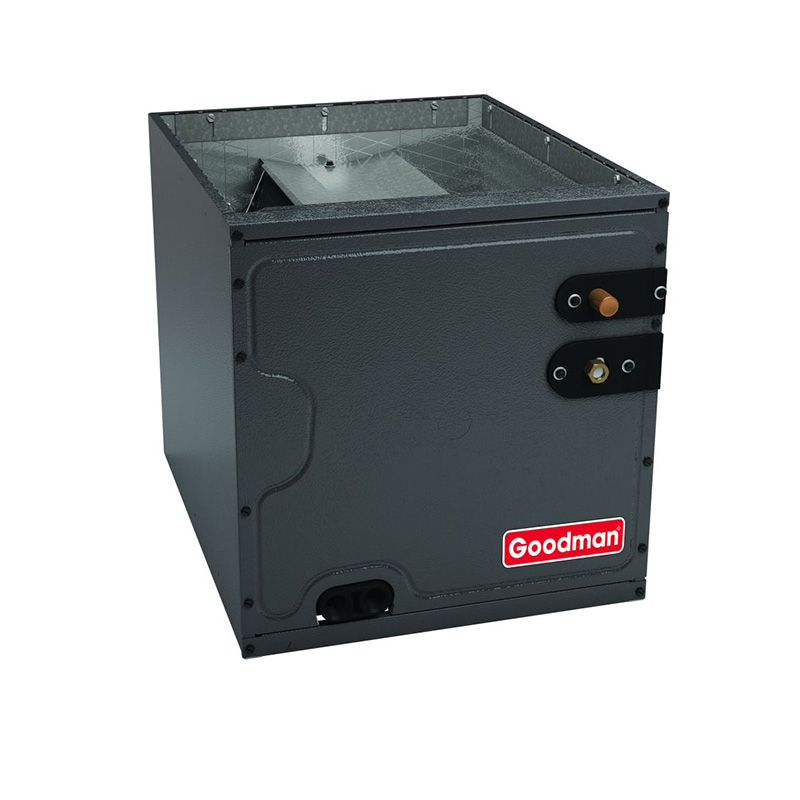
Goodman Furnace And Air Conditioner 4 Ton 15.2 SEER2 AC With 120000 BTU 80% AFUE Two Stage Multi-Speed ECM Gas Furnace System – Upflow | R32
View on AC Direct see your lowest price →Check current price on AC Direct →
Key features
- 4-ton cooling capacity matched to larger homes, typically 2,200 to 3,000 sq ft depending on climate and insulation
- 15.2 SEER2 efficiency meets 2023 federal minimums and qualifies as a code-compliant replacement or new install
- R-32 refrigerant replaces R-410A with a lower global-warming potential and improving serviceability going forward
- Two-stage gas furnace runs at reduced output on mild days, limiting temperature swings and fuel use
- Multi-speed ECM blower motor operates more quietly and efficiently than standard PSC motors
- 80% AFUE heating efficiency suits moderate climates; buyers in cold climates should weigh upgrade cost vs. fuel savings
About this system
This Goodman bundle pairs a 4-ton, 15.2 SEER2 air conditioner with a 120,000 BTU, 80% AFUE two-stage gas furnace in an upflow configuration, making it a practical fit for larger homes in the 2,200 to 3,000 square foot range that need serious heating capacity alongside solid cooling efficiency. The AC side uses R-32 refrigerant, a lower global-warming-potential refrigerant that is becoming the industry standard as R-410A is phased out, so parts and service should remain accessible for the foreseeable future. The 15.2 SEER2 rating clears the federal minimum efficiency threshold that took effect in 2023, which means it is compliant for new installations nationwide, though it sits at the entry tier of efficiency rather than the mid or high end.
The furnace is where this system earns some of its value proposition. Two-stage operation means the burner can run at a lower output on milder days, reducing temperature swings and cutting fuel consumption compared to a single-stage unit. The multi-speed ECM blower motor is more energy-efficient than a standard PSC motor and moves air more quietly at lower speeds, which homeowners in open floor-plan homes tend to notice. At 80% AFUE, roughly 20 cents of every dollar spent on gas exits the flue rather than heating the home, so buyers in very cold climates may want to consider whether a 96% AFUE unit would pay back the cost difference over time. The upflow configuration suits the most common residential duct layout, where the furnace sits in a basement or ground-level utility room and supplies conditioned air upward through the duct system.
As a bundled system, the components are matched for compatibility, which simplifies the AHRI certification process and helps ensure the system performs close to its rated efficiency when installed correctly. That last qualifier matters more with Goodman than with some other brands, because technician feedback consistently identifies install quality as the biggest variable in how long a Goodman system performs reliably.
This Goodman bundle gives buyers a fully matched, R-32-ready system at a price point that undercuts comparable Carrier, Trane, and Lennox equipment by 15 to 25 percent, and the two-stage furnace with ECM blower adds real comfort value at this tier. The trade-off is a brand track record that shows elevated repair frequency after year 7 and documented failure points including dual-run capacitors, evaporator coil leaks, and compressor lifespans that average shorter than premium competitors. It is a reasonable buy for cost-conscious homeowners who budget for periodic maintenance and understand they may face replacements sooner than with a premium brand.
Overall score is the average of the five ratings above.
What we like
- Bundled price typically 15 to 25 percent below Carrier, Trane, and Lennox equivalents at similar SEER2
- Two-stage furnace reduces temperature cycling and can lower heating bills compared to single-stage operation
- ECM blower motor cuts electricity use and lowers operating noise at lower fan speeds
- R-32 refrigerant positions the system for long-term parts availability as the industry transitions away from R-410A
- AHRI-matched bundle simplifies permitting and confirms real-world efficiency close to rated specs
Trade-offs
- 80% AFUE is the lowest efficiency tier available; buyers in cold climates may face higher long-term fuel costs than with a 96% AFUE unit
- Documented history of dual-run capacitor failures and evaporator coil leaks that can add up after the early warranty years
- Compressor lifespan averages 10 to 14 years versus 15 to 20 years for premium brands, meaning earlier replacement costs
- System performance is heavily dependent on install quality, so contractor selection and proper commissioning are critical
What homeowners and pros say about Goodman
Homeowners who have gone the Goodman route often describe the buying experience positively and the early years of ownership as uneventful, which lines up with Google dealer review scores that average around 3.8 out of 5 across many locations, where affordability is the praise that shows up most consistently. The picture shifts as systems age. On ConsumerAffairs, where the audience skews toward people who had a problem worth writing about, Goodman scores around 2.5 out of 5, and the recurring theme in those posts is repair costs accumulating after roughly year 7. That pattern is consistent with the brand’s documented failure modes: dual-run capacitors are the most commonly reported breakdown, typically a low-cost repair, but evaporator coil leaks and compressor wear showing up earlier than premium brands are the issues that sting the most financially.
HVAC technicians who work on many brands tend to frame Goodman as a system that rewards a careful installation and penalizes a sloppy one more than premium equipment does. Pros who bolt these units in without checking refrigerant charge, duct static pressure, and airflow will see problems that the brand gets blamed for but that are largely installer-driven. The specific failure modes to keep in mind for this 4-ton system are the dual-run capacitor on the AC side, which technicians regard as a near-certainty replacement at some point after year 5, and the compressor, which statistically averages 10 to 14 years of service life compared to 15 to 20 years for Trane or Lennox compressors. Coil integrity is worth watching too: refrigerant leaks in the first year are documented in a minority of owner reports and are usually traceable to the install rather than a manufacturing defect, while leaks that develop between years 5 and 10 point more to the coil itself.
Sources: ConsumerAffairs Goodman owner reviews, AHRI Directory of Certified Product Performance, U.S. DOE appliance and equipment efficiency standards, Goodman product specification sheets.
What it costs to run
At 15.2 SEER2, cooling this 4-ton system for a typical 1200-hour cooling season at the U.S. average electricity rate of $0.17/kWh works out to roughly $644 per year in cooling, about $87 less per year than a minimum-efficiency 13.4 SEER2 unit of the same size. Your real cost depends on your climate and local rate.
Method: (48,000 BTU/hr ÷ 15.2 SEER2) × 1200 hours ÷ 1000 × $0.17/kWh. Rate source: U.S. EIA average; cooling hours: moderate-climate estimate.
How it compares
| Brand | Comparable model | SEER2 | Stage | Price position |
|---|---|---|---|---|
| Goodman | This system (4-ton 15.2 SEER2 AC + 120K BTU 80% AFUE two-stage furnace) | 15.2 | Two-stage furnace / standard AC | Value pick |
| Carrier | Performance Series (24ACC636 AC + 59TP6 two-stage furnace bundle) | 15-16 | Two-stage furnace / standard AC | Typically 15 to 25 percent more than this Goodman bundle |
| Trane | XR15 AC + S9V2 two-stage furnace bundle | 15-16 | Two-stage furnace / standard AC | Typically 15 to 25 percent more than this Goodman bundle |
| Lennox | Merit Series (ML14XC1 AC + ML196E two-stage furnace bundle) | 15-16 | Two-stage furnace / standard AC | Typically 15 to 25 percent more than this Goodman bundle |
Competitor rows are comparable single-stage units at similar efficiency; price is relative position, not a quote.
Questions about this system
Is 15.2 SEER2 good enough, or should I pay more for a higher-efficiency AC?
15.2 SEER2 meets the 2023 federal minimum and is perfectly legal and functional. Whether upgrading makes financial sense depends on your cooling hours and electricity rate. In hot climates with long summers, a 17 or 18 SEER2 unit can pay back the cost difference in 5 to 8 years; in milder climates the payback period stretches considerably and the upgrade rarely makes financial sense.
Why does the furnace use R-32 refrigerant on the AC side, and will that be hard to service?
R-32 is the refrigerant in the air conditioner, not the furnace itself. It is becoming the industry standard as R-410A production winds down under environmental regulations, so availability is improving and most HVAC technicians are becoming certified to handle it. For now, confirm your local contractor is R-32 certified before scheduling service.
What are the most likely repair bills I should budget for after the warranty period?
Based on documented owner feedback, dual-run capacitor replacement is the most common early repair, typically in the 300 to 600 dollar range and a quick fix. Evaporator coil leaks show up in a meaningful share of reviews and cost more to address. Setting aside 150 to 200 dollars per year in a maintenance fund starting around year 5 is a reasonable approach with this brand.
My home is 2,800 square feet in a cold northern climate. Is this the right system?
The 4-ton cooling capacity may be appropriate depending on your insulation and window quality, but the 80% AFUE furnace is worth reconsidering for a cold climate. In a northern state with long heating seasons, upgrading to a 96% AFUE unit can save several hundred dollars annually in gas costs, and the payback period on the higher upfront cost is often under five years. Have a Manual J load calculation done before committing.
How important is it to use a specific contractor, and does Goodman require registration for the warranty?
Contractor quality has an outsized effect on Goodman system longevity compared to premium brands, so choosing an HVAC installer who will perform a proper refrigerant charge, duct sizing check, and airflow commissioning is important. Goodman typically requires warranty registration within a specified window after installation to receive the full parts coverage, so confirm registration steps with your dealer at the time of purchase.
Specifications
| Cooling capacity | 4 Ton |
| Efficiency | 15.2 SEER2 |
| Furnace output | 120000 BTU |
| Furnace efficiency | 80% AFUE |
| Configuration | Upflow |
| Refrigerant | R-32 |