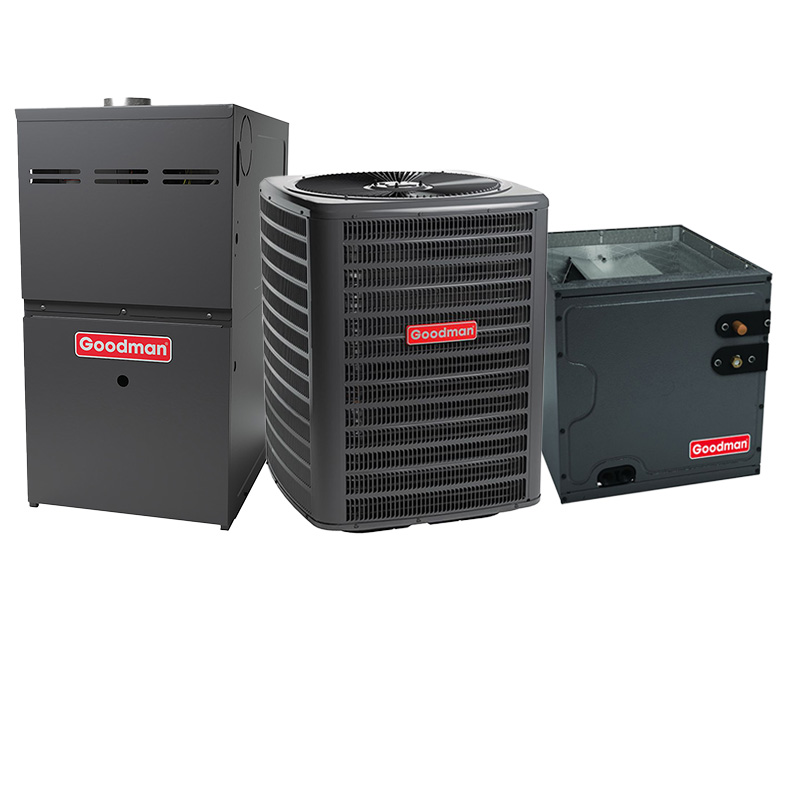
Goodman Furnace And Air Conditioner 4 Ton 15.2 SEER2 AC With 80000 BTU 80% AFUE Multi-Speed ECM Gas Furnace System – Upflow | R32
View on AC Direct see your lowest price →Check current price on AC Direct →
Key features
- 4-ton cooling capacity with 15.2 SEER2 efficiency rating
- 80,000 BTU output at 80% AFUE in a non-condensing upflow furnace
- Multi-speed ECM blower motor for improved humidity and airflow control
- R-32 refrigerant with lower global warming potential than R-410A
- Upflow cabinet design for basement or floor-level installations
- Factory-matched system tested and rated as a complete split assembly
About this system
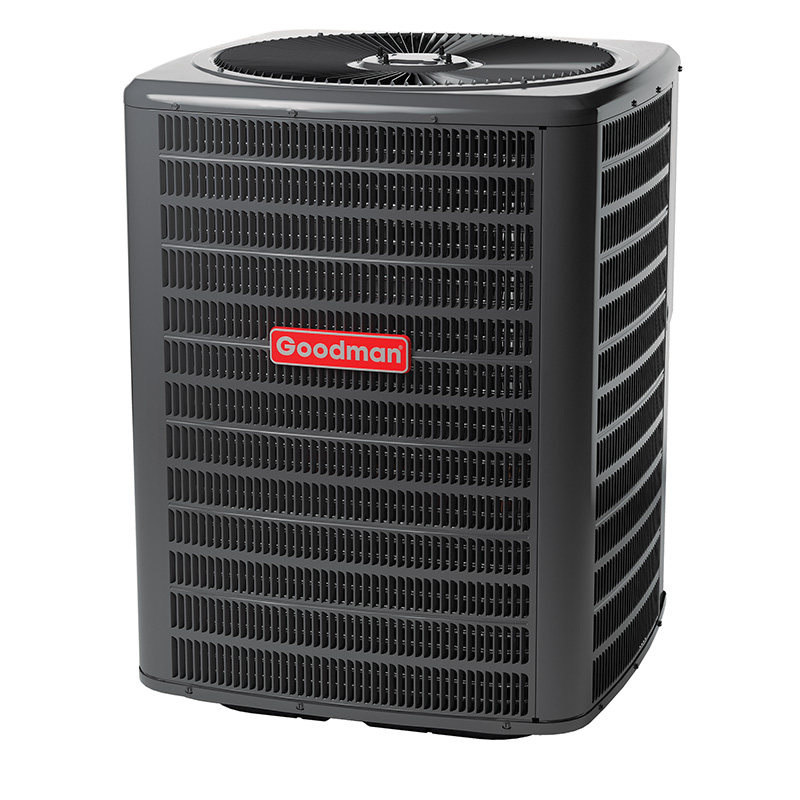
This Goodman bundle pairs a 4-ton, 15.2 SEER2 central air conditioner with an 80,000 BTU, 80% AFUE multi-speed ECM gas furnace in an upflow configuration. The cooling side uses R-32 refrigerant, a lower global-warming-potential option that is becoming standard as the industry moves away from R-410A. At 15.2 SEER2, the system clears the federal minimum efficiency threshold for most U.S. climate zones and will satisfy Energy Star requirements in many states, though it sits at the entry tier of the efficiency ladder rather than the top of it.
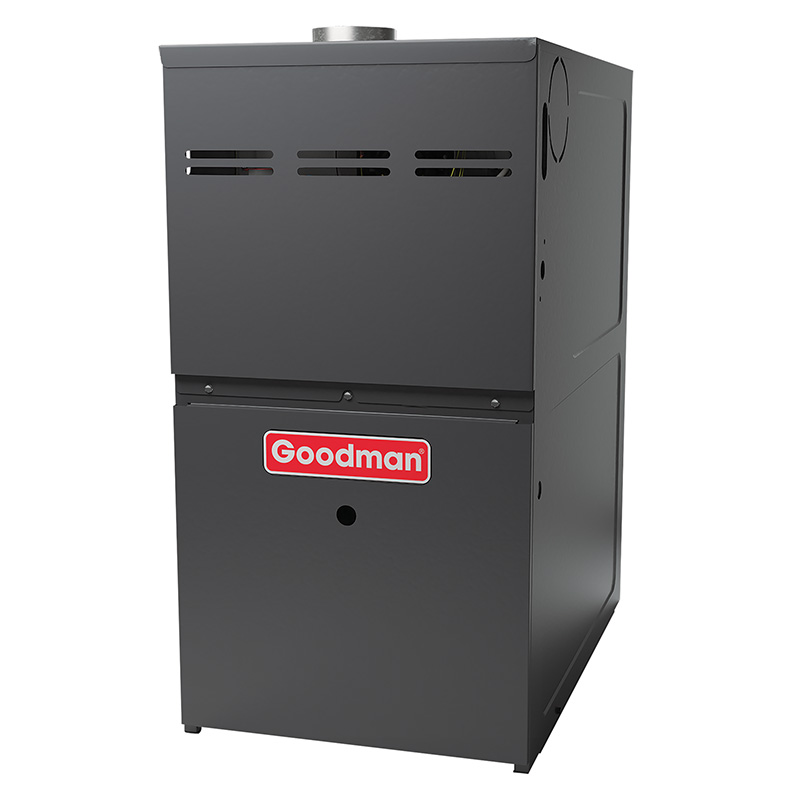
The multi-speed ECM blower motor is one of the more notable upgrades in this package. Unlike a single-speed furnace fan, an ECM motor can ramp airflow up or down in response to demand, which improves humidity control in summer and reduces electricity consumption during mild weather. The 80% AFUE rating means roughly 80 cents of every dollar spent on gas becomes heat, with the rest lost through the flue. That is the baseline for non-condensing furnaces and is perfectly workable in mild to moderate heating climates, though homeowners in harsh winters may want to compare the long-run gas savings of a 96% AFUE condensing unit. The upflow cabinet suits homes where the furnace sits in a basement or closet blowing air upward into overhead ductwork.
This system is well matched to homeowners replacing aging equipment on a budget, builders outfitting new construction at a competitive price point, and landlords or investors who need reliable climate control without spending at the top of the market. It is less suited to extreme-cold climates where high AFUE pays back quickly or to buyers who want the longest possible compressor lifespan without much maintenance attention.
This Goodman system delivers solid entry-level performance at a price that typically runs 15 to 25 percent below comparable Carrier, Trane, or Lennox equipment. The ECM motor and R-32 refrigerant are genuine upgrades for the price tier, but buyers should budget for potential capacitor replacements and be aware that compressor longevity tends to trail premium brands. Installation quality will have an outsized effect on how this system performs over its lifespan.
Overall score is the average of the five ratings above.
What we like
- Lower purchase price than comparable premium-brand systems, often by 15 to 25 percent
- Multi-speed ECM blower motor improves humidity control and lowers fan operating costs
- R-32 refrigerant is better for the environment and increasingly supported by service technicians
- Factory-matched system simplifies equipment selection and supports rated SEER2 performance
- 80,000 BTU furnace output covers a wide range of home sizes in moderate climates
Trade-offs
- 80% AFUE is the minimum efficiency tier; high-heating-load climates will see faster payback from a condensing furnace
- Dual-run capacitors are the most frequently reported failure point, typically needing replacement within the first several years
- Compressor lifespan averages 10 to 14 years in owner experience, shorter than the 15 to 20 years cited for premium brands
- A minority of owners report refrigerant leaks in year one, most tied to install or charge issues rather than factory defects
What homeowners and pros say about Goodman
Goodman sits in a specific lane in the HVAC market, and the people who buy into that lane generally know exactly what they are getting. On Google dealer review pages, the brand averages around 3.8 out of 5 across hundreds of reviews per location, with affordability consistently cited as the reason buyers chose it over alternatives. That reputation holds for this 4-ton, 15.2 SEER2 system. The ECM motor is a genuine value-adds that buyers in this price range appreciate, and the R-32 refrigerant puts the system ahead of older R-410A equipment on environmental grounds. The honest caveat from technicians is that installation quality shapes the outcome more for Goodman than for premium brands, meaning a well-installed unit in a properly sized application will outperform a poorly installed Carrier or Trane every time, and the reverse is equally true.
On the more cautious side of the ledger, ConsumerAffairs gives Goodman roughly 2.5 out of 5, a channel that skews toward frustrated owners filing complaints, but the recurring themes there are worth noting for buyers of this specific system. Dual-run capacitor failures are the most commonly reported issue across Goodman equipment, generally a repair in the 300 to 600 dollar range and not catastrophic, but an expected line item over a 10-year ownership window. Evaporator coil leaks show up in a meaningful share of owner accounts, which is worth factoring into any extended warranty decision. Compressor longevity tends to land in the 10 to 14 year range based on owner experience, versus the 15 to 20 years that premium-brand buyers often see. A small share of owners also report refrigerant issues in year one, which the service community generally attributes to install or initial charge problems rather than factory faults, reinforcing why choosing an experienced installer matters at least as much as choosing the equipment itself.
Sources: ConsumerAffairs Goodman owner reviews, AHRI Directory of Certified Product Performance, U.S. DOE appliance and equipment efficiency standards, Goodman product specification sheets.
What it costs to run
At 15.2 SEER2, cooling this 4-ton system for a typical 1200-hour cooling season at the U.S. average electricity rate of $0.17/kWh works out to roughly $644 per year in cooling, about $87 less per year than a minimum-efficiency 13.4 SEER2 unit of the same size. Your real cost depends on your climate and local rate.
Method: (48,000 BTU/hr ÷ 15.2 SEER2) × 1200 hours ÷ 1000 × $0.17/kWh. Rate source: U.S. EIA average; cooling hours: moderate-climate estimate.
How it compares
| Brand | Comparable model | SEER2 | Stage | Price position |
|---|---|---|---|---|
| Goodman | GSZB404810 / GMVC8 80% ECM Bundle | 15.2 | Single-stage | Value pick |
| Carrier | Comfort 24ACC636 / 58SB Series | 15.2 | Single-stage | Typically 15 to 25 percent more than this Goodman bundle |
| Trane | XR15 / S8X1 80% Series | 15.2 | Single-stage | Typically 15 to 25 percent more than this Goodman bundle |
| Lennox | Merit ML15XC1 / ML180 80% Series | 15.2 | Single-stage | Typically 15 to 25 percent more than this Goodman bundle |
Competitor rows are comparable single-stage units at similar efficiency; price is relative position, not a quote.
Questions about this system
Will 15.2 SEER2 qualify for any federal or utility rebates?
15.2 SEER2 meets or exceeds the federal minimum in most climate zones and qualifies as Energy Star certified in many regions, which can unlock utility rebates. Check the ENERGY STAR rebate finder and your local utility's program, because eligibility varies significantly by location and changes year to year.
Is R-32 refrigerant easy to service, and can any technician work with it?
R-32 is mildly flammable (classified A2L), so technicians need certification and equipment rated for A2L refrigerants to handle it legally and safely. Most larger HVAC companies have already updated their tools and training, but it is worth confirming before scheduling service.
How much should I budget for maintenance and likely repairs over the first 10 years?
Annual tune-ups typically run 80 to 150 dollars. Dual-run capacitor replacement, the most commonly reported Goodman failure, usually costs 300 to 600 dollars when it happens. Evaporator coil leaks are a real possibility and are more expensive to address, so keeping the system on a maintenance plan that includes coil inspection is worthwhile.
Does the upflow configuration work if my furnace sits in a crawl space or attic?
No. Upflow units are designed for installations where the furnace sits below the ductwork, typically in a basement or main-floor closet, and pushes air upward. Crawl space installations typically need a downflow or horizontal unit, and attic installations generally require a horizontal or downflow cabinet depending on orientation.
How does the multi-speed ECM motor actually affect comfort compared to a basic single-speed blower?
A single-speed blower runs at full blast or not at all, which can create hot and cold swings and move humidity less effectively. The ECM motor in this furnace runs at lower speeds during mild conditions, circulating air more gently and giving the evaporator coil more time to pull moisture out of the air, which translates to more even temperatures and lower indoor humidity in summer.
Specifications
| Cooling capacity | 4 Ton |
| Efficiency | 15.2 SEER2 |
| Furnace output | 80000 BTU |
| Furnace efficiency | 80% AFUE |
| Configuration | Upflow |
| Refrigerant | R-32 |