Goodman Furnace And Air Conditioner 4 Ton 15.2 SEER2 AC With 80000 BTU 80% AFUE Two Stage Multi-Speed ECM Gas Furnace System – Low NOX For California Downflow | R32
View on AC Direct see your lowest price →Check current price on AC Direct →
Key features
- 4-ton, 15.2 SEER2 cooling efficiency meets federal 2023 minimum standards for the Southwest region
- 80,000 BTU two-stage gas furnace operates at reduced capacity on mild days to limit temperature swings
- Multi-speed ECM blower motor reduces electricity consumption and lowers operating noise versus PSC motors
- Downflow configuration designed for installations where supply air exits the bottom of the air handler
- R-32 refrigerant charge complies with California Low NOx and CARB regulations
- 80% AFUE rating recovers four out of five BTUs from every unit of gas burned
About this system
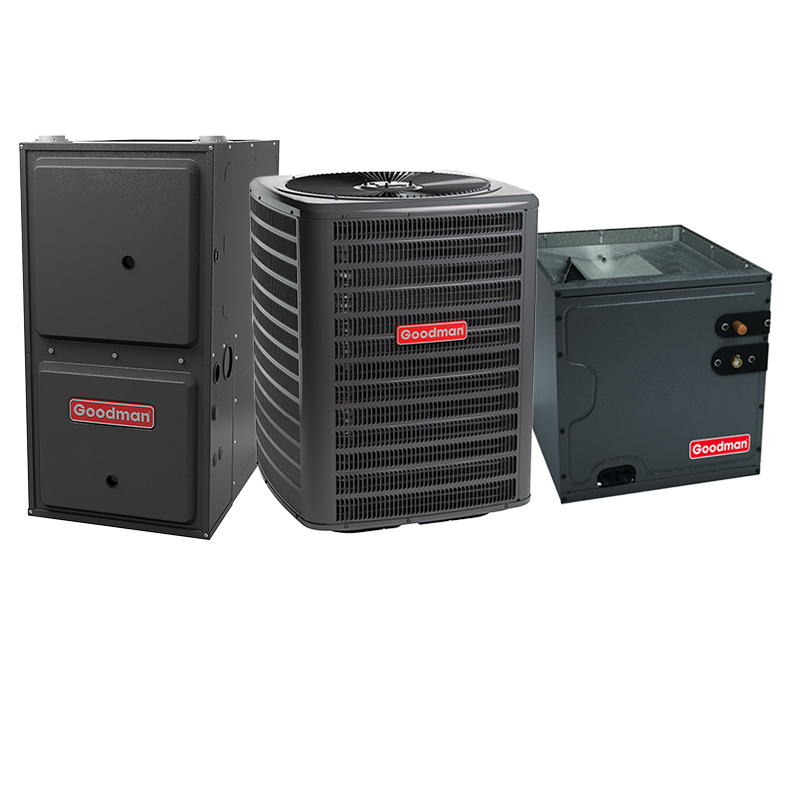
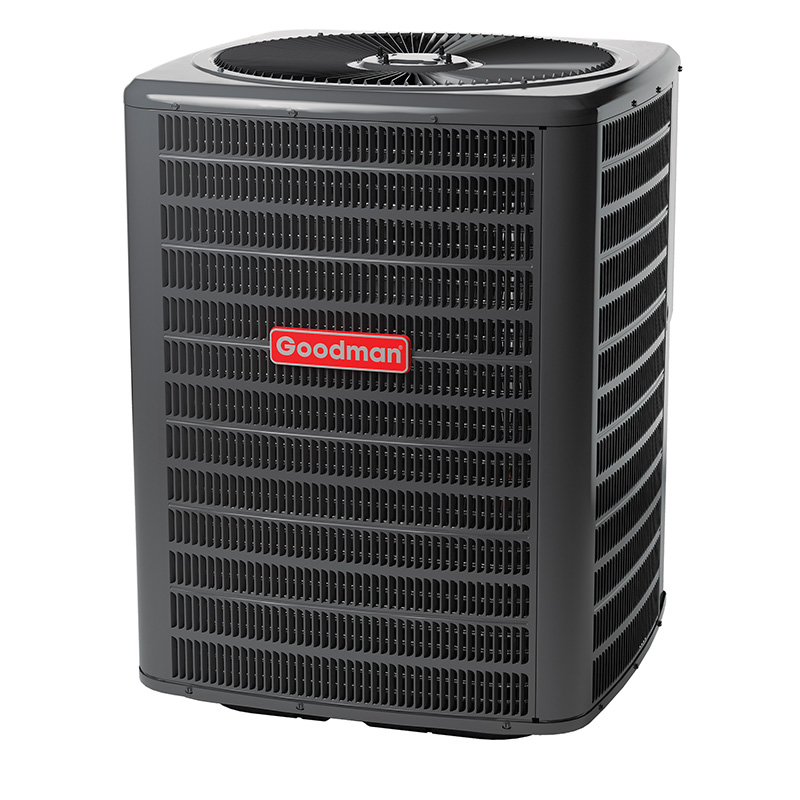
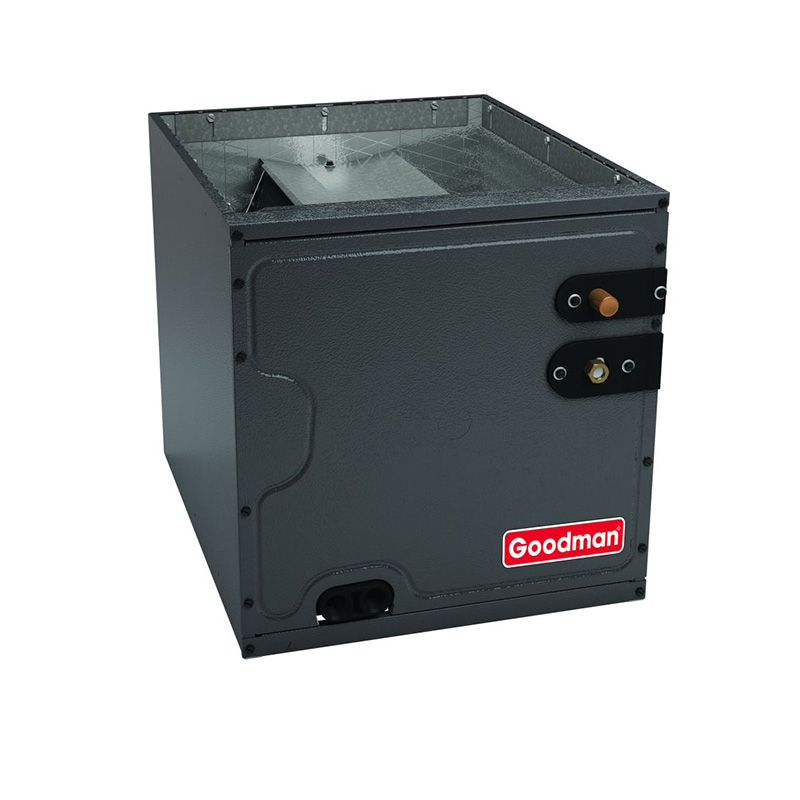
This Goodman bundle pairs a 4-ton, 15.2 SEER2 air conditioner with an 80,000 BTU, 80% AFUE two-stage gas furnace in a downflow configuration, making it a practical fit for homes where the air handler sits in an upper-floor closet, attic platform, or above a crawlspace that feeds supply air downward. The R-32 refrigerant charge meets California’s low-NOx requirements and positions the system ahead of older R-410A equipment on global-warming potential, which matters for homeowners in CARB-regulated regions or anyone thinking about future refrigerant availability. At 4 tons it is sized for roughly 1,800 to 2,400 square feet under typical California load conditions, though a Manual J calculation by your installer should confirm that before any purchase.
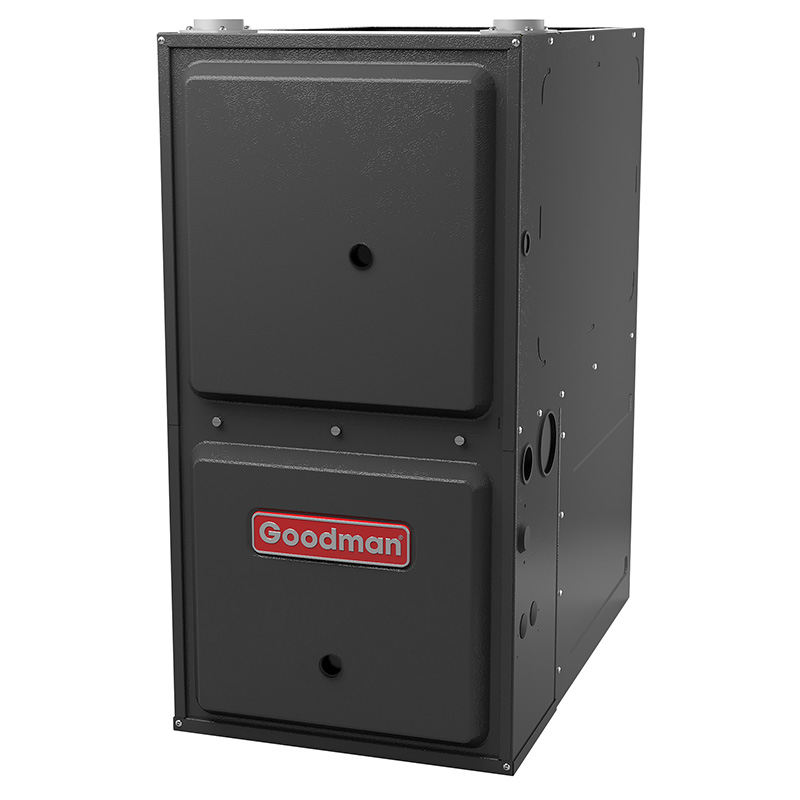
The two-stage furnace and multi-speed ECM blower motor are meaningful upgrades over entry-level single-stage gas equipment. Two-stage operation lets the furnace run at a lower fire rate on mild days, which reduces temperature swings, cuts short-cycling, and tends to improve humidity control compared with a single-stage unit cycling on and off at full capacity. The ECM motor adjusts airflow to match duct static pressure rather than running at one fixed speed, which lowers blower electricity use and keeps the air distribution quieter. The 80% AFUE rating is code-minimum in most California climate zones, so heat that would come from a 95% or 97% AFUE furnace is not recovered here; that trade-off is worth understanding before you commit if gas prices are a concern in your area.
This Goodman system delivers a legitimate two-stage, ECM-equipped setup at a price that typically undercuts Carrier, Trane, and Lennox by 15 to 25 percent, which is a real advantage for budget-conscious buyers who still want better-than-single-stage comfort. The 80% AFUE furnace and baseline 15.2 SEER2 rating keep operating efficiency at the minimum acceptable tier rather than a high-efficiency tier, and Goodman's real-world reliability record shows more mid-life repair calls than premium brands. Whether the upfront savings offset those longer-term factors depends heavily on how well it is installed and how long you plan to stay in the home.
Overall score is the average of the five ratings above.
What we like
- Two-stage furnace and ECM blower provide noticeably more even temperatures than single-stage alternatives at this price point
- R-32 refrigerant meets California Low NOx requirements and carries lower environmental impact than R-410A
- Downflow configuration is one of the less common setups, and having it factory-matched simplifies equipment selection
- Price point typically 15 to 25 percent below comparable Carrier, Trane, and Lennox systems, lowering the upfront investment
- Multi-speed ECM motor reduces blower electricity draw and is compatible with most programmable and smart thermostats
Trade-offs
- 80% AFUE is code-minimum efficiency; a condensing 95% or higher AFUE furnace would recover significantly more heat per therm of gas
- Goodman compressors average 10 to 14 years in real-world use versus 15 to 20 years reported for premium-brand compressors
- Dual-run capacitor failures and evaporator coil leaks are documented recurring issues that add repair costs after year 7 or so
- A minority of owners report refrigerant leaks in the first year, typically tied to installation quality rather than the equipment itself, which puts even more weight on hiring an experienced contractor
What homeowners and pros say about Goodman
Homeowners who track Goodman on ConsumerAffairs give it roughly 2.5 out of 5 stars, a score shaped heavily by the platform’s tendency to attract complaints rather than praise. The recurring pattern in those reviews is not early catastrophic failure but repair costs that start climbing around year 7 or 8, with dual-run capacitors and evaporator coil leaks the most cited culprits. Google dealer reviews land higher, around 3.8 out of 5 across hundreds of location-level ratings, where the most consistent praise is straightforward: the equipment costs less up front and it cools and heats as advertised. The gap between those two scores reflects the difference between buyers who had a smooth experience and moved on, and buyers who felt compelled to write about repair bills.
HVAC technicians generally frame Goodman as a workable choice with an important asterisk: installation quality determines outcome more than it does with premium brands. Compressors on Goodman outdoor units tend to average 10 to 14 years in real-world service, meaningfully shorter than the 15 to 20 years often reported for Trane and Carrier equipment at the same price tier. A small but documented share of owners also report refrigerant leaks within the first year of ownership, and experienced technicians consistently attribute those to improper line-set connections or refrigerant charge errors at installation rather than factory defects. For this specific downflow R-32 bundle, that means the caliber of the installer is not just a formality; it is the single biggest variable in whether the system performs well across its full service life.
Sources: ConsumerAffairs Goodman owner reviews, AHRI Directory of Certified Product Performance, U.S. DOE appliance and equipment efficiency standards, Goodman product specification sheets.
What it costs to run
At 15.2 SEER2, cooling this 4-ton system for a typical 1200-hour cooling season at the U.S. average electricity rate of $0.17/kWh works out to roughly $644 per year in cooling, about $87 less per year than a minimum-efficiency 13.4 SEER2 unit of the same size. Your real cost depends on your climate and local rate.
Method: (48,000 BTU/hr ÷ 15.2 SEER2) × 1200 hours ÷ 1000 × $0.17/kWh. Rate source: U.S. EIA average; cooling hours: moderate-climate estimate.
How it compares
| Brand | Comparable model | SEER2 | Stage | Price position |
|---|---|---|---|---|
| Goodman | GSX6 / GMVC8 Series (this bundle) | 15.2 | two-stage | Value pick |
| Carrier | Comfort 24ACC6 / 58SB Series | 15.2 | single-stage | Typically 15 to 25 percent more than this Goodman bundle |
| Trane | XR15 / S8X1 Series | 15.2 | single-stage | Typically 15 to 25 percent more than this Goodman bundle |
| Lennox | Merit 14ACX / ML180 Series | 15.2 | single-stage | Typically 15 to 25 percent more than this Goodman bundle |
Competitor rows are comparable single-stage units at similar efficiency; price is relative position, not a quote.
Questions about this system
Is this system actually approved for sale in California, and what makes it Low NOx compliant?
Yes. The Low NOx designation means the furnace meets California Air Resources Board (CARB) emission limits for nitrogen oxides, which are required for gas furnace sales in most California air districts. The R-32 refrigerant also has a lower global-warming potential than R-410A, which aligns with California's refrigerant transition regulations. Confirm with your local distributor that the specific model numbers in the bundle carry the current CARB certification before purchase.
Why does the downflow configuration matter, and can I use this in a standard horizontal or upflow installation?
Downflow means supply air exits the bottom of the furnace cabinet, which suits installations in upper-floor closets, attic platforms, or above crawlspaces. It is not interchangeable with upflow or horizontal configurations without modification. If your existing ductwork was built for an upflow furnace, this unit is not a drop-in replacement and you would need either a different unit or significant duct rework.
What are the most common repairs I should budget for over the life of this Goodman system?
Based on documented owner feedback, dual-run capacitor failure is the most frequently reported issue and typically costs 300 to 600 dollars to repair. Evaporator coil leaks appear in a meaningful share of longer-term owner reports and are more expensive to address. Compressor longevity averages 10 to 14 years for Goodman equipment, so budgeting for a potential compressor repair or replacement before the 15-year mark is reasonable.
The system uses R-32 refrigerant. Does that affect service costs or technician availability?
R-32 is a mildly flammable (A2L classification) refrigerant, which means technicians need specific training and equipment to handle it safely. Availability is growing but is not yet as universal as R-410A service tools in all markets. Ask prospective installers before hiring whether they are already certified and equipped for R-32 systems to avoid service complications down the road.
Does the 80% AFUE furnace qualify for any California or federal rebates?
Federal Inflation Reduction Act tax credits (25C) for gas furnaces currently require 97% AFUE or higher to qualify, so this 80% AFUE unit does not meet that threshold. California utility rebate programs vary by provider and change periodically; some programs have minimum AFUE requirements that this unit may not meet. Check your specific utility's current rebate portal and consult your installer before assuming any incentive applies.
Specifications
| Cooling capacity | 4 Ton |
| Efficiency | 15.2 SEER2 |
| Furnace output | 80000 BTU |
| Furnace efficiency | 80% AFUE |
| Configuration | Downflow |
| Refrigerant | R-32 |