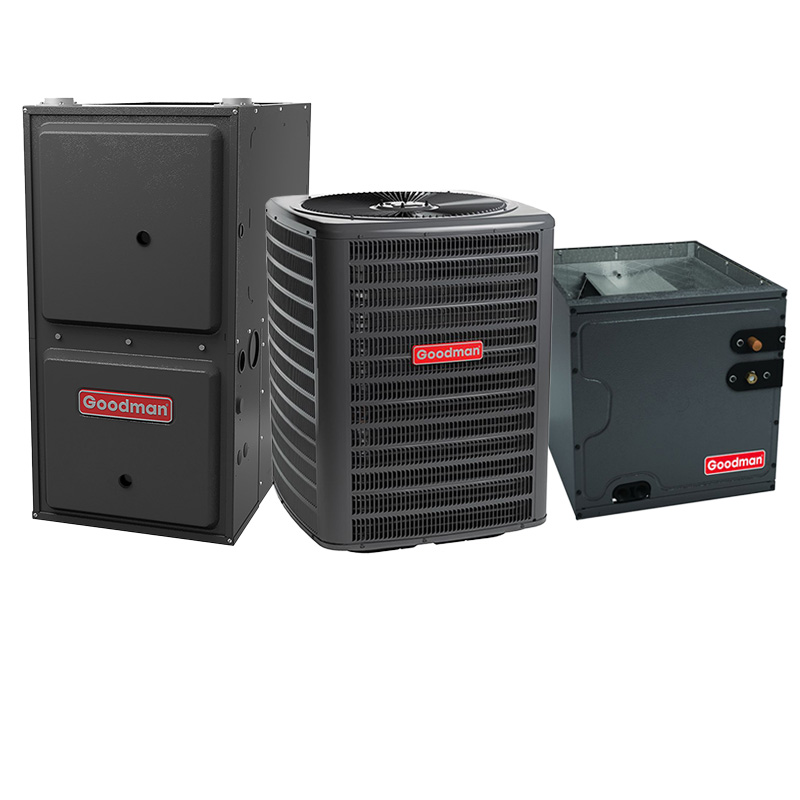
Goodman Furnace And Air Conditioner 5 Ton 15.5 SEER2 AC With 100000 BTU 80% AFUE Multi-Speed ECM Gas Furnace System – Downflow | R32
View on AC Direct see your lowest price →Check current price on AC Direct →
Key features
- 5-ton cooling capacity, 15.5 SEER2 efficiency rating
- 100,000 BTU output, 80% AFUE single-stage gas furnace
- Multi-speed ECM blower motor for variable airflow and lower blower energy use
- Downflow configuration for closet or platform installations over floor registers
- R-32 refrigerant with lower global warming potential than R-410A
- Goodman 10-year parts limited warranty with registration required within 60 days
About this system
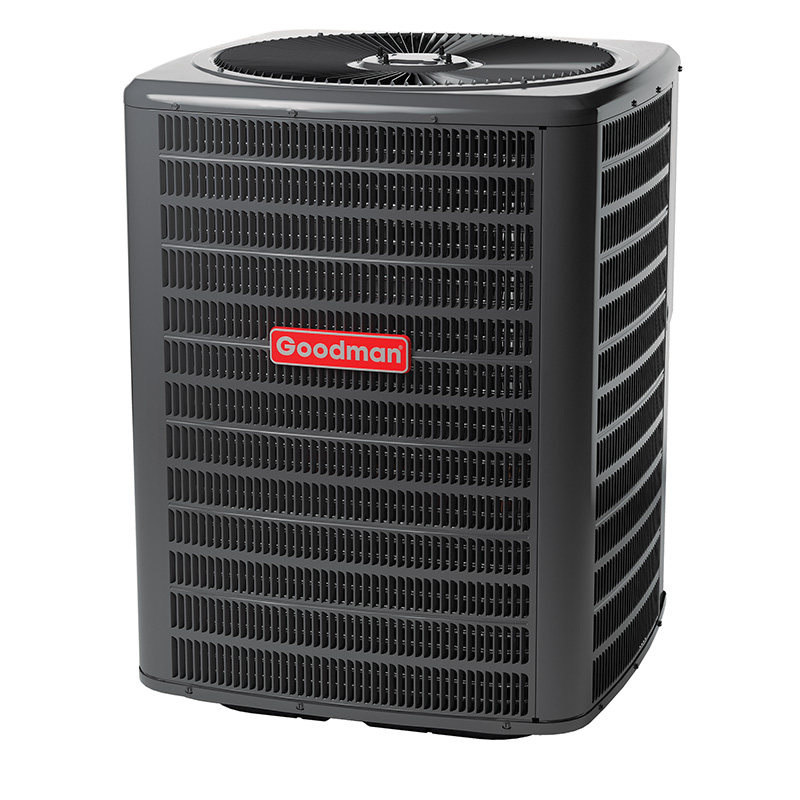
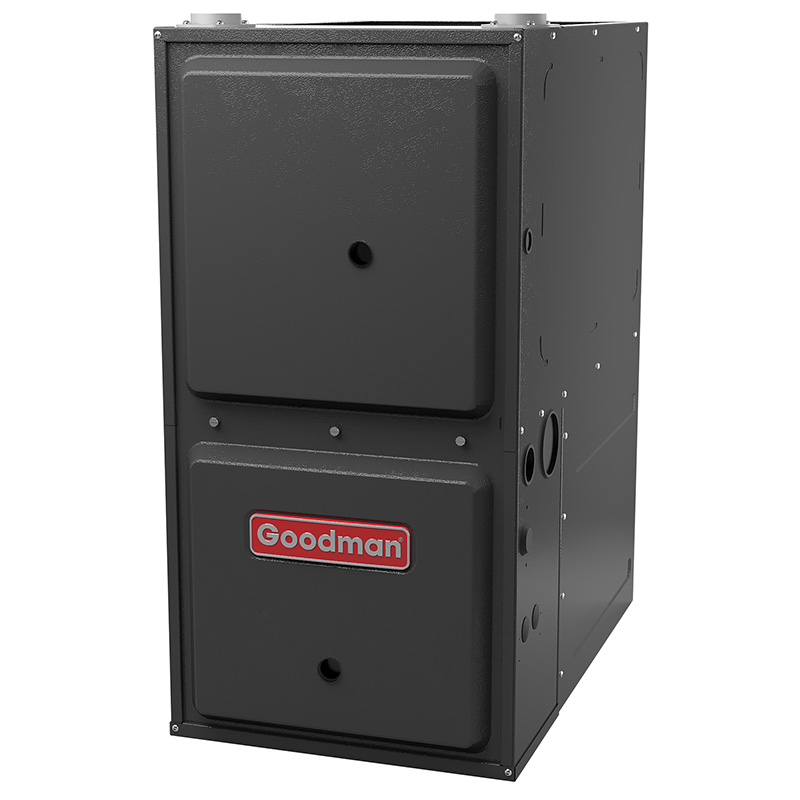
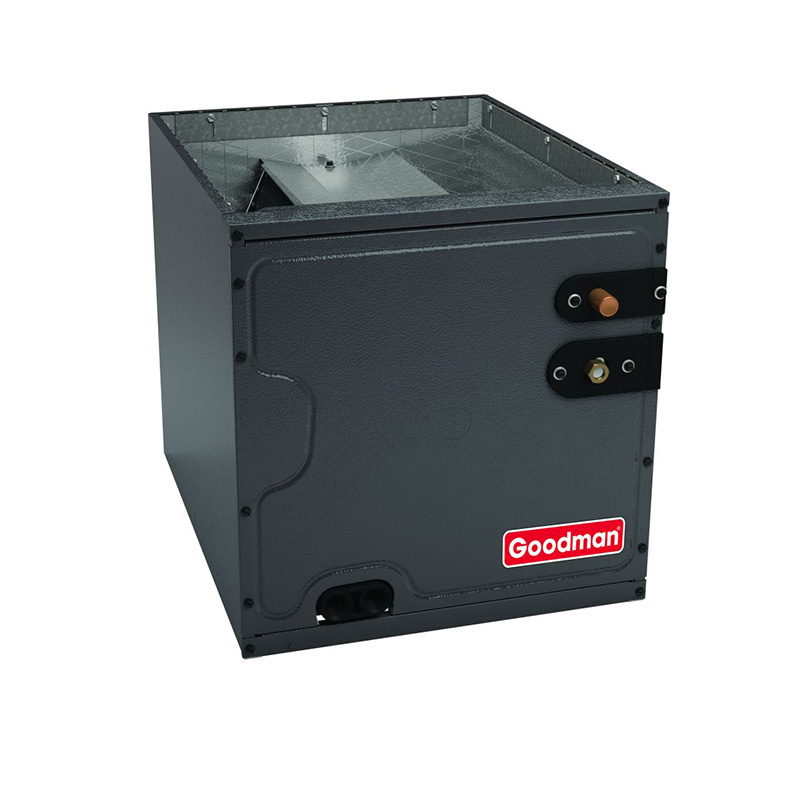
This Goodman five-ton system pairs a 15.5 SEER2 central air conditioner with a 100,000 BTU, 80% AFUE multi-speed ECM gas furnace in a downflow configuration, and it uses R-32 refrigerant rather than the older R-410A. At five tons, it is sized for larger homes, typically in the 2,400 to 3,200 square foot range depending on local climate, insulation quality, and window load. The downflow orientation means the furnace discharges conditioned air downward into the duct system, which suits homes where the air handler sits in a closet or utility space above a crawlspace or slab with floor registers.
The multi-speed ECM blower motor is a meaningful upgrade over a standard single-speed motor. It ramps airflow up and down based on demand, which reduces short-cycling, lowers electricity consumption at the air handler, and tends to produce more even temperatures room to room compared with a basic PSC motor. At 80% AFUE, roughly 20 cents of every dollar spent on gas exits through the flue, so this furnace sits at the code-minimum efficiency tier in most northern markets. Homeowners in cold climates who run their heat for five or six months a year will see a tangible operating cost difference versus a 96% AFUE unit. In mild or moderate climates, the payback gap narrows considerably. R-32 refrigerant carries a lower global warming potential than R-410A and is increasingly common as the industry transitions away from older refrigerants.
This system delivers a competitive efficiency and feature package at a price point that sits noticeably below Carrier, Trane, and Lennox equivalents, making it a reasonable choice for budget-conscious buyers who invest in quality installation. The 80% AFUE furnace and entry-level SEER2 rating mean operating costs will be higher than mid- or high-efficiency alternatives, and Goodman's documented history of capacitor failures, evaporator coil leaks, and shorter average compressor lifespan are real long-term considerations. It performs best when installed by an experienced Goodman dealer who verifies refrigerant charge and airflow at startup.
Overall score is the average of the five ratings above.
What we like
- Purchase price runs 15 to 25 percent below comparable Carrier, Trane, and Lennox systems
- Multi-speed ECM motor improves comfort and cuts blower electricity versus basic single-speed units
- R-32 refrigerant is better positioned for long-term regulatory stability than R-410A
- 10-year registered parts warranty is competitive at this price tier
- Widely available parts network makes capacitor and minor component repairs straightforward and affordable
Trade-offs
- 80% AFUE is code-minimum in many northern states and will cost more to operate than 95-96% AFUE alternatives over the system's life
- Compressor average lifespan of 10 to 14 years runs shorter than the 15 to 20 years often cited for premium brands
- Evaporator coil leaks and first-year refrigerant issues appear in a meaningful share of owner reports, underscoring how much ride on install quality
- Dual-run capacitor failures are the most commonly reported service call, typically after year five to seven, adding recurring maintenance costs
What homeowners and pros say about Goodman
Homeowners who research Goodman before buying tend to land in one of two camps. On ConsumerAffairs, where the brand scores around 2.5 out of 5, the recurring theme is repair bills that start climbing after roughly year seven, with dual-run capacitor failures showing up as the most common service call and evaporator coil leaks appearing often enough to be a pattern rather than an outlier. Google dealer reviews tell a somewhat different story, averaging around 3.8 out of 5, where the most frequent praise centers on affordability and the availability of service technicians who know the product. The gap between those two scores is itself informative: buyers who go in expecting premium-brand durability are often disappointed, while buyers who budget for a periodic capacitor replacement and choose their installer carefully tend to report acceptable results.
HVAC technicians are candid that Goodman’s performance is inseparable from the quality of the installation. The documented compressor lifespan of roughly 10 to 14 years, compared with 15 to 20 years on premium brands, is a real long-term cost factor on a five-ton system where compressor replacement is not a minor expense. The minority of owners who report refrigerant leaks within the first year are almost always dealing with a charge or fitting issue at startup rather than a factory defect, which is why experienced installers emphasize proper commissioning documentation. For this specific system, the R-32 refrigerant adds a variable that not every technician has worked with yet, so confirming your installer’s familiarity with R-32 handling and the downflow configuration before signing a contract is time well spent.
Sources: ConsumerAffairs Goodman owner reviews, AHRI Directory of Certified Product Performance, U.S. DOE appliance and equipment efficiency standards, Goodman product specification sheets.
What it costs to run
At 15.5 SEER2, cooling this 5-ton system for a typical 1200-hour cooling season at the U.S. average electricity rate of $0.17/kWh works out to roughly $790 per year in cooling, about $123 less per year than a minimum-efficiency 13.4 SEER2 unit of the same size. Your real cost depends on your climate and local rate.
Method: (60,000 BTU/hr ÷ 15.5 SEER2) × 1200 hours ÷ 1000 × $0.17/kWh. Rate source: U.S. EIA average; cooling hours: moderate-climate estimate.
How it compares
| Brand | Comparable model | SEER2 | Stage | Price position |
|---|---|---|---|---|
| Goodman | GSXH5 / GCVC8 Series (this system) | 15.5 | Single-stage | Value pick |
| Carrier | Comfort 24ACC6 / 59SC5 Series | 15.2 to 16.0 | Single-stage | Typically 15 to 25 percent more than this Goodman system |
| Trane | XR15 / S8X1 Series | 15.0 to 16.0 | Single-stage | Typically 15 to 25 percent more than this Goodman system |
| Lennox | Merit ML15 / ML180 Series | 15.2 to 16.0 | Single-stage | Typically 15 to 25 percent more than this Goodman system |
Competitor rows are comparable single-stage units at similar efficiency; price is relative position, not a quote.
Questions about this system
Does the downflow configuration mean I need a special slab or platform for this furnace?
Yes. Downflow furnaces discharge air through the bottom, so the unit must be mounted on a factory-approved combustible floor base or non-combustible platform with an opening that connects to the return and supply duct system below. Your installer will confirm the specific clearance and base requirements for this model before installation.
Will this system work with my existing R-410A lineset?
R-32 and R-410A are not interchangeable, and a system using R-32 requires a clean, properly sized lineset free of any R-410A residue or oil. In many cases a new lineset is recommended, and your installer should verify that all components including the service valves are rated for R-32 before proceeding.
How much will I actually save with the multi-speed ECM motor compared to a standard blower?
ECM motors typically consume 60 to 75 percent less electricity than a standard PSC motor at lower speed settings, and the multi-speed operation means the blower often runs at a reduced speed rather than full blast. The savings vary with run hours and local electricity rates, but it is one of the more tangible efficiency advantages in this system.
Is 80% AFUE going to be a problem in a colder climate, and can I upgrade to a higher-efficiency furnace?
In northern states where heating seasons run long, 80% AFUE is notably less efficient than 95 or 96% AFUE condensing furnaces, and some jurisdictions now require 90% or higher for new installs above certain elevations or climate zones. Check your local code before purchasing, and consider whether a higher-AFUE Goodman or competitor model makes more financial sense for your heating load.
What should I ask my installer to do at startup to reduce the risk of early refrigerant leaks?
Ask the technician to perform a standing pressure test on the lineset before charging, verify the final charge by weight and superheat or subcooling measurements rather than pressure alone, and provide written startup documentation. Early refrigerant leaks on Goodman systems are most often traced to improper charge or a fitting issue at installation, so thorough commissioning is the single most important step.
Specifications
| Cooling capacity | 5 Ton |
| Efficiency | 15.5 SEER2 |
| Furnace output | 100000 BTU |
| Furnace efficiency | 80% AFUE |
| Configuration | Downflow |
| Refrigerant | R-32 |