Goodman Furnace And Air Conditioner 5 Ton 15.5 SEER2 AC With 120000 BTU 80% AFUE Two Stage Multi-Speed ECM Gas Furnace System – Horizontal | R32
View on AC Direct see your lowest price →Check current price on AC Direct →
Key features
- 5-ton cooling capacity rated at 15.5 SEER2 for code-compliant efficiency
- 120,000 BTU two-stage gas furnace at 80% AFUE for variable heat output
- Horizontal configuration for attic, crawlspace, or side-discharge installs
- Multi-speed ECM blower motor reduces energy use and improves airflow consistency
- R-32 refrigerant with lower global-warming potential than outgoing R-410A
- Two-stage operation supports better humidity control and quieter part-load running
About this system
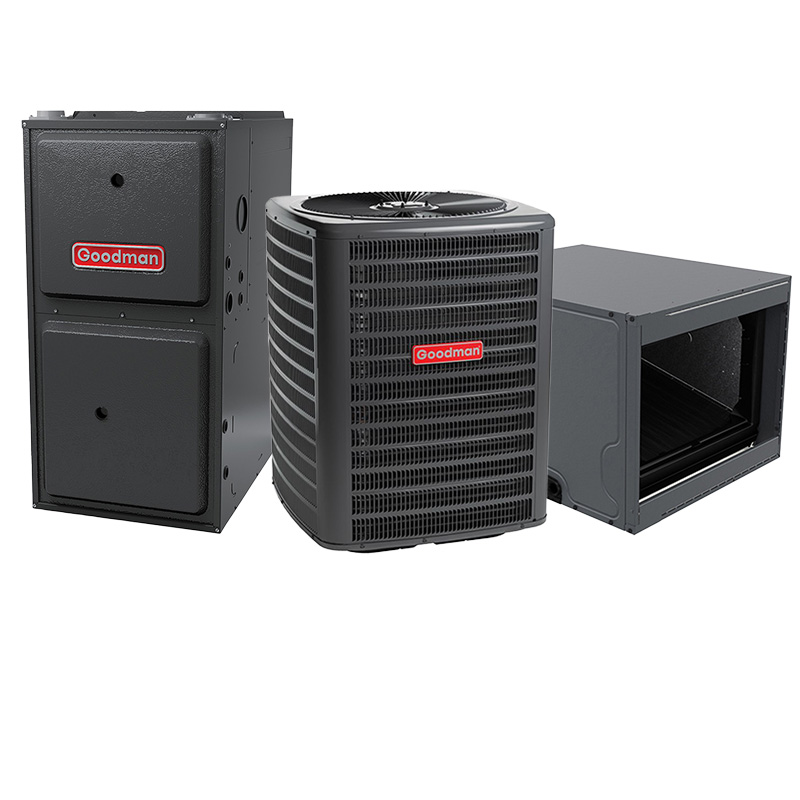
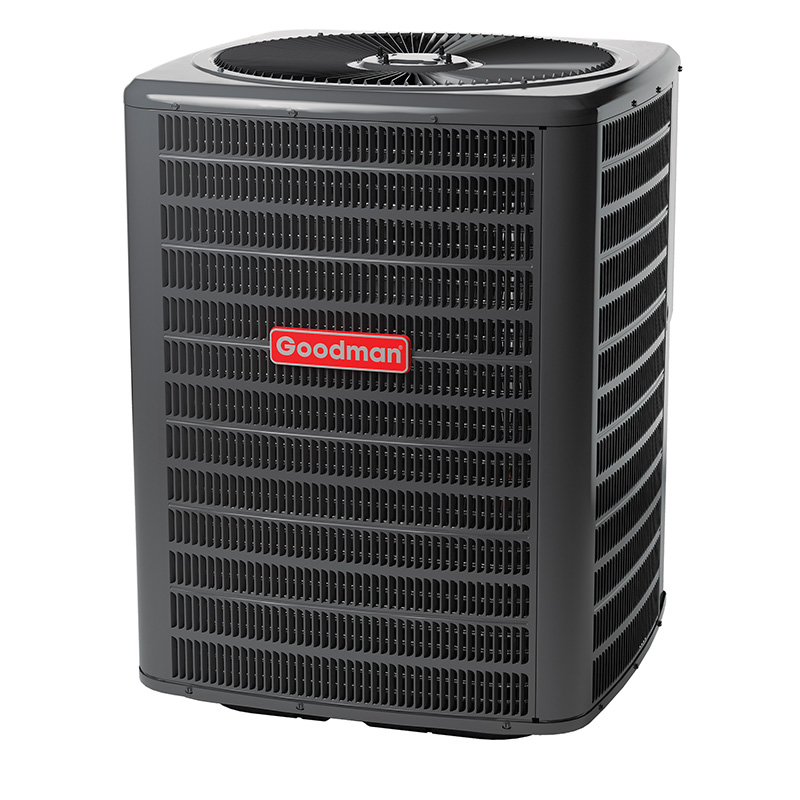
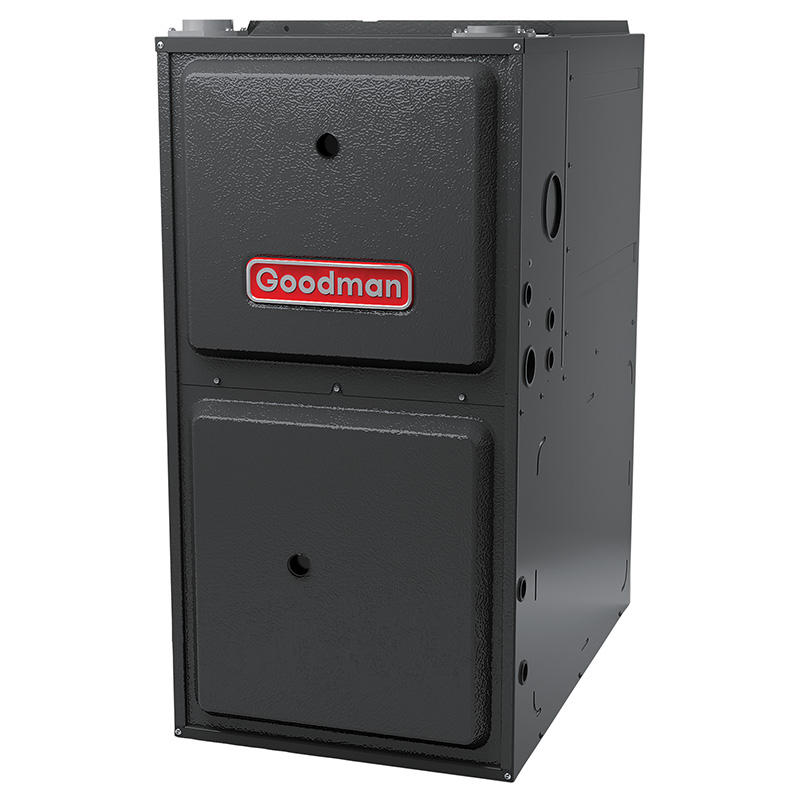
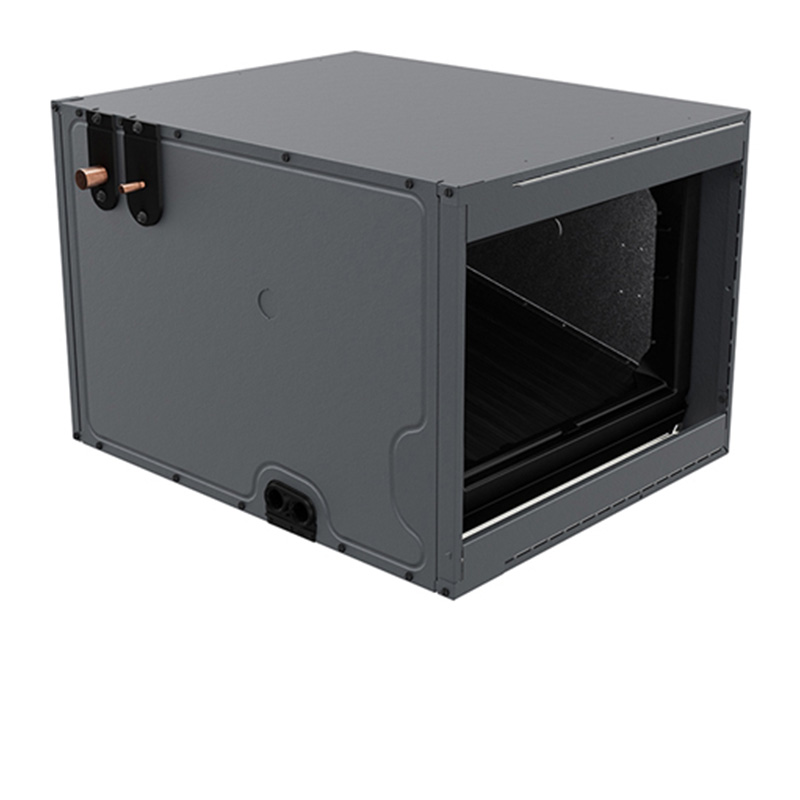
This Goodman bundle pairs a 5-ton, 15.5 SEER2 central air conditioner using R-32 refrigerant with a 120,000 BTU, 80% AFUE two-stage gas furnace in a horizontal configuration. The horizontal layout is designed specifically for attic or crawlspace installations where vertical clearance is limited, making it a practical choice for ranch-style homes, manufactured housing, or additions where the air handler must lie on its side. At 5 tons, this system is sized for larger homes, typically in the 2,400 to 3,000 square-foot range depending on climate zone, insulation quality, and local Manual J load calculations.
The 15.5 SEER2 rating places this system just above the federal minimum thresholds that took effect in 2023, offering a modest efficiency step up from baseline equipment without reaching the higher cost tiers of variable-speed or 18-plus SEER2 systems. The two-stage furnace runs at a lower stage most of the time, which means quieter operation, more even temperature distribution, and better humidity control compared to single-stage alternatives. The multi-speed ECM blower motor is more efficient than a standard PSC motor and pairs well with the two-stage heat valve for consistent airflow. R-32 is a lower global-warming-potential refrigerant replacing older R-410A stock, which is worth noting for long-term serviceability as the industry transitions. This combination suits homeowners who want a capable, no-frills system at a price point well below premium brands, provided installation is handled by a qualified technician.
This Goodman bundle delivers a functional, code-compliant system at a price that is typically 15 to 25 percent below comparable Trane, Carrier, or Lennox equipment, and the two-stage furnace with ECM blower is a genuine step up from entry-level single-stage gear. The trade-off is a compressor and coil track record that falls short of premium brands, and real-world satisfaction depends heavily on who installs and commissions the system.
Overall score is the average of the five ratings above.
What we like
- Priced 15 to 25 percent below comparable premium-brand bundles at similar efficiency
- Two-stage furnace operation improves comfort and humidity management over single-stage
- ECM blower motor lowers blower energy consumption compared to standard PSC motors
- Horizontal configuration broadens installation locations including attics and crawlspaces
- R-32 refrigerant is a forward-looking choice as the industry moves away from R-410A
Trade-offs
- Dual-run capacitors are the most commonly reported early failure, though repairs typically run $300 to $600
- Compressors average 10 to 14 years in owner reports, shorter than the 15 to 20 years cited for premium brands
- A share of owners report evaporator coil leaks, which are a more costly and disruptive repair
- Overall satisfaction is polarized: ConsumerAffairs scores run around 2.5 out of 5, with repair cost complaints rising after roughly year 7
What homeowners and pros say about Goodman
Homeowners who share feedback on Goodman systems tend to split along one clear line: those who got a careful installation and routine maintenance are often satisfied for the first several years, while those who ran into problems cite repair bills climbing after roughly year 7, a pattern that shows up consistently on ConsumerAffairs where Goodman scores around 2.5 out of 5. That score comes from a channel that skews toward complaint-driven reviews, but the recurring theme of escalating costs in the second half of the warranty period is worth taking seriously for a 5-ton system where component costs scale up with size. Google dealer reviews paint a more balanced picture at around 3.8 out of 5, where the most common praise is straightforward: buyers got a functional system at a price that left room in the budget for professional installation and a service agreement.
HVAC technicians who work on Goodman equipment regularly point to two things. First, dual-run capacitor failures are the most common call they get on these units, and while that repair typically runs $300 to $600 and is not catastrophic, it happens often enough that setting aside a small maintenance fund is practical advice. Second, and more concerning for a system at this price point, evaporator coil leaks show up in a meaningful share of owner histories, and compressor lifespan tends to average 10 to 14 years rather than the 15 to 20 years technicians associate with Trane, Carrier, or Lennox compressors. Technicians are also consistent on one point that Goodman itself acknowledges indirectly in its install documentation: the single biggest predictor of how long one of these systems lasts is the quality of the original installation. A properly commissioned system with correct refrigerant charge, sealed ductwork, and correctly sized airflow will significantly outperform the same unit installed carelessly, which makes contractor selection as important as the equipment choice itself.
Sources: ConsumerAffairs Goodman owner reviews, AHRI Directory of Certified Product Performance, U.S. DOE appliance and equipment efficiency standards, Goodman product specification sheets.
What it costs to run
At 15.5 SEER2, cooling this 5-ton system for a typical 1200-hour cooling season at the U.S. average electricity rate of $0.17/kWh works out to roughly $790 per year in cooling, about $123 less per year than a minimum-efficiency 13.4 SEER2 unit of the same size. Your real cost depends on your climate and local rate.
Method: (60,000 BTU/hr ÷ 15.5 SEER2) × 1200 hours ÷ 1000 × $0.17/kWh. Rate source: U.S. EIA average; cooling hours: moderate-climate estimate.
How it compares
| Brand | Comparable model | SEER2 | Stage | Price position |
|---|---|---|---|---|
| Goodman | GSX2 / GMVC8 Two-Stage Bundle | 15.5 | Two-stage | Value pick |
| Carrier | Comfort 24ACC6 Series | 15.2 to 16 | Single-stage | Typically 15 to 25 percent more than this Goodman bundle |
| Trane | XR15 Series | 15 to 16 | Single-stage | Typically 15 to 25 percent more than this Goodman bundle |
| Lennox | Merit ML15XC1 Series | 15.5 | Single-stage | Typically 15 to 25 percent more than this Goodman bundle |
Competitor rows are comparable single-stage units at similar efficiency; price is relative position, not a quote.
Questions about this system
Why does this system use a horizontal configuration and can it be installed vertically instead?
The horizontal configuration means the air handler is oriented on its side, which is required for attic rafters, crawlspaces, or tight side-discharge closets where standing the unit upright is not possible. This specific model is rated for horizontal installation; if your application needs a vertical or upflow configuration, you would need a different cabinet variant from Goodman's lineup.
What does 80% AFUE mean in practical terms, and should I consider a higher-efficiency furnace?
80% AFUE means 80 cents of every dollar spent on gas becomes usable heat, with 20 cents lost through the flue. In milder climates or homes that already have good insulation, 80% AFUE is often a reasonable choice. In very cold climates with long heating seasons, a 96% or higher AFUE furnace can meaningfully reduce annual gas bills, though the upfront cost is higher.
Is R-32 refrigerant widely available and easy for technicians to service?
R-32 availability is growing as the HVAC industry moves away from R-410A, but it is not yet as universally stocked as R-410A was at its peak. Most certified HVAC technicians are trained to handle it, and it requires some different handling precautions due to its mild flammability classification. Confirm that any service contractor you use has R-32 certification before scheduling work.
What are the most common repairs owners report on Goodman systems like this one?
Dual-run capacitor failures are the most frequently cited issue and are typically a straightforward, low-cost repair in the $300 to $600 range. Evaporator coil leaks appear in a meaningful share of owner accounts and are a more involved fix. A minority of owners have reported refrigerant leaks in the first year, which are usually tied to installation or initial charge quality rather than a component defect.
Does a 5-ton system require any special electrical or gas supply considerations?
A 5-ton air conditioner typically requires a dedicated 240-volt circuit, often 40 to 60 amps depending on the specific unit's minimum circuit ampacity listed on the data plate. The 120,000 BTU furnace requires a gas line sized to handle that load, which may exceed what smaller furnace piping can supply. Have a licensed contractor verify both the electrical panel capacity and gas line sizing before purchase.
Specifications
| Cooling capacity | 5 Ton |
| Efficiency | 15.5 SEER2 |
| Furnace output | 120000 BTU |
| Furnace efficiency | 80% AFUE |
| Configuration | Horizontal |
| Refrigerant | R-32 |