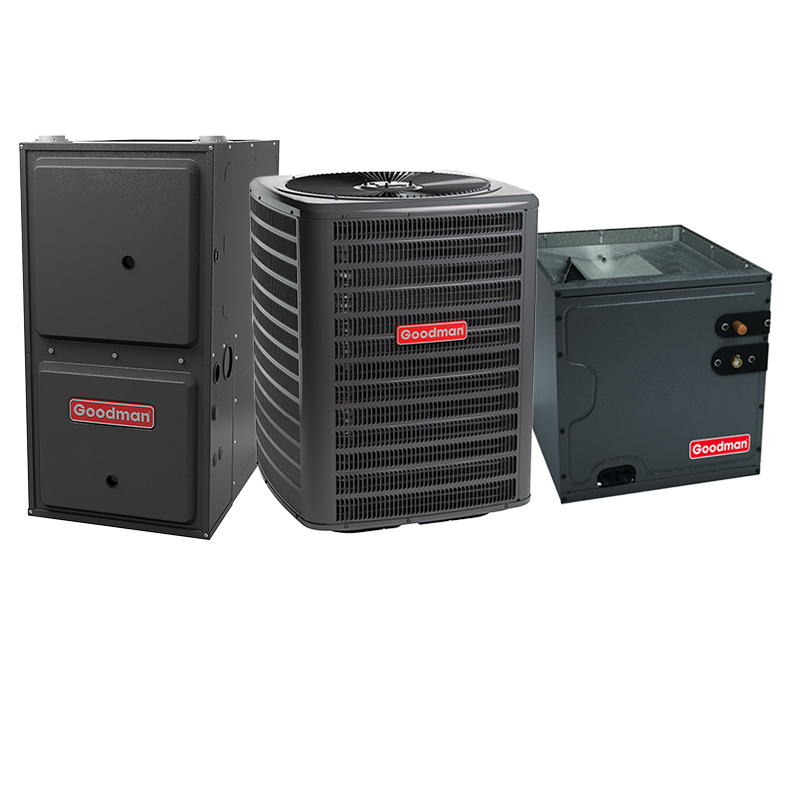
Goodman Furnace And Air Conditioner 5 Ton 15.5 SEER2 AC With 80000 BTU 80% AFUE Two Stage Multi-Speed ECM Gas Furnace System – Low NOX For California Downflow | R32
View on AC Direct see your lowest price →Check current price on AC Direct →
Key features
- 5-ton cooling capacity with 15.5 SEER2 efficiency rating
- 80,000 BTU two-stage gas furnace at 80% AFUE
- Multi-speed ECM blower motor for lower operating costs and quieter part-load operation
- Downflow configuration for attic or upper-closet air handler installations
- R-32 refrigerant charge meets California Low NOx and current regulatory requirements
- Two-stage heating reduces short-cycling and improves temperature consistency
About this system
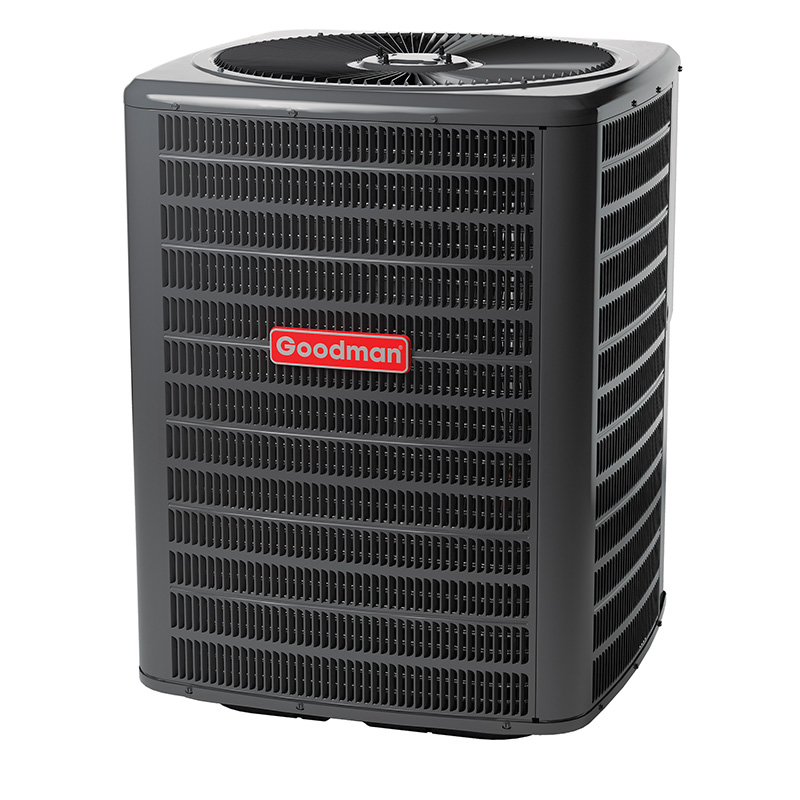
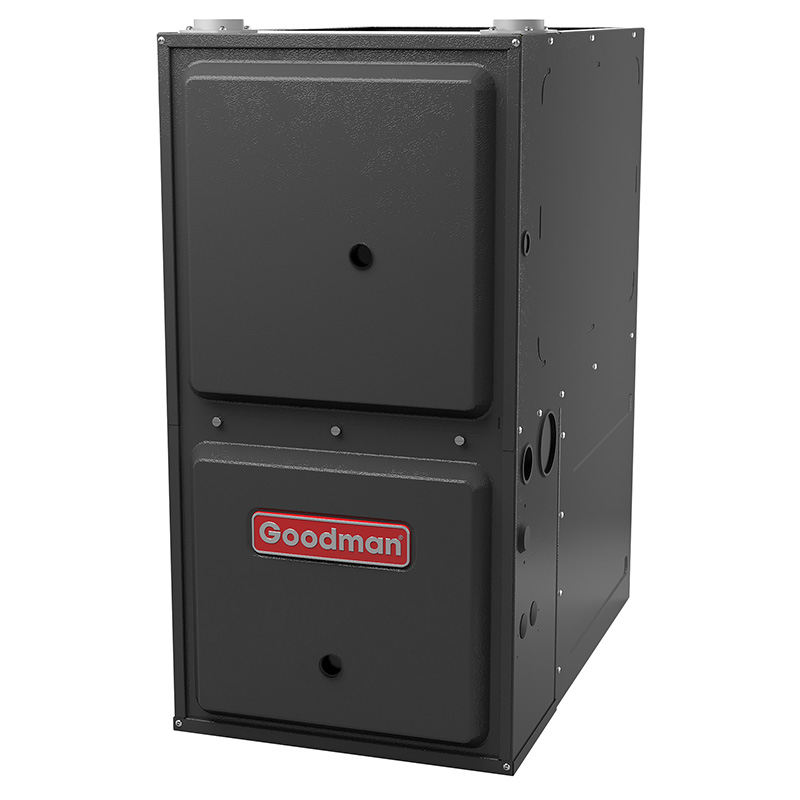
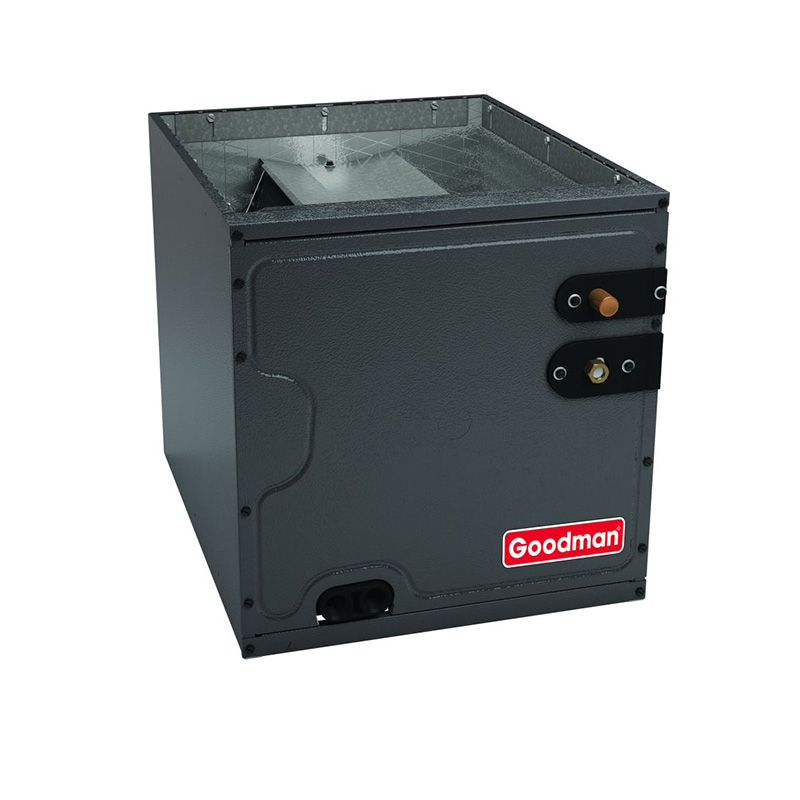
This Goodman bundle pairs a 5-ton, 15.5 SEER2 air conditioner with an 80,000 BTU, 80% AFUE two-stage gas furnace in a downflow configuration, making it suited to homes where the air handler sits in an upper-level closet or attic and supply air flows downward into the living space. The R-32 refrigerant charge meets California’s low-NOx requirements and aligns with the industry’s ongoing shift away from R-410A, so this system is compatible with current and near-future regulatory standards in the state. At 5 tons, it is sized for larger homes, typically in the 2,200 to 2,800 square foot range depending on climate zone, insulation, and window load, though a proper Manual J load calculation should always confirm sizing before purchase.
The two-stage furnace runs at a reduced capacity on milder days, which smooths out temperature swings and reduces short-cycling compared to a single-stage unit. The multi-speed ECM blower motor draws less electricity than a standard PSC motor and gives the system more flexibility when matched with variable airflow demands. The air conditioner’s 15.5 SEER2 rating clears California’s minimum efficiency thresholds and sits in the mid-efficiency tier, above baseline single-stage equipment but below premium variable-speed systems that push into the 18 to 22 SEER2 range. Buyers who want solid, code-compliant performance for a large home without paying premium-brand prices are the primary audience here.
This Goodman system delivers mid-efficiency, code-compliant performance for large California homes at a price point that is noticeably lower than comparable Carrier, Trane, or Lennox equipment. The two-stage furnace and ECM blower are genuine comfort upgrades over entry-level single-stage bundles, and R-32 keeps the system future-ready on the refrigerant front. The trade-off is that Goodman's real-world reliability record is uneven, and long-term ownership costs depend heavily on the quality of installation and how quickly minor component failures are addressed.
Overall score is the average of the five ratings above.
What we like
- Priced 15 to 25 percent below comparable premium-brand systems, reducing upfront cost significantly on a 5-ton package
- Two-stage operation reduces temperature swings and lowers the frequency of full-capacity cycling on mild days
- ECM blower motor cuts blower electricity consumption compared to standard PSC motors
- R-32 refrigerant is compliant with California Low NOx rules and positions the system for near-future regulatory changes
- Downflow configuration serves attic and upper-closet installs that would not work with a standard upflow unit
Trade-offs
- Dual-run capacitors are the most commonly reported failure point across Goodman equipment, typically requiring a 300 to 600 dollar repair
- Evaporator coil leaks appear in a meaningful share of owner reviews and can be costly to diagnose and repair if outside warranty
- Compressor lifespan averages 10 to 14 years, shorter than the 15 to 20 years reported for premium brands at similar use levels
- 80% AFUE is the minimum efficiency tier for gas furnaces; homeowners in cold California climates or those prioritizing operating cost savings will get better returns from a 96% AFUE upgrade
What homeowners and pros say about Goodman
Homeowners who leave reviews on ConsumerAffairs rate Goodman at around 2.5 out of 5, and it is worth noting that platform skews toward people who had problems, not satisfied owners who never thought to post. The recurring theme in those reviews is not early catastrophic failure but rather repair costs that start climbing after year seven, which tracks with what is known about the brand’s component quality. Google dealer reviews sit around 3.8 out of 5 across multiple locations, and the most consistent praise there is straightforward: the equipment cost less than competing brands and the system runs as expected when it is installed correctly. Technicians who work on Goodman equipment frequently point out that a well-commissioned Goodman can perform reliably for a decade or more, while a poorly installed one from any brand will cause problems early.
Among the documented failure patterns on Goodman systems, dual-run capacitors come up most often in service calls. They are a relatively low-cost repair, typically in the 300 to 600 dollar range, but they do tend to appear more frequently on Goodman equipment than on premium-brand competitors. Evaporator coil leaks are a second concern that shows up in a meaningful share of owner accounts and can be more expensive to address depending on when they occur relative to the warranty period. Compressor longevity is a real trade-off as well: Goodman compressors tend to average 10 to 14 years in service, compared to the 15 to 20 years that owners and technicians more often report for Trane, Lennox, and Carrier at similar duty cycles. For this specific 5-ton downflow system, those trade-offs are worth weighing against the upfront savings, especially since larger systems run harder and component wear accumulates faster than it does on a 2 or 3-ton residential unit.
Sources: ConsumerAffairs Goodman owner reviews, AHRI Directory of Certified Product Performance, U.S. DOE appliance and equipment efficiency standards, Goodman product specification sheets.
What it costs to run
At 15.5 SEER2, cooling this 5-ton system for a typical 1200-hour cooling season at the U.S. average electricity rate of $0.17/kWh works out to roughly $790 per year in cooling, about $123 less per year than a minimum-efficiency 13.4 SEER2 unit of the same size. Your real cost depends on your climate and local rate.
Method: (60,000 BTU/hr ÷ 15.5 SEER2) × 1200 hours ÷ 1000 × $0.17/kWh. Rate source: U.S. EIA average; cooling hours: moderate-climate estimate.
How it compares
| Brand | Comparable model | SEER2 | Stage | Price position |
|---|---|---|---|---|
| Goodman | GSX6 / GCVC8 Two-Stage Bundle | 15.5 | Two-stage | Value pick |
| Carrier | Comfort 16 (24ACC6) Series | 15.2 to 16 | Single-stage | Typically 15 to 25 percent more than this Goodman bundle |
| Trane | XR15 Series | 15 to 15.5 | Single-stage | Typically 15 to 25 percent more than this Goodman bundle |
| Lennox | Merit 16ACX Series | 15.5 to 16 | Single-stage | Typically 15 to 25 percent more than this Goodman bundle |
Competitor rows are comparable single-stage units at similar efficiency; price is relative position, not a quote.
Questions about this system
Is 15.5 SEER2 sufficient to meet California's current minimum efficiency requirements for a 5-ton system?
Yes. California's current Title 24 minimums for residential split systems at this capacity tier fall below 15.5 SEER2, so this unit clears the threshold. That said, efficiency requirements in California continue to tighten, and if you are planning a long-term install, confirming the current local AHJ requirements before purchase is always a good step.
What does the downflow configuration mean, and how do I know if my home needs it?
In a downflow setup, the furnace and air handler are oriented so that return air enters from the top and conditioned air exits from the bottom, flowing down into floor-level ductwork. This is common when the equipment sits in an attic or an upper-level closet with ductwork running beneath it. If your current system is upflow or horizontal, this unit will not be a direct swap without significant duct modifications.
What are the most likely repair costs I should budget for with a Goodman system over the first 10 years?
Dual-run capacitor replacement is the most frequently reported issue with Goodman equipment and typically runs 300 to 600 dollars including labor. Evaporator coil leaks are a less common but higher-cost repair. Keeping up with annual preventive maintenance and ensuring the system is properly charged at installation reduces the risk of both failure modes.
Why does this system use R-32 refrigerant instead of R-410A, and does that affect servicing costs?
R-32 has a lower global warming potential than R-410A and aligns with California's ongoing refrigerant transition regulations. It is increasingly stocked by HVAC suppliers, though some smaller independent technicians may not yet carry it routinely. Confirming that your servicing contractor is familiar with R-32 handling procedures is worth doing before you commit to the system.
Does the two-stage furnace really make a noticeable difference in comfort compared to a single-stage unit?
For most homeowners in larger homes, yes. Running at a lower stage for the majority of heating hours means the system cycles on for longer periods at reduced output, which distributes heat more evenly and avoids the sharp temperature spikes that single-stage units can produce. The ECM blower also runs more quietly at lower speeds, which adds to the day-to-day comfort difference.
Specifications
| Cooling capacity | 5 Ton |
| Efficiency | 15.5 SEER2 |
| Furnace output | 80000 BTU |
| Furnace efficiency | 80% AFUE |
| Configuration | Downflow |
| Refrigerant | R-32 |