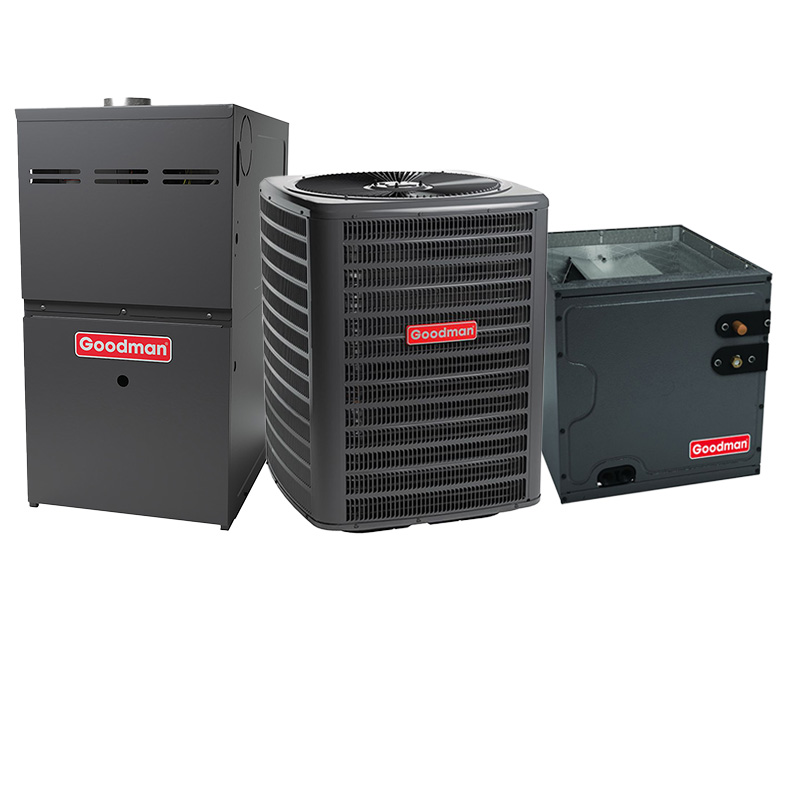
Goodman Furnace And Air Conditioner 5 Ton 16 SEER2 AC With 100000 BTU 80% AFUE Multi-Speed ECM Gas Furnace System – Upflow | R32
View on AC Direct see your lowest price →Check current price on AC Direct →
Key features
- 5-ton cooling capacity suited to larger homes, typically 2,400 to 3,000 sq ft depending on load
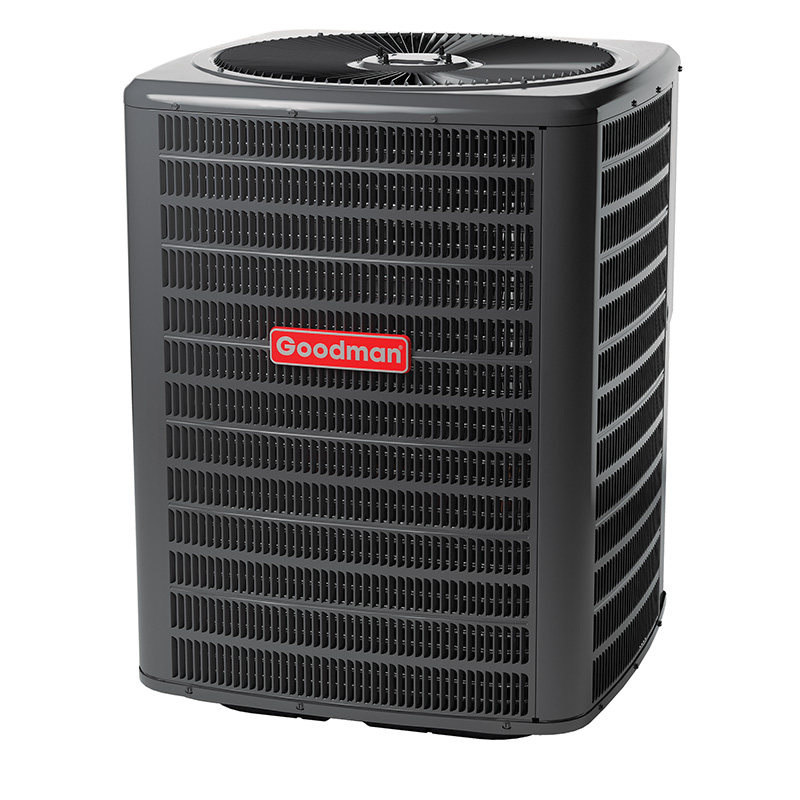
- 16 SEER2 single-stage air conditioner using R-32 refrigerant with lower global-warming potential than R-410A
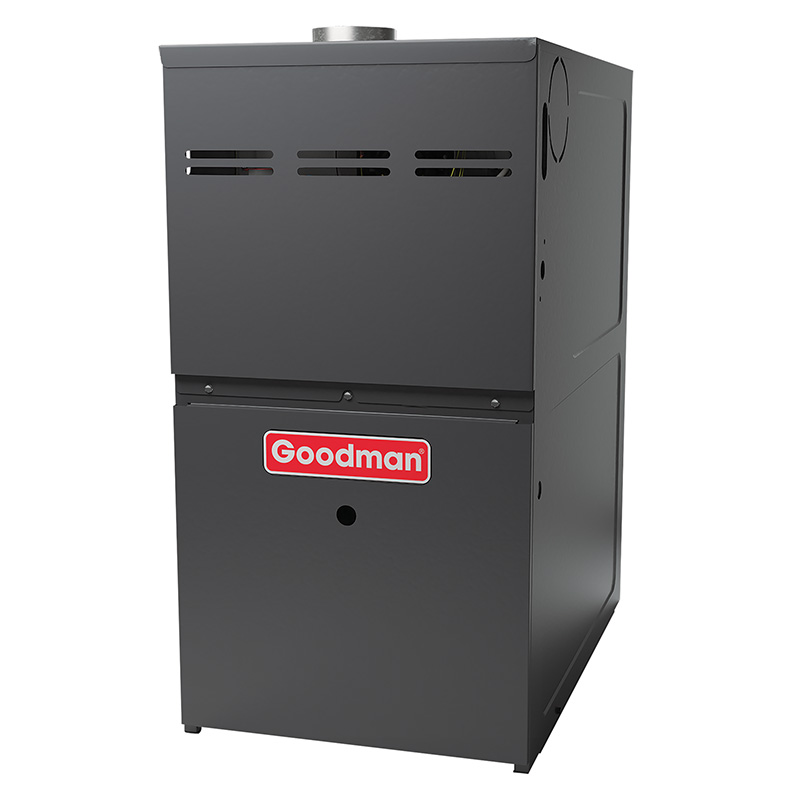
- 100,000 BTU output at 80% AFUE for entry-level gas heating efficiency in mild-to-moderate climates
- Multi-speed ECM blower motor reduces electricity use and fan noise compared to single-speed PSC motors
- Upflow configuration designed for basement or ground-level air handler installations with supply air directed upward
- Priced roughly 15 to 25 percent below comparable Trane, Lennox, and Carrier systems at similar efficiency
About this system
This Goodman 5-ton, 16 SEER2 combination system pairs a single-stage central air conditioner with a 100,000 BTU, 80% AFUE multi-speed ECM gas furnace in an upflow configuration. The package is sized for larger homes, typically in the 2,400 to 3,000 square-foot range depending on climate zone, local duct design, and insulation quality. The R-32 refrigerant is a meaningful step forward from R-410A, carrying a lower global-warming potential and slightly better thermodynamic efficiency, though it does require technicians certified to handle it during any future service call.
The 80% AFUE rating means 80 cents of every dollar spent on gas goes toward heat, with the remaining 20 percent lost through the flue. That is an entry-level efficiency tier and is entirely adequate for mild-to-moderate heating climates or homes where gas is inexpensive, but homeowners in colder northern regions should weigh whether a 96% AFUE unit would recover its price premium through fuel savings. The multi-speed ECM blower motor is a genuine comfort upgrade over a single-speed PSC motor: it ramps airflow up and down gradually, which smooths temperature swings, reduces fan noise, and lowers electricity consumption at the air handler compared to older motor technology. The 16 SEER2 rating sits at the current federal minimum for most of the country, so this is a code-compliant, baseline-efficiency system rather than an energy-star standout.
This Goodman system delivers code-minimum cooling efficiency and a genuinely useful ECM blower at a price point that is hard to argue with for budget-conscious buyers. The trade-off is a brand track record that shows higher-than-average repair costs after year seven and compressor lifespans that tend to run shorter than premium competitors. It is a reasonable choice when installed carefully by an experienced contractor, but it rewards buyers who budget for maintenance and do not expect trouble-free ownership past a decade.
Overall score is the average of the five ratings above.
What we like
- Lowest purchase price in its efficiency class, typically 15 to 25 percent less than Carrier, Trane, or Lennox equivalents
- Multi-speed ECM blower motor improves comfort and reduces blower electricity use compared to basic PSC motors
- R-32 refrigerant is a forward-looking choice with lower environmental impact than the R-410A systems it replaces
- 100,000 BTU furnace output provides ample heating headroom for larger homes in cold snaps
- Upflow cabinet design is straightforward for experienced installers in basement or closet configurations
Trade-offs
- 80% AFUE is the lowest efficiency tier available and will cost more in annual fuel bills than a 96% AFUE alternative in cold climates
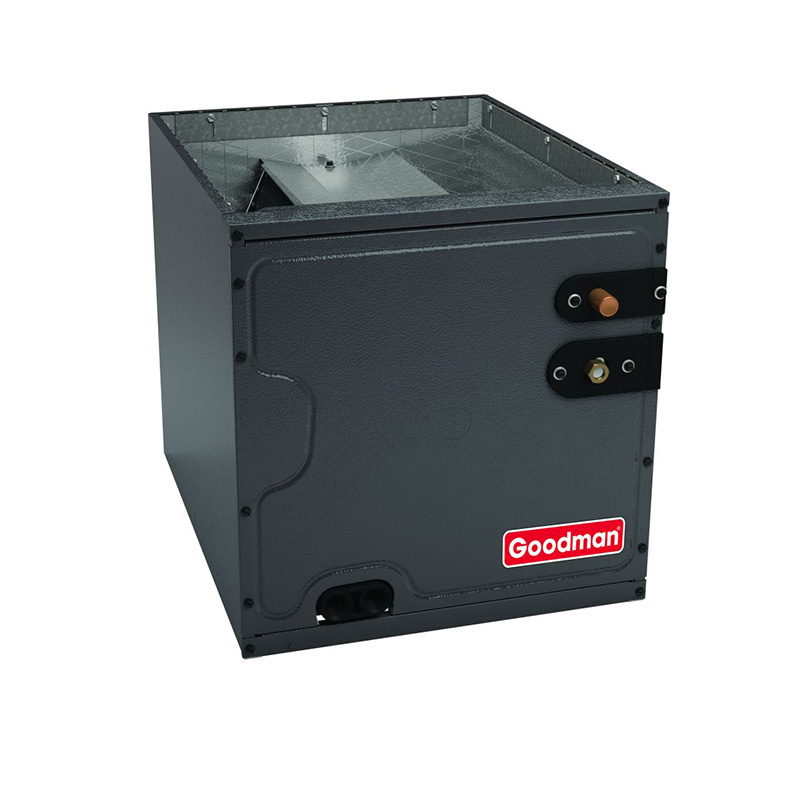
- Dual-run capacitor failures and evaporator coil leaks are documented recurring repair issues, with repair costs climbing noticeably after year seven according to ConsumerAffairs patterns
- Compressor lifespan averages 10 to 14 years versus 15 to 20 years reported for premium-brand compressors, raising long-term replacement risk
- A minority of owners have reported refrigerant leaks within the first year, most often traced to installation or initial charge errors rather than equipment defects
What homeowners and pros say about Goodman
Homeowners who post about Goodman systems tend to cluster at the extremes. Those who had a careful installation by a contractor who properly sized the equipment, verified the refrigerant charge, and confirmed airflow rarely have dramatic complaints in the early years. The Google dealer review average of around 3.8 out of 5 across hundreds of reviews per location reflects that experience: affordability is the most frequently cited positive, and many buyers feel they got a functional system at a fair price. The ConsumerAffairs picture is rougher, averaging around 2.5 out of 5, though that platform draws disproportionately from owners who had problems and felt strongly enough to report them. The pattern that emerges from those reviews is not early catastrophic failure but rather a steady increase in repair frequency after roughly year seven, when out-of-pocket costs start to sting.
HVAC technicians who work on Goodman equipment regularly tend to describe it as serviceable but not forgiving of shortcuts. They point to dual-run capacitor failures as the most routine call on Goodman condensing units, a low-cost fix but one that comes up more often than on premium-brand equipment in their experience. Evaporator coil leaks appear in a meaningful share of owner reports and tend to be more expensive when they arrive. Compressor longevity is the bigger long-term concern: 10 to 14 years is the typical range cited for Goodman compressors versus 15 to 20 years for Trane, Carrier, or Lennox compressors, meaning a five-ton replacement compressor or full system swap could arrive sooner than a homeowner expects. The R-32 refrigerant in this specific system also means any future refrigerant service requires a tech equipped and trained for that charge, so lining up the right contractor from the start matters more than it might with a conventional R-410A system.
Sources: ConsumerAffairs Goodman owner reviews, AHRI Directory of Certified Product Performance, U.S. DOE appliance and equipment efficiency standards, Goodman product specification sheets.
What it costs to run
At 16 SEER2, cooling this 5-ton system for a typical 1200-hour cooling season at the U.S. average electricity rate of $0.17/kWh works out to roughly $765 per year in cooling, about $148 less per year than a minimum-efficiency 13.4 SEER2 unit of the same size. Your real cost depends on your climate and local rate.
Method: (60,000 BTU/hr ÷ 16 SEER2) × 1200 hours ÷ 1000 × $0.17/kWh. Rate source: U.S. EIA average; cooling hours: moderate-climate estimate.
How it compares
| Brand | Comparable model | SEER2 | Stage | Price position |
|---|---|---|---|---|
| Goodman | 5-Ton 16 SEER2 / 100,000 BTU 80% AFUE ECM System (R-32) | 16 | Single-stage | Value pick |
| Carrier | Performance 16 Series (24ACC6 / 58TP) | 16 | Single-stage | Typically 15 to 25 percent more than Goodman |
| Trane | XR16 / S9X1 Series | 16 | Single-stage | Typically 15 to 25 percent more than Goodman |
| Lennox | Merit 16ACX / ML195 Series | 16 | Single-stage | Typically 15 to 25 percent more than Goodman |
Competitor rows are comparable single-stage units at similar efficiency; price is relative position, not a quote.
Questions about this system
Will my existing R-410A technician be able to service this R-32 system?
Not necessarily without additional preparation. R-32 requires specific handling procedures, dedicated equipment to avoid cross-contamination, and in some states a separate certification or refrigerant purchase authorization. Confirm your service contractor has R-32 experience before committing to this system, especially since refrigerant handling is required any time a coil leak or low-charge situation comes up.
Is 80% AFUE good enough for my climate?
In the southern U.S. and mild-winter regions, 80% AFUE is common and the fuel-cost difference versus a 96% unit is modest enough that the lower purchase price usually wins. In colder climates where the furnace runs heavily from November through March, the 16-percentage-point efficiency gap adds up over years of operation and a higher-efficiency furnace often pays back its premium within five to eight heating seasons.
How large a home can a 5-ton system actually cool properly?
Tonnage alone does not determine the right size: Manual J load calculations that account for insulation, window area, ceiling height, local design temperatures, and duct layout determine correct sizing. A rough rule of thumb puts 5 tons at roughly 2,400 to 3,000 square feet in average construction, but oversizing is a real risk and causes short-cycling, poor humidity removal, and accelerated wear. Have your installer perform a proper load calculation rather than relying on square footage alone.
What is the most common repair I should expect, and what does it cost?
Based on documented owner experience, dual-run capacitor failure is the most frequently reported issue on Goodman condensing units. It is also one of the least expensive HVAC repairs, typically running in the $300 to $600 range including a service call. Keeping a service agreement in place means this kind of failure gets caught quickly before it strains the compressor.
What warranty does this Goodman system carry, and are there conditions I need to meet?
Goodman typically offers a 10-year parts warranty on registered systems, which requires registration within a specified window after installation, usually 60 days. Failure to register commonly drops coverage to a shorter base period. The warranty covers parts but not labor, which is a significant out-of-pocket exposure on any repair after year one, and it does not transfer to a new owner if you sell the home. Confirm the current warranty terms at registration since Goodman periodically updates its coverage structure.
Specifications
| Cooling capacity | 5 Ton |
| Efficiency | 16 SEER2 |
| Furnace output | 100000 BTU |
| Furnace efficiency | 80% AFUE |
| Configuration | Upflow |
| Refrigerant | R-32 |