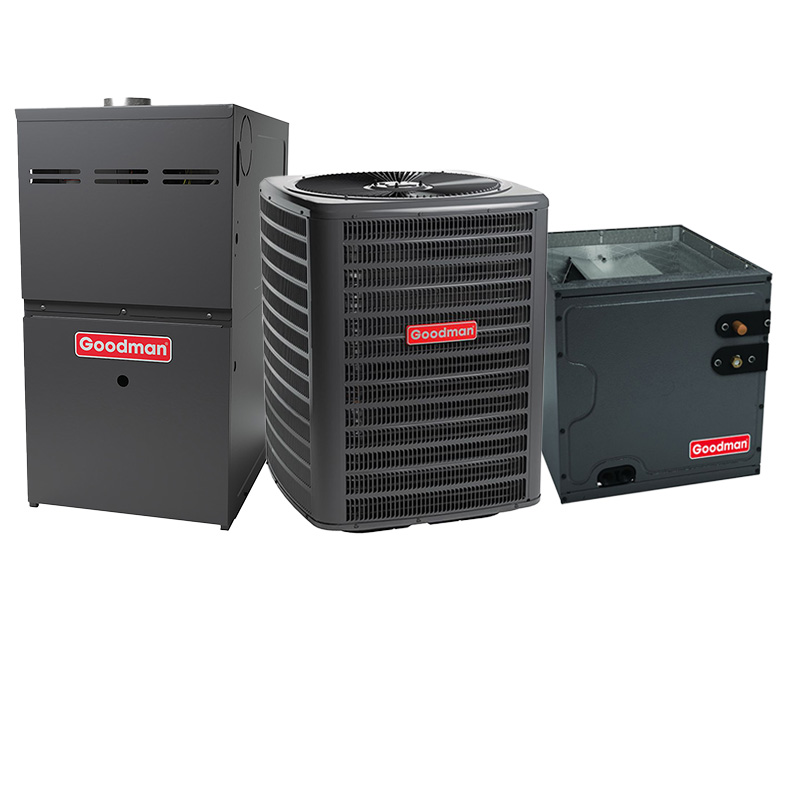
Goodman Furnace And Air Conditioner 5 Ton 16 SEER2 AC With 120000 BTU 80% AFUE Multi-Speed ECM Gas Furnace System – Upflow | R32
View on AC Direct see your lowest price →Check current price on AC Direct →
Key features
- 5-ton cooling capacity rated at 16 SEER2 for baseline modern efficiency
- 120,000 BTU gas furnace with 80% AFUE single-stage heat output
- Multi-speed ECM blower motor reduces electrical draw at partial load
- Upflow configuration suits basement and ground-level closet installs
- R-32 refrigerant with lower global-warming potential than R-410A
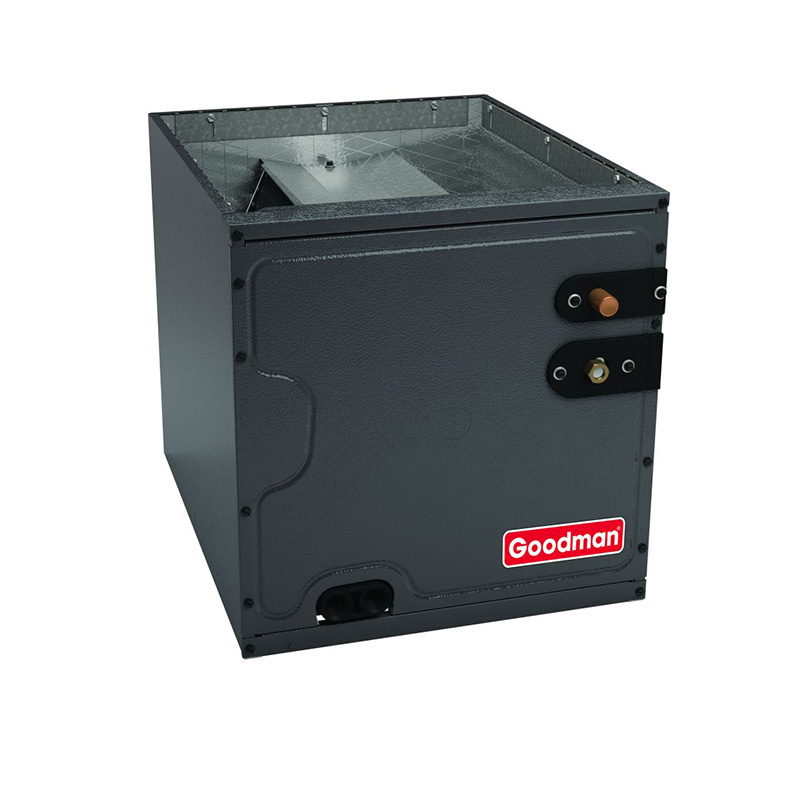
- Factory-matched system simplifies coil compatibility and warranty coverage
About this system
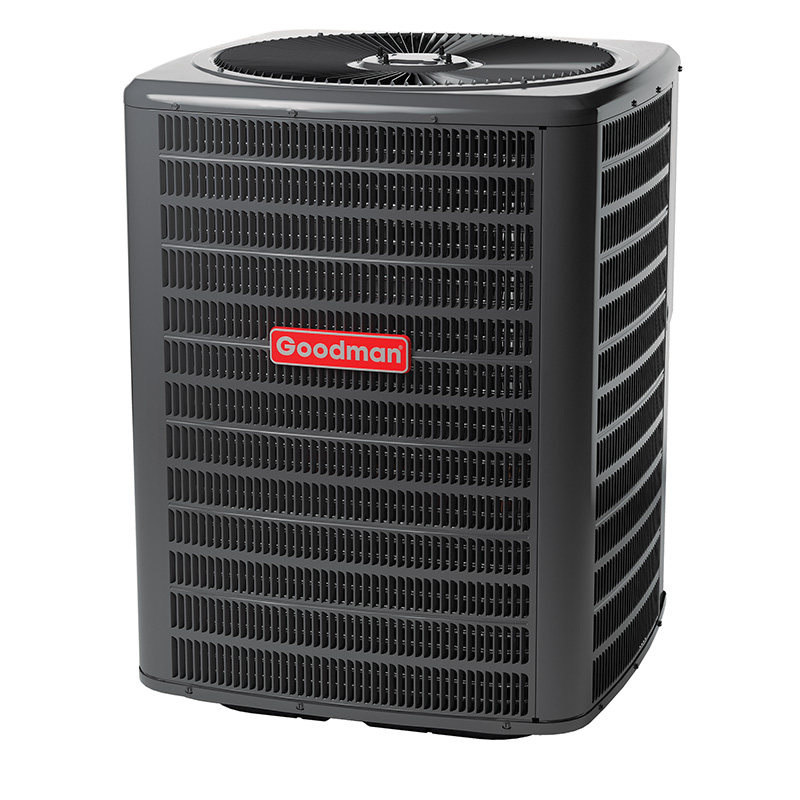
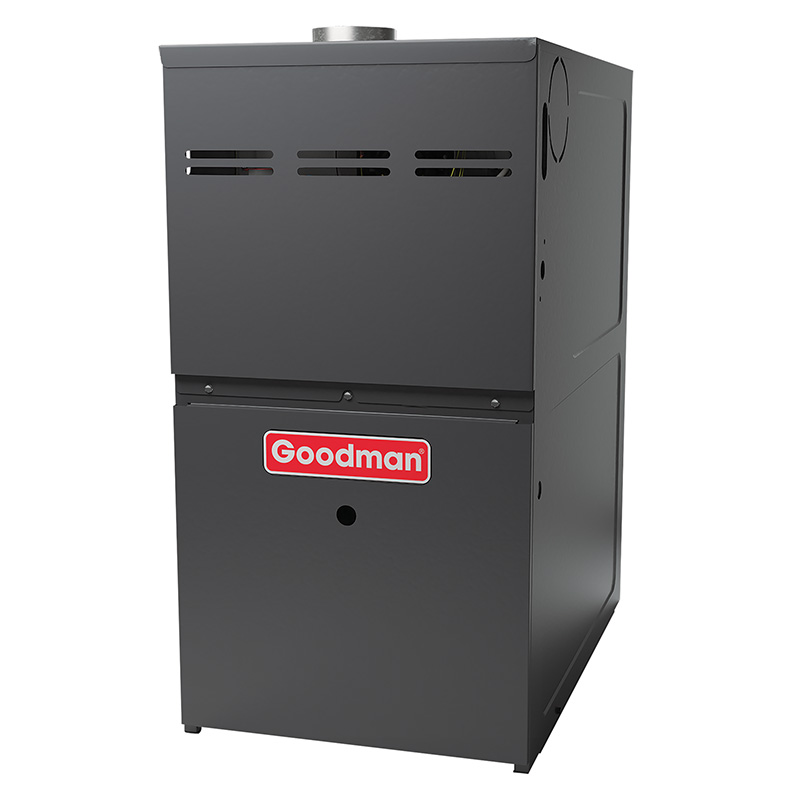
This Goodman bundle pairs a 5-ton, 16 SEER2 central air conditioner with a 120,000 BTU, 80% AFUE multi-speed ECM gas furnace in an upflow configuration, making it a straightforward fit for larger homes typically in the 2,500 to 3,500 square-foot range, depending on local climate and insulation. The R-32 refrigerant charge reflects a shift toward a lower global-warming-potential refrigerant that is increasingly standard as the industry moves away from R-410A. The multi-speed ECM blower motor runs at variable speeds to match heating demand more precisely than a single-speed unit, which moderates temperature swings and can trim electricity consumption at the blower level.
At 16 SEER2 and 80% AFUE, this system sits at the baseline of modern efficiency rather than the leading edge. It meets federal minimum efficiency standards for most U.S. regions, but it is not a high-efficiency setup. Homeowners in cold climates or those with high annual heating hours will notice the 80% AFUE means one dollar out of every five spent on gas leaves through the flue rather than heating the home. Those in milder climates or who prioritize upfront cost over long-term energy savings are the most natural fit. The upflow configuration is standard for installations where the furnace sits in a basement or closet with ductwork running above it.
This Goodman bundle delivers an honest entry-level system for buyers who want a factory-matched 5-ton setup without paying premium-brand prices. The 16 SEER2 and 80% AFUE specs meet current minimums rather than exceed them, and long-term ownership costs depend heavily on install quality and how quickly minor component failures, which Goodman owners do encounter, get addressed. It is a reasonable starting point for budget-conscious buyers who have a reliable local installer.
Overall score is the average of the five ratings above.
What we like
- Purchase price runs roughly 15 to 25 percent below comparable Carrier, Trane, and Lennox equipment
- Factory-matched system reduces compatibility guesswork for the installing contractor
- Multi-speed ECM motor provides better comfort and blower efficiency than a single-speed alternative
- R-32 refrigerant is increasingly available and has a lower environmental footprint than R-410A
- 16 SEER2 meets current federal minimums, keeping the unit eligible for standard utility rebate programs
Trade-offs
- 80% AFUE means 20% of fuel energy is lost through the flue, a real long-term cost in cold climates
- Compressor lifespan averages 10 to 14 years versus 15 to 20 years seen in premium brands, per documented owner experience
- Dual-run capacitor failures are the most commonly reported issue, typically adding a 300 to 600 dollar repair call around the mid-life mark
- Evaporator coil leaks appear in a meaningful share of owner reviews, and a minority of buyers report refrigerant leaks within the first year, usually tied to install or charge quality
What homeowners and pros say about Goodman
Homeowners who leave reviews of Goodman equipment on ConsumerAffairs give the brand roughly 2.5 out of 5 stars, and it is worth understanding what that number reflects. ConsumerAffairs skews toward dissatisfied owners, and the recurring pattern in negative Goodman reviews is repair costs that begin climbing after about year seven. Google dealer reviews land in a more balanced place at around 3.8 out of 5 across hundreds of reviews per location, where the most consistent praise is that the equipment costs noticeably less upfront than Carrier, Trane, or Lennox alternatives. For a 5-ton system like this one, that price gap is real and meaningful.
HVAC technicians who service Goodman equipment regularly point to a consistent pattern of failure modes on this brand. Dual-run capacitor replacements are the most common call, a relatively low-stakes repair in the 300 to 600 dollar range that tends to show up in the mid-life years. Evaporator coil leaks appear in enough owner accounts to be a legitimate concern rather than a rare outlier. Compressor lifespan for Goodman equipment is documented in the 10 to 14 year range, shorter than the 15 to 20 years associated with premium brands. A minority of owners also report refrigerant leaks in the first year, which technicians attribute to install or initial charge issues rather than a product defect. That last point underscores what pros say consistently: on Goodman equipment more than most, the quality of the installer determines a significant share of the ownership experience.
Sources: ConsumerAffairs Goodman owner reviews, AHRI Directory of Certified Product Performance, U.S. DOE appliance and equipment efficiency standards, Goodman product specification sheets.
What it costs to run
At 16 SEER2, cooling this 5-ton system for a typical 1200-hour cooling season at the U.S. average electricity rate of $0.17/kWh works out to roughly $765 per year in cooling, about $148 less per year than a minimum-efficiency 13.4 SEER2 unit of the same size. Your real cost depends on your climate and local rate.
Method: (60,000 BTU/hr ÷ 16 SEER2) × 1200 hours ÷ 1000 × $0.17/kWh. Rate source: U.S. EIA average; cooling hours: moderate-climate estimate.
How it compares
| Brand | Comparable model | SEER2 | Stage | Price position |
|---|---|---|---|---|
| Goodman | GSXH5 / GMVC8 Series (this system) | 16 | Single-stage AC / Multi-speed furnace | Value pick |
| Carrier | Performance 16 Series (24ACC6) | 16 | Single-stage | Typically 15 to 25 percent more than this Goodman bundle |
| Trane | XR16 Series | 16 | Single-stage | Typically 15 to 25 percent more than this Goodman bundle |
| Lennox | Merit Series ML16XC1 | 16 | Single-stage | Typically 15 to 25 percent more than this Goodman bundle |
Competitor rows are comparable single-stage units at similar efficiency; price is relative position, not a quote.
Questions about this system
Will this system work for a house larger than 3,000 square feet?
A 5-ton unit can cool homes in roughly the 2,500 to 3,500 square-foot range, but the right answer depends on your local climate, insulation, window area, and ceiling height. You should have an HVAC contractor perform a Manual J load calculation before purchasing, because oversizing a 5-ton unit leads to short cycling, humidity problems, and premature wear.
Is R-32 refrigerant easy to service, and can my current technician handle it?
R-32 is becoming more common in residential equipment and most certified HVAC technicians are or will soon be familiar with it, but it is mildly flammable, which requires specific handling procedures and certified equipment. Confirm that your installer and any future service technician holds the appropriate certification before work begins.
What does 80% AFUE actually cost me compared to a 96% AFUE furnace?
With an 80% AFUE furnace, roughly 20 cents of every dollar spent on gas exits through the flue. At a 96% AFUE unit, that drops to about 4 cents. The annual dollar difference depends on your gas rates and heating hours, but in a cold climate with high heating loads, the efficiency gap can add up to several hundred dollars per year over the system's life.
How likely am I to need a capacitor replacement, and what does it cost?
Dual-run capacitor failure is the most commonly documented repair issue for Goodman equipment, and it tends to show up in the mid-life years. The part itself is inexpensive, and a service call to replace it typically runs in the 300 to 600 dollar range depending on labor rates in your area. Keeping a service contract or scheduling annual tune-ups gives a technician the chance to catch a weakening capacitor before it causes a no-cool call.
Does Goodman's warranty require registration, and what does it actually cover?
Goodman typically requires online product registration within a set window after installation to qualify for the full parts warranty period, which can extend to 10 years on covered components when registered. Without registration the coverage period is shorter, so registering promptly after install matters. The warranty covers parts, not labor, so factor in labor costs for any warranty repair when budgeting.
Specifications
| Cooling capacity | 5 Ton |
| Efficiency | 16 SEER2 |
| Furnace output | 120000 BTU |
| Furnace efficiency | 80% AFUE |
| Configuration | Upflow |
| Refrigerant | R-32 |