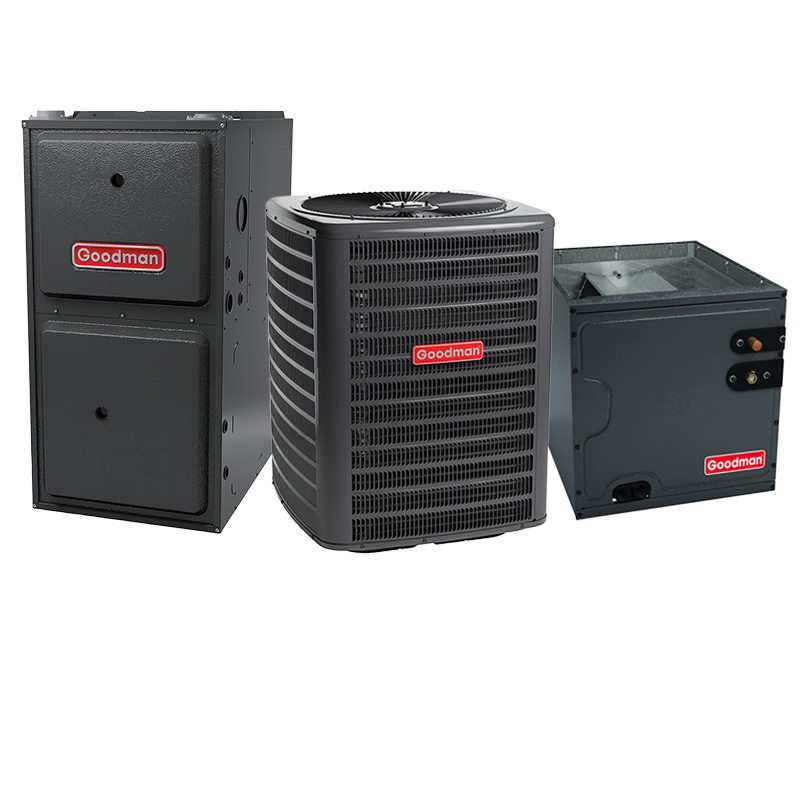
Goodman Furnace And Air Conditioner 5 Ton 16 SEER2 AC With 120000 BTU 80% AFUE Two Stage Multi-Speed ECM Gas Furnace System – Upflow | R32
View on AC Direct see your lowest price →Check current price on AC Direct →
Key features
- 5-ton, 16 SEER2 R-32 air conditioner for mid-efficiency cooling in larger homes
- 120,000 BTU two-stage gas valve reduces short-cycling and improves temperature consistency
- 80% AFUE rating converts eight of every ten units of gas into usable heat
- Multi-speed ECM blower motor cuts electricity use compared to standard PSC motors
- Upflow configuration designed for basement or closet installations with overhead ductwork
- R-32 refrigerant with lower global warming potential than outgoing R-410A systems
About this system
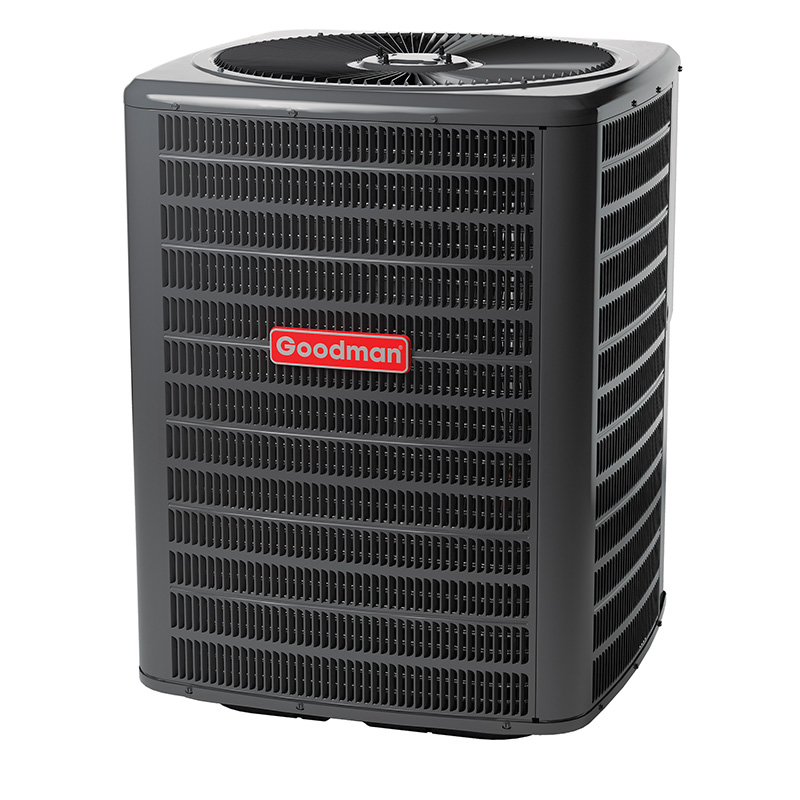
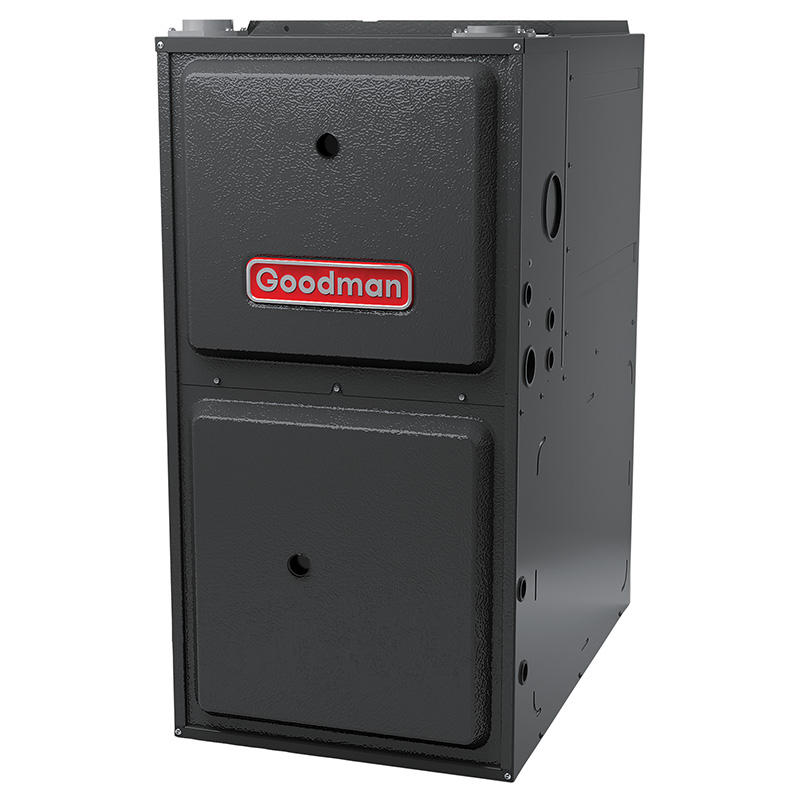
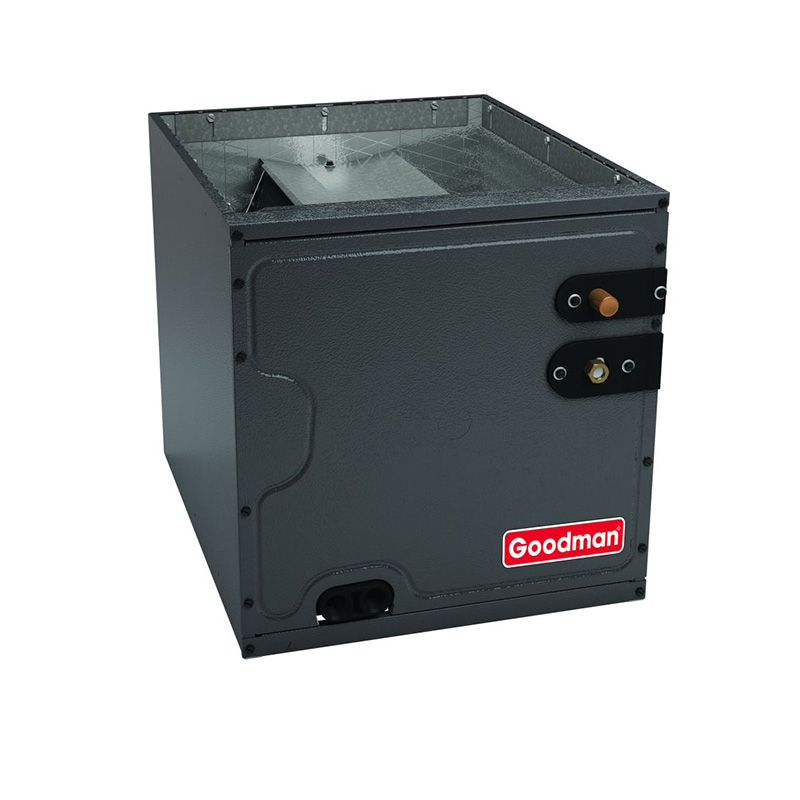
This Goodman bundle pairs a 5-ton, 16 SEER2 R-32 air conditioner with a 120,000 BTU, 80% AFUE two-stage, multi-speed ECM gas furnace in an upflow configuration. The combination is aimed at larger homes, typically in the 2,500 to 3,500 square foot range, where a single-stage system would cycle on and off aggressively and struggle to hold even temperatures. The two-stage gas valve lets the furnace run at a lower output on mild days, reducing short-cycling, evening out hot and cold spots, and trimming fuel bills compared to a single-stage 80% unit. The ECM blower motor draws significantly less electricity than a standard PSC motor, which adds up over a heating season.
On the cooling side, 16 SEER2 sits at the practical entry point for mid-efficiency equipment under the current federal standards. It will outperform older 13 or 14 SEER systems in operating cost but will not match the 18 SEER2 and above numbers of variable-speed premium alternatives. R-32 refrigerant is worth noting: it carries a lower global warming potential than R-410A and is becoming the industry standard, so future service availability should be straightforward. The upflow configuration means the furnace discharges conditioned air through the top, suiting installations where the air handler sits in a basement or closet and ductwork runs overhead. Buyers who need a downflow or horizontal setup will need a different model.
This system suits homeowners who want a noticeable step up from the cheapest single-stage equipment without paying the premium that Trane, Lennox, or Carrier charge for equivalent or slightly higher efficiency. The trade-off is that Goodman’s long-term reliability numbers trail the premium tier, and getting the most out of any Goodman product depends heavily on the quality of the installing contractor.
This Goodman bundle delivers genuine mid-efficiency performance at a price point that is typically 15 to 25 percent below comparable Trane, Lennox, or Carrier packages, making it a reasonable choice for budget-conscious buyers who can source a skilled installer. The two-stage furnace and ECM motor are real operational upgrades over single-stage economy units. However, Goodman's documented reliability concerns, particularly around compressor longevity and coil integrity, mean the lower upfront cost could be offset by higher repair expenses after year seven.
Overall score is the average of the five ratings above.
What we like
- Priced 15 to 25 percent below equivalent Trane, Lennox, and Carrier equipment
- Two-stage gas valve improves comfort and reduces short-cycling on mild days
- ECM blower motor meaningfully reduces electricity consumption versus PSC motors
- 16 SEER2 rating meets mid-efficiency standards and lowers cooling operating costs versus older equipment
- R-32 refrigerant is increasingly available and carries a lower environmental impact than R-410A
Trade-offs
- Compressor lifespan averages 10 to 14 years versus 15 to 20 years for premium brands, a meaningful long-term cost difference
- Evaporator coil leaks appear in a notable share of owner reports, which can be an expensive repair outside the parts warranty window
- 80% AFUE does not qualify for high-efficiency federal tax credits and will cost more to operate annually than a 95%+ AFUE alternative
- Overall performance depends heavily on install quality; a poor installation is the most commonly cited cause of early problems with Goodman equipment
What homeowners and pros say about Goodman
Homeowners who have lived with Goodman systems tend to split into two camps. Those with good installs and a responsive service contractor often describe years of uneventful operation and point to the lower purchase price as the reason they chose the brand. Those who ran into problems sooner tell a different story, and that pattern shows up in the aggregate ratings: Goodman sits at roughly 2.5 out of 5 on ConsumerAffairs, a complaint-heavy channel where the recurring theme is repair bills climbing after year seven, and around 3.8 out of 5 on Google dealer reviews, where affordability is the most frequently cited positive. The gap between those two scores reflects how much the ownership experience varies.
HVAC technicians who work on Goodman equipment regularly point to dual-run capacitors as the most common service call, a failure that usually runs between 300 and 600 dollars and is straightforward to fix. More consequential are evaporator coil leaks, which appear in enough owner reports to be worth budgeting for, and compressor lifespans that tend to fall in the 10 to 14 year range rather than the 15 to 20 years more typical of premium brands. A small number of owners also report refrigerant leaks in the first year, which technicians almost universally attribute to the installation rather than the equipment itself. For a 5-ton two-stage system like this one, where the stakes of a failed compressor or a leaking coil are higher than on a smaller unit, the consistent advice from the trade is to invest in the best installer you can find and to keep up with annual maintenance.
Sources: ConsumerAffairs Goodman owner reviews, AHRI Directory of Certified Product Performance, U.S. DOE appliance and equipment efficiency standards, Goodman product specification sheets.
What it costs to run
At 16 SEER2, cooling this 5-ton system for a typical 1200-hour cooling season at the U.S. average electricity rate of $0.17/kWh works out to roughly $765 per year in cooling, about $148 less per year than a minimum-efficiency 13.4 SEER2 unit of the same size. Your real cost depends on your climate and local rate.
Method: (60,000 BTU/hr ÷ 16 SEER2) × 1200 hours ÷ 1000 × $0.17/kWh. Rate source: U.S. EIA average; cooling hours: moderate-climate estimate.
How it compares
| Brand | Comparable model | SEER2 | Stage | Price position |
|---|---|---|---|---|
| Goodman | GSXH5 / GMVC8 Series Bundle | 16 | Two-stage | Value pick |
| Carrier | Comfort 16 (24ACC6) with 58SB0 80% Gas Furnace | 16 | Single-stage | Typically 15 to 25 percent more than this Goodman bundle |
| Trane | XR16 (4TTR6) with S8X1 80% Gas Furnace | 16 | Single-stage | Typically 15 to 25 percent more than this Goodman bundle |
| Lennox | Merit 16 (14ACX) with ML180 80% Gas Furnace | 16 | Single-stage | Typically 15 to 25 percent more than this Goodman bundle |
Competitor rows are comparable single-stage units at similar efficiency; price is relative position, not a quote.
Questions about this system
Is 16 SEER2 worth paying more for over a 14 SEER2 system for a 5-ton unit?
At 5 tons, the efficiency gap between 14 and 16 SEER2 translates into a meaningful annual electricity savings because the system moves a large volume of air and runs frequently in warm climates. For homes in the South or Southwest where cooling hours are high, the payback period on the 16 SEER2 premium is generally shorter. In cooler northern climates with fewer cooling hours, the math is less compelling.
What does the two-stage furnace actually do differently in daily operation?
On most days, the furnace runs at its lower stage, which means longer, quieter cycles that distribute heat more evenly and reduce the blast-and-coast temperature swings of single-stage units. It only ramps to full 120,000 BTU output when outdoor temperatures drop sharply and the thermostat calls for more heat. The result is generally better comfort and lower fuel use during the shoulder seasons.
Why does install quality matter so much more with Goodman than with premium brands?
Goodman equipment is engineered to perform within tighter tolerances, meaning that an improper refrigerant charge, undersized ductwork, or a condensate line that is not sloped correctly are more likely to show up as early failures. The minority of owners who report refrigerant leaks in the first year almost always trace them to installation or charge issues, not factory defects. A licensed contractor who pulls permits, pressures the system, and verifies airflow is essential.
How long should I realistically expect the compressor in this system to last?
Based on documented owner experience, Goodman compressors tend to average 10 to 14 years, compared to 15 to 20 years for premium brands. Running the system at the correct refrigerant charge, keeping the condenser coil clean, and replacing capacitors promptly when they fail are the main factors under your control that can push that number toward the higher end.
Does this system qualify for the federal energy efficiency tax credit?
The 80% AFUE furnace does not meet the 97% AFUE threshold required for the furnace portion of the federal 25C tax credit. The 16 SEER2 air conditioner may qualify for the cooling credit if it also meets the required EER2 threshold; you should confirm the specific model numbers against the ENERGY STAR certified products list and consult a tax professional before filing.
Specifications
| Cooling capacity | 5 Ton |
| Efficiency | 16 SEER2 |
| Furnace output | 120000 BTU |
| Furnace efficiency | 80% AFUE |
| Configuration | Upflow |
| Refrigerant | R-32 |