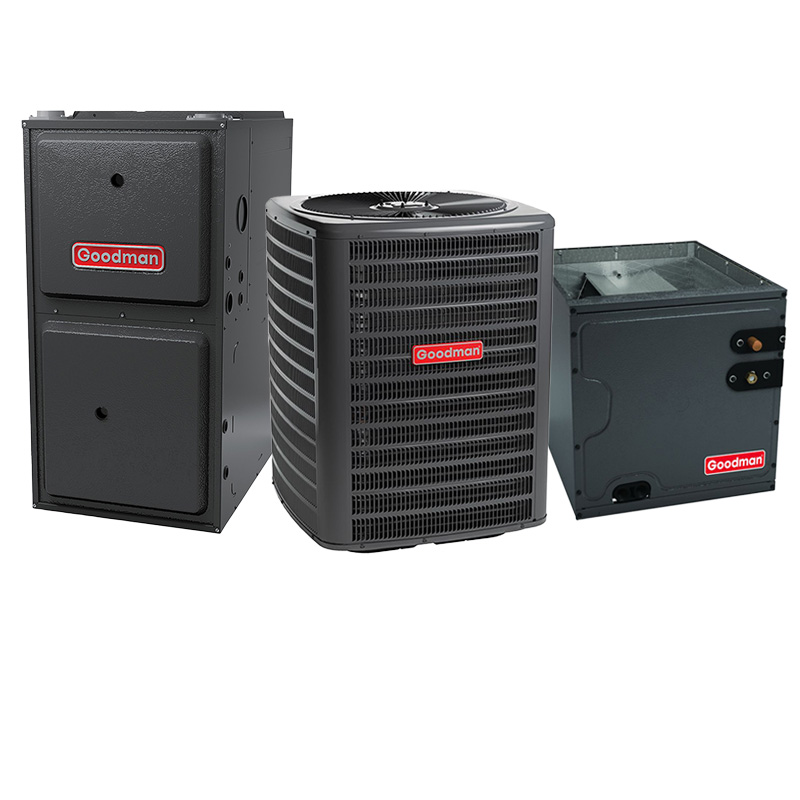
Goodman Furnace And Air Conditioner 5 Ton 16 SEER2 AC With 80000 BTU 80% AFUE Two Stage Multi-Speed ECM Gas Furnace System – Upflow | R32
View on AC Direct see your lowest price →Check current price on AC Direct →
Key features
- 5-ton cooling capacity suited for larger homes, roughly 2,400 to 3,000 sq ft depending on load
- 16 SEER2 efficiency rating, above federal minimums and competitive in the mid-efficiency tier
- Two-stage gas furnace reduces temperature swings and runs quieter on low fire the majority of the time
- Multi-speed ECM blower motor adjusts airflow to match demand, improving comfort and reducing energy use
- 80,000 BTU output at 80% AFUE; efficient enough for moderate climates, less so for heavy heating regions
- R-32 refrigerant with lower global warming potential than the R-410A used in older systems
About this system
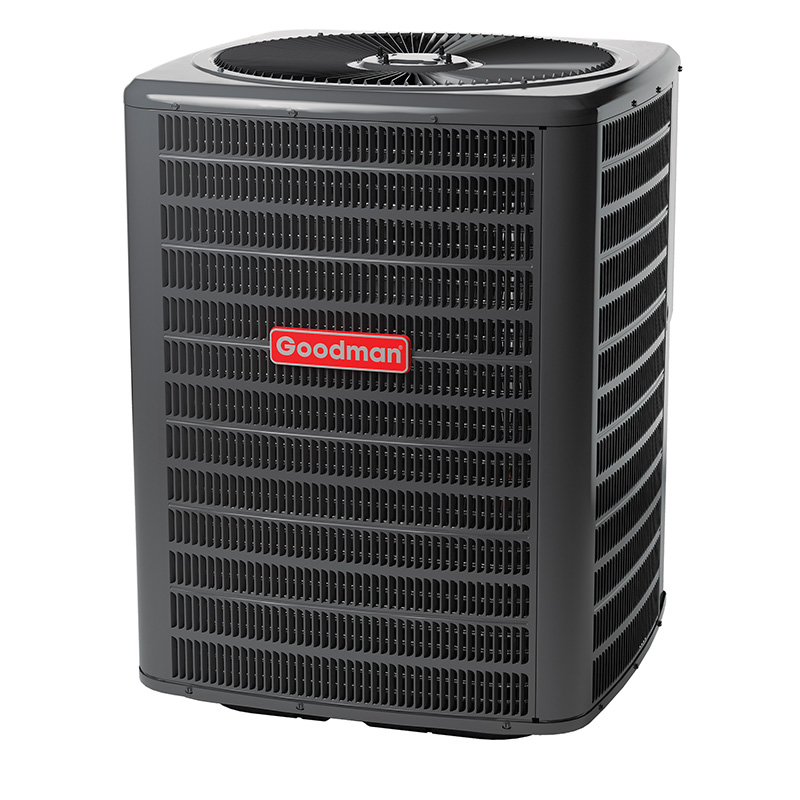
This Goodman bundle pairs a 5-ton, 16 SEER2 R-32 air conditioner with an 80,000 BTU, 80% AFUE two-stage gas furnace in an upflow configuration. The 5-ton cooling capacity is sized for larger homes, typically in the 2,400 to 3,000 square foot range depending on climate, insulation, and ceiling height. At 16 SEER2, the system clears the federal minimum efficiency threshold by a comfortable margin and will meaningfully outperform older 13 or 14 SEER equipment on summer utility bills, though it stops well short of the 18 to 20 SEER2 territory where premium variable-speed systems operate.
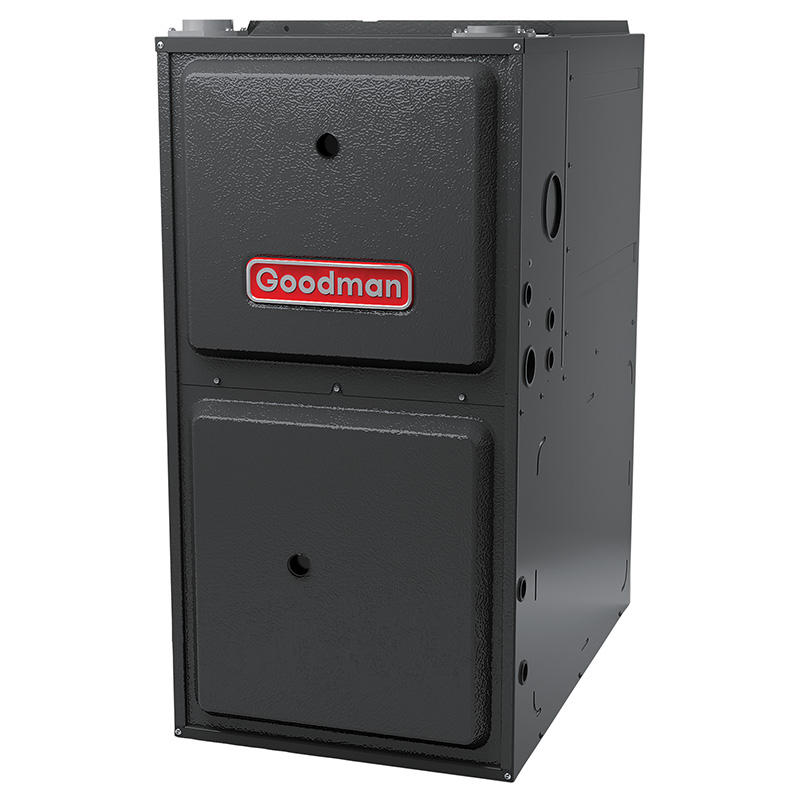
The two-stage furnace is a genuine comfort upgrade over single-stage heating. It runs on low fire the majority of the time, which reduces temperature swings, cuts cycling noise, and extracts more even heat distribution through the home. The multi-speed ECM blower motor compounds those benefits by matching airflow to demand rather than hammering on at full speed every cycle. The 80% AFUE rating means one-fifth of combustion energy exits through the flue as exhaust, so homeowners in colder climates where heating loads are heavy may want to compare the long-term fuel savings of a 96% AFUE option against its higher upfront cost. R-32 refrigerant carries a lower global warming potential than the R-410A it replaces and is what forward-looking equipment in this price tier is moving toward.
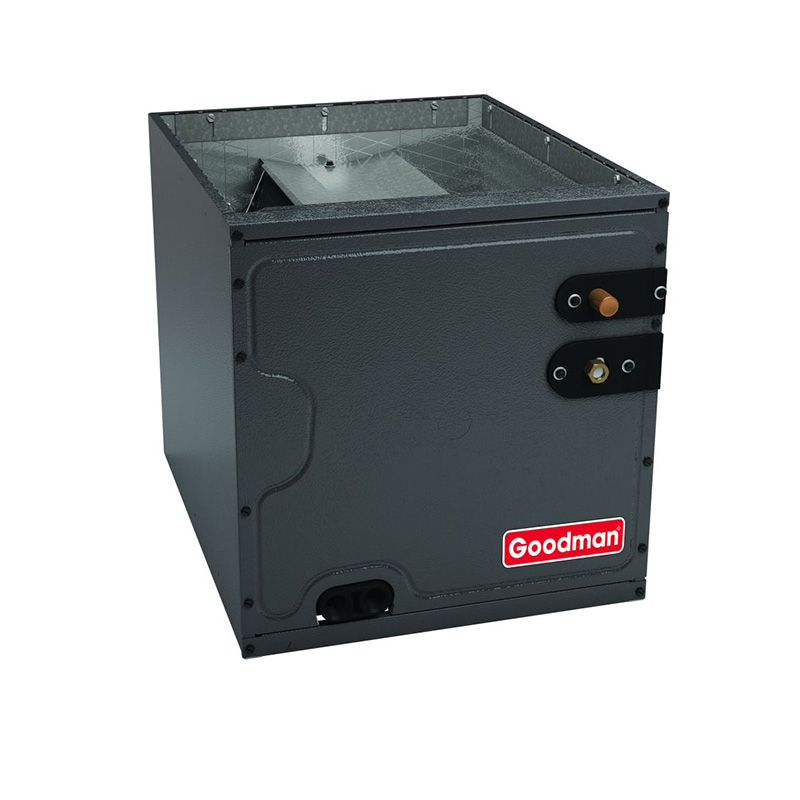
This system suits budget-conscious buyers replacing aging equipment in a larger home who want meaningful efficiency and comfort gains without stepping up to premium-brand pricing. It is most at home when professionally installed by a technician experienced with Goodman equipment and when paired with a quality coil and correctly sized ductwork.
This Goodman system delivers a real mid-efficiency comfort package at a price point that is hard to argue with for larger homes on a budget. The two-stage furnace and ECM blower are genuine upgrades over entry-level equipment, and R-32 keeps the system future-relevant. The trade-off is that Goodman's reliability track record is average at best, with documented failure modes that buyers should understand before committing.
Overall score is the average of the five ratings above.
What we like
- Priced roughly 15 to 25 percent below comparable Trane, Lennox, and Carrier systems, leaving room in the budget for quality installation
- Two-stage heating operation noticeably reduces hot and cold spots compared to single-stage furnaces
- Multi-speed ECM blower is more energy-efficient and quieter than standard PSC motors
- R-32 refrigerant is forward-compatible and carries a lower environmental impact than R-410A
- 16 SEER2 efficiency will reduce cooling costs meaningfully versus equipment built before 2015
Trade-offs
- Compressor lifespan averages 10 to 14 years, shorter than the 15 to 20 years reported for premium brands
- Evaporator coil leaks appear in a notable share of owner reviews, worth monitoring after installation
- 80% AFUE is adequate for mild to moderate climates but leaves significant fuel savings on the table in cold regions compared to 96% AFUE alternatives
- Overall reliability is closely tied to install quality; a rushed or under-qualified installation can accelerate the failure modes Goodman is already known for
What homeowners and pros say about Goodman
Homeowners who share feedback on Goodman equipment tend to split along predictable lines. Those who had the system professionally installed by an experienced technician and kept up with maintenance often report solid performance through the first several years. The affordability is consistently the most cited reason for choosing Goodman, reflected in Google dealer review scores that average around 3.8 out of 5, where the value-for-money theme appears repeatedly. The two-stage furnace and ECM blower in this specific configuration also draw positive comments around quieter, more even heating compared to basic single-stage equipment owners replaced.
The less favorable picture comes through clearly on ConsumerAffairs, where Goodman scores around 2.5 out of 5 on a channel that skews toward owners with complaints. The recurring pattern is equipment that performs reasonably well for six or seven years and then begins generating repair bills, consistent with the documented failure modes. Dual-run capacitor failures are the most reported issue and are inexpensive to fix when caught early. Evaporator coil leaks are a more serious concern and appear often enough in owner accounts to be worth factoring into a long-term cost estimate. Compressor longevity averaging 10 to 14 years versus 15 to 20 for premium competitors is a real gap, especially on a 5-ton unit where replacement costs are at the higher end. HVAC professionals who work on Goodman equipment regularly note that many of the early failures they see trace back to installation shortcuts, reinforcing that budget left over from the equipment purchase is best spent on a thorough, quality install.
Sources: ConsumerAffairs Goodman owner reviews, AHRI Directory of Certified Product Performance, U.S. DOE appliance and equipment efficiency standards, Goodman product specification sheets.
What it costs to run
At 16 SEER2, cooling this 5-ton system for a typical 1200-hour cooling season at the U.S. average electricity rate of $0.17/kWh works out to roughly $765 per year in cooling, about $148 less per year than a minimum-efficiency 13.4 SEER2 unit of the same size. Your real cost depends on your climate and local rate.
Method: (60,000 BTU/hr ÷ 16 SEER2) × 1200 hours ÷ 1000 × $0.17/kWh. Rate source: U.S. EIA average; cooling hours: moderate-climate estimate.
How it compares
| Brand | Comparable model | SEER2 | Stage | Price position |
|---|---|---|---|---|
| Goodman | This system (5-ton 16 SEER2 AC + 80,000 BTU 80% AFUE two-stage furnace) | 16 | Two-stage | Value pick |
| Carrier | Performance 16 Series (24ACC636 with 59TP6) | 16 | Two-stage | Typically 15 to 25 percent more than this Goodman system |
| Trane | XR16 (4TTR6060 with S9X2 80% furnace) | 16 | Single-stage AC, two-stage furnace | Typically 15 to 25 percent more than this Goodman system |
| Lennox | Merit 16 Series (ML16XC1 with ML196E furnace) | 16 | Single-stage AC, two-stage furnace | Typically 15 to 25 percent more than this Goodman system |
Competitor rows are comparable single-stage units at similar efficiency; price is relative position, not a quote.
Questions about this system
Is 16 SEER2 efficient enough to justify this system over a cheaper 14 SEER2 option?
For a 5-ton system running long cooling seasons, the gap between 14 and 16 SEER2 does produce measurable monthly savings that can offset the modest price difference over several years. In mild climates with shorter summers, payback takes longer and the financial case is weaker.
The 80% AFUE furnace is included, but I live in Minnesota. Should I upgrade to 96% AFUE?
In climates with long, cold winters, the 16-percentage-point efficiency gap between 80% and 96% AFUE translates to a meaningful annual fuel cost difference that can pay back a higher-efficiency furnace in five to eight years. If your heating load is heavy, pricing out a 96% AFUE two-stage option before buying is worth the time.
What are the most likely repairs I should plan for with Goodman equipment?
Dual-run capacitors are the most commonly reported failure, typically costing 300 to 600 dollars and usually a same-day fix. Evaporator coil leaks show up in a meaningful share of reviews and are more expensive to address. Compressor replacement, if needed, typically surfaces in the 10 to 14 year window rather than at 15 to 20 years as with premium brands.
Does the upflow configuration limit where this system can be installed?
Upflow means conditioned air exits the top of the furnace and travels upward into the supply ductwork, which is the standard configuration for systems installed in a basement, utility closet, or mechanical room where ductwork runs through a ceiling plenum. It is not suitable for attic or crawlspace installations without a different configuration.
What refrigerant does this system use and does that matter for future service?
This system uses R-32, which has replaced R-410A in newer equipment due to its lower global warming potential. Most certified HVAC technicians are equipped to handle R-32, but it is worth confirming with your installer before service appointments, as handling procedures differ slightly from R-410A and require specific equipment.
Specifications
| Cooling capacity | 5 Ton |
| Efficiency | 16 SEER2 |
| Furnace output | 80000 BTU |
| Furnace efficiency | 80% AFUE |
| Configuration | Upflow |
| Refrigerant | R-32 |