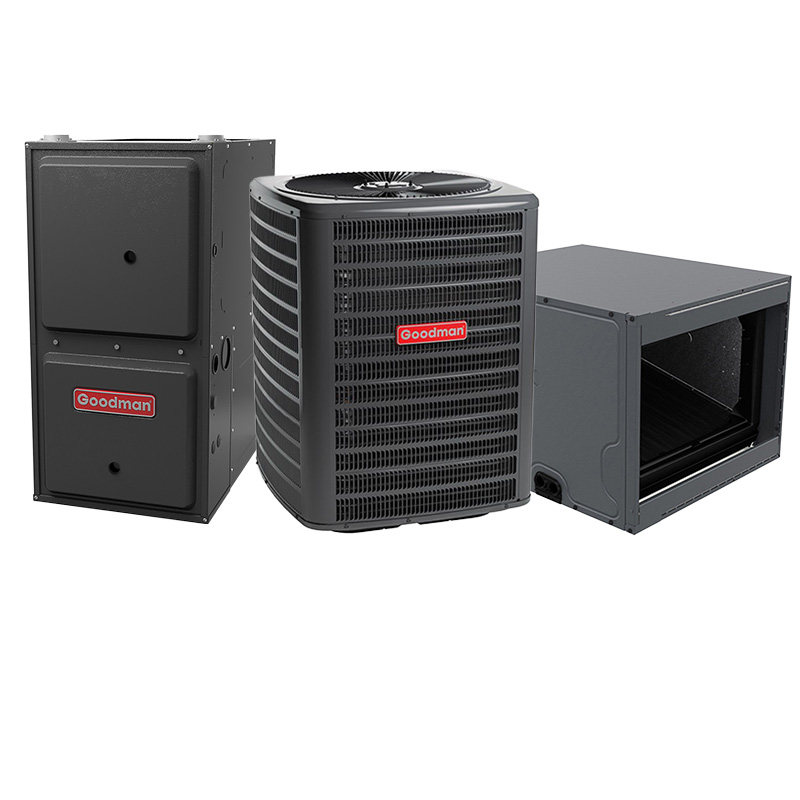
Goodman R32 1.5 Ton 13.8 SEER2 40000 BTU 80% Two Stage 9-Speed ECM Gas Furnace and Air Conditioner System – Horizontal
View on AC Direct see your lowest price →Check current price on AC Direct →
Key features
- 1.5-ton R-32 air conditioner rated at 13.8 SEER2 for entry-level efficiency compliance
- Horizontal-only configuration designed for attic, crawl space, and mobile home installs
- Two-stage gas furnace runs on low fire for most heating hours, reducing temperature swings
- Nine-speed ECM blower motor adjusts airflow gradually for quieter operation and lower fan energy use
- R-32 refrigerant with lower global warming potential than legacy R-410A systems
- Goodman factory warranty covers parts; registration typically required within 60 days of install
About this system
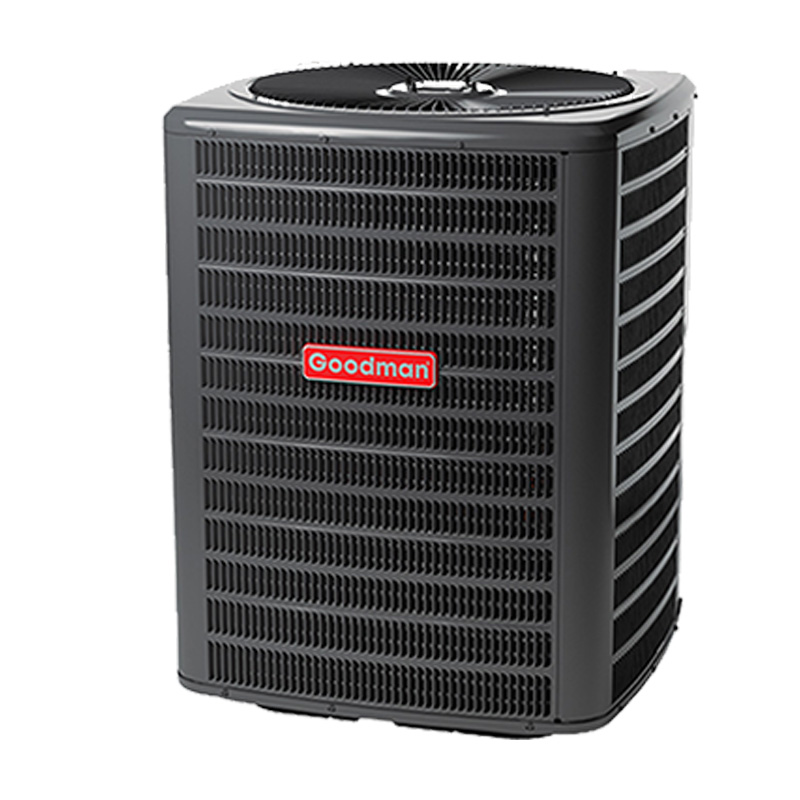
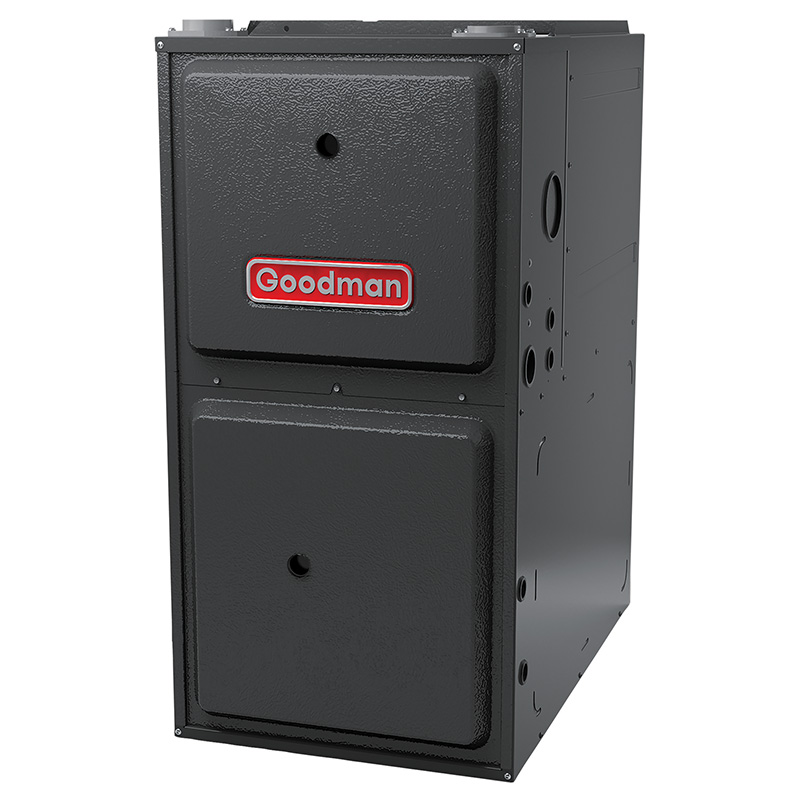
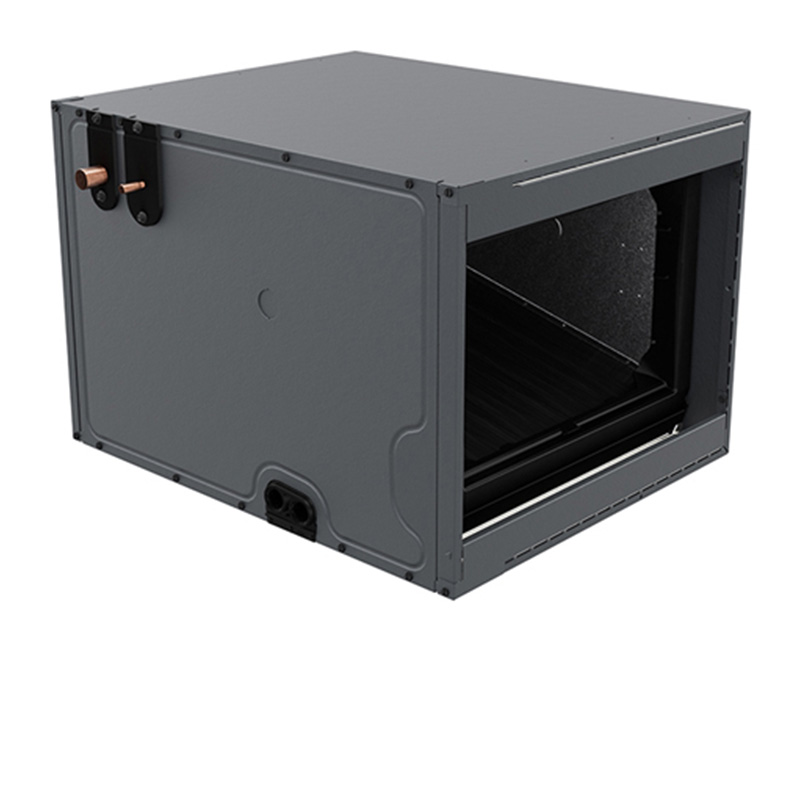
This Goodman horizontal system pairs a 1.5-ton R-32 air conditioner rated at 13.8 SEER2 with a 40,000 BTU two-stage gas furnace in a configuration built specifically for attic installs, crawl spaces, and utility closets where the air handler must lie on its side. The horizontal-only orientation is a real constraint: if your mechanical space does not require it, a standard upflow or downflow unit gives you more flexibility. But for tight attic runs and mobile homes, this package is one of the more accessible options on the market at its price point.
The two-stage furnace and nine-speed ECM blower motor are the standout specs here. Two-stage heating means the furnace runs on a lower fire the majority of the time, cycling up only on the coldest days. That longer, quieter low-stage run distributes heat more evenly and keeps humidity in better check than a single-stage unit. The ECM blower adds to that by ramping airflow gradually rather than kicking on at full blast, which saves electricity over the heating season and reduces the hot-and-cold drafts that frustrate owners of basic systems. R-32 refrigerant carries a lower global warming potential than R-410A and is becoming standard across the industry. Note that this listing does not include an AFUE rating in the product data, so confirm the furnace efficiency tier with your distributor before purchase if natural gas operating costs are a key factor for your home.
This system earns its place as a budget-friendly horizontal-application package with genuinely useful two-stage and ECM features that are not always available at this price. The trade-off is Goodman's documented mid-life repair frequency, particularly around capacitors and evaporator coils, which can erode the upfront savings after year seven or so. Buyers who invest in a quality install and sign up for annual maintenance will get the most out of it.
Overall score is the average of the five ratings above.
What we like
- Two-stage furnace and ECM blower deliver noticeably more even comfort than single-stage alternatives at this price
- Priced roughly 15 to 25 percent below comparable Trane, Carrier, and Lennox horizontal systems
- R-32 refrigerant is a forward-looking choice that aligns with tightening EPA regulations
- Horizontal configuration is purpose-built for attic and crawl space installs where upflow units simply do not fit
- Wide dealer and parts network means capacitors and common components are usually in stock locally
Trade-offs
- Dual-run capacitors are the most frequently reported failure, typically appearing after year five and costing 300 to 600 dollars per incident
- Evaporator coil leaks appear in a meaningful share of owner reports, a potential repair that can run well beyond the capacitor cost
- Compressor longevity averages 10 to 14 years versus 15 to 20 years for premium-brand compressors, meaning earlier end-of-life decisions
- A minority of owners report refrigerant leaks in the first year, most traced to install or initial charge issues rather than factory defects
What homeowners and pros say about Goodman
Homeowners who have lived with Goodman equipment tend to land in two camps. Those with a skilled installer who pulled permits, verified refrigerant charge, and set airflow correctly often report years of unremarkable, problem-free operation and point to the lower purchase price as genuine value. Those who had a rushed or cut-rate install are more likely to be the ones leaving the reviews that drag Goodman’s ConsumerAffairs score down to roughly 2.5 out of 5, citing repair bills that started accumulating around year seven and beyond. Google dealer reviews tell a more moderate story, averaging near 3.8 out of 5, where the word that comes up most often is affordable rather than excellent. For a horizontal system like this one, where the install geometry is more involved than a straight upflow closet job, the quality of the technician doing the work is arguably more important than the brand on the cabinet.
HVAC professionals who work on Goodman equipment regularly describe dual-run capacitors as the unit’s most predictable weak link, a part that fails often enough that experienced techs sometimes replace it proactively at tune-up time. The repair itself typically runs 300 to 600 dollars and is not catastrophic, but it is a recurring cost owners of premium-brand equipment report less frequently. Evaporator coil leaks are a more serious documented concern, appearing in enough owner accounts to be worth factoring into a long-term budget. Compressor lifespan averaging 10 to 14 years is real, and for a system installed in an attic where labor access is harder, that timeline matters when a replacement decision arrives. Pros consistently frame Goodman as a sensible choice for budget-constrained buyers who treat maintenance as non-negotiable, and a risky choice for anyone planning to set it and forget it for 15 years.
Sources: ConsumerAffairs Goodman owner reviews, AHRI Directory of Certified Product Performance, U.S. DOE appliance and equipment efficiency standards, Goodman product specification sheets.
What it costs to run
At 13.8 SEER2, cooling this 1.5-ton system for a typical 1200-hour cooling season at the U.S. average electricity rate of $0.17/kWh works out to roughly $266 per year in cooling, about $8 less per year than a minimum-efficiency 13.4 SEER2 unit of the same size. Your real cost depends on your climate and local rate.
Method: (18,000 BTU/hr ÷ 13.8 SEER2) × 1200 hours ÷ 1000 × $0.17/kWh. Rate source: U.S. EIA average; cooling hours: moderate-climate estimate.
How it compares
| Brand | Comparable model | SEER2 | Stage | Price position |
|---|---|---|---|---|
| Goodman | R-32 Horizontal Two-Stage ECM System (this unit) | 13.8 | Two-stage | Value pick |
| Carrier | Performance 14 (24ACC4 series) with horizontal air handler | 13.8 to 14.3 | Single-stage | Typically 15 to 25 percent more than the Goodman |
| Trane | XR14 with horizontal TEM4 air handler | 14.0 to 14.5 | Single-stage | Typically 15 to 25 percent more than the Goodman |
| Lennox | Merit 14ACX with horizontal CBX25UH air handler | 13.8 to 14.3 | Single-stage | Typically 15 to 25 percent more than the Goodman |
Competitor rows are comparable single-stage units at similar efficiency; price is relative position, not a quote.
Questions about this system
Is 13.8 SEER2 good enough to meet current efficiency standards, or will I have trouble getting permits?
13.8 SEER2 meets the federal minimum for the Northern region as of 2023 and satisfies most local permit requirements in that zone. If you are in the Southwest or Southeast, check your regional minimum, as those regions require higher SEER2 floors for cooling equipment and this unit may not qualify there.
Can this system be installed in an upflow or downflow position if my space ends up being more flexible than I thought?
No. The horizontal designation on this unit is fixed by the cabinet and drain pan design. Attempting an upflow or downflow install creates drainage and airflow problems that void the warranty and can damage the unit. If there is any chance your space can accommodate a standard orientation, order the appropriate configuration from the start.
What does the two-stage furnace actually do differently from a single-stage on mild winter days?
On a mild day the furnace fires at its lower stage, running longer cycles at reduced output. That longer runtime means more air passes over the heat exchanger before the burner shuts off, producing more even temperatures room to room and better humidity control. The unit only escalates to full capacity when outdoor temperatures drop significantly and the home cannot keep up on low stage.
Goodman has a mixed reputation online. How worried should I realistically be about reliability?
The ConsumerAffairs score of about 2.5 out of 5 is worth noting, though that platform captures complaints disproportionately. Google dealer reviews average around 3.8 out of 5, with affordability as the most common praise. The documented failure points are dual-run capacitors (a relatively inexpensive fix), evaporator coil leaks, and compressors that tend to reach end-of-life around 10 to 14 years rather than the 15 to 20 years seen with premium brands. A maintenance contract and prompt capacitor replacement when symptoms appear help significantly.
Does R-32 refrigerant require any special handling or tools that my HVAC technician might not have?
R-32 requires dedicated manifold gauges and recovery equipment that cannot be shared with R-410A or R-22 tools. Most established HVAC companies have already equipped their technicians as R-32 adoption has accelerated, but it is worth confirming with your service tech before scheduling a maintenance visit or repair to avoid a wasted trip.
Specifications
| Cooling capacity | 1.5 Ton |
| Efficiency | 13.8 SEER2 |
| Furnace output | 40000 BTU |
| Configuration | Horizontal |
| Refrigerant | R-32 |