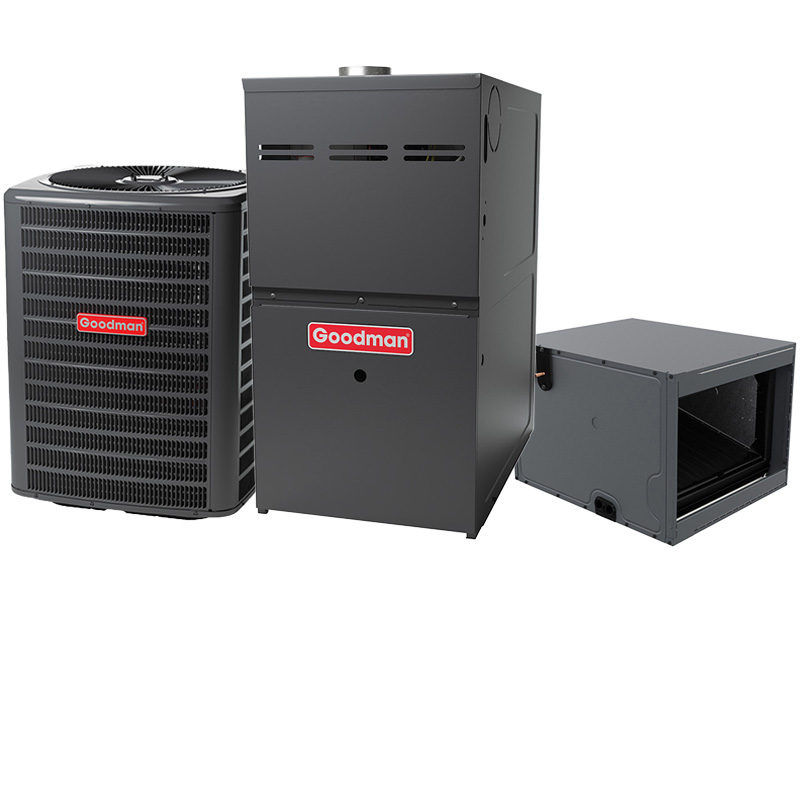
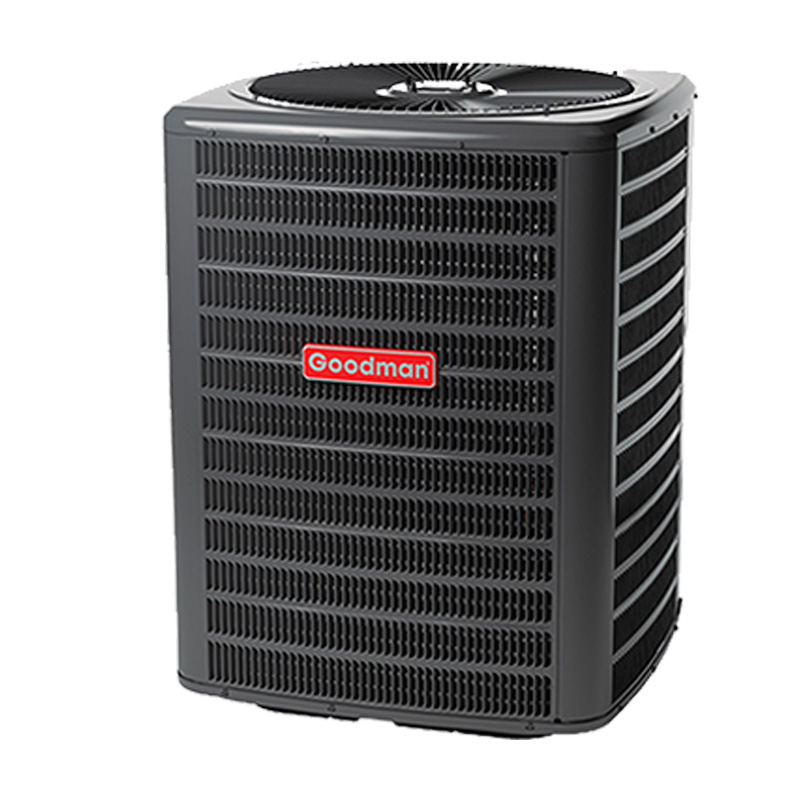
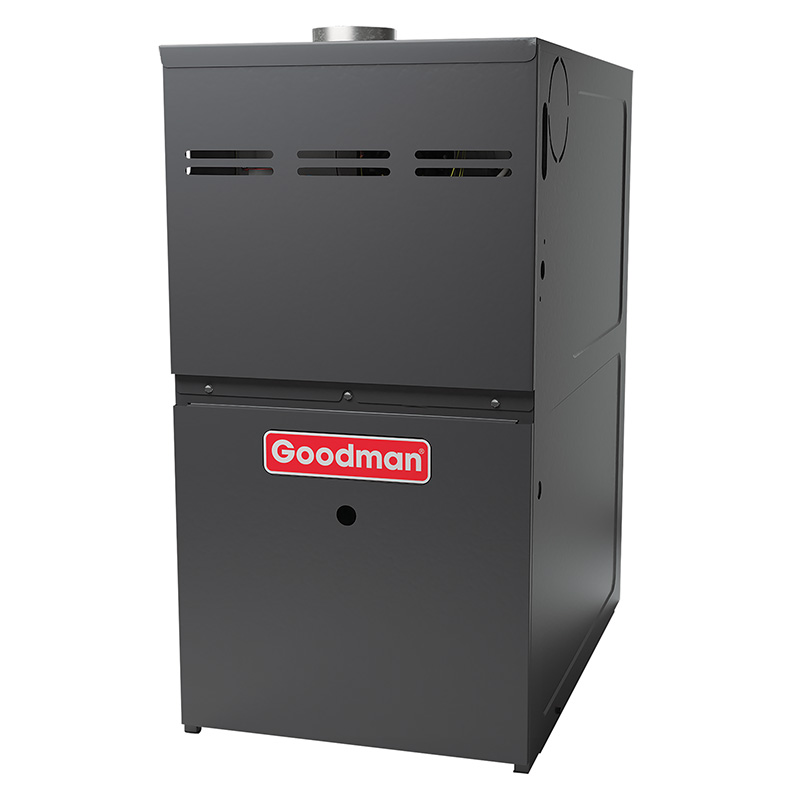
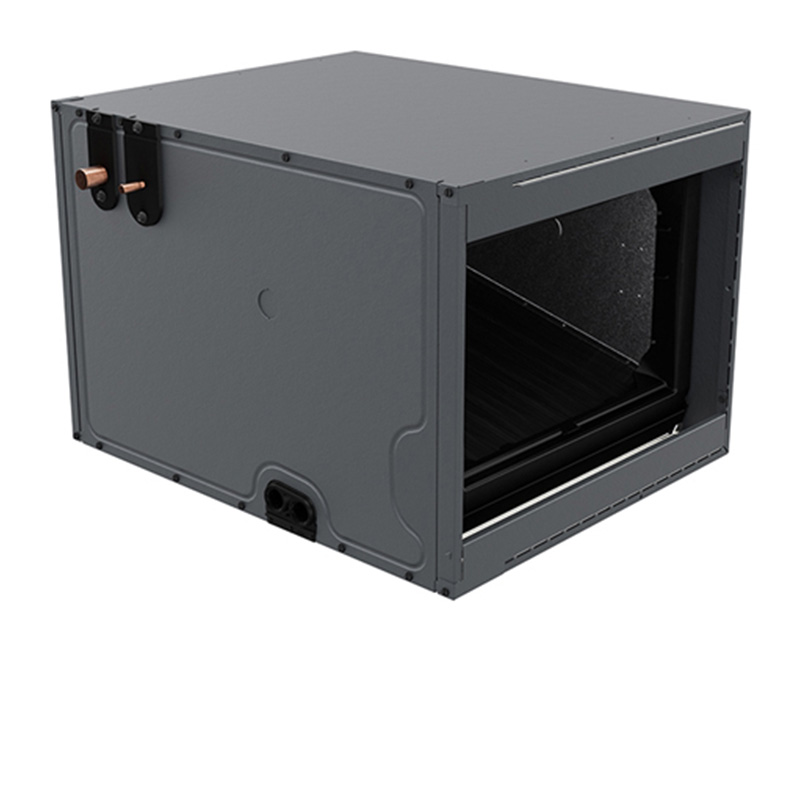
Goodman R32 1.5 Ton 14.5 SEER2 60000 BTU 80% Multi-Speed ECM Gas Furnace and Air Conditioner System – Horizontal
View on AC Direct see your lowest price →Check current price on AC Direct →
Key features
- 1.5-ton cooling capacity with 14.5 SEER2 efficiency rating
- 60,000 BTU 80% AFUE multi-speed ECM gas furnace
- R-32 refrigerant with lower global warming potential than R-410A
- Horizontal configuration designed for crawl-space and attic installs
- ECM blower motor reduces fan energy consumption versus PSC motors
- Factory-matched system designed for straightforward AHU compatibility
About this system
This Goodman bundle pairs a 1.5-ton, 14.5 SEER2 R-32 air conditioner with a 60,000 BTU 80% AFUE multi-speed ECM gas furnace in a horizontal configuration, making it a practical fit for crawl-space installations, attic air handlers, and manufactured homes where vertical cabinet placement is not an option. At 1.5 tons, the cooling capacity is sized for smaller conditioned spaces, typically 600 to 900 square feet depending on local climate, insulation quality, and window exposure, so a proper Manual J load calculation before purchase is worth the time.
The 14.5 SEER2 rating sits at the federal minimum-efficiency threshold for most U.S. climate zones, meaning it meets the law but does not stretch for top-tier savings on your utility bill. The switch to R-32 refrigerant is a forward-looking move, as R-32 carries a significantly lower global warming potential than the R-410A it replaces and is increasingly common in new residential equipment. The ECM blower motor in the furnace side is a genuine efficiency upgrade over a standard PSC motor, cutting fan electricity use meaningfully over a cooling and heating season. Together, this is a competent entry-level system rather than a high-efficiency one.
This Goodman horizontal system delivers reliable entry-level performance at a price point that is hard to argue with for budget-conscious buyers, and the R-32 refrigerant and ECM motor are genuine modern touches. The trade-off is that Goodman's documented history of capacitor failures, coil leaks, and shorter compressor lifespans means long-term ownership costs can offset some of the upfront savings, especially if install quality is not excellent.
Overall score is the average of the five ratings above.
What we like
- Priced 15 to 25 percent below comparable Carrier, Trane, and Lennox systems
- R-32 refrigerant is more environmentally responsible and increasingly service-friendly
- ECM multi-speed blower motor lowers operating costs compared to single-speed PSC motors
- Horizontal configuration opens up installation options in attics and crawl spaces where vertical units cannot fit
- Factory-matched coil and condenser pairing simplifies system design and warranty claims
Trade-offs
- Dual-run capacitor failures are the most commonly reported service call, typically costing $300 to $600 to fix
- Evaporator coil leaks appear in a meaningful share of owner reports and can be costly outside the warranty window
- Compressor lifespan averages 10 to 14 years versus 15 to 20 years for premium-brand compressors
- A minority of owners report refrigerant leaks in year one, generally tied to install or factory charge issues rather than the unit itself
What homeowners and pros say about Goodman
Homeowners who share feedback on Goodman equipment tend to split along a familiar line. Those who had a skilled, detail-oriented installer and who maintain annual service visits often report years of trouble-free operation and cite the lower purchase price as the main reason they chose the brand. Goodman’s Google dealer reviews average around 3.8 out of 5 across hundreds of location-level reviews, and affordability is the praise that comes up most consistently. The picture on ConsumerAffairs is less flattering, sitting around 2.5 out of 5, though that platform skews heavily toward owners who had a problem and wanted to vent. The recurring theme there is repair bills that start climbing after roughly year seven, which lines up with the documented failure modes: dual-run capacitor replacements in the $300 to $600 range are the most common early service call, evaporator coil leaks appear in a meaningful share of longer-term owner accounts, and compressor lifespan on Goodman units tends to average 10 to 14 years rather than the 15 to 20 years owners of premium-brand equipment sometimes report.
HVAC technicians who work on a wide variety of brands generally say Goodman is a serviceable product that lives or dies by the install. Refrigerant leaks reported in the first year are almost always traced back to a loose fitting or improper charge at installation rather than a factory defect, which underscores how much the brand’s real-world performance depends on who puts the unit in and how carefully they do it. For a horizontal application specifically, proper condensate management and airflow balance at install are non-negotiable, and a rushed job can create headaches that have nothing to do with the equipment itself. The bottom line from the field is that Goodman represents a workable budget option when paired with a thorough installer and a realistic maintenance plan, but it is not a set-it-and-forget-it purchase.
Sources: ConsumerAffairs Goodman owner reviews, AHRI Directory of Certified Product Performance, U.S. DOE appliance and equipment efficiency standards, Goodman product specification sheets.
What it costs to run
At 14.5 SEER2, cooling this 1.5-ton system for a typical 1200-hour cooling season at the U.S. average electricity rate of $0.17/kWh works out to roughly $253 per year in cooling, about $21 less per year than a minimum-efficiency 13.4 SEER2 unit of the same size. Your real cost depends on your climate and local rate.
Method: (18,000 BTU/hr ÷ 14.5 SEER2) × 1200 hours ÷ 1000 × $0.17/kWh. Rate source: U.S. EIA average; cooling hours: moderate-climate estimate.
How it compares
| Brand | Comparable model | SEER2 | Stage | Price position |
|---|---|---|---|---|
| Goodman | R-32 1.5 Ton 14.5 SEER2 Horizontal System | 14.5 | Single-stage | Value pick |
| Carrier | Comfort 14 Series (24ACC4) | 14.3-14.5 | Single-stage | Typically 15 to 25 percent more than Goodman |
| Trane | XR14 Series | 14.3-15.0 | Single-stage | Typically 15 to 25 percent more than Goodman |
| Lennox | Merit ML14 Series | 14.3-15.0 | Single-stage | Typically 15 to 25 percent more than Goodman |
Competitor rows are comparable single-stage units at similar efficiency; price is relative position, not a quote.
Questions about this system
Why is the horizontal configuration important, and can this unit be installed vertically instead?
The horizontal designation means the air handler is engineered for airflow in a side-to-side orientation, which is required in crawl spaces, certain attic setups, and some manufactured housing situations. Using a horizontal unit in a vertical orientation can cause condensate drainage problems and void the warranty, so confirm your application before ordering.
What does switching to R-32 refrigerant mean for future service costs?
R-32 has a lower global warming potential than R-410A and is being adopted broadly in new equipment, so technician familiarity and parts availability are growing. Refrigerant cost and charge procedures differ slightly from R-410A, so confirm your servicing contractor has R-32 experience before the first tune-up.
Is 14.5 SEER2 going to cost me significantly more on my electricity bill than a higher-efficiency unit?
At 14.5 SEER2 you are at the federally mandated minimum efficiency for most regions, so you will spend more on cooling electricity than you would with a 16 or 18 SEER2 system. For a 1.5-ton unit running in a moderate climate the annual dollar gap is real but modest, and the lower purchase price can offset it over several years depending on your local utility rates.
How worried should I be about the documented dual-run capacitor failures in Goodman equipment?
Capacitor failure is the most commonly reported issue with Goodman units and typically shows up after a few years of use. The repair itself is generally quick and costs roughly $300 to $600 through a licensed technician. Keeping an annual maintenance contract and asking your tech to check capacitor readings every season is the best way to catch this before it causes a full system shutdown on a hot day.
What is the warranty on this system, and do I need to register it?
Goodman typically offers a 10-year parts warranty on registered equipment, with a shorter coverage period if you skip registration within the required window after installation. The compressor is generally covered under that same registered warranty, though labor costs are not included, which means out-of-pocket service bills can still add up. Check the specific warranty certificate included with the unit for exact terms, as coverage details can vary by product line.
Specifications
| Cooling capacity | 1.5 Ton |
| Efficiency | 14.5 SEER2 |
| Furnace output | 60000 BTU |
| Configuration | Horizontal |
| Refrigerant | R-32 |