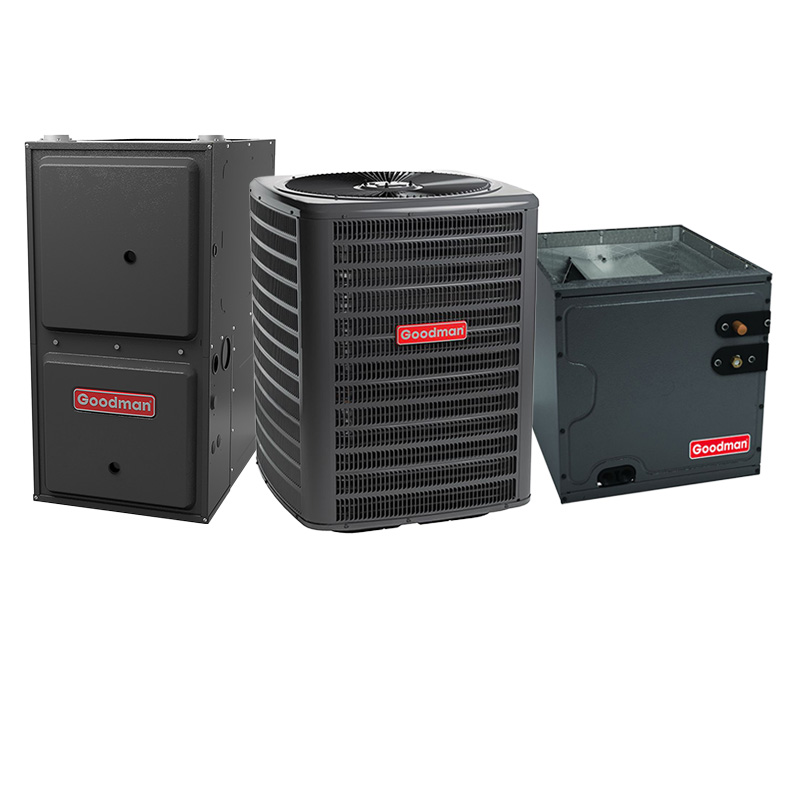
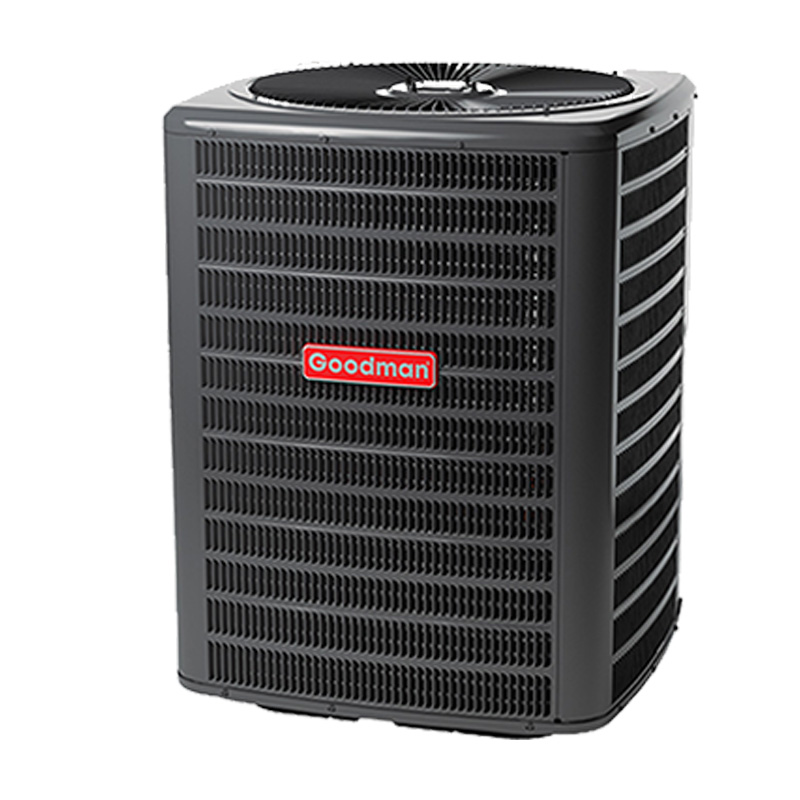
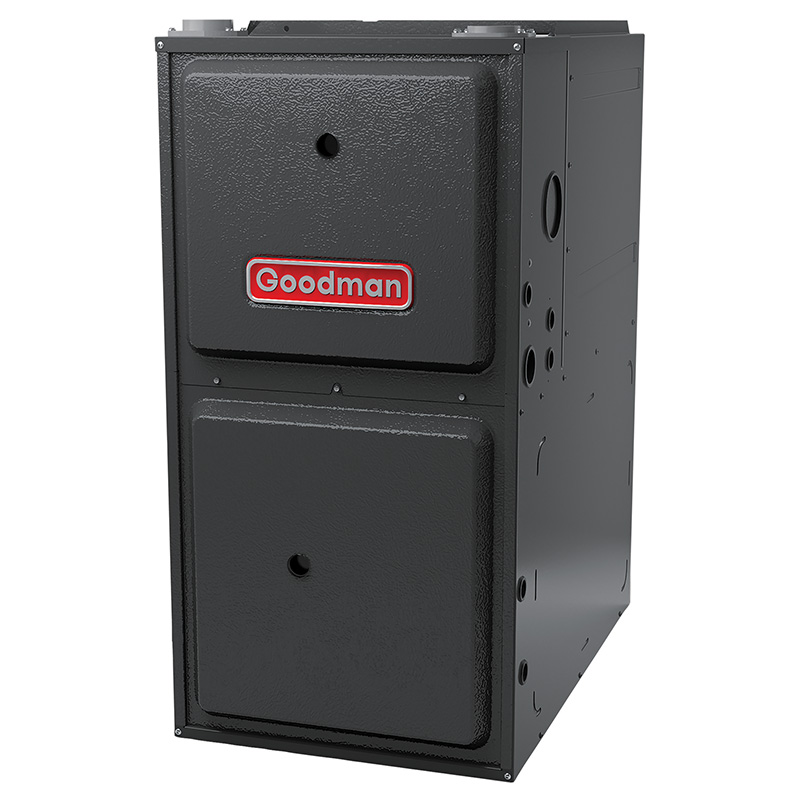
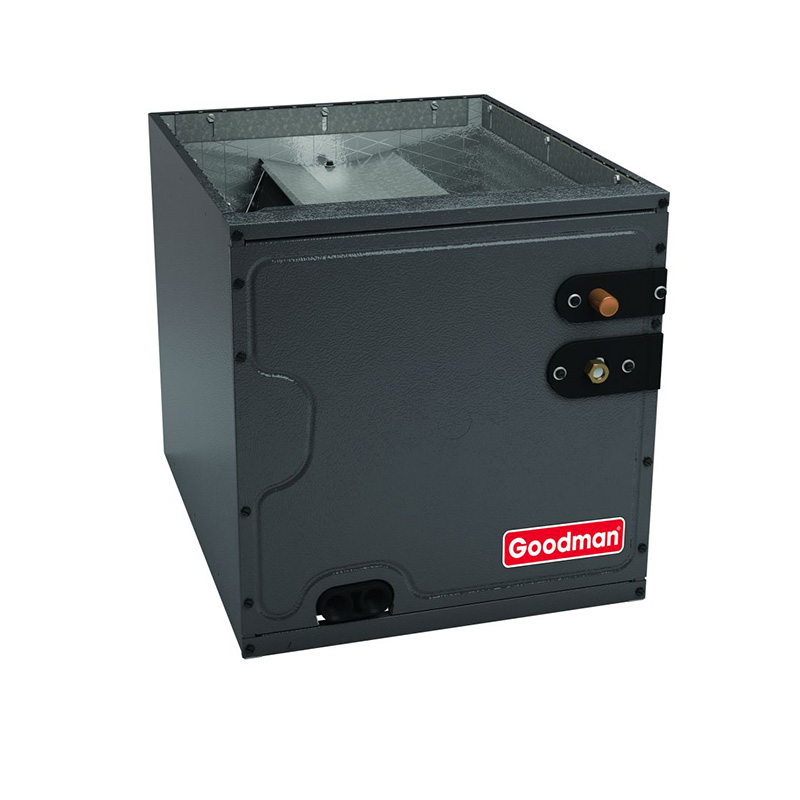
Goodman R32 1.5 Ton 14 SEER2 60000 BTU 80% Two Stage 9-Speed ECM Gas Furnace and Air Conditioner System – Upflow
View on AC Direct see your lowest price →Check current price on AC Direct →
Key features
- 1.5-ton cooling capacity rated at 14 SEER2 for minimum federal efficiency compliance
- 60,000 BTU two-stage gas furnace operating at 80% AFUE for moderate climate efficiency
- Nine-speed ECM variable blower motor reduces electricity use and improves airflow control
- R-32 refrigerant with lower global warming potential than R-410A
- Upflow cabinet orientation for basement or closet installations with overhead ductwork
- Two-stage heating reduces temperature swings and short-cycling compared to single-stage furnaces
About this system
This Goodman bundle pairs a 1.5-ton, 14 SEER2 R-32 air conditioner with a 60,000 BTU 80% AFUE two-stage gas furnace in an upflow configuration, making it a practical choice for smaller homes, condos, or additions in moderate climates. The upflow cabinet sends conditioned air upward through a duct system located in the ceiling or attic, which is the most common arrangement in single-story construction with a basement or utility closet installation. At 1.5 tons, the cooling side is sized for roughly 600 to 900 square feet depending on insulation, ceiling height, and local climate, so a proper Manual J load calculation before purchase is not optional here.
The two-stage furnace and nine-speed ECM blower motor are genuine comfort upgrades over entry-level single-stage equipment. Two-stage heating runs at low fire the majority of the time, which smooths out temperature swings, reduces short cycling, and cuts fuel use compared to a furnace that is always at full blast. The ECM motor adjusts blower speed to match airflow demand, which lowers electricity consumption and helps the system communicate well with a smart thermostat. R-32 refrigerant has a lower global warming potential than the R-410A it replaces and is increasingly the industry standard as regulations tighten, though it does require R-32-rated service equipment from your technician. At 14 SEER2, efficiency sits right at the federal minimum for most regions, which keeps the upfront cost down but means energy savings over a premium 16 or 18 SEER2 system will not materialize quickly.
This Goodman bundle delivers legitimate two-stage comfort technology at a price point that undercuts most name-brand alternatives by 15 to 25 percent, which is its clearest strength. The trade-off is a brand track record that includes documented capacitor failures, coil leak reports, and compressor lifespans that typically trail premium brands by several years. Whether that gap matters depends heavily on how well it is installed and how diligently it is maintained.
Overall score is the average of the five ratings above.
What we like
- Two-stage furnace and nine-speed ECM blower provide noticeably better comfort than single-stage baseline systems
- Priced 15 to 25 percent below comparable Trane, Lennox, and Carrier bundles, lowering the entry cost
- R-32 refrigerant is forward-compatible with tightening environmental regulations
- Upflow configuration is the most installer-friendly layout, reducing labor complexity and cost
- Two-stage operation lowers fuel consumption versus always-on single-stage heating
Trade-offs
- Dual-run capacitors are the most commonly reported failure point and, while inexpensive to fix, tend to appear after year seven
- Evaporator coil leaks appear in a meaningful share of owner reviews, a potential mid-life repair cost
- Compressor longevity averages 10 to 14 years versus 15 to 20 for premium-brand compressors
- 14 SEER2 is the federal minimum efficiency tier, so long-term energy savings versus a 16 or 18 SEER2 system are limited
What homeowners and pros say about Goodman
Homeowners who choose Goodman generally fall into two camps. The first group appreciates the lower purchase price and, when paired with a skilled installer and routine maintenance, reports years of satisfactory operation. The second group, well represented on ConsumerAffairs where Goodman scores around 2.5 out of 5, runs into repair costs after roughly year seven and feels the savings evaporated. The recurring complaints on that platform center on dual-run capacitor failures, evaporator coil leaks, and compressor issues appearing earlier than owners expected. Google dealer reviews land at a more balanced 3.8 out of 5, where affordability is the most frequently cited reason for satisfaction, suggesting that buyers who go in with clear expectations tend to rate the experience more favorably.
HVAC technicians who work on Goodman equipment consistently say that install quality is the single biggest predictor of how the system performs long term. A poorly charged refrigerant circuit or undersized ductwork will surface as a problem regardless of brand, but Goodman’s documented failure modes, specifically capacitor wear after year seven, evaporator coil leaks in a meaningful share of units, and compressor lifespans that average 10 to 14 years against 15 to 20 for premium brands, mean that maintenance attentiveness matters more here than it might with a Trane or Lennox of equivalent size. For this specific two-stage ECM system, the upside is real: the motor and furnace staging technology genuinely improve comfort over single-stage entry equipment, and if the documented weak points are caught early through annual inspections, many owners get a full decade or more of reliable service.
Sources: ConsumerAffairs Goodman owner reviews, AHRI Directory of Certified Product Performance, U.S. DOE appliance and equipment efficiency standards, Goodman product specification sheets.
What it costs to run
At 14 SEER2, cooling this 1.5-ton system for a typical 1200-hour cooling season at the U.S. average electricity rate of $0.17/kWh works out to roughly $262 per year in cooling, about $12 less per year than a minimum-efficiency 13.4 SEER2 unit of the same size. Your real cost depends on your climate and local rate.
Method: (18,000 BTU/hr ÷ 14 SEER2) × 1200 hours ÷ 1000 × $0.17/kWh. Rate source: U.S. EIA average; cooling hours: moderate-climate estimate.
How it compares
| Brand | Comparable model | SEER2 | Stage | Price position |
|---|---|---|---|---|
| Goodman | R-32 1.5 Ton 14 SEER2 Two-Stage ECM Bundle (this system) | 14 | Two-stage | Value pick |
| Carrier | Comfort 14 Series (24ACC4) | 14 | Single-stage | Typically 15 to 25 percent more than this Goodman bundle |
| Trane | XR14c Series | 14 | Single-stage | Typically 15 to 25 percent more than this Goodman bundle |
| Lennox | Merit ML14XC1 Series | 14 | Single-stage | Typically 15 to 25 percent more than this Goodman bundle |
Competitor rows are comparable single-stage units at similar efficiency; price is relative position, not a quote.
Questions about this system
Is 1.5 tons enough cooling for my house, and how do I know before buying?
Sizing depends on square footage, insulation quality, window area, ceiling height, and local climate. A 1.5-ton unit is generally appropriate for 600 to 900 square feet in a well-insulated home in a moderate climate, but the only reliable way to confirm is a Manual J load calculation performed by a licensed HVAC contractor before equipment is ordered.
What does the 80% AFUE rating mean for my gas bills?
80% AFUE means 80 cents of every dollar spent on gas is converted to heat, with 20 cents lost through the flue. It is the minimum allowed by federal code in most northern states and is noticeably less efficient than 90-plus percent condensing furnaces, which can cut fuel use by 10 to 15 percent. If you are in a cold climate with high heating loads, a 96% AFUE unit may pay back the cost difference within several years.
My technician says R-32 requires special equipment. Is that going to raise my service costs?
R-32 does require recovery equipment rated for A2L refrigerants, and not every technician currently has it. As R-32 becomes the industry standard, availability is improving, but in some rural markets you may need to confirm your service provider is equipped before signing a maintenance agreement. Labor rates for R-32 service are not inherently higher, but finding a qualified technician may take extra effort in the short term.
What are the most likely repair costs I should budget for over 10 years?
Based on Goodman's documented failure patterns, dual-run capacitor replacement is the most common call, typically running 300 to 600 dollars including labor. Evaporator coil leaks appear in a meaningful share of units and can cost considerably more depending on refrigerant charges and parts. A maintenance plan that includes annual inspections can catch capacitor wear and refrigerant charge issues early.
Does the two-stage furnace work with any smart thermostat, or do I need a specific one?
The two-stage furnace requires a thermostat with two-stage heating capability, meaning it has separate W1 and W2 terminals or equivalent staging logic. Most modern smart thermostats from Ecobee, Nest (with the right wiring), and Honeywell support two-stage operation, but you should confirm compatibility with your specific thermostat model before purchase. Running a two-stage furnace on a single-stage thermostat will cause it to operate only on the first stage.
Specifications
| Cooling capacity | 1.5 Ton |
| Efficiency | 14 SEER2 |
| Furnace output | 60000 BTU |
| Configuration | Upflow |
| Refrigerant | R-32 |