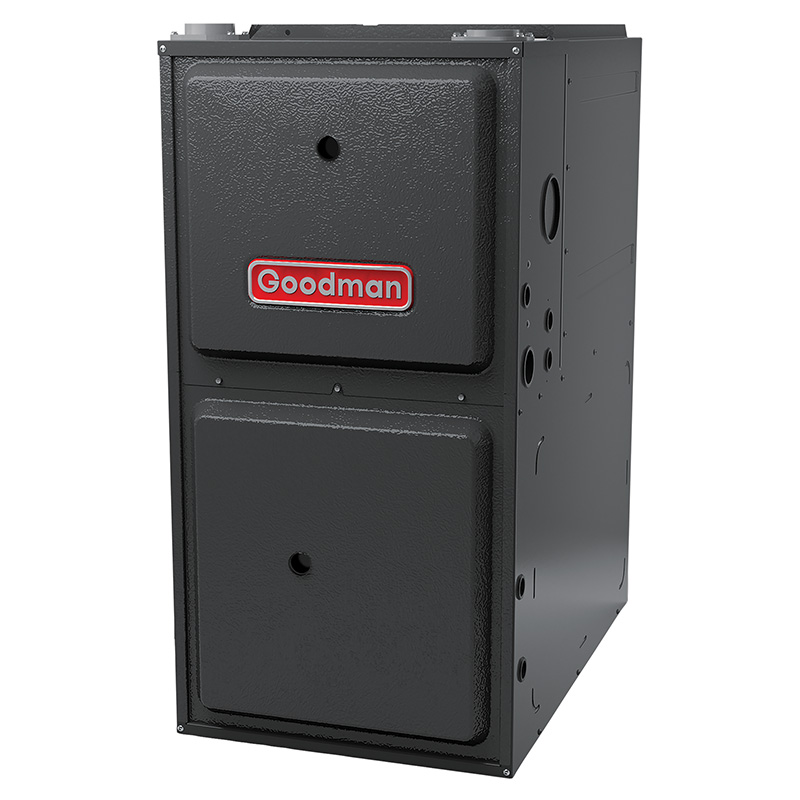
Goodman R32 120000 BTU 92% Multi-Speed ECM Gas Furnace Upflow / Horizontal (GR9S921205DN)
View on AC Direct see your lowest price →Check current price on AC Direct →
Key features
- 120,000 BTU output suits larger homes in cold climates
- 92% AFUE mid-efficiency rating, single-pipe metal flue compatible
- Multi-speed ECM blower motor reduces electricity use and improves comfort
- Upflow and horizontal installation configurations supported
- Compatible with separate AC or heat pump coil for full system builds
- Five-speed ECM blower allows adjustment for zoned or variable duct systems
About this system
The Goodman GR9S921205DN is a 120,000 BTU, 92% AFUE multi-speed ECM gas furnace built for upflow or horizontal installation. The 92% AFUE rating means 92 cents of every dollar spent on gas goes toward heating your home, which lands this unit in the mid-efficiency tier. It is not a high-efficiency condensing furnace, so it does not require PVC venting or a condensate drain, making it a straightforward swap in homes already set up for single-pipe metal flue systems. The ECM (electronically commutated motor) blower is a meaningful upgrade over PSC motors found on entry-level furnaces: it ramps airflow up and down to match demand rather than running at one fixed speed, which improves comfort, reduces temperature swings, and cuts blower electricity use by a notable margin.
At 5 tons of heating capacity, this furnace suits larger homes in cold climates, typically above 2,500 square feet depending on insulation, ceiling height, and local design temperatures. The multi-speed operation also makes it a solid match for zoned duct systems where static pressure varies across zones. The R-32 designation in the model name refers to a refrigerant class callout Goodman includes in product family naming conventions for certain lines, but this is a gas furnace only. There is no refrigerant circuit in this unit. It pairs with a separate air conditioning or heat pump coil and outdoor unit that you supply independently.
The GR9S921205DN is a competent mid-efficiency furnace at a price point well below comparable Trane, Lennox, and Carrier units, and the ECM blower adds genuine day-to-day value. The 92% AFUE is honest workhouse territory but not the ceiling of what is available, and Goodman's long-term reliability record means you should factor in service costs after year seven when budgeting. For buyers who want solid heat in a large home without paying a premium-brand premium, and who plan to maintain it properly, it is a reasonable choice.
Overall score is the average of the five ratings above.
What we like
- Priced roughly 15 to 25 percent below Trane, Lennox, and Carrier equivalents
- ECM blower motor improves efficiency and comfort compared to single-speed PSC alternatives
- 92% AFUE avoids the added cost and complexity of condensing venting
- Upflow and horizontal configs reduce install constraints in many home layouts
- Large 120,000 BTU capacity covers substantial square footage in cold climates
Trade-offs
- 92% AFUE trails high-efficiency 96-98% AFUE options if long-term gas savings are a priority
- Dual-run capacitors are the most frequently reported failure point, with repair costs typically in the $300-$600 range after year seven
- Compressor longevity in paired AC units averages 10 to 14 years for Goodman systems, below the 15 to 20 years typical of premium brands
- ConsumerAffairs scores average around 2.5 out of 5, with recurring complaints about rising repair costs in the second half of the warranty period
What homeowners and pros say about Goodman
Homeowners who have purchased Goodman gas furnaces consistently cite price as the primary reason for choosing the brand, and dealer Google reviews averaging around 3.8 out of 5 reflect that buyers are broadly satisfied when the unit is installed well and maintained on schedule. The ECM blower on this model in particular draws positive feedback for quieter operation and steadier room temperatures compared to older single-speed furnaces it replaces. That said, ConsumerAffairs scores for Goodman sit at roughly 2.5 out of 5, a channel where dissatisfied owners are overrepresented, and the recurring complaint is not early failure but escalating repair bills after approximately year seven, when parts like dual-run capacitors begin to wear.
HVAC technicians who work on Goodman equipment regularly point to install quality as the single biggest variable in how long one of these furnaces lasts. A properly commissioned unit with correct airflow, gas pressure, and flue sizing can run reliably for 15 years or more. Documented failure modes specific to the Goodman line include dual-run capacitor failures (a common and relatively affordable fix), evaporator coil leaks in paired cooling systems, and compressor lifespans that tend to average 10 to 14 years rather than the 15 to 20 years more typical of premium-brand equipment. A minority of owners also report refrigerant issues in the first year on paired cooling systems, which technicians generally attribute to charge or install error rather than a manufacturing defect in the unit itself.
Sources: ConsumerAffairs Goodman owner reviews, AHRI Directory of Certified Product Performance, U.S. DOE appliance and equipment efficiency standards, Goodman product specification sheets.
How it compares
| Brand | Comparable model | SEER2 | Stage | Price position |
|---|---|---|---|---|
| Goodman | GR9S921205DN | N/A (gas furnace) | Multi-speed | Value pick |
| Carrier | Performance 92 (58TP5) | N/A (gas furnace) | Two-stage | Moderately higher than Goodman |
| Trane | S9V2 (92% AFUE) | N/A (gas furnace) | Two-stage | Moderately to significantly higher than Goodman |
| Lennox | Merit ML195 (92% AFUE) | N/A (gas furnace) | Single-stage | Moderately higher than Goodman |
Competitor rows are comparable single-stage units at similar efficiency; price is relative position, not a quote.
Questions about this system
Does this furnace require PVC condensate venting like a high-efficiency unit?
No. At 92% AFUE, this is a non-condensing furnace and uses conventional single-pipe metal flue venting. If you are replacing an older mid-efficiency furnace, it will typically connect to your existing flue with minimal modification.
What does the ECM blower actually do differently from a standard furnace motor?
An ECM (electronically commutated motor) adjusts its speed in steps rather than running at one fixed output. This results in more consistent airflow, quieter low-demand operation, and meaningfully lower electricity consumption over a heating season compared to single-speed PSC motors.
What are the most common repairs on Goodman furnaces like this one?
Dual-run capacitors are the most frequently reported failure point in Goodman equipment and typically cost $300 to $600 to repair. This is a relatively straightforward fix, but owner feedback on ConsumerAffairs indicates repair costs tend to increase after roughly year seven of ownership.
What size home can a 120,000 BTU furnace handle?
A rough rule of thumb is 30 to 60 BTU per square foot depending on climate zone, ceiling height, and insulation quality. In a cold climate with average insulation, 120,000 BTU is typically appropriate for homes in the 2,500 to 3,500 square foot range, but a proper Manual J load calculation by your installer is the only accurate way to confirm sizing.
Is the warranty on this Goodman furnace comparable to Trane or Carrier?
Goodman offers a limited lifetime heat exchanger warranty and a 10-year parts warranty when registered within a specified window after installation, which is broadly comparable to what Trane and Carrier offer at similar price tiers. However, labor is not covered, so out-of-pocket repair costs in years eight through ten can still add up if component failures occur.
Specifications
| Furnace output | 120000 BTU |
| Configuration | Upflow |
| Refrigerant | R-32 |
| Model | GR9S921205DN |