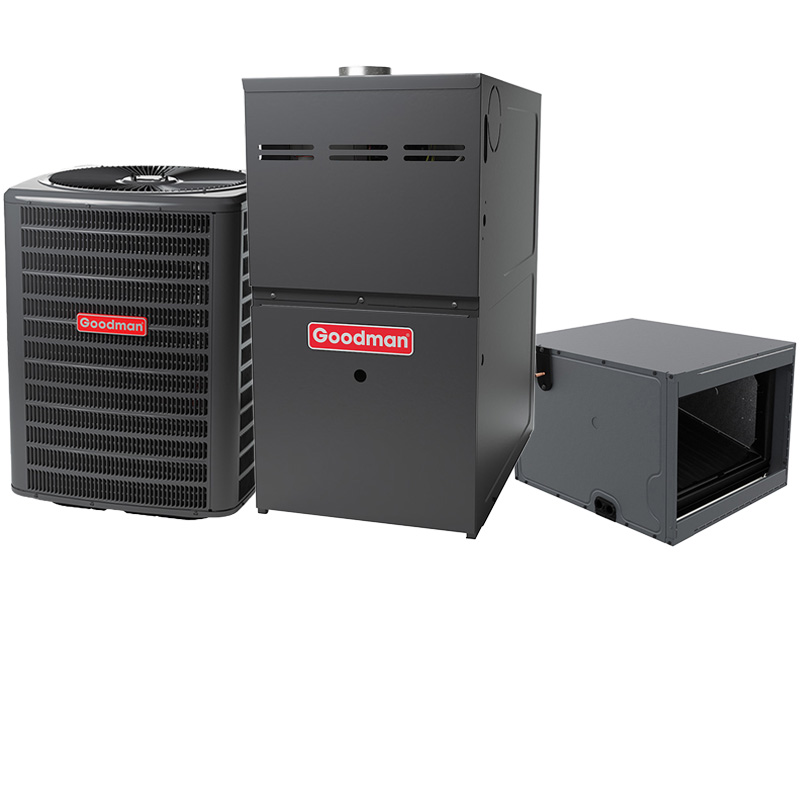
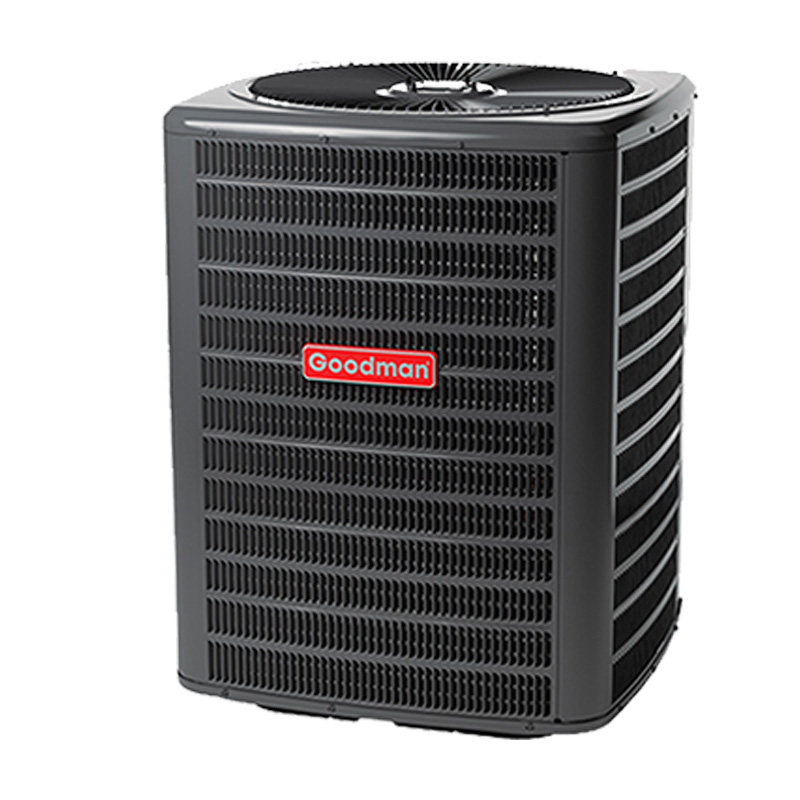
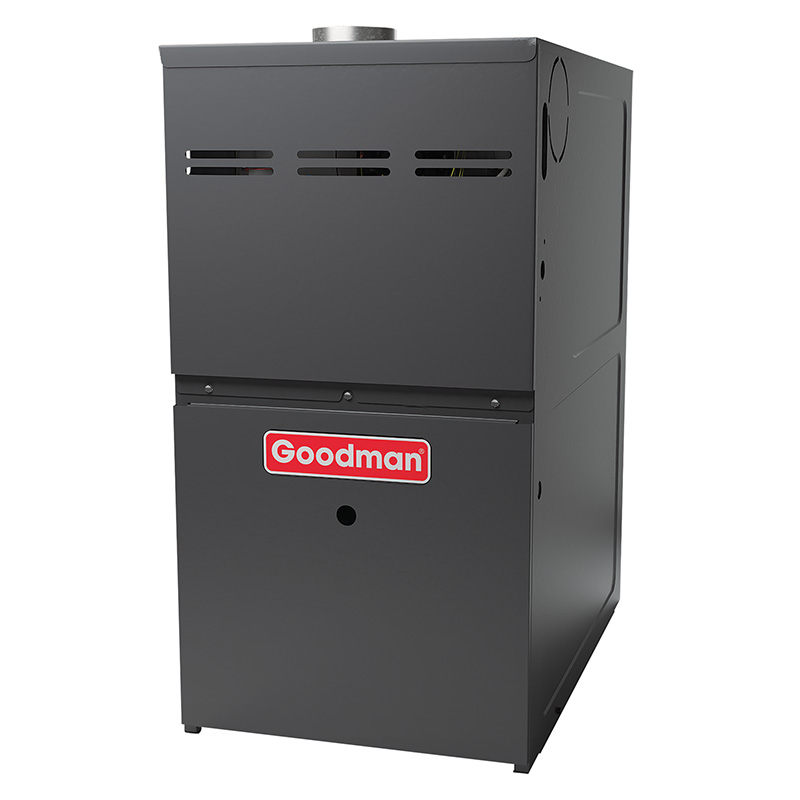
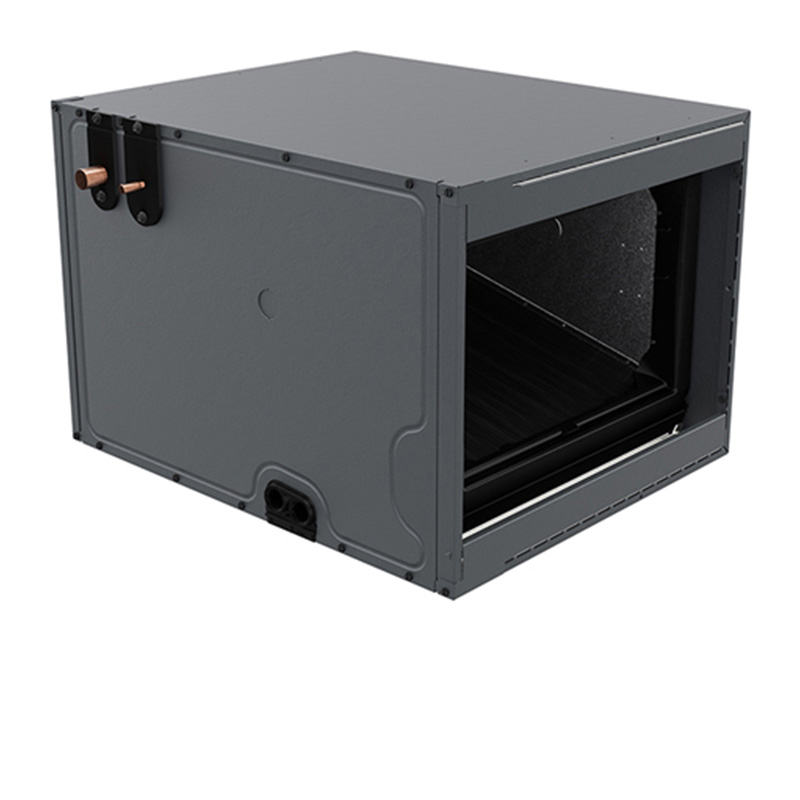
Goodman R32 2.5 Ton 13.8 SEER2 60000 BTU 80% Multi-Speed ECM Gas Furnace and Air Conditioner System – Horizontal
View on AC Direct see your lowest price →Check current price on AC Direct →
Key features
- 13.8 SEER2 cooling efficiency, meeting federal minimums with a modest buffer
- Horizontal configuration designed for attic, crawlspace, or side-discharge installs
- R-32 refrigerant with lower global warming potential than R-410A
- Multi-speed ECM blower motor for quieter part-load operation and reduced temperature swings
- 60,000 BTU output matches mid-size homes in moderate to warm climates
- 80% AFUE gas furnace for adequate heating efficiency at an entry-level price point
About this system
This Goodman 2.5-ton horizontal system pairs a 13.8 SEER2 air conditioner with a 60,000 BTU multi-speed ECM gas furnace in a configuration built specifically for attic or crawlspace installations where vertical airflow is not an option. The horizontal orientation is not an afterthought: the air handler and coil are oriented to move air laterally, which suits ranch-style homes, manufactured housing, and tight utility closets where a conventional upflow or downflow cabinet simply will not fit. R-32 refrigerant replaces the older R-410A that dominated residential equipment for decades, offering a lower global warming potential and slightly better thermodynamic efficiency, though it does require technicians certified to handle it during service calls.
A 13.8 SEER2 rating lands just above the federal minimum for most U.S. climate zones, meaning this system meets code without pushing into mid-efficiency territory. That is a practical choice for homeowners prioritizing upfront cost over long-run utility savings. The multi-speed ECM blower motor on the furnace side is a real comfort upgrade over single-speed alternatives: it ramps airflow up and down in response to demand, which reduces temperature swings, lowers blower noise at part-load, and modestly improves dehumidification during shoulder seasons. At 80% AFUE on the furnace, roughly one dollar in five spent on gas leaves as exhaust, which is adequate but not impressive in high-heating-load climates where 90% or higher units pay back more quickly.
This Goodman horizontal system is a straightforward, code-compliant package that makes the most sense when budget and a constrained installation space are the primary drivers. It will perform reliably for a decade or more if a qualified technician installs and commissions it properly, but buyers should go in aware that long-term ownership costs can climb after year seven and that component failures like capacitors and evaporator coil leaks are documented patterns in this brand's history. It is not the most efficient or the most durable option on the market, but the price gap versus premium brands is real and meaningful.
Overall score is the average of the five ratings above.
What we like
- Priced 15 to 25 percent below comparable Trane, Lennox, and Carrier equipment, leaving room in the budget for a quality install
- Horizontal configuration is genuinely useful in attic and crawlspace applications where other form factors will not fit
- Multi-speed ECM blower provides better comfort and quieter operation than basic single-speed motors at this price tier
- R-32 refrigerant is a forward-looking choice that aligns with regulatory trends away from higher-GWP refrigerants
- Widely available parts and a large national dealer network make service accessible in most markets
Trade-offs
- Dual-run capacitors are the most commonly reported failure point, typically appearing in the first several years and costing $300 to $600 per incident
- Evaporator coil leaks appear in a meaningful share of owner reviews and can be expensive to address once a system ages past warranty
- Compressor lifespan averages 10 to 14 years versus 15 to 20 for premium brands, which matters in high-runtime climates
- 80% AFUE furnace efficiency is adequate but costs noticeably more to operate than a 90%+ unit in cold-climate regions where heating loads are heavy
What homeowners and pros say about Goodman
Homeowners who choose Goodman generally do so because the price gap versus premium brands is large enough to matter in a budget-driven replacement decision, and dealer Google reviews averaging around 3.8 out of 5 suggest that satisfaction is real when the install goes smoothly. The pattern that shows up in ConsumerAffairs data, where the brand scores closer to 2.5 out of 5, reflects a different subset of owners: those who encountered repair bills after roughly year seven, often from dual-run capacitor failures that run $300 to $600 per visit, or from evaporator coil leaks that can be significantly more costly. Neither failure mode is unique to Goodman, but both appear with enough frequency in owner accounts to be worth factoring into the total cost of ownership.
HVAC technicians tend to hold a pragmatic view of Goodman equipment, noting that compressor lifespan in this brand averages 10 to 14 years compared to 15 to 20 years in Trane, Lennox, and Carrier units, and that a minority of first-year refrigerant leak reports typically trace back to installation or initial charge quality rather than a manufacturing defect. That last point reinforces what experienced installers say consistently: the outcome with a Goodman system tracks closely with how carefully it was commissioned. For this specific horizontal R-32 unit, the multi-speed ECM motor and R-32 refrigerant represent genuine specification upgrades at the entry-level price point, but buyers who expect premium-brand durability at a value-brand price are likely to be disappointed over the long run.
Sources: ConsumerAffairs Goodman owner reviews, AHRI Directory of Certified Product Performance, U.S. DOE appliance and equipment efficiency standards, Goodman product specification sheets.
What it costs to run
At 13.8 SEER2, cooling this 2.5-ton system for a typical 1200-hour cooling season at the U.S. average electricity rate of $0.17/kWh works out to roughly $443 per year in cooling, about $14 less per year than a minimum-efficiency 13.4 SEER2 unit of the same size. Your real cost depends on your climate and local rate.
Method: (30,000 BTU/hr ÷ 13.8 SEER2) × 1200 hours ÷ 1000 × $0.17/kWh. Rate source: U.S. EIA average; cooling hours: moderate-climate estimate.
How it compares
| Brand | Comparable model | SEER2 | Stage | Price position |
|---|---|---|---|---|
| Goodman | R32 Horizontal 2.5 Ton Multi-Speed ECM System | 13.8 | Multi-speed | Value pick |
| Carrier | Comfort Series (24ACC6 / 59SC2) | 13.8 to 14.3 | Single-stage | Typically 15 to 25 percent more than Goodman |
| Trane | XR14 / S8X1 series | 14.0 | Single-stage | Typically 15 to 25 percent more than Goodman |
| Lennox | Merit Series (13ACX / ML180) | 13.8 to 14.0 | Single-stage | Typically 15 to 25 percent more than Goodman |
Competitor rows are comparable single-stage units at similar efficiency; price is relative position, not a quote.
Questions about this system
Why does this system require a horizontal configuration and can I install it vertically instead?
The horizontal designation means the cabinet and coil are engineered to operate with airflow moving laterally rather than straight up or down. Using a horizontal unit in a vertical orientation is not supported and can cause drainage and airflow problems. If your installation space allows for upflow or downflow, you would want a different cabinet configuration from the start.
My technician mentioned R-32 requires special handling. Does that affect service costs?
R-32 is mildly flammable (classified A2L) and requires technicians with the appropriate EPA certification and equipment to recover and recharge it safely. Most established HVAC companies are already equipped for R-32 work as the industry transitions away from R-410A, but it is worth confirming with your service provider before signing a maintenance agreement.
Is 13.8 SEER2 going to cost me significantly more to run than a higher-efficiency unit?
Compared to a 16 or 17 SEER2 system, a 13.8 SEER2 unit will use roughly 15 to 20 percent more electricity for the same cooling output over a season. In climates with long, hot summers that difference adds up, so if your cooling bills are already substantial, the payback on a higher-efficiency unit may be worth the upfront gap.
What does the Goodman warranty actually cover on this system and are there conditions attached?
Goodman typically offers a 10-year parts warranty on registered equipment, but registration must be completed within a set window after installation and the unit generally must be installed by a licensed contractor to qualify for the full term. Read the warranty documentation carefully before installation, because coverage for labor is not included and some components may carry shorter terms.
The reviews mention capacitor failures. Is that something I can prevent or plan for?
Dual-run capacitors degrade over time and heat cycles, and Goodman units have a documented history of this failure mode appearing within the first several years. You cannot prevent it outright, but scheduling annual maintenance where a technician measures capacitor microfarad values lets you replace a weakening capacitor proactively before it causes a no-cool call, typically at a lower cost than an emergency service visit.
Specifications
| Cooling capacity | 2.5 Ton |
| Efficiency | 13.8 SEER2 |
| Furnace output | 60000 BTU |
| Configuration | Horizontal |
| Refrigerant | R-32 |