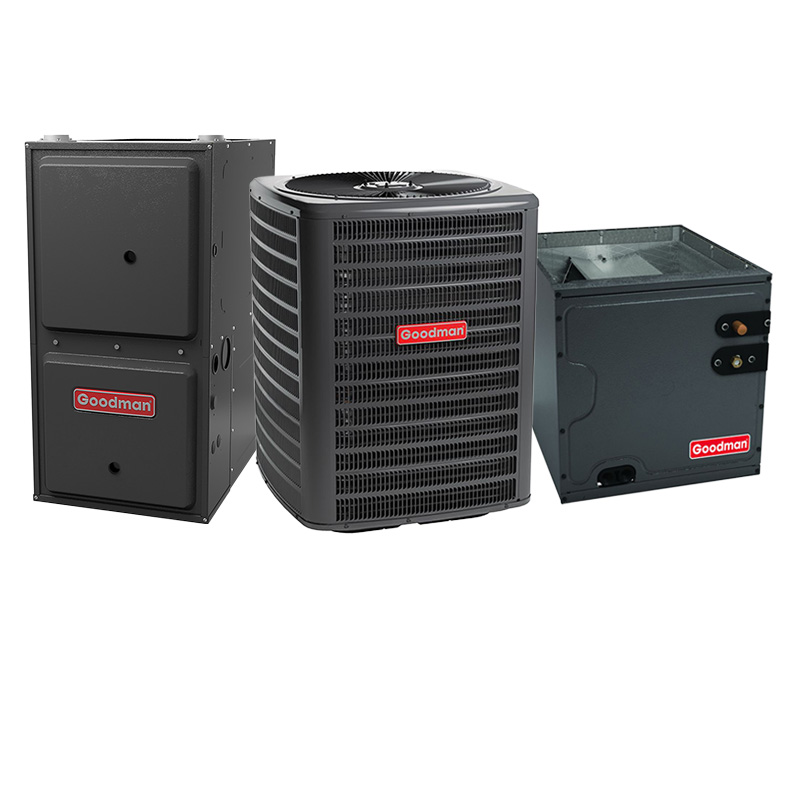
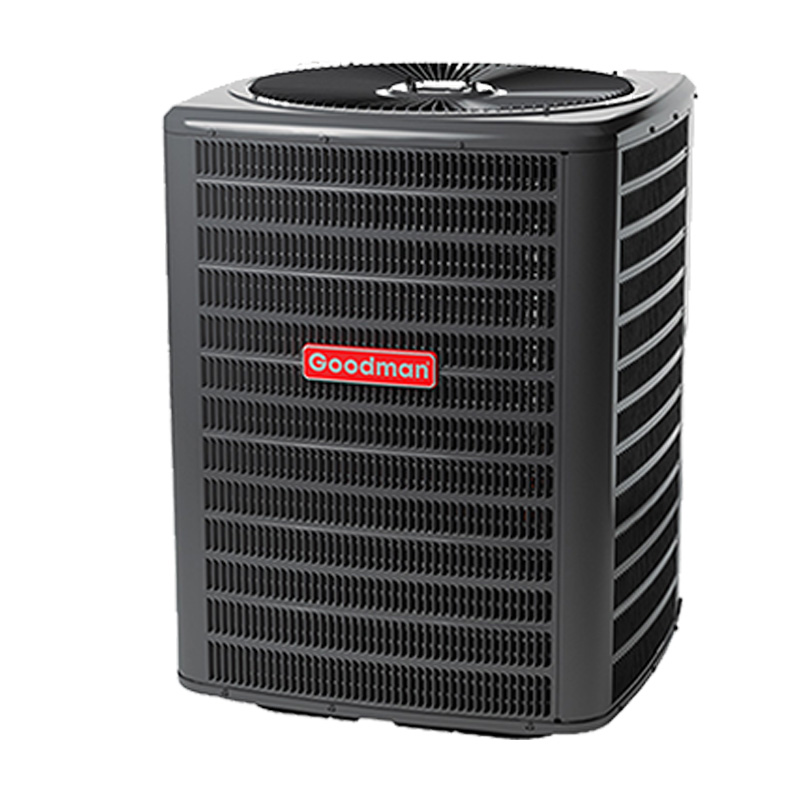
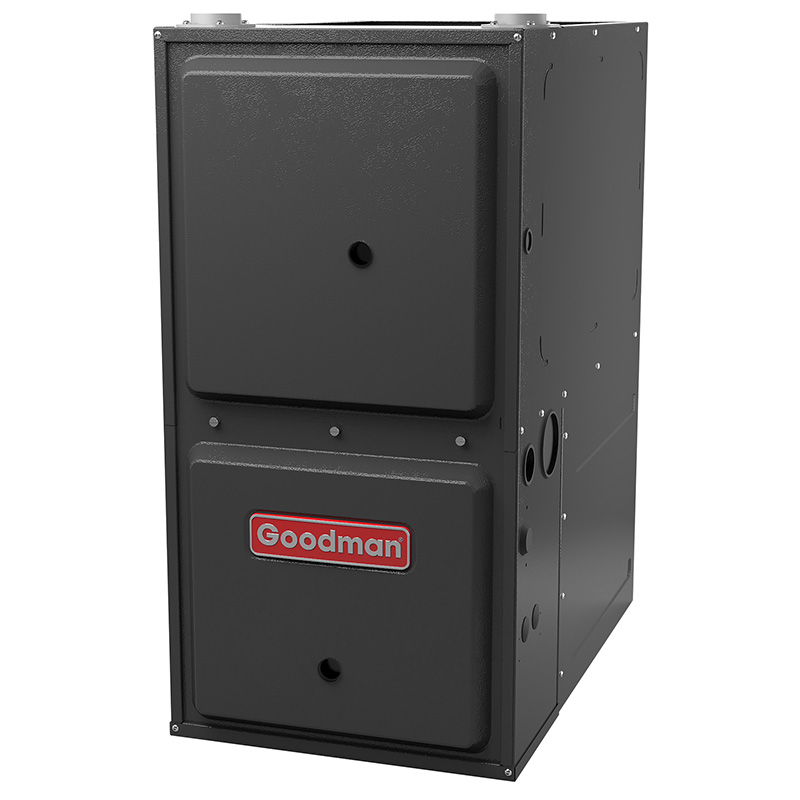
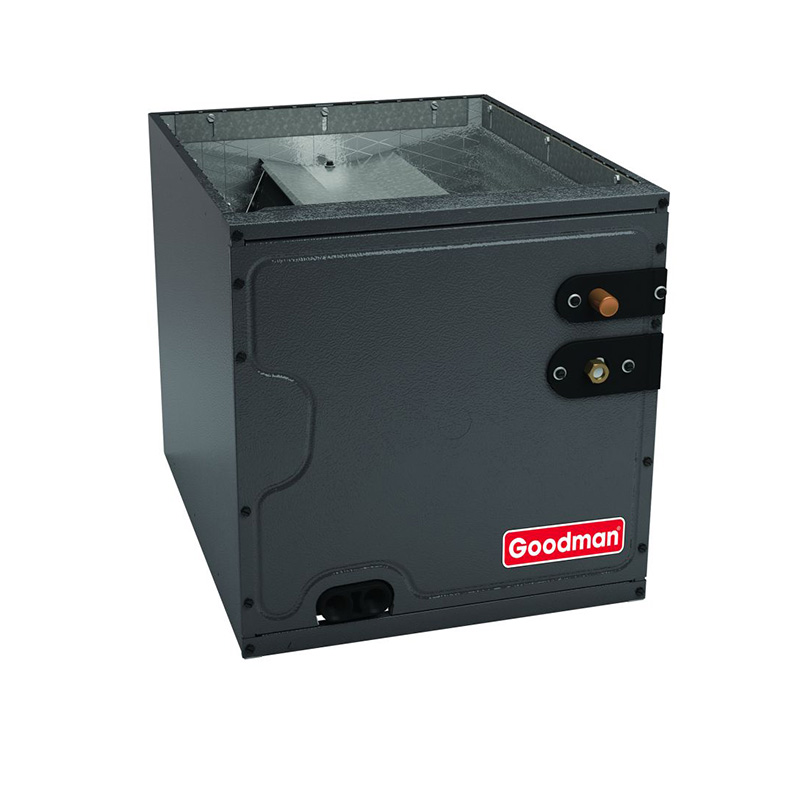
Goodman R32 2.5 Ton 13.8 SEER2 80000 BTU 80% Multi-Speed ECM Gas Furnace and Air Conditioner System – Downflow
View on AC Direct see your lowest price →Check current price on AC Direct →
Key features
- 2.5-ton cooling capacity with 13.8 SEER2 efficiency rating
- 80,000 BTU gas furnace rated at 80% AFUE
- Downflow air discharge for floor-duct and crawl-space installations
- Multi-speed ECM blower motor for improved airflow control and lower fan energy use
- R-32 refrigerant with lower global warming potential than R-410A
- Factory-matched split system designed for simplified commissioning
About this system
The Goodman R-32 2.5-ton downflow system pairs a 13.8 SEER2 air conditioner with an 80,000 BTU, 80% AFUE multi-speed ECM gas furnace in a downflow configuration, meaning the furnace discharges heated or cooled air downward through floor-level ductwork. That orientation makes it the correct choice for homes where the air handler sits in a closet above a crawl space, in a utility room on the main floor, or in any layout where supply ducts run beneath the equipment rather than overhead. The 2.5-ton capacity targets homes in the roughly 1,200 to 1,600 square foot range, though actual sizing always depends on local climate, insulation, and Manual J load calculations.
At 13.8 SEER2, this system meets but does not exceed current federal minimum efficiency standards for most U.S. regions, so operating costs will be higher than mid-tier or premium systems in the 16 to 18 SEER2 range. The multi-speed ECM blower motor does improve airflow precision and reduce electricity draw compared to a single-speed PSC motor, which is a meaningful upgrade at this price point. R-32 refrigerant has a lower global warming potential than the older R-410A it replaces and is increasingly the industry standard going forward. The 80% AFUE furnace is an entry-level efficiency rating; homeowners in cold climates who run heat heavily for several months each year may find a 96% or higher AFUE furnace pays back its cost difference over time.
This Goodman system is a straightforward, budget-conscious entry point that covers the basics competently when installed correctly by a skilled technician. It will not deliver the efficiency or expected lifespan of premium-brand competitors, and the 80% AFUE furnace is a meaningful limitation for cold-climate homeowners watching fuel bills. For mild climates or buyers focused on keeping upfront costs down in a home they do not plan to stay in long-term, it is a defensible choice.
Overall score is the average of the five ratings above.
What we like
- Priced 15 to 25 percent below comparable Carrier, Trane, and Lennox systems
- Multi-speed ECM motor is a genuine upgrade over basic single-speed blowers at this price tier
- R-32 refrigerant is lower-GWP and increasingly well-supported by service technicians
- Factory-matched components reduce compatibility guesswork during installation
- Downflow configuration serves a specific installation need that not all competing packages address
Trade-offs
- 80% AFUE is entry-level furnace efficiency; high-use heating climates will see noticeably higher gas bills versus 96%+ systems
- 13.8 SEER2 meets the minimum federal threshold but offers no efficiency headroom above it
- Goodman compressors average 10 to 14 years versus 15 to 20 years for premium brands, meaning a shorter expected replacement cycle
- Documented owner reports of dual-run capacitor failures and evaporator coil leaks add to lifetime service cost considerations
What homeowners and pros say about Goodman
Homeowners who post about Goodman systems tend to cluster into two camps: those who have had a smooth first five to seven years and credit the low purchase price as a win, and those dealing with repair bills after year seven who wish they had budgeted for a premium brand. Goodman’s ConsumerAffairs score sits at roughly 2.5 out of 5, which reflects that platform’s complaint-heavy audience but also points to a real pattern of ownership frustration as systems age. Google dealer reviews average around 3.8 out of 5 across locations, where affordability is the most consistently praised factor. For this specific downflow package, buyer expectations should be set accordingly: it is not a long-haul premium investment, it is a cost-conscious solution that performs adequately when the installation is done right.
HVAC technicians who service Goodman equipment most often flag dual-run capacitor failures as the brand’s most predictable wear item, a repair that typically runs 300 to 600 dollars and is not unique to Goodman but occurs with some frequency here. Evaporator coil leaks appear in a notable share of owner accounts and represent a more significant expense. Compressor lifespan averages 10 to 14 years based on documented owner experience, shorter than the 15 to 20 years commonly reported for Trane, Lennox, and Carrier compressors. Technicians consistently note that install quality has an outsized effect on how long any Goodman system lasts, so investing in an experienced, licensed installer is arguably more important here than with a premium-brand unit.
Sources: ConsumerAffairs Goodman owner reviews, AHRI Directory of Certified Product Performance, U.S. DOE appliance and equipment efficiency standards, Goodman product specification sheets.
What it costs to run
At 13.8 SEER2, cooling this 2.5-ton system for a typical 1200-hour cooling season at the U.S. average electricity rate of $0.17/kWh works out to roughly $443 per year in cooling, about $14 less per year than a minimum-efficiency 13.4 SEER2 unit of the same size. Your real cost depends on your climate and local rate.
Method: (30,000 BTU/hr ÷ 13.8 SEER2) × 1200 hours ÷ 1000 × $0.17/kWh. Rate source: U.S. EIA average; cooling hours: moderate-climate estimate.
How it compares
| Brand | Comparable model | SEER2 | Stage | Price position |
|---|---|---|---|---|
| Goodman | R-32 2.5T 13.8 SEER2 / 80K BTU 80% ECM Downflow | 13.8 | Single-stage / Multi-speed | Value pick |
| Carrier | Comfort Series (24ACC / 58CV pairing) | 14.0–15.2 | Single-stage | Typically 15 to 25 percent more than Goodman |
| Trane | XR14 / S8X1 series | 14.0–15.0 | Single-stage | Typically 15 to 25 percent more than Goodman |
| Lennox | Merit Series (13ACX / ML180 pairing) | 13.8–14.3 | Single-stage | Typically 15 to 25 percent more than Goodman |
Competitor rows are comparable single-stage units at similar efficiency; price is relative position, not a quote.
Questions about this system
Is a downflow furnace harder to find an installer for than a standard upflow unit?
Most experienced HVAC contractors work with both configurations, but downflow installs require careful attention to duct transition and airflow direction, so it is worth confirming your contractor has done downflow work before. Mistakes in a downflow setup can affect system performance and increase the chance of refrigerant or condensate issues.
Will 80% AFUE cost me significantly more to heat my home than a 96% furnace would?
For every dollar of gas burned, an 80% AFUE furnace delivers 80 cents of heat versus 96 cents for a high-efficiency unit. In a mild climate with short heating seasons the dollar difference is modest, but in colder regions with 5 to 6 months of heavy heating use the annual savings from a 96% unit can meaningfully offset its higher upfront cost over 8 to 10 years.
What are the most likely repairs I should budget for over the life of this system?
Based on documented Goodman owner experience, dual-run capacitor replacement is the most common service call and typically runs 300 to 600 dollars. Evaporator coil leaks appear in a meaningful share of reviews and are a more expensive repair. A small minority of owners report refrigerant leaks in the first year, which is usually traced to installation or initial charge quality rather than the equipment itself.
Does R-32 refrigerant require any special handling that will affect service costs?
R-32 is mildly flammable and requires technicians certified to handle A2L refrigerants and, in some cases, updated recovery equipment. The service pool of R-32-qualified technicians is growing quickly as R-32 becomes the industry standard, but in rural areas you may want to confirm local availability before purchasing.
What warranty comes with this Goodman system and what does it actually cover?
Goodman typically offers a 10-year parts warranty on registered systems, covering components like the compressor, coil, and heat exchanger. Registration must generally be completed within a set window after installation to activate the full term. Labor is not included in the manufacturer warranty, so repair calls still carry a service fee even on covered parts.
Specifications
| Cooling capacity | 2.5 Ton |
| Efficiency | 13.8 SEER2 |
| Furnace output | 80000 BTU |
| Configuration | Downflow |
| Refrigerant | R-32 |