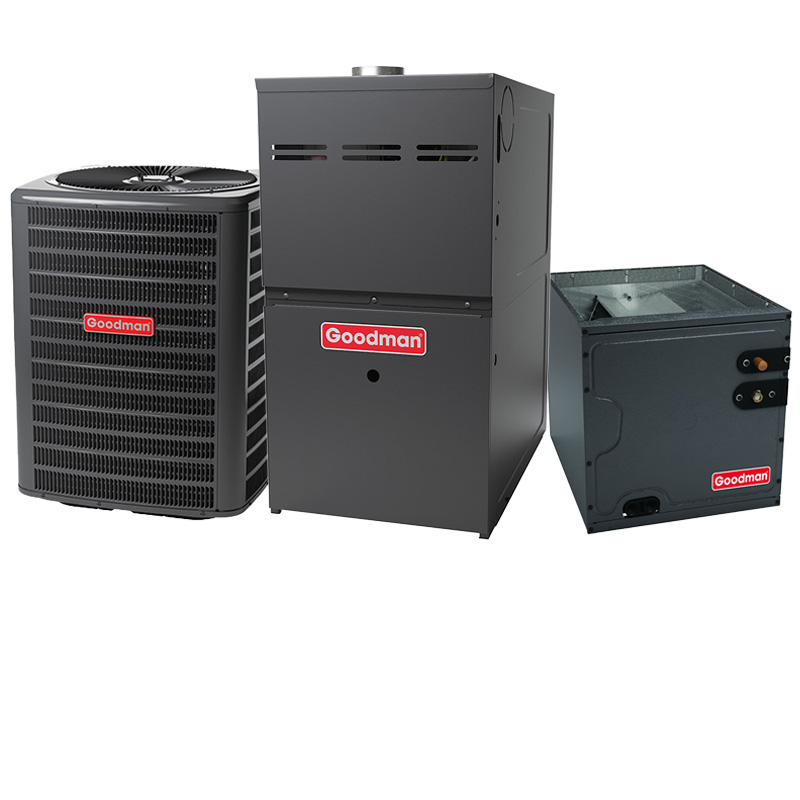
Goodman R32 2.5 Ton 14 SEER2 80000 BTU 80% Multi-Speed ECM Gas Furnace and Air Conditioner System – Upflow
View on AC Direct see your lowest price →Check current price on AC Direct →
Key features
- 2.5-ton cooling capacity rated at 14 SEER2, meeting current federal minimum efficiency standards
- 80,000 BTU gas furnace with 80% AFUE for standard single-stage heating output
- Multi-speed ECM blower motor reduces fan electricity use versus PSC motors and runs quieter
- R-32 refrigerant with lower global-warming potential than legacy R-410A systems
- Upflow configuration designed for basement or utility closet installs with overhead ductwork
- Factory-matched system tested together, simplifying equipment selection and coil compatibility
About this system
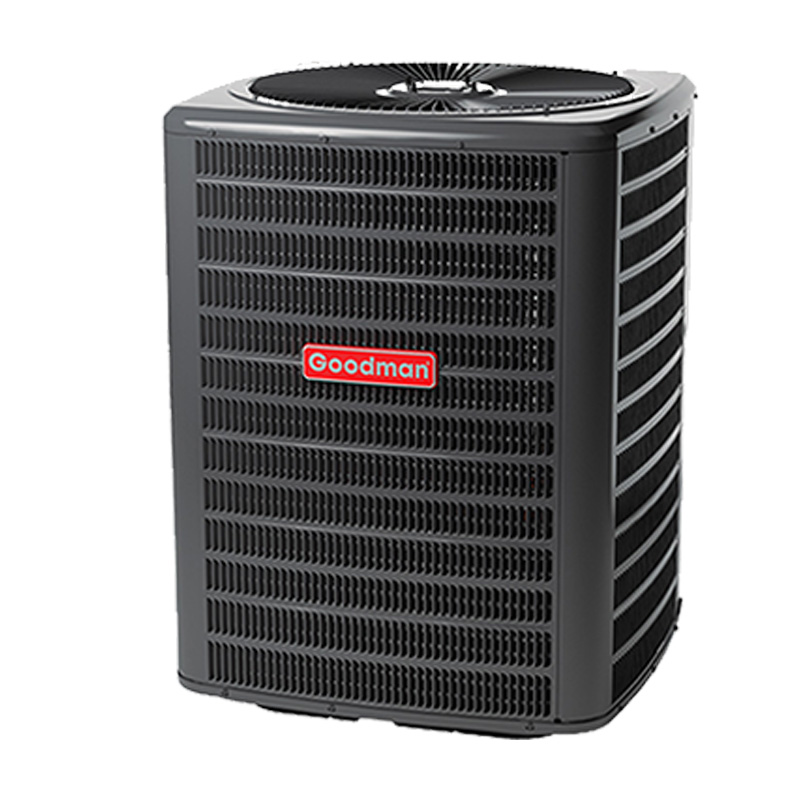
This Goodman bundle pairs a 2.5-ton, 14 SEER2 central air conditioner with an 80,000 BTU, 80% AFUE upflow gas furnace, covering homes roughly in the 1,200 to 1,800 square foot range depending on local climate, insulation quality, and layout. The 14 SEER2 rating sits at the current federal minimum efficiency threshold for most U.S. climate zones, so it meets code but does not exceed it. That is a realistic expectation to set before purchase: you are buying entry-level efficiency, not a premium efficiency upgrade.
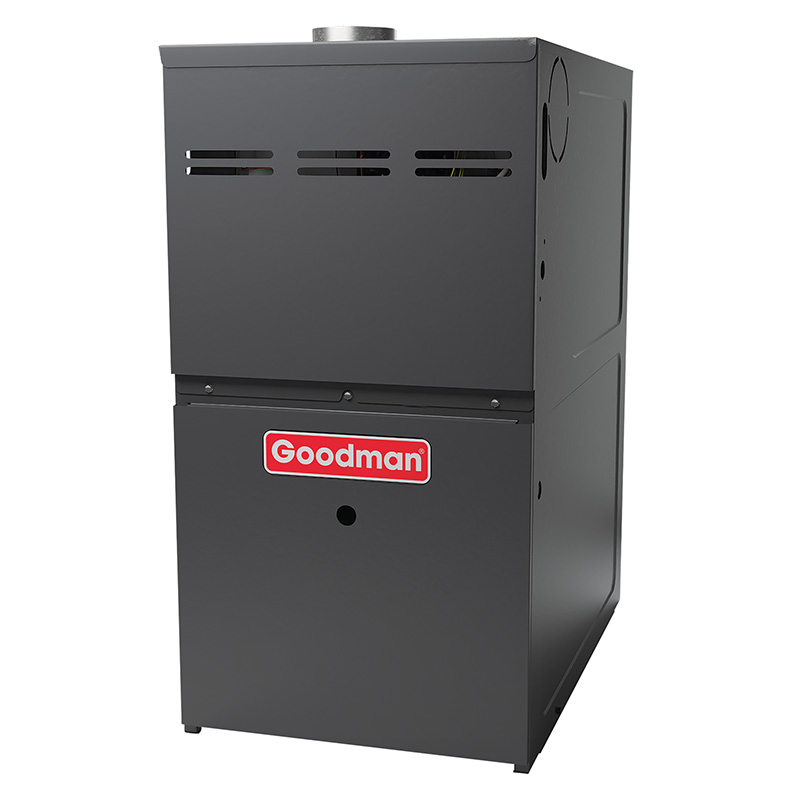
The furnace runs on an ECM (electronically commutated motor) blower, which is a meaningful step up from a standard PSC motor. ECM motors use noticeably less electricity during fan operation and tend to run quieter, which matters in two-story homes or open floor plans where the air handler is close to living spaces. The R-32 refrigerant is a lower global-warming-potential option compared to the older R-410A, and it is becoming the industry standard, so servicing options should remain accessible as the refrigerant landscape shifts. The upflow configuration means the air handler sits at floor level and discharges warm or cooled air upward through ductwork above, a common setup in basements and utility closets with overhead trunk lines.
This system suits buyers who need a reliable, code-compliant replacement without stretching the budget toward variable-speed or two-stage equipment. It is not the right fit for homeowners chasing low utility bills or ultra-quiet operation, but for straightforward, cost-conscious comfort in a mid-size home, the specs are honest and the price point is hard to argue with.
This Goodman bundle is a straightforward, budget-conscious choice for homeowners who need a functional replacement system without paying premium-brand prices. The ECM motor adds real value at this price point, but the 14 SEER2 efficiency ceiling and Goodman's documented track record on capacitors and coil longevity are genuine considerations. A quality installation matters more here than with premium brands, so technician selection is not optional.
Overall score is the average of the five ratings above.
What we like
- Priced 15 to 25 percent below comparable Trane, Lennox, and Carrier systems at similar efficiency
- ECM blower motor cuts fan energy use and reduces operating noise compared to standard PSC motors
- R-32 refrigerant is forward-compatible as the industry moves away from R-410A
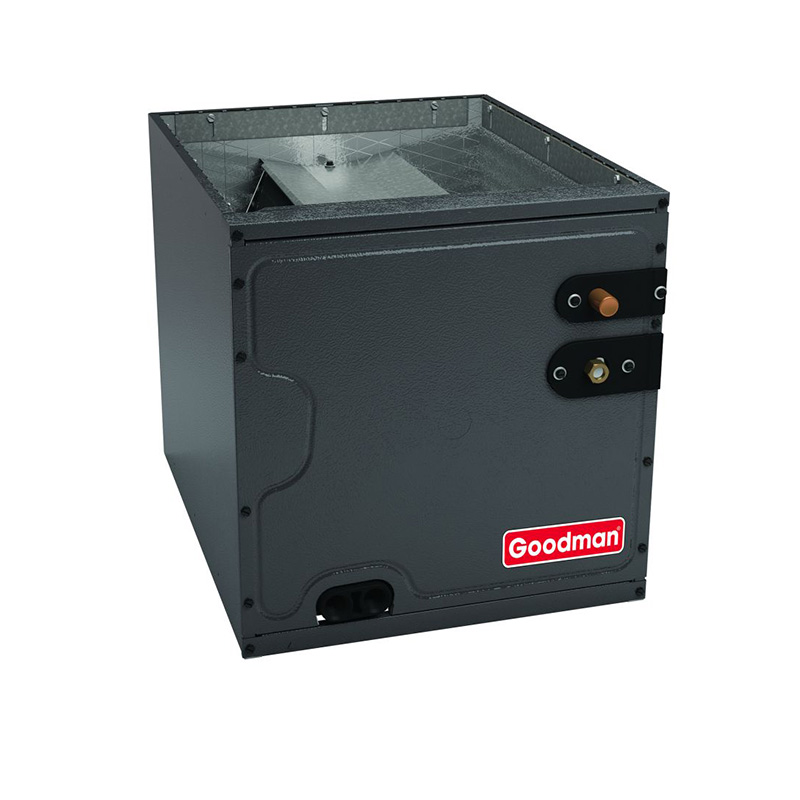
- Factory-matched AC and furnace simplifies coil sizing and reduces compatibility guesswork
- Dual-run capacitor failures, the most common repair, are typically a low-cost fix in the $300 to $600 range
Trade-offs
- 80% AFUE is the lowest efficiency tier available for gas furnaces, leaving money on the table in cold climates compared to 96%+ models
- 14 SEER2 meets minimum federal standards only, so energy savings versus an older system may be modest
- Compressors average 10 to 14 years according to owner experience, shorter than the 15 to 20-year range typical of premium brands
- Evaporator coil leaks and refrigerant charge issues within the first year appear in a meaningful share of owner reports, underscoring the importance of installer quality
What homeowners and pros say about Goodman
Homeowners who buy Goodman systems land in two camps fairly consistently, and the ConsumerAffairs score of around 2.5 out of 5 captures the frustrated half while Google dealer reviews around 3.8 out of 5 reflect the more common outcome when installation goes well. The complaints that show up repeatedly on ConsumerAffairs center on repair costs that start climbing after roughly year seven, which aligns with what technicians see in the field: dual-run capacitors failing, evaporator coil leaks developing over time, and compressors that tend to top out in the 10 to 14 year range rather than the 15 to 20 years owners of Carrier or Trane equipment sometimes report. None of these are surprises for the price tier, but they are worth knowing before you sign a purchase agreement.
HVAC installers tend to say the same thing about Goodman across the board: the equipment performs fine when it is set up correctly, and it underperforms when it is not. That is true of any brand, but Goodman’s tighter margins on component quality leave less room for a sloppy refrigerant charge or an airflow miscalculation. Dealers praise the affordability in their Google reviews, and that praise is genuine. Getting 10 or more years of reliable cooling and heating out of this system is a realistic outcome for buyers who vet their installer carefully, sign up for annual maintenance, and do not expect the unit to outlast a premium system. For straightforward replacement jobs where budget is the primary constraint, the value case for Goodman is real.
Sources: ConsumerAffairs Goodman owner reviews, AHRI Directory of Certified Product Performance, U.S. DOE appliance and equipment efficiency standards, Goodman product specification sheets.
What it costs to run
At 14 SEER2, cooling this 2.5-ton system for a typical 1200-hour cooling season at the U.S. average electricity rate of $0.17/kWh works out to roughly $437 per year in cooling, about $20 less per year than a minimum-efficiency 13.4 SEER2 unit of the same size. Your real cost depends on your climate and local rate.
Method: (30,000 BTU/hr ÷ 14 SEER2) × 1200 hours ÷ 1000 × $0.17/kWh. Rate source: U.S. EIA average; cooling hours: moderate-climate estimate.
How it compares
| Brand | Comparable model | SEER2 | Stage | Price position |
|---|---|---|---|---|
| Goodman | R-32 2.5 Ton 14 SEER2 / 80k BTU 80% AFUE Upflow Bundle | 14 | Single-stage | Value pick |
| Carrier | Comfort Series (24ACC6 / 59SC2) | 14-15 | Single-stage | Typically 15 to 25 percent higher than this Goodman bundle |
| Trane | XR14c / S8X1 80% Gas Furnace Bundle | 14 | Single-stage | Typically 20 to 30 percent higher than this Goodman bundle |
| Lennox | Merit Series (ML14XC1 / ML80UH) | 14-15 | Single-stage | Typically 20 to 30 percent higher than this Goodman bundle |
Competitor rows are comparable single-stage units at similar efficiency; price is relative position, not a quote.
Questions about this system
Is 14 SEER2 good enough, or should I step up to a higher-efficiency unit?
14 SEER2 meets the current federal minimum for most climate zones and will cool your home effectively, but it is not a high-efficiency choice. If your electric rates are high or your cooling season is long, a 16 SEER2 or higher system can pay back the price difference over time. For mild or short cooling seasons, the extra cost often does not pencil out.
Is 80% AFUE enough for my gas furnace, or do I need higher?
In mild-winter climates like the Southeast or Southwest, 80% AFUE is serviceable and the simpler venting requirements can actually reduce installation cost. In cold-climate states where the furnace runs hard for five or more months, stepping up to a 96% or higher AFUE model typically produces meaningful annual savings on gas bills and is worth pricing out before you decide.
What is the most likely repair I should budget for over the first 10 years?
Dual-run capacitors are the most frequently reported failure on Goodman air conditioning equipment, and they are also one of the cheapest HVAC repairs, typically running $300 to $600 with a service call. Setting aside a small maintenance reserve for this is reasonable. Evaporator coil leaks are less common but more expensive and show up in a meaningful share of long-term owner reports.
Does the R-32 refrigerant affect who can service this system?
R-32 requires technicians to use equipment rated for A2L refrigerants due to its mild flammability classification, so not every HVAC company will be set up to handle it yet. Availability is improving quickly as R-32 becomes the industry standard, but it is worth confirming that your local service provider works with A2L refrigerants before you buy.
How important is installer quality for a Goodman system specifically?
More important than with premium brands, according to HVAC technicians who work on both. Goodman's track record leans heavily on proper refrigerant charge, correct airflow setup, and tight connections at commissioning. A minority of owners report refrigerant leaks in the first year, and these are almost always traced back to install or charge issues rather than equipment defects. Getting multiple quotes and checking installer reviews is not a step to skip.
Specifications
| Cooling capacity | 2.5 Ton |
| Efficiency | 14 SEER2 |
| Furnace output | 80000 BTU |
| Configuration | Upflow |
| Refrigerant | R-32 |