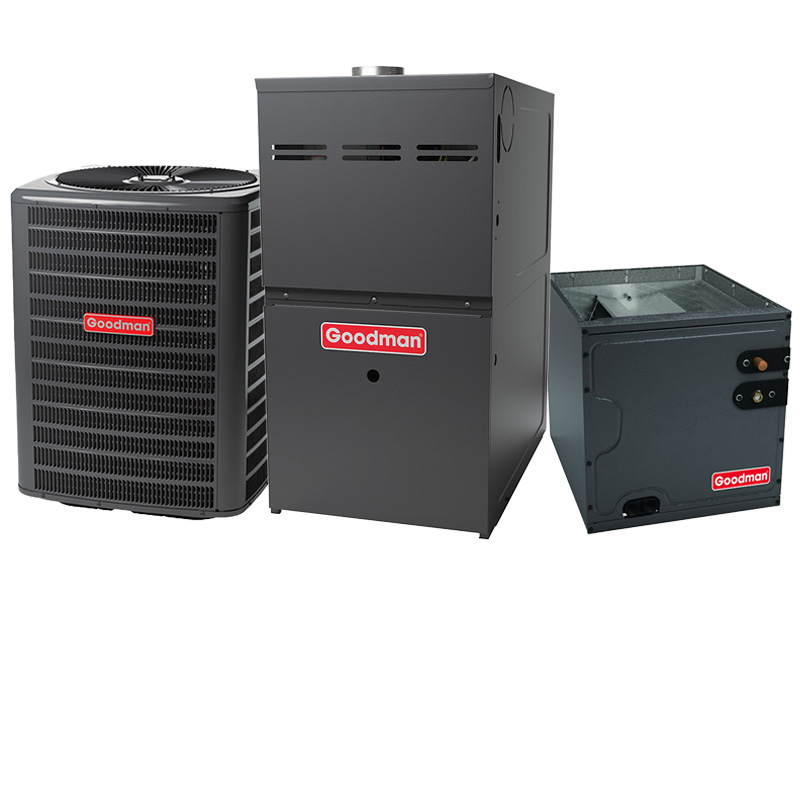
Goodman R32 2.5 Ton 14 SEER2 80000 BTU 80% Multi-Speed ECM Gas Furnace and Air Conditioner System – Upflow
View on AC Direct see your lowest price →Check current price on AC Direct →
Key features
- 2.5-ton cooling capacity with 14 SEER2 efficiency rating
- 80,000 BTU output at 80% AFUE single-stage gas furnace
- R-32 refrigerant with lower global-warming potential than R-410A
- ECM multi-speed blower motor for reduced fan energy use
- Upflow configuration for basement or ground-level installations with overhead ductwork
- Factory-matched system designed to simplify permit and equipment compatibility documentation
About this system
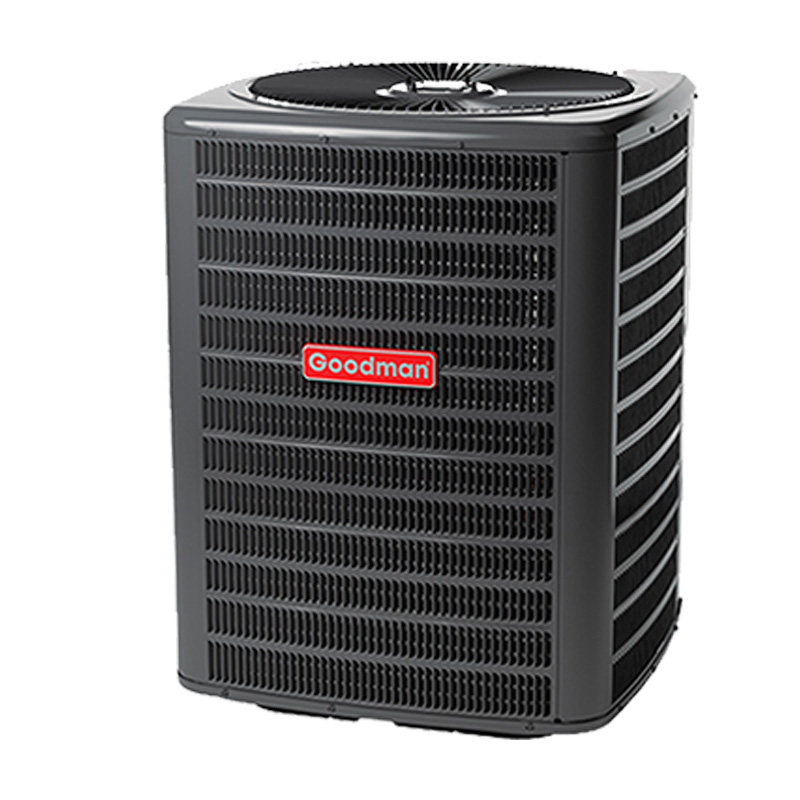
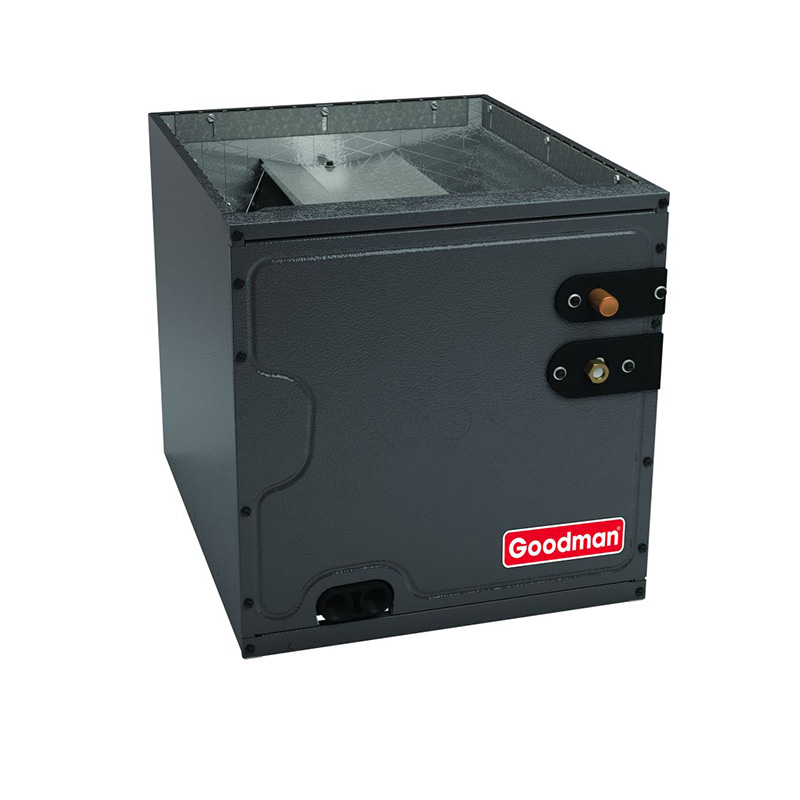
This Goodman bundle pairs a 2.5-ton, 14 SEER2 R-32 air conditioner with an 80,000 BTU, 80% AFUE upflow gas furnace to cover cooling and heating in a single purchase. The 14 SEER2 rating sits at the current federal minimum efficiency threshold for most U.S. climate zones, meaning you meet code without paying for efficiency you may not recoup in energy savings over a typical ownership period. R-32 refrigerant carries a significantly lower global-warming potential than the R-410A it replaces, and its higher energy density allows slightly smaller refrigerant charges, which can simplify handling for your installer.
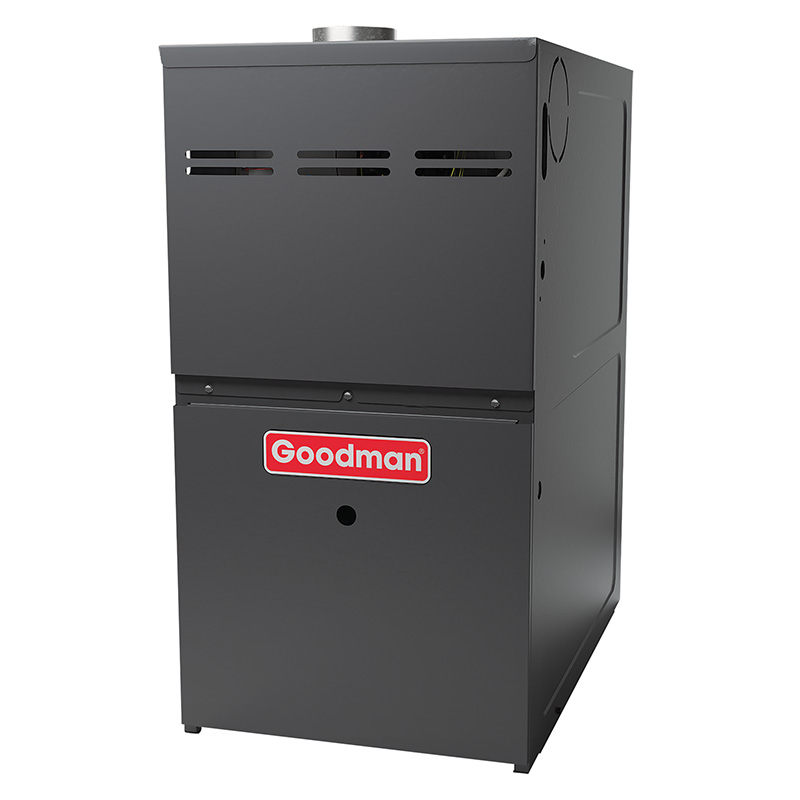
The upflow configuration directs conditioned air upward into the duct system, making this combination a direct fit for homes where the furnace sits in a basement, utility closet, or ground-level mechanical room with ductwork running overhead. The ECM (electronically commutated motor) blower in the furnace operates at multiple speeds rather than a fixed single speed, which reduces electricity consumption during fan-only and low-demand heating cycles and tends to improve comfort consistency compared to a standard PSC motor. That said, this is a multi-speed rather than a fully variable or modulating system, so temperature precision will not match premium variable-speed equipment. Buyers who need that level of control, or who have unusually high cooling loads in a humid climate, should weigh a higher-tier system carefully before choosing this one.
This Goodman bundle is a competent entry-level system that delivers code-minimum cooling efficiency and adequate heating performance at a price point meaningfully below Carrier, Trane, and Lennox alternatives. It suits budget-conscious homeowners who want reliable climate control without paying for top-tier efficiency or variable-speed precision. The trade-off is a documented history of component failures past year seven and a compressor lifespan that typically falls short of premium brands.
Overall score is the average of the five ratings above.
What we like
- Priced roughly 15 to 25 percent below comparable Carrier, Trane, and Lennox systems
- R-32 refrigerant is easier to source and has a lower environmental impact than R-410A
- ECM blower motor reduces electricity use during fan operation compared to single-speed PSC motors
- Factory-matched pairing simplifies permitting and eliminates compatibility guesswork
- Widely supported parts network means most HVAC technicians stock common components, including the frequently replaced dual-run capacitor
Trade-offs
- 14 SEER2 is code-minimum efficiency; energy savings versus a 16 or 18 SEER2 system will be noticeable over a 10-plus year ownership period
- Dual-run capacitor failures and evaporator coil leaks are documented recurring issues, adding to long-term ownership costs
- Compressor lifespan averages 10 to 14 years versus 15 to 20 years reported for premium brands, shortening the effective replacement window
- ConsumerAffairs reviews average around 2.5 out of 5, with repair cost complaints climbing after year seven
What homeowners and pros say about Goodman
Homeowners who chose Goodman equipment most often credit the price. Google dealer reviews across Goodman-focused HVAC contractors land around 3.8 out of 5, and the praise in those reviews clusters around affordability and the fact that the equipment does what it is supposed to do at a lower cost of entry than the major premium brands. ConsumerAffairs paints a harder picture, averaging around 2.5 out of 5, though that platform skews toward dissatisfied owners who seek out a place to report problems. The recurring complaint there is repair bills that start accumulating after roughly year seven, with dual-run capacitor replacements being the most frequently mentioned service call and evaporator coil leaks showing up in a meaningful share of longer-term owner accounts.
HVAC technicians who work on Goodman equipment regularly tend to hold a pragmatic view. They point out that the dual-run capacitor is a known wear item, inexpensive to stock, and fast to swap, so it rarely becomes a catastrophic failure. The more serious concern professionals raise is compressor longevity: Goodman compressors tend to average 10 to 14 years in the field, versus the 15 to 20 years technicians associate with Trane, Carrier, and Lennox compressors. For this specific R-32 system, installers also note that first-year refrigerant leak reports in Goodman units are usually tied to installation quality or initial charge rather than a systemic product defect, reinforcing the widely held view among pros that a careful, experienced installer is the single most important variable in how long any Goodman system lasts.
Sources: ConsumerAffairs Goodman owner reviews, AHRI Directory of Certified Product Performance, U.S. DOE appliance and equipment efficiency standards, Goodman product specification sheets.
What it costs to run
At 14 SEER2, cooling this 2.5-ton system for a typical 1200-hour cooling season at the U.S. average electricity rate of $0.17/kWh works out to roughly $437 per year in cooling, about $20 less per year than a minimum-efficiency 13.4 SEER2 unit of the same size. Your real cost depends on your climate and local rate.
Method: (30,000 BTU/hr ÷ 14 SEER2) × 1200 hours ÷ 1000 × $0.17/kWh. Rate source: U.S. EIA average; cooling hours: moderate-climate estimate.
How it compares
| Brand | Comparable model | SEER2 | Stage | Price position |
|---|---|---|---|---|
| Goodman | R-32 14 SEER2 Multi-Speed ECM Bundle (this system) | 14 | Single-stage | Value pick |
| Carrier | Comfort 14 Series (24ACC4) | 14 | Single-stage | Typically 15 to 25 percent more than this Goodman bundle |
| Trane | XR14c | 14 | Single-stage | Typically 15 to 25 percent more than this Goodman bundle |
| Lennox | Merit ML14XC1 | 14 | Single-stage | Typically 15 to 25 percent more than this Goodman bundle |
Competitor rows are comparable single-stage units at similar efficiency; price is relative position, not a quote.
Questions about this system
Is 14 SEER2 enough, or should I pay more for a higher-efficiency unit?
14 SEER2 meets current federal minimums and will keep your home comfortable, but the efficiency gap versus a 16 or 18 SEER2 system translates into measurable differences on your monthly cooling bill, especially in climates with long, hot summers. If you run the air conditioner heavily from May through September, the payback on a higher-efficiency unit can be reasonable over 8 to 10 years.
What does R-32 refrigerant mean for maintenance and repairs?
R-32 is a single-component refrigerant, which means technicians can recharge it without replacing the entire charge if a small leak is repaired, unlike some blended refrigerants. It is increasingly stocked by HVAC suppliers, so parts availability should not be a concern. A minority of first-year refrigerant leak reports for Goodman systems are typically traced to installation or initial charge issues rather than the refrigerant itself.
What is the difference between the ECM multi-speed blower and a variable-speed blower?
The ECM motor in this furnace runs at a fixed set of pre-programmed speeds and uses less electricity than a standard PSC motor, which is a real benefit. A fully variable-speed blower ramps up and down continuously in response to demand, providing finer temperature control and better humidity management. This multi-speed ECM is a meaningful step up from entry-level but falls short of the comfort precision a variable-speed system offers.
How often do Goodman dual-run capacitors fail, and what does that cost to fix?
Capacitor failure is the most commonly reported repair issue across Goodman owner reviews. The part itself is inexpensive and a straightforward replacement for any HVAC technician, with typical all-in repair costs in the 300 to 600 dollar range. Keeping a service agreement or scheduling annual tune-ups can catch a weakening capacitor before it causes a no-cool situation in midsummer.
Does an upflow furnace work if my ductwork runs through the floor instead of the ceiling?
No. Upflow furnaces are designed to discharge air upward into overhead ductwork. If your supply ducts run under the floor or the unit needs to sit on top of the air handler and blow down, you need a downflow or horizontal configuration instead. Confirm your duct layout with your installer before ordering.
Specifications
| Cooling capacity | 2.5 Ton |
| Efficiency | 14 SEER2 |
| Furnace output | 80000 BTU |
| Configuration | Upflow |
| Refrigerant | R-32 |