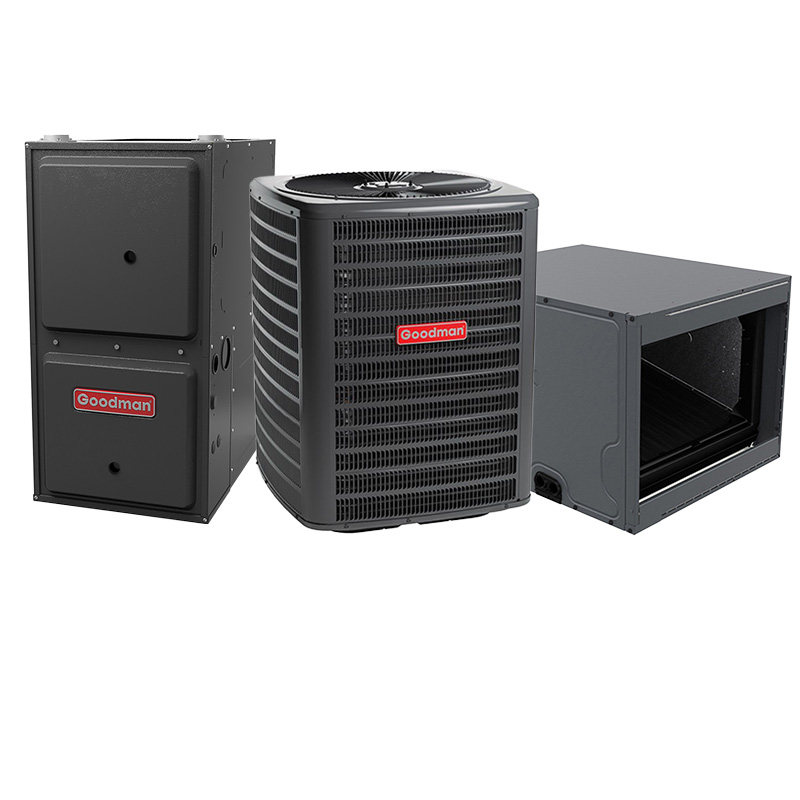
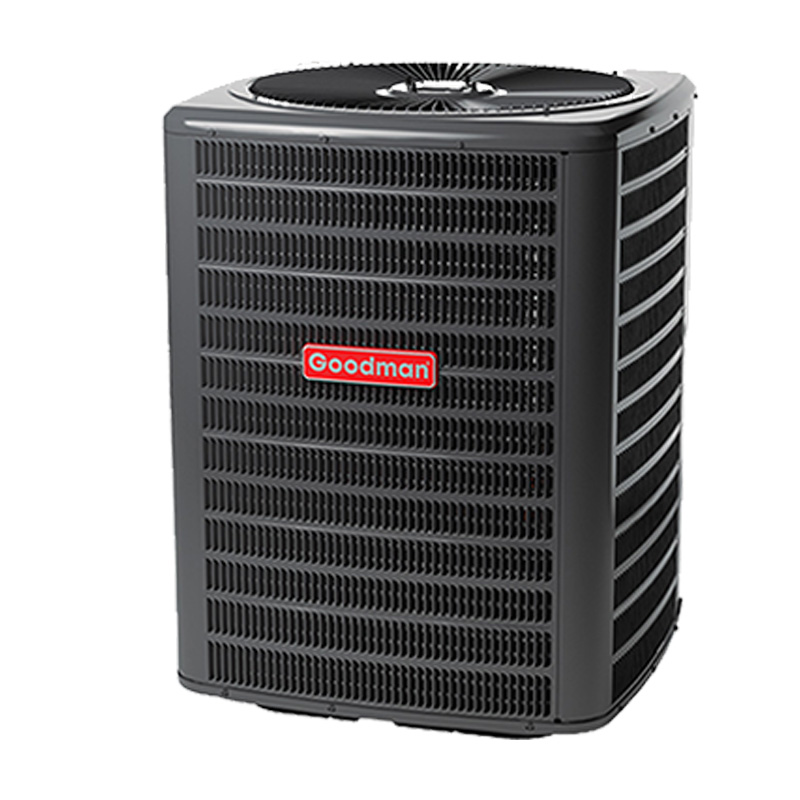
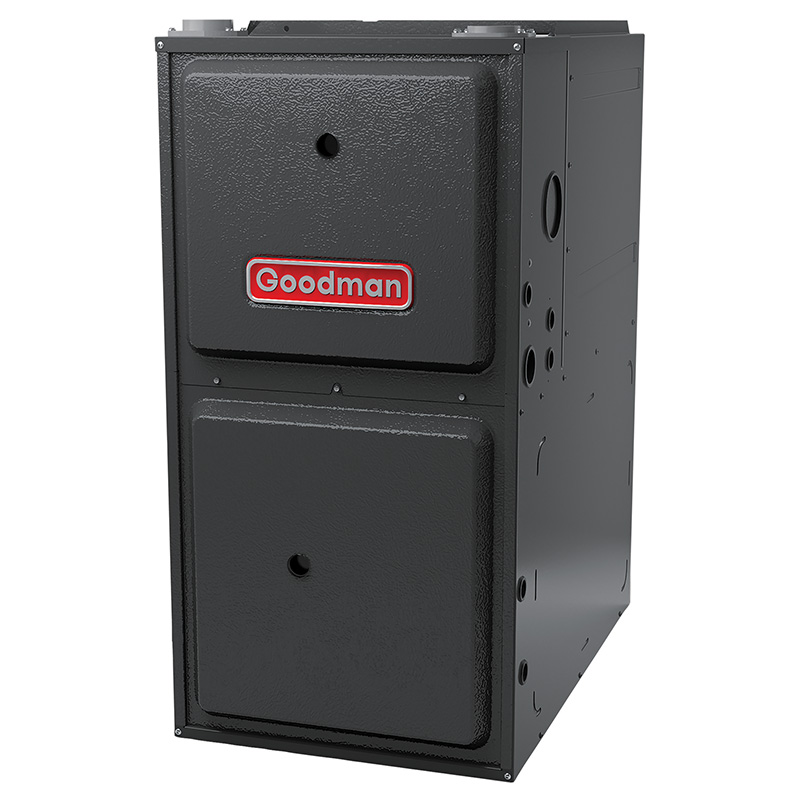
Goodman R32 2.5 Ton 14 SEER2 80000 BTU 80% Two Stage 9-Speed ECM Gas Furnace and Air Conditioner System – Horizontal
View on AC Direct see your lowest price →Check current price on AC Direct →
Key features
- 2.5-ton, 14 SEER2 R-32 air conditioner sized for roughly 1,200 to 1,800 sq ft
- 80,000 BTU two-stage gas furnace rated at 80% AFUE
- Nine-speed ECM blower motor for reduced electricity use and smoother airflow
- Horizontal configuration designed for attic, crawl space, or side-closet installs
- R-32 refrigerant with lower global warming potential than R-410A
- Matched system qualifies for Goodman factory warranty when registered within 60 days
About this system
This Goodman bundle pairs a 2.5-ton, 14 SEER2 R-32 air conditioner with an 80,000 BTU, 80% AFUE two-stage gas furnace in a horizontal configuration, making it a practical choice for homes where the air handler sits on its side in a tight crawl space, attic, or side-closet installation. The 14 SEER2 rating lands right at the federal minimum threshold for most northern U.S. climate zones, so it meets code without reaching into mid-efficiency or high-efficiency territory. That keeps the purchase price accessible while still delivering meaningful comfort improvements over aging equipment from the early 2000s.
The two-stage furnace and nine-speed ECM blower are the standout features here. Two-stage heating means the furnace runs at a lower fire for most of the season, cycling on and off less aggressively, which reduces temperature swings and cold-spot complaints. The ECM motor uses significantly less electricity than a standard PSC blower and ramps speed gradually, which also helps the air conditioner remove humidity more effectively during long, mild cooling days. R-32 refrigerant has a lower global warming potential than the R-410A it replaces and typically requires a smaller refrigerant charge, though it does require technicians to be R-32 certified and use compatible equipment.
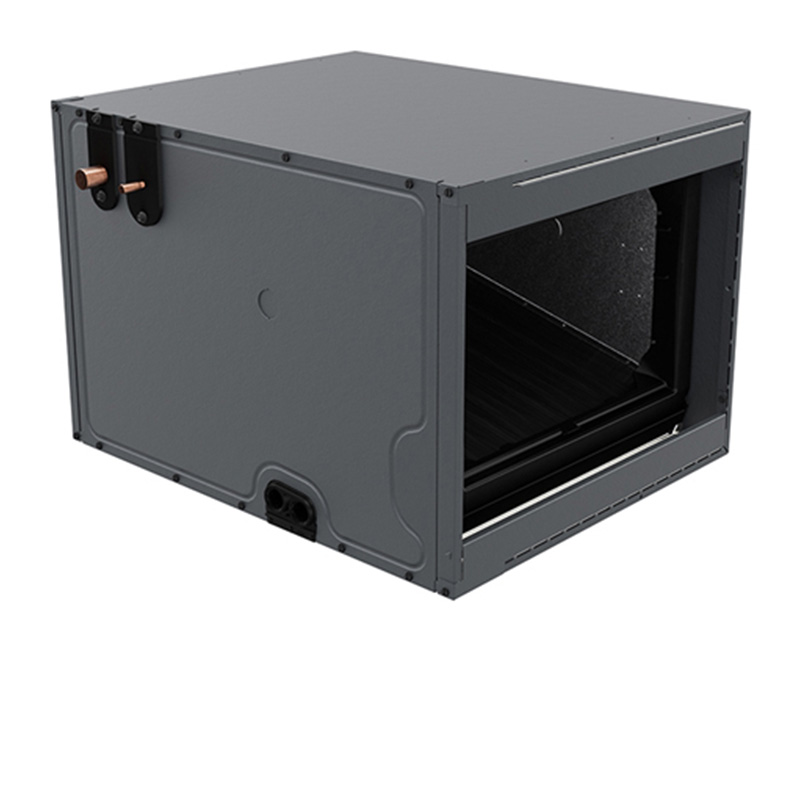
The horizontal configuration adds installation complexity compared with a standard upflow or downflow setup. Proper condensate drainage, coil orientation, and airflow balance all become more critical when the unit is on its side, and any shortcuts during the install tend to surface as performance or moisture problems within the first few cooling seasons. Buyers in the 1,200 to 1,800 square foot range with moderate heating loads in mixed-climate zones are the clearest fit for this system.
This Goodman horizontal system offers a genuinely capable two-stage furnace and an ECM blower at a price point typically 15 to 25 percent below comparable Carrier, Trane, or Lennox bundles, making it a reasonable choice for budget-conscious buyers who can secure a skilled installer. The 14 SEER2 efficiency is code-minimum for many regions rather than a standout spec, and Goodman's real-world reliability record is mixed enough that buyers should budget for a possible capacitor or coil repair in the 7- to 12-year window. The horizontal configuration raises the stakes on installation quality even further than a standard orientation.
Overall score is the average of the five ratings above.
What we like
- Two-stage furnace reduces temperature swings and short-cycling compared with single-stage alternatives
- Nine-speed ECM blower cuts fan electricity costs and improves dehumidification during cooling
- R-32 refrigerant lowers environmental impact and requires a smaller refrigerant charge
- Purchase price lands 15 to 25 percent below comparable premium-brand systems
- Matched bundle simplifies warranty coverage and ensures coil and condenser compatibility
Trade-offs
- 14 SEER2 is code-minimum efficiency, not a strong performer for energy savings in hot or humid climates
- Horizontal configuration demands precise installation for drainage and airflow; errors show up quickly as moisture or comfort problems
- Goodman compressors historically average 10 to 14 years versus 15 to 20 for premium brands, meaning a possible mid-life replacement
- A documented pattern of dual-run capacitor failures and evaporator coil leaks after year 7 can push lifetime maintenance costs higher than the upfront savings suggest
What homeowners and pros say about Goodman
Homeowners who leave reviews for Goodman equipment tend to split along a familiar fault line. Those who had a careful, experienced installer report years of steady, unremarkable operation and point to the lower purchase price as a clear win. Those who ran into trouble more often trace the root cause back to the install rather than the equipment itself, though Goodman’s ConsumerAffairs score of roughly 2.5 out of 5 reflects real frustration with repair costs that start accumulating after year 7, particularly around capacitor failures, evaporator coil leaks, and compressors that tend to reach the end of their service life in the 10 to 14 year range rather than the 15 to 20 years owners of premium brands sometimes report. Google dealer reviews average around 3.8 out of 5, with affordability consistently cited as the reason buyers chose Goodman in the first place.
HVAC technicians working on this horizontal-configuration bundle would flag install quality as the single most important variable in how the system performs and how long it lasts. The horizontal orientation adds specific demands around condensate drainage slope and coil positioning that leave less margin for shortcuts than a standard upflow install. Techs familiar with R-32 systems note the refrigerant itself is not problematic as long as certified equipment is used, but they caution that the pool of R-32-experienced contractors is still growing in some markets. The two-stage furnace and nine-speed ECM blower are generally regarded as practical, real-world upgrades over basic single-stage equipment at this price point, and the dual-run capacitor is widely understood to be the first maintenance call to anticipate and budget for as the system ages.
Sources: ConsumerAffairs Goodman owner reviews, AHRI Directory of Certified Product Performance, U.S. DOE appliance and equipment efficiency standards, Goodman product specification sheets.
What it costs to run
At 14 SEER2, cooling this 2.5-ton system for a typical 1200-hour cooling season at the U.S. average electricity rate of $0.17/kWh works out to roughly $437 per year in cooling, about $20 less per year than a minimum-efficiency 13.4 SEER2 unit of the same size. Your real cost depends on your climate and local rate.
Method: (30,000 BTU/hr ÷ 14 SEER2) × 1200 hours ÷ 1000 × $0.17/kWh. Rate source: U.S. EIA average; cooling hours: moderate-climate estimate.
How it compares
| Brand | Comparable model | SEER2 | Stage | Price position |
|---|---|---|---|---|
| Goodman | This R-32 2.5T 14 SEER2 80K BTU 80% Two-Stage ECM Horizontal Bundle | 14 | Two-stage | Value pick |
| Carrier | Performance 14 Series (24ACC / 58TP80) | 14 | Single-stage | Typically 15 to 25 percent more than the Goodman bundle |
| Trane | XR14 / S8X2 80% Gas Furnace Bundle | 14 | Single-stage | Typically 15 to 25 percent more than the Goodman bundle |
| Lennox | Merit 14ACX / ML180 80% Two-Stage Bundle | 14 | Two-stage | Typically 15 to 25 percent more than the Goodman bundle |
Competitor rows are comparable single-stage units at similar efficiency; price is relative position, not a quote.
Questions about this system
Why does horizontal configuration matter for installation, and what can go wrong?
In a horizontal install the evaporator coil and air handler lie on their side, so condensate drainage relies entirely on correct slope and a functioning drain pan rather than gravity pulling straight down. If the installer gets the pitch wrong or skips a secondary drain line, water backs up and can damage ceilings or cause mold. It also makes refrigerant line routing and access for future service more involved than a standard upflow setup.
Does my HVAC technician need any special certification or tools to work on an R-32 system?
Yes. R-32 is classified as mildly flammable (A2L), so technicians need specific training and must use R-32-rated recovery equipment and leak detectors. Most licensed HVAC contractors in larger markets already have or are acquiring this certification, but it is worth confirming before you book the install or any future service call.
What does the Goodman warranty actually cover on this matched system, and how do I protect it?
Goodman's registered warranty on a matched system is typically 10 years on covered components including the compressor, coils, and heat exchanger, but you must register the unit within 60 days of installation to activate those terms. Without registration it usually drops to a shorter base period. Keep your installation invoice and registration confirmation, because warranty claims require proof of both.
What repair should I plan for and budget around year 7 to 10?
The dual-run capacitor is Goodman's most commonly reported failure point and is generally a straightforward repair in the 300 to 600 dollar range when caught early. Evaporator coil leaks are the more expensive concern, potentially running into the low thousands if a coil replacement is needed, and they appear in a meaningful share of owner reviews after the first decade of use.
Is 14 SEER2 going to save me money on cooling bills compared with my old system?
If you are replacing equipment from the early 2000s rated at 10 to 12 SEER, you will likely see a noticeable drop in cooling costs. However, 14 SEER2 is the current federal minimum for most northern zones, so if you are in a hot climate running the AC heavily from April through October, stepping up to a 16 or 18 SEER2 system would recover the cost difference faster in energy savings.
Specifications
| Cooling capacity | 2.5 Ton |
| Efficiency | 14 SEER2 |
| Furnace output | 80000 BTU |
| Configuration | Horizontal |
| Refrigerant | R-32 |