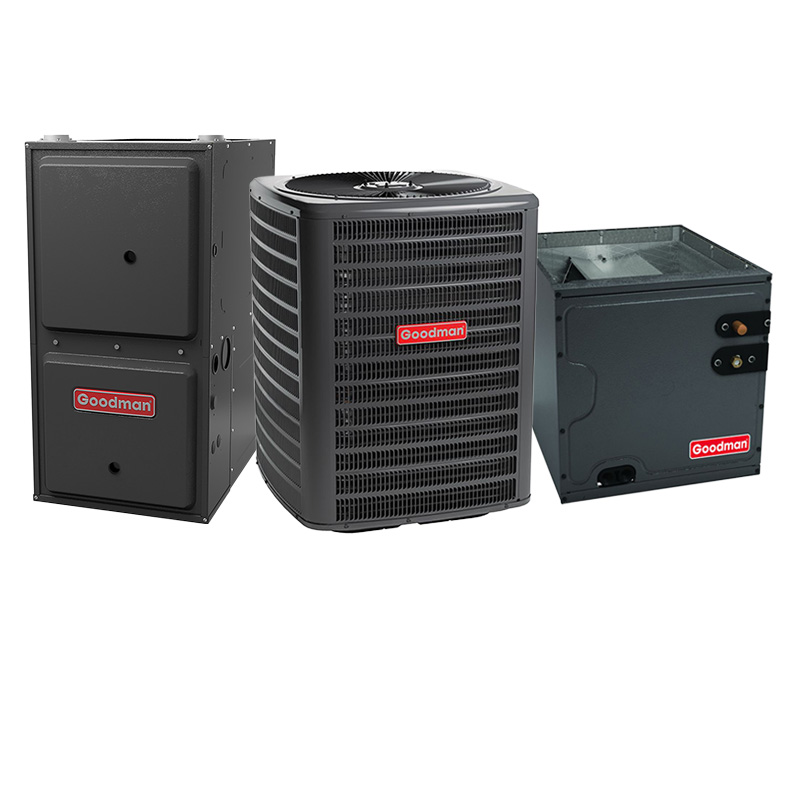
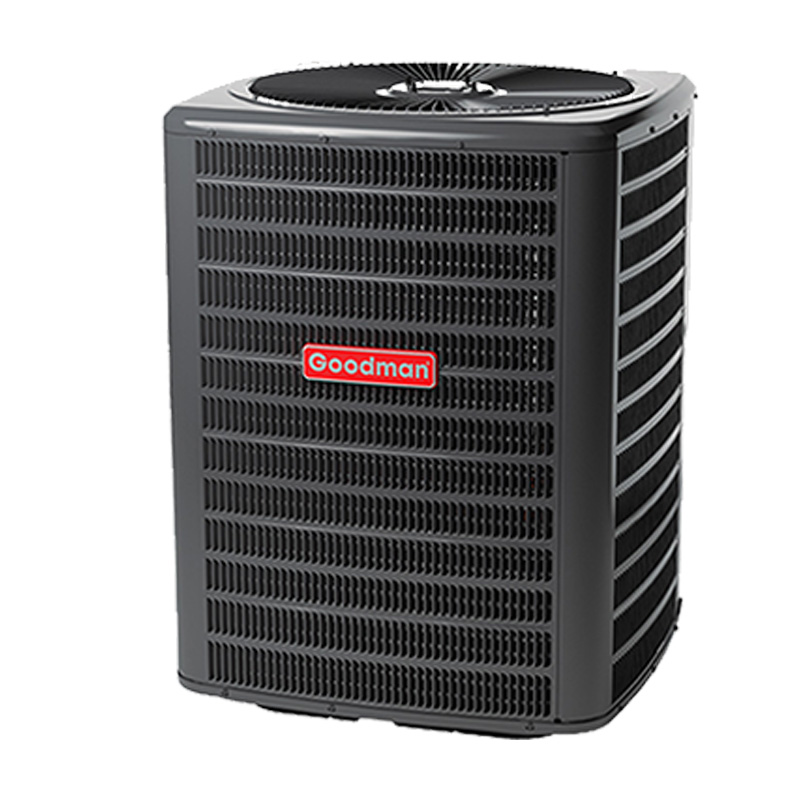
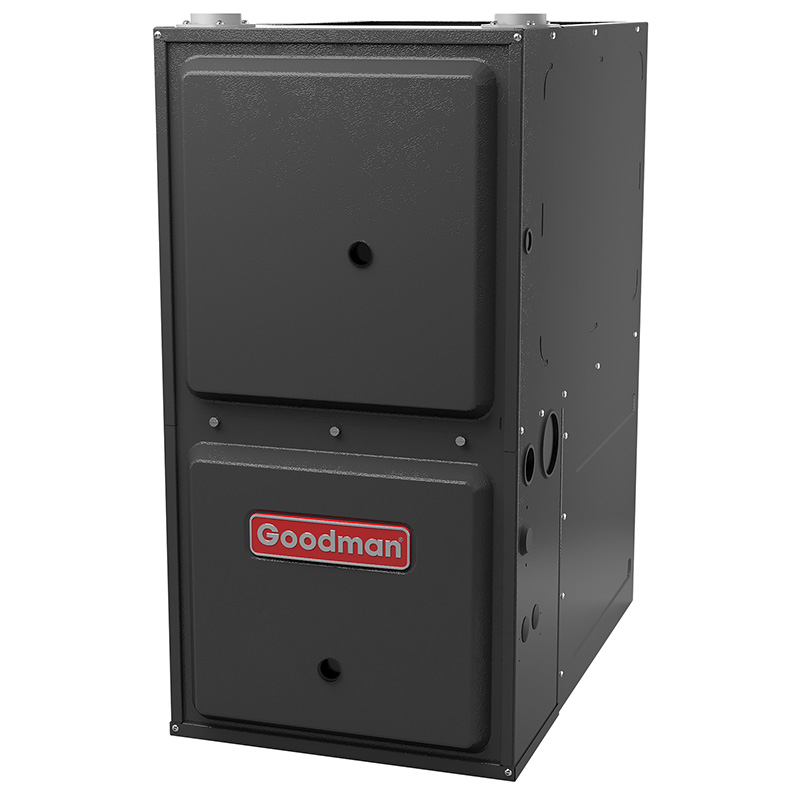
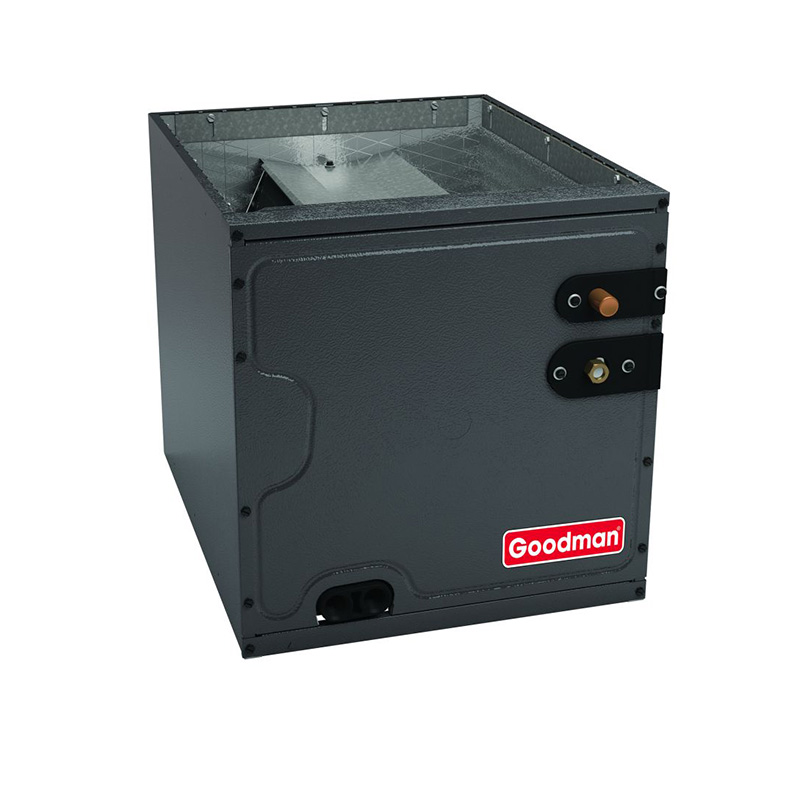
Goodman R32 2 Ton 13.8 SEER2 60000 BTU 80% Multi-Speed ECM Gas Furnace and Air Conditioner System – Downflow
View on AC Direct see your lowest price →Check current price on AC Direct →
Key features
- 2-ton R-32 air conditioner rated 13.8 SEER2 for baseline efficiency compliance
- 60,000 BTU 80% AFUE multi-speed gas furnace in downflow configuration
- ECM blower motor reduces electricity use and noise versus standard PSC motors
- R-32 refrigerant with lower global warming potential than R-410A
- Downflow design suits slab, crawlspace, or overhead-closet duct layouts
- Factory-matched coil and furnace cabinet for straightforward system integration
About this system
This Goodman bundle pairs a 2-ton R-32 air conditioner rated at 13.8 SEER2 with a 60,000 BTU 80% AFUE multi-speed ECM gas furnace in a downflow configuration. The downflow orientation means conditioned air exits the bottom of the furnace cabinet, making this setup the right call for homes where the ductwork runs beneath the unit through a crawlspace or slab, or where the air handler sits in a closet above living space. At 2 tons, it is sized for roughly 900 to 1,300 square feet of well-insulated living area, though a proper Manual J load calculation should always be the deciding factor before purchase.
The ECM (electronically commutated motor) blower is a meaningful step up from a standard PSC motor. It adjusts airflow more precisely, pulls less electricity during fan-only operation, and tends to run quieter at lower speeds. R-32 refrigerant has a lower global warming potential than the R-410A it replaces and operates at similar pressures, so certified technicians who know R-32 handling can work with familiar equipment. At 13.8 SEER2, efficiency sits just above the federal minimum for most U.S. climate zones, which keeps the upfront cost down but means operating costs will be higher over time compared with 16 SEER2 or better systems. This system is a practical, budget-conscious option rather than a high-efficiency showcase.
This Goodman system delivers a workable entry-level bundle for homeowners who want to keep upfront costs low and have a skilled installer lined up. The 13.8 SEER2 rating and 80% AFUE are minimum-tier efficiency numbers, so expect average utility bills rather than savings. Long-term ownership experience is closely tied to installation quality and a willingness to budget for maintenance after year seven.
Overall score is the average of the five ratings above.
What we like
- Priced roughly 15 to 25 percent below comparable Carrier, Trane, and Lennox bundles
- ECM blower motor improves airflow consistency and cuts fan operating costs
- Downflow configuration is the correct factory-built solution for slab and crawlspace homes
- R-32 refrigerant is a forward-looking choice with lower environmental impact
- Factory-matched components simplify warranty claims compared with mixing brands
Trade-offs
- Dual-run capacitors are the most commonly reported failure, typically arising within the first several years and adding a repair bill in the $300 to $600 range
- Evaporator coil leaks appear in a meaningful share of owner reviews and can be costly once the unit is out of warranty
- Compressor lifespan averages 10 to 14 years versus 15 to 20 years for premium-brand compressors
- A minority of owners report refrigerant leaks in year one, generally traced to installation or initial charge issues rather than a product defect
What homeowners and pros say about Goodman
Homeowners who have purchased Goodman equipment reflect two distinct experiences. On Google dealer reviews, where ratings average around 3.8 out of 5, the most common praise is straightforward: the system cost less than comparable brands and it cools or heats the house. On ConsumerAffairs, the score drops to roughly 2.5 out of 5, and the complaints tell a more specific story. That channel skews toward people who had a problem worth writing about, and the recurring theme is repair costs climbing after roughly year seven of ownership. The two documented failure modes that appear most often are dual-run capacitor failures, a relatively inexpensive fix in the $300 to $600 range, and evaporator coil leaks, which are more disruptive and costly when they occur.
HVAC technicians who work on Goodman equipment regularly tend to say the same thing: the brand is serviceable, but installation quality matters more with Goodman than with premium brands. A careful charge, correct airflow setup, and a well-sealed refrigerant circuit on day one are the factors most likely to determine whether the system runs reliably for a decade or starts generating service calls within a few years. Compressor longevity is also worth noting. Goodman compressors typically average 10 to 14 years in real-world use, which is shorter than the 15 to 20 years reported for Trane, Carrier, and Lennox compressors. For a downflow installation in a budget-focused project with a skilled installer, this system is a reasonable fit. For a homeowner who wants to minimize the chance of mid-ownership repair bills, the premium brands carry a track record that justifies their higher upfront cost.
Sources: ConsumerAffairs Goodman owner reviews, AHRI Directory of Certified Product Performance, U.S. DOE appliance and equipment efficiency standards, Goodman product specification sheets.
What it costs to run
At 13.8 SEER2, cooling this 2-ton system for a typical 1200-hour cooling season at the U.S. average electricity rate of $0.17/kWh works out to roughly $355 per year in cooling, about $10 less per year than a minimum-efficiency 13.4 SEER2 unit of the same size. Your real cost depends on your climate and local rate.
Method: (24,000 BTU/hr ÷ 13.8 SEER2) × 1200 hours ÷ 1000 × $0.17/kWh. Rate source: U.S. EIA average; cooling hours: moderate-climate estimate.
How it compares
| Brand | Comparable model | SEER2 | Stage | Price position |
|---|---|---|---|---|
| Goodman | R-32 2-Ton 13.8 SEER2 Downflow Bundle (this system) | 13.8 | Single-stage | Value pick |
| Carrier | Comfort Series (24ACC / 58SB pairing) | 13.8–14.3 | Single-stage | Typically 15 to 25 percent more than this Goodman bundle |
| Trane | XR13 / S8X1 pairing | 13.8–14.0 | Single-stage | Typically 15 to 25 percent more than this Goodman bundle |
| Lennox | Merit Series (13ACX / ML180 pairing) | 13.8–14.0 | Single-stage | Typically 15 to 25 percent more than this Goodman bundle |
Competitor rows are comparable single-stage units at similar efficiency; price is relative position, not a quote.
Questions about this system
Why does the downflow configuration matter and can I use this unit in an upflow application?
Downflow means the blower pushes air downward out of the cabinet bottom, which matches ductwork running under the unit through a crawlspace or slab. Using a downflow furnace in an upflow or horizontal application is not safe or code-compliant. If your ductwork exits from the top or side of the unit location, you need a different configuration entirely.
What does R-32 refrigerant mean for service and maintenance costs?
R-32 is a single-component refrigerant with a lower global warming potential than R-410A and similar operating pressures. Most certified HVAC technicians can handle it, but you should confirm your service provider is equipped and certified for R-32 before scheduling any work, since not every shop has updated its recovery equipment yet.
Is 13.8 SEER2 going to cost me noticeably more in electricity than a higher-rated unit?
Yes, over a full cooling season the difference between 13.8 SEER2 and a 16 or 18 SEER2 unit adds up, especially in hot climates with long cooling seasons. In a mild climate or smaller home the annual gap may be modest, but over a 10-plus-year lifespan the operating cost difference can offset some or all of the upfront savings.
What are the most common repairs to budget for with this system?
Based on documented owner experience with Goodman equipment, dual-run capacitor failures are the most frequent issue and typically cost $300 to $600 to fix. Evaporator coil leaks are a more serious and expensive problem reported by a meaningful share of owners, and compressors on Goodman units tend to reach end of life between 10 and 14 years, somewhat shorter than premium brands.
Does Goodman's warranty cover both parts and labor on this bundle?
Goodman's standard registered warranty covers parts for an extended term, but labor is generally not included, meaning you pay the technician's time for any covered repair. Reading the current warranty terms before purchase is important, and registering the equipment within the required window after installation is necessary to activate the full coverage period.
Specifications
| Cooling capacity | 2 Ton |
| Efficiency | 13.8 SEER2 |
| Furnace output | 60000 BTU |
| Configuration | Downflow |
| Refrigerant | R-32 |