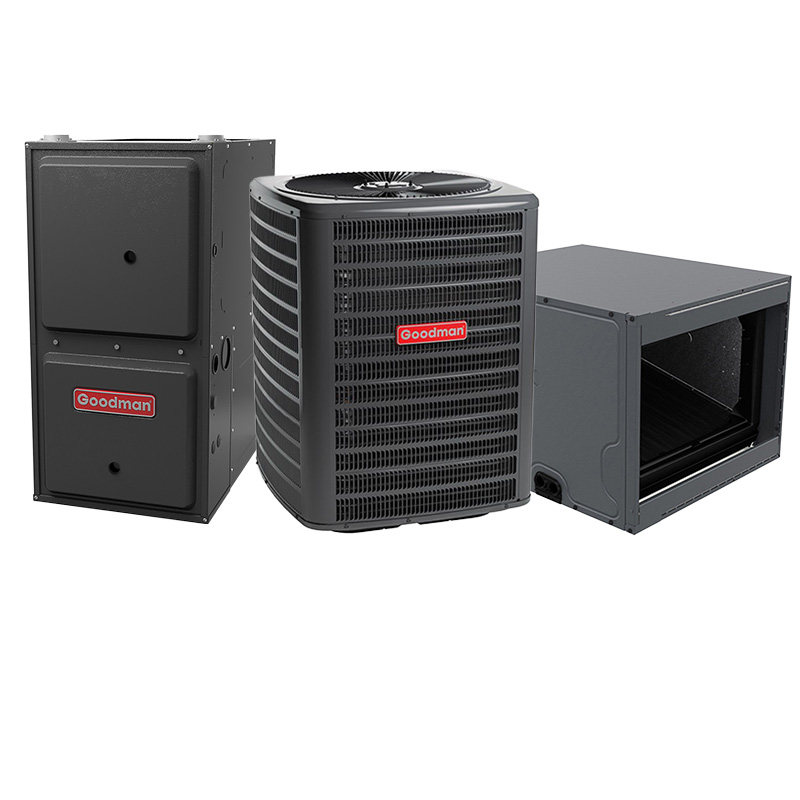
Goodman R32 2 Ton 14.5 SEER2 80000 BTU 80% Two Stage 9-Speed ECM Gas Furnace and Air Conditioner System – Horizontal
View on AC Direct see your lowest price →Check current price on AC Direct →
Key features
- 2-ton, 14.5 SEER2 air conditioner using R-32 refrigerant
- 80,000 BTU two-stage gas furnace rated at 80% AFUE
- 9-speed ECM blower motor for quieter, more consistent airflow
- Horizontal configuration for attic, crawl space, or side-load installations
- Two-stage heating reduces short-cycling and temperature swings on mild days
- R-32 refrigerant offers lower global warming potential than R-410A
About this system
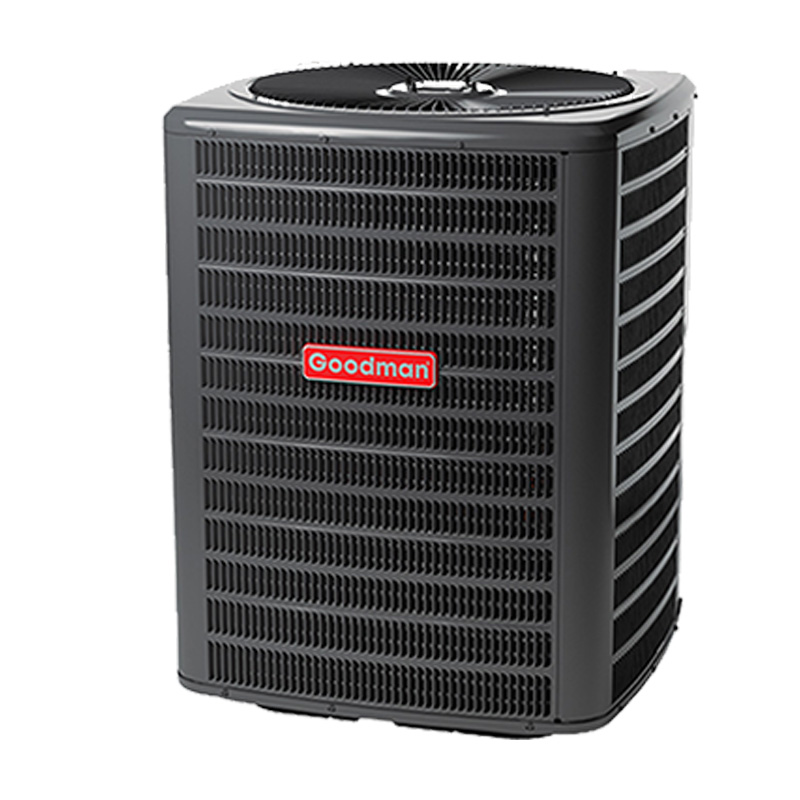
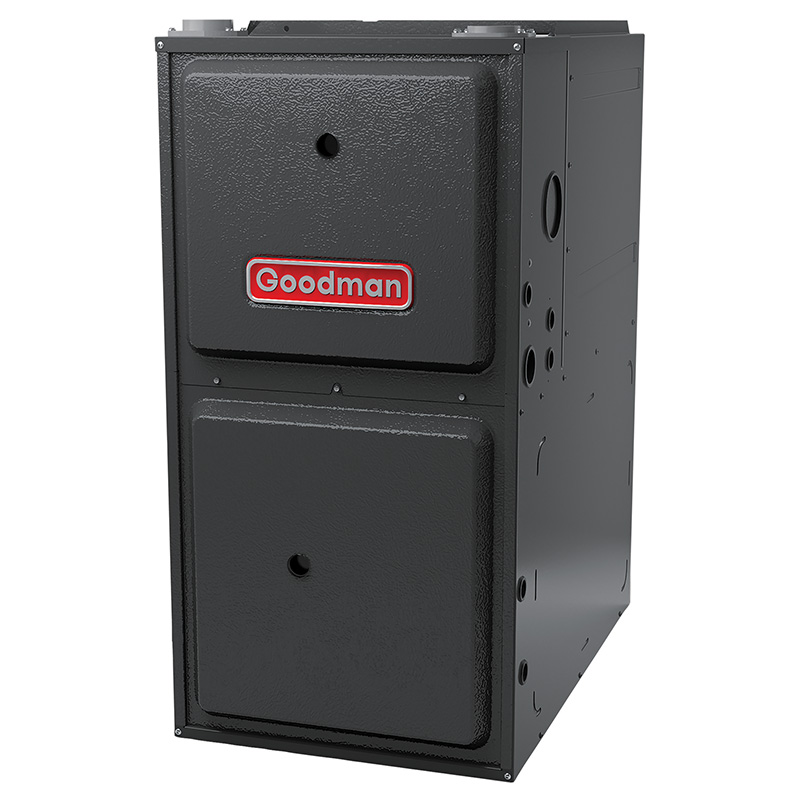
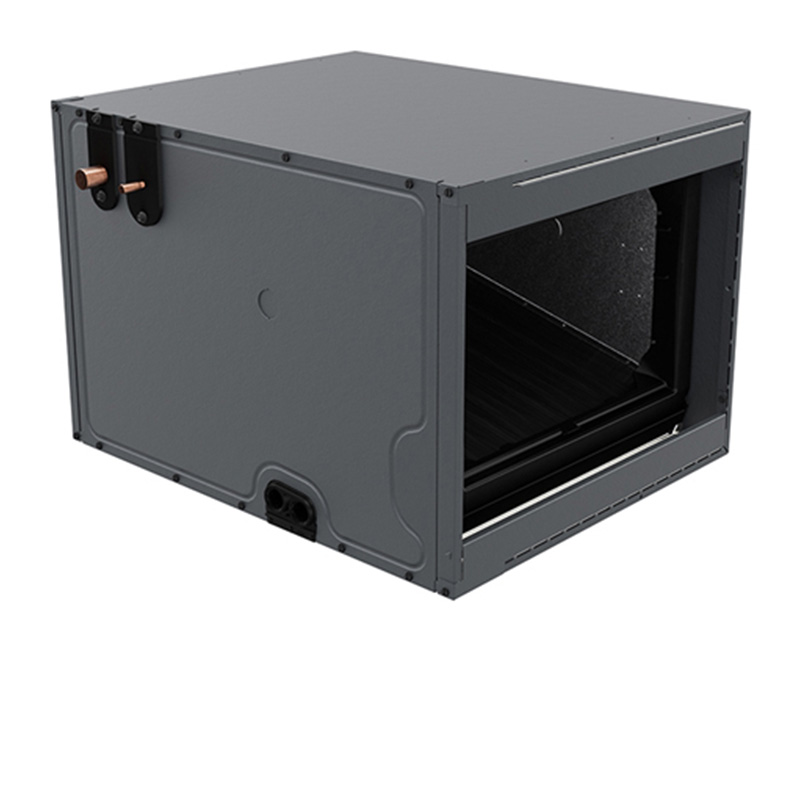
This Goodman bundle pairs a 2-ton, 14.5 SEER2 R-32 air conditioner with an 80,000 BTU, 80% AFUE two-stage gas furnace in a horizontal configuration, making it a practical choice for homes where the air handler must sit on its side, such as in attics, crawl spaces, or tight utility closets. The two-stage furnace fires at a lower capacity on mild days and ramps up only when temperatures drop sharply, which reduces temperature swings and short-cycling compared to a single-stage unit. The 9-speed ECM blower motor further smooths airflow and trims electricity use at the air handler, partly offsetting the furnace’s modest 80% efficiency rating.
At 14.5 SEER2, this system sits right at the federal minimum efficiency threshold for many regions, meaning it is code-compliant but not a high-efficiency standout. Homeowners in climates with mild cooling seasons or those prioritizing upfront cost over long-term energy savings will find that trade-off acceptable. R-32 refrigerant carries a lower global warming potential than the older R-410A it replaces, and it is compatible with modern servicing equipment, so finding a qualified technician down the road should not be a problem. This bundle is best suited to a replacement project in a well-insulated home where budget discipline matters more than chasing the top of the efficiency chart.
Because this is a horizontal-configuration system, installation complexity is higher than a standard upflow setup. Proper leveling, drain slope, and refrigerant line routing all require extra attention, and those factors directly influence how reliably the system performs over its lifetime. Buyers should budget for an experienced installer and a thorough startup commissioning, not just equipment cost.
This Goodman horizontal bundle delivers code-minimum cooling efficiency and capable two-stage heating at a price that typically runs 15 to 25 percent below comparable Carrier, Trane, or Lennox systems. It is a workable long-term investment when installed correctly, but documented reliability concerns and a compressor lifespan that tends to trail premium brands mean buyers are accepting real trade-offs in exchange for upfront savings. Quality of installation matters more with this unit than almost any other variable.
Overall score is the average of the five ratings above.
What we like
- Priced 15 to 25 percent below comparable premium-brand systems, freeing budget for a quality install
- Two-stage furnace improves comfort and reduces energy waste on mild heating days
- 9-speed ECM motor lowers blower electricity consumption compared to single-speed PSC motors
- R-32 refrigerant is lower-impact environmentally and widely serviceable
- Horizontal configuration expands placement options for homes without a standard vertical equipment closet
Trade-offs
- 80% AFUE furnace leaves meaningful heating efficiency on the table versus 96% condensing alternatives
- 14.5 SEER2 is the federal minimum threshold, not a standout efficiency rating
- Horizontal installs add complexity; poor leveling or drain slope can cause premature failures
- Goodman compressors average 10 to 14 years versus 15 to 20 years for premium brands, and evaporator coil leaks appear in a notable share of owner reports
What homeowners and pros say about Goodman
Homeowners who post about Goodman equipment tend to split into two camps. Those who had a careful installation by an experienced technician and kept up with annual maintenance often report years of trouble-free service and consistently point to affordability as the system’s strongest attribute, consistent with the roughly 3.8 out of 5 score Goodman equipment earns across Google dealer reviews. Those who ran into problems early tend to land on platforms like ConsumerAffairs, where Goodman sits around 2.5 out of 5, and the recurring complaint is repair bills that start climbing after year 7 or 8. The two documented failure modes that come up most consistently are dual-run capacitor failures, a relatively inexpensive fix, and evaporator coil leaks, which are more disruptive and costly. A minority of owners also report refrigerant loss within the first year, which technicians generally attribute to installation or initial charge issues rather than a factory defect.
HVAC professionals who work on Goodman equipment regularly tend to describe it as serviceable equipment that rewards a thorough install and punishes a rushed one. For this specific horizontal bundle, that professional view carries extra weight because horizontal configurations demand precise leveling and drain routing that upflow jobs do not. Pros also note that Goodman compressors tend to average 10 to 14 years in the field, a shorter window than the 15 to 20 years commonly cited for premium-brand compressors, which matters when projecting the real 15-year cost of ownership. The consensus view: this system can deliver solid value, but only when the installation is done right and maintenance is not skipped.
Sources: ConsumerAffairs Goodman owner reviews, AHRI Directory of Certified Product Performance, U.S. DOE appliance and equipment efficiency standards, Goodman product specification sheets.
What it costs to run
At 14.5 SEER2, cooling this 2-ton system for a typical 1200-hour cooling season at the U.S. average electricity rate of $0.17/kWh works out to roughly $338 per year in cooling, about $27 less per year than a minimum-efficiency 13.4 SEER2 unit of the same size. Your real cost depends on your climate and local rate.
Method: (24,000 BTU/hr ÷ 14.5 SEER2) × 1200 hours ÷ 1000 × $0.17/kWh. Rate source: U.S. EIA average; cooling hours: moderate-climate estimate.
How it compares
| Brand | Comparable model | SEER2 | Stage | Price position |
|---|---|---|---|---|
| Goodman | R-32 2-Ton 14.5 SEER2 / 80K BTU 80% Two-Stage Horizontal Bundle | 14.5 | Two-stage | Value pick |
| Carrier | Comfort 14 (24ACC4) with 58MXA 80% Gas Furnace | 14.3-15 | Single-stage | Typically 15 to 25 percent more than the Goodman bundle |
| Trane | XR14c with S9X1 80% Gas Furnace | 14.3-15 | Single-stage | Typically 15 to 25 percent more than the Goodman bundle |
| Lennox | Merit 14ACX with ML180 80% Gas Furnace | 14.3-15 | Single-stage | Typically 15 to 25 percent more than the Goodman bundle |
Competitor rows are comparable single-stage units at similar efficiency; price is relative position, not a quote.
Questions about this system
Why does the horizontal configuration matter, and what does it add to the install cost?
A horizontal unit is designed to rest on its side rather than stand upright, which is necessary in attics, low crawl spaces, or certain utility closets. The orientation demands careful leveling and precise condensate drain slope to prevent water backup, so labor time and installer skill requirements are higher than a standard upflow job. Budget for that extra complexity when comparing total installed cost.
Is 80% AFUE good enough, or should I pay more for a 96% condensing furnace?
An 80% furnace means 20 cents of every fuel dollar exits through the flue, while a 96% unit wastes only about 4 cents. In a cold climate where the furnace runs heavily from October through March, that gap adds up meaningfully on monthly gas bills. In a mild or mixed climate, the payback period for the higher-efficiency unit stretches out, and the 80% option can make financial sense when the upfront difference is large.
What is the most likely repair this system will need, and what does it cost?
Dual-run capacitors are the most commonly reported failure point on Goodman air conditioners, and they are also among the cheapest fixes, typically running $300 to $600 including labor. Evaporator coil leaks show up in a meaningful share of owner reports and are more expensive to address. Catching refrigerant loss early through annual maintenance helps avoid compressor damage, which is far costlier.
Does R-32 refrigerant change how I maintain or service this system?
R-32 requires technicians to use equipment rated for its slightly higher pressure and flammability class (A2L), but most modern HVAC service tools already support it. Servicing availability should not be a concern, as R-32 is now a mainstream refrigerant. Just confirm your service contractor has A2L-rated equipment before scheduling work.
What warranty does Goodman provide on this system, and are there conditions to know about?
Goodman typically offers a 10-year parts warranty on registered equipment, which covers the compressor, heat exchanger, and other major components when you register within a set window after installation. Failure to register on time usually drops coverage to 5 years, and the warranty does not cover labor, refrigerant, or secondary damage from a failed part. Read the registration terms carefully and keep your install documentation.
Specifications
| Cooling capacity | 2 Ton |
| Efficiency | 14.5 SEER2 |
| Furnace output | 80000 BTU |
| Configuration | Horizontal |
| Refrigerant | R-32 |