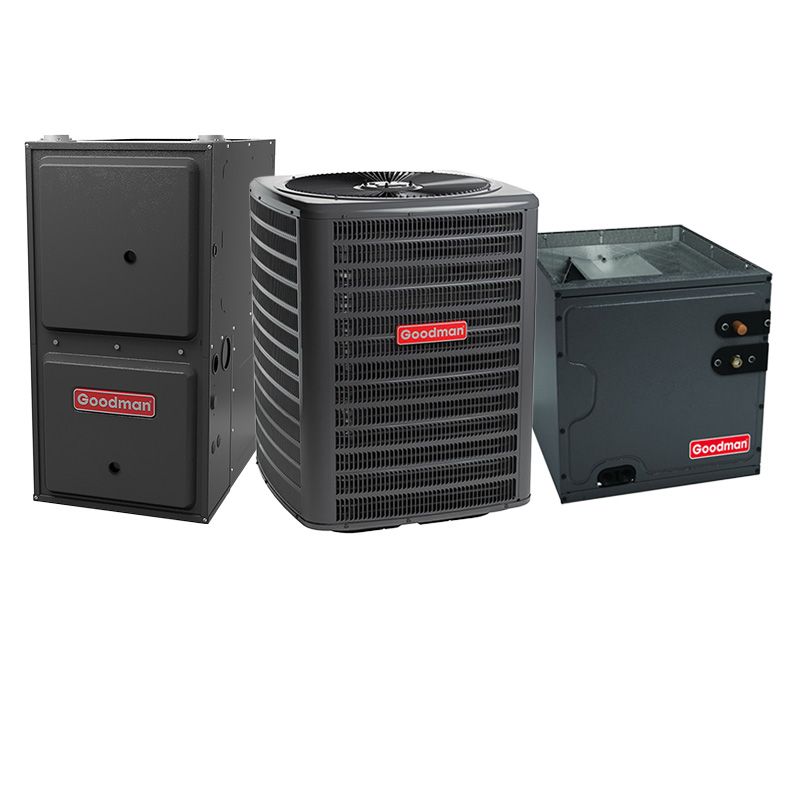
Goodman R32 2 Ton 14 SEER2 40000 BTU 80% Multi-Speed ECM Gas Furnace and Air Conditioner System – Downflow
View on AC Direct see your lowest price →Check current price on AC Direct →
Key features
- 2-ton / 40,000 BTU cooling capacity with 14 SEER2 efficiency rating
- R-32 refrigerant: lower global-warming potential than R-410A, in step with current EPA phase-down rules
- Downflow furnace orientation for slab-foundation and under-floor duct applications
- Multi-speed ECM blower motor for improved humidity control and reduced fan energy use
- 80% AFUE gas furnace included in bundle for combined heating and cooling installation
- Goodman factory-matched system designed to meet AHRI-certified efficiency ratings as a set
About this system
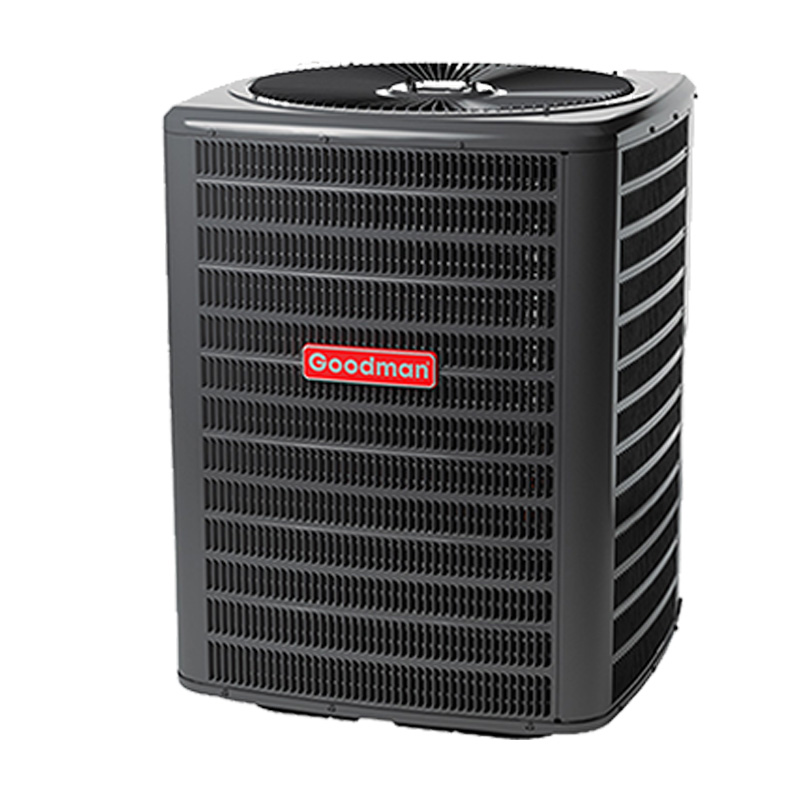
This Goodman bundle pairs a 2-ton, 14 SEER2 air conditioner running on R-32 refrigerant with an 80% AFUE multi-speed ECM gas furnace in a downflow configuration. The 40,000 BTU cooling output is sized for roughly 900 to 1,200 square feet under typical Southern or mid-Atlantic conditions, though accurate Manual J load calculations should always drive the final sizing decision. R-32 is a lower-GWP refrigerant that has become the new baseline as R-410A phases out, so the outdoor unit is already aligned with current EPA direction and should not face near-term refrigerant availability headaches.
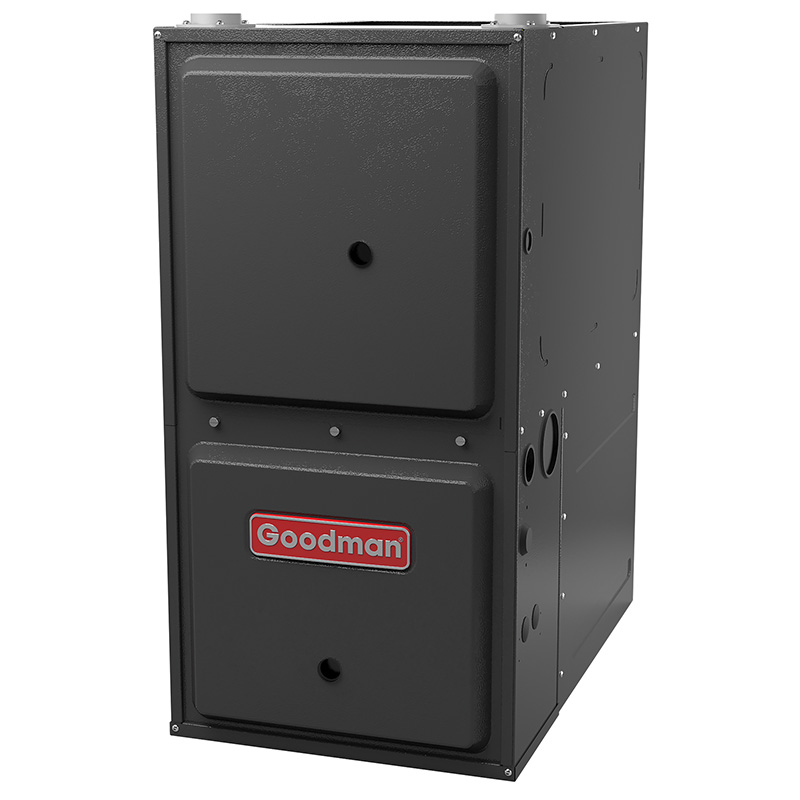
The downflow configuration means conditioned air exits the furnace cabinet through the bottom and flows into a supply plenum below, which suits homes with slab foundations, crawl spaces with under-floor ductwork, or closet installations where the unit sits above the duct system. The multi-speed ECM blower motor is a meaningful step up from a single-speed PSC motor: it ramps fan speed to match system demand, which generally improves humidity control, reduces cold-air blasts, and cuts blower electricity consumption. For a household replacing an aging R-22 or R-410A system on a budget and committed to proper professional installation, this package represents a reasonable entry-level choice without surrendering modern refrigerant compliance.
This Goodman bundle is a capable, budget-conscious system for homeowners who want modern refrigerant compliance and a multi-speed blower without paying a premium-brand price. The 14 SEER2 rating meets minimum federal standards but trails mid-tier efficiency, and long-term ownership costs depend heavily on installation quality and willingness to budget for component repairs after year seven. It earns its place as a practical starter system, not a set-and-forget investment.
Overall score is the average of the five ratings above.
What we like
- Priced roughly 15 to 25 percent below comparable Carrier, Trane, and Lennox systems, leaving budget for a quality installation
- R-32 refrigerant keeps the system current with ongoing EPA phase-down regulations and supports long-term serviceability
- ECM multi-speed blower delivers better comfort and humidity management than basic single-speed alternatives at this price tier
- Factory-matched system means the AC and furnace are AHRI-rated together, protecting the published efficiency numbers
- Downflow configuration fills a specific install need that not every brand covers at this price point
Trade-offs
- Dual-run capacitors are the most frequently reported failure point and, while the repair is usually low cost, failures before year seven are not rare
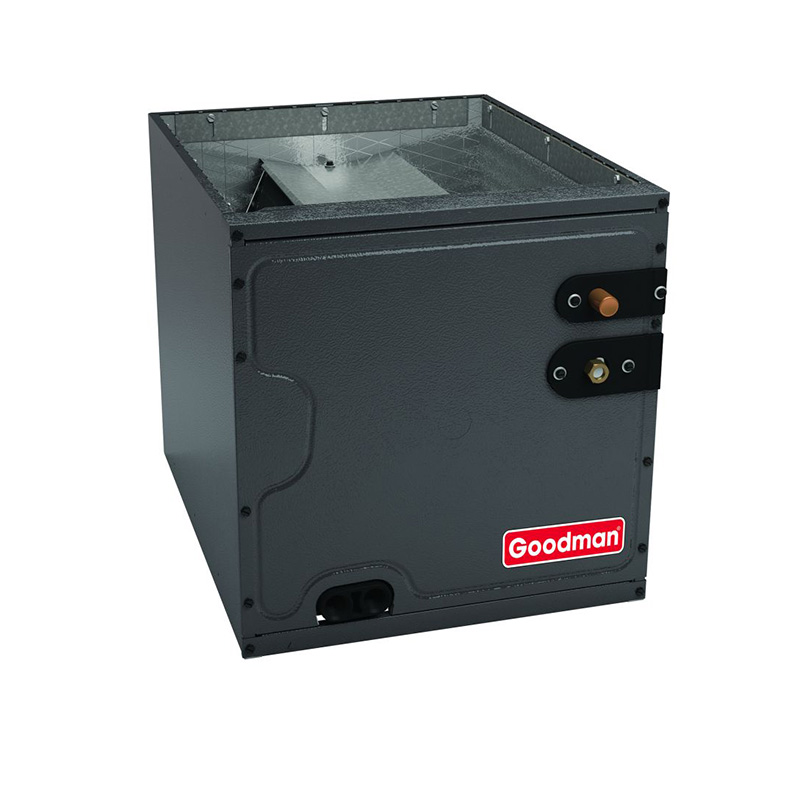
- Evaporator coil leaks appear in a meaningful share of owner reviews and can be expensive to address outside of warranty
- Compressor lifespan averages 10 to 14 years versus 15 to 20 years typical of premium brands, raising long-term replacement cost considerations
- 14 SEER2 sits at the federal minimum threshold, so monthly energy bills will run higher than a 16 or 18 SEER2 system over a long ownership period
What homeowners and pros say about Goodman
Homeowners who go with Goodman most often cite the upfront savings as the deciding factor, a view reflected in the Google dealer review average of around 3.8 out of 5 where affordability is the most frequently mentioned positive. The more complaint-weighted ConsumerAffairs channel tells a different story, averaging roughly 2.5 out of 5, with a recurring pattern of repair costs accelerating after about year seven of ownership. Neither number captures the full picture on its own, but together they suggest Goodman performs acceptably in the early years and then requires more budget attention as components age.
HVAC technicians consistently single out installation quality as the variable that separates a Goodman that runs reliably for a decade from one that generates callbacks in year three. The documented failure modes reinforce that point: dual-run capacitor failures are the most reported issue and are almost always a straightforward fix, but evaporator coil leaks and early refrigerant loss within the first year tend to trace back to installation or charge errors rather than factory defects. Compressor longevity sits in the 10 to 14 year range on average, shorter than the 15 to 20 years associated with premium brands, which is worth factoring into a realistic total-cost-of-ownership estimate before committing to this system for a long-term home.
Sources: ConsumerAffairs Goodman owner reviews, AHRI Directory of Certified Product Performance, U.S. DOE appliance and equipment efficiency standards, Goodman product specification sheets.
What it costs to run
At 14 SEER2, cooling this 2-ton system for a typical 1200-hour cooling season at the U.S. average electricity rate of $0.17/kWh works out to roughly $350 per year in cooling, about $15 less per year than a minimum-efficiency 13.4 SEER2 unit of the same size. Your real cost depends on your climate and local rate.
Method: (24,000 BTU/hr ÷ 14 SEER2) × 1200 hours ÷ 1000 × $0.17/kWh. Rate source: U.S. EIA average; cooling hours: moderate-climate estimate.
How it compares
| Brand | Comparable model | SEER2 | Stage | Price position |
|---|---|---|---|---|
| Goodman | This R-32 2-Ton 14 SEER2 Downflow Bundle | 14 | Single-stage | Value pick |
| Carrier | Comfort 24ACC4 Series with 80% AFUE 58SB furnace | 14-15 | Single-stage | Typically 15 to 25 percent more than this Goodman bundle |
| Trane | XR14c with S8X1 80% AFUE furnace | 14-15 | Single-stage | Typically 20 to 30 percent more than this Goodman bundle |
| Lennox | Merit ML14XC1 with ML180 80% AFUE furnace | 14-15 | Single-stage | Typically 20 to 30 percent more than this Goodman bundle |
Competitor rows are comparable single-stage units at similar efficiency; price is relative position, not a quote.
Questions about this system
Why does this system use R-32 instead of R-410A, and does that affect service costs?
R-32 has a lower global-warming potential and is being adopted industry-wide as R-410A phases out under EPA rules. Most HVAC technicians are already certified to handle it, but it is mildly flammable (A2L classification), so not every older shop will be equipped on day one. Ask your installer specifically about their R-32 certification before signing a service contract.
My house has a slab foundation and the ductwork runs under the floor. Is downflow the right choice?
Yes. A downflow furnace discharges air from the bottom of the cabinet into a plenum or duct boot below, which is exactly what under-floor duct systems require. Confirm your existing duct layout with your installer, because using a downflow unit with upflow ductwork will not function correctly and can void equipment warranties.
What is the real-world difference between the ECM blower in this furnace and a standard single-speed motor?
An ECM motor can operate at multiple speeds and adjusts to actual system conditions, so it runs slower during mild weather and ramps up only when needed. This generally translates to quieter operation, better dehumidification on part-load days, and lower blower electricity consumption compared with a single-speed PSC motor that runs at full blast or not at all.
Goodman reviews mention capacitor failures. How worried should I be and what does it cost to fix?
Dual-run capacitors are the single most commonly reported failure on Goodman condensing units. The part itself is inexpensive, and a qualified technician can typically complete the repair for roughly 300 to 600 dollars including the service call. Keeping a service agreement in place and asking your tech to check capacitor readings annually is the most practical way to catch one before it takes out the compressor on a 95-degree day.
How does the 2-ton size translate to square footage, and what happens if my home is larger?
A rough industry guideline puts 2 tons at around 900 to 1,200 square feet in moderate climates, but ceiling height, insulation quality, window area, and local design temperatures all shift that number significantly. An undersized system will run continuously and struggle to dehumidify; an oversized one short-cycles and leaves humidity high. A licensed contractor performing a Manual J calculation is the only reliable way to confirm whether 2 tons is correct for your specific home.
Specifications
| Cooling capacity | 2 Ton |
| Efficiency | 14 SEER2 |
| Furnace output | 40000 BTU |
| Configuration | Downflow |
| Refrigerant | R-32 |