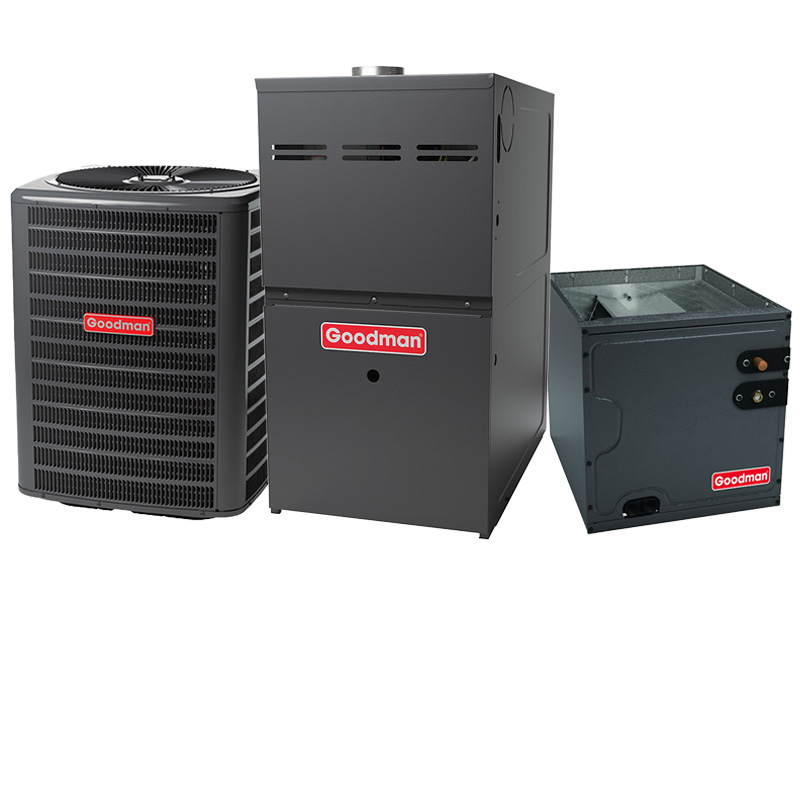
Goodman R32 2 Ton 14 SEER2 40000 BTU 80% Multi-Speed ECM Gas Furnace and Air Conditioner System – Upflow
View on AC Direct see your lowest price →Check current price on AC Direct →
Key features
- 2-ton cooling capacity rated at 14 SEER2, meeting current federal minimum efficiency standards
- 40,000 BTU gas furnace at 80% AFUE for moderate-climate heating
- R-32 refrigerant with lower global warming potential than R-410A
- Multi-speed ECM blower motor for quieter operation and improved humidity control
- Upflow configuration compatible with standard basement and closet duct layouts
- Priced 15 to 25 percent below comparable Trane, Carrier, and Lennox systems
About this system
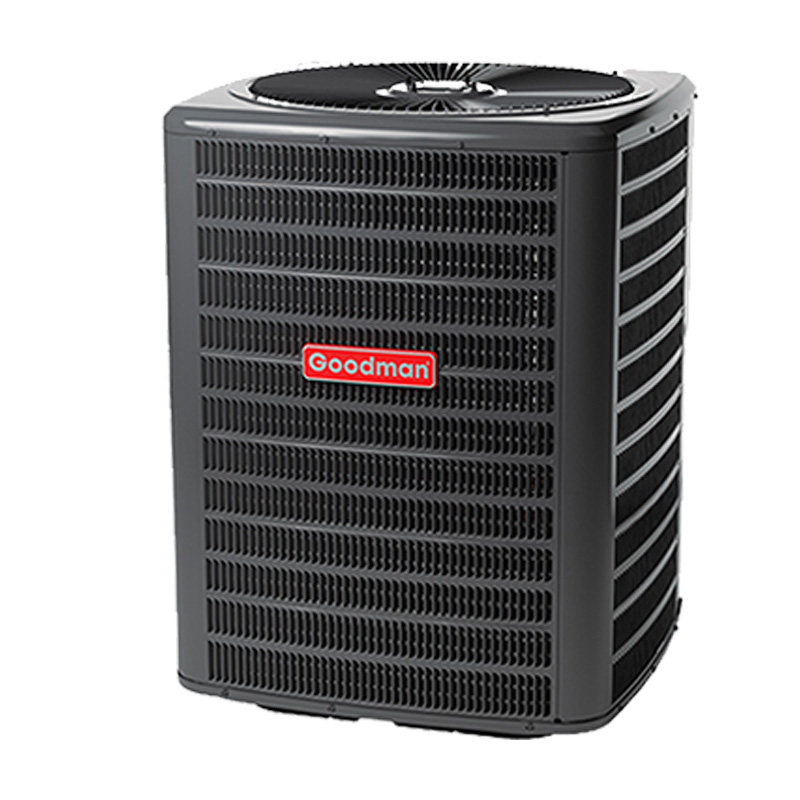
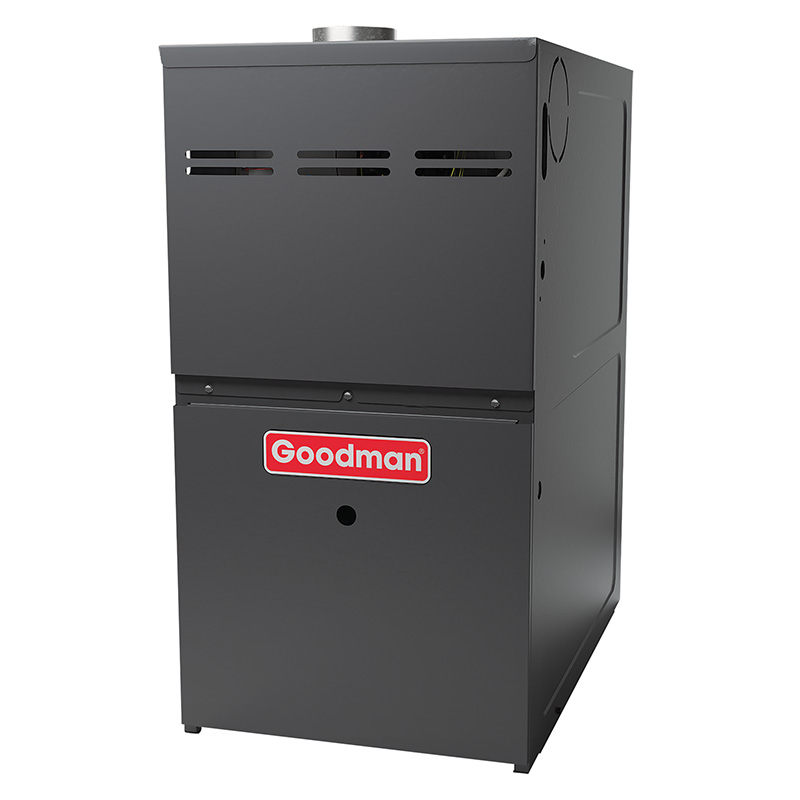
This Goodman 2-ton, 14 SEER2 upflow gas furnace and air conditioner system is built for smaller homes and conditioned spaces typically in the 800 to 1,100 square foot range, depending on local climate and insulation. The air conditioner runs on R-32 refrigerant, a lower global-warming-potential alternative to the R-410A it replaces, and meets the current federal minimum efficiency threshold for most U.S. climate zones. The furnace side delivers 40,000 BTU at 80% AFUE, which means eight out of every ten units of heat energy in the gas supply reaches your living space. That is a solid, though not premium, efficiency level suited to moderate-winter climates where a 96% or higher furnace would take decades to pay back in energy savings.
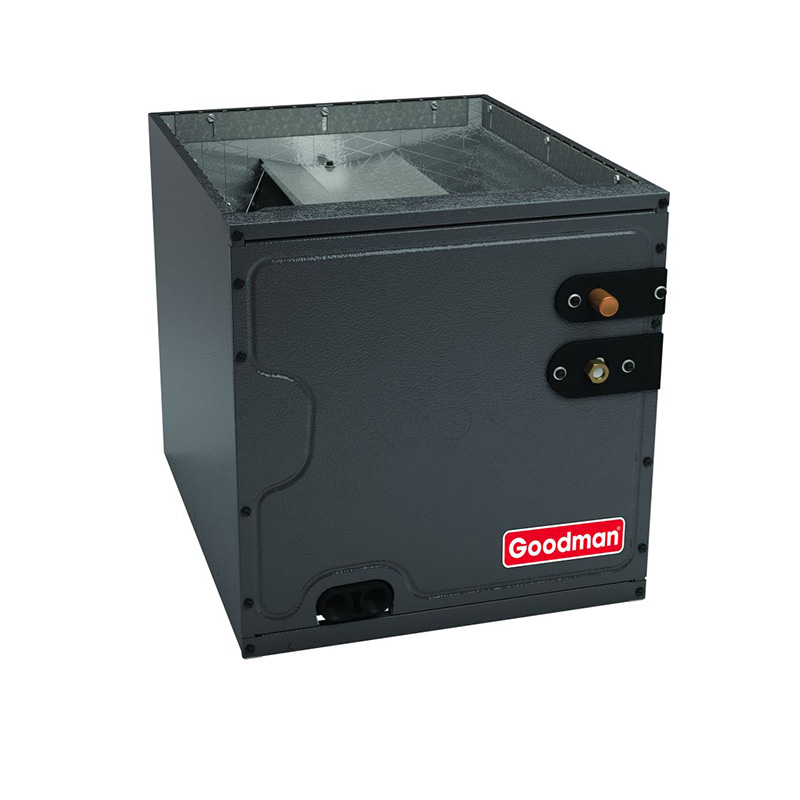
The multi-speed ECM blower motor is one of the more useful features in this package. Unlike a single-speed motor that runs flat out or not at all, the ECM motor can ramp to an intermediate speed during mild conditions, which improves humidity control, reduces noise, and cuts blower electricity use meaningfully over a full season. The upflow configuration means the air handler pulls return air from the bottom and discharges conditioned air upward into the duct system, the standard orientation for a furnace installed at floor level in a basement, utility closet, or garage. If your existing duct system is designed for upflow, this system drops in without major sheet-metal changes.
This Goodman system is a reasonable entry point for budget-conscious homeowners who want a functioning, code-compliant HVAC system and are comfortable with the trade-off that long-term reliability leans on installation quality and a willingness to handle component repairs after year seven. At 14 SEER2 and 80% AFUE, efficiency is adequate but not a standout, so energy-cost savings will not offset much of the price gap with premium brands over a typical ownership period. It earns its place when upfront cost is the primary constraint and a qualified installer is doing the work.
Overall score is the average of the five ratings above.
What we like
- Meaningfully lower purchase price than Carrier, Trane, or Lennox equivalents
- Multi-speed ECM motor improves comfort and lowers blower electricity draw versus single-speed units
- R-32 refrigerant is a forward-looking choice with lower environmental impact
- Upflow design integrates cleanly into existing basement or closet duct systems without reconfiguration
- Replacement parts, including the commonly needed dual-run capacitor, are widely stocked and relatively inexpensive
Trade-offs
- Compressor lifespan averages 10 to 14 years, shorter than the 15 to 20 years documented for premium brands
- Evaporator coil leaks appear in a meaningful share of owner reports, a potential mid-life repair cost
- ConsumerAffairs scores average around 2.5 out of 5, with recurring complaints about repair costs climbing after year seven
- A minority of owners report refrigerant leaks within the first year, which typically traces back to installation or initial charge issues rather than the equipment itself
What homeowners and pros say about Goodman
Homeowners who post about Goodman equipment tend to fall into two distinct camps. Those who had a smooth installation and kept up with maintenance often report years of trouble-free service and point to the lower purchase price as money well spent. Those who ran into problems typically describe issues that surfaced after the seven-year mark, which lines up with the ConsumerAffairs rating of roughly 2.5 out of 5 on that platform, where repair cost complaints are the recurring theme. Google dealer reviews tell a somewhat different story, averaging around 3.8 out of 5 across hundreds of reviews per location, where the most common note of praise is affordability and the most common frustration is inconsistent service experience after the sale.
HVAC technicians who work on Goodman equipment regularly point to dual-run capacitor failures as the most predictable service call on these units, which is actually a relatively manageable repair in the 300 to 600 dollar range. The concerns that get more attention in professional circles are evaporator coil leaks, which appear in a meaningful share of owner accounts, and compressor lifespan that tends to land in the 10 to 14 year range rather than the 15 to 20 years more commonly associated with Trane, Carrier, or Lennox compressors. A smaller number of owners report refrigerant leaks within the first year, and technicians generally attribute those to installation or initial charge problems rather than a defect in the equipment itself. The consistent takeaway from both groups is that a careful, experienced installer does more for long-term performance of this specific brand than almost any other variable.
Sources: ConsumerAffairs Goodman owner reviews, AHRI Directory of Certified Product Performance, U.S. DOE appliance and equipment efficiency standards, Goodman product specification sheets.
What it costs to run
At 14 SEER2, cooling this 2-ton system for a typical 1200-hour cooling season at the U.S. average electricity rate of $0.17/kWh works out to roughly $350 per year in cooling, about $15 less per year than a minimum-efficiency 13.4 SEER2 unit of the same size. Your real cost depends on your climate and local rate.
Method: (24,000 BTU/hr ÷ 14 SEER2) × 1200 hours ÷ 1000 × $0.17/kWh. Rate source: U.S. EIA average; cooling hours: moderate-climate estimate.
How it compares
| Brand | Comparable model | SEER2 | Stage | Price position |
|---|---|---|---|---|
| Goodman | 2-Ton 14 SEER2 R-32 Multi-Speed ECM Gas System (this unit) | 14 | Single-stage | Value pick |
| Carrier | Comfort Series (24ACC4) | 14-15 | Single-stage | Typically 15 to 25 percent more than this Goodman |
| Trane | XR14c | 14 | Single-stage | Typically 15 to 25 percent more than this Goodman |
| Lennox | Merit Series (ML14XC1) | 14 | Single-stage | Typically 15 to 25 percent more than this Goodman |
Competitor rows are comparable single-stage units at similar efficiency; price is relative position, not a quote.
Questions about this system
Is 14 SEER2 going to cost me more to run than a higher-efficiency unit?
Yes, but the difference in a 2-ton system is modest. Moving from 14 SEER2 to 16 SEER2 typically reduces cooling electricity use by roughly 12 to 14 percent, which on a small home may amount to only a few dollars per month. In mild climates or smaller homes, that gap rarely justifies the higher upfront cost of a more efficient unit on its own.
What is the warranty on this Goodman system?
Goodman offers a 10-year parts limited warranty when the unit is registered within 60 days of installation by a licensed contractor. If registration is missed, coverage typically drops to five years. The warranty covers parts but not labor, so out-of-pocket repair costs can still be significant after the contractor's labor charges are factored in.
Does R-32 refrigerant require special handling or tools that my technician might not have?
R-32 is mildly flammable and does require technicians to use R-32-rated recovery equipment and follow updated safety procedures. Most established HVAC companies have updated their equipment as R-32 systems have become more common, but it is worth confirming with your service company before scheduling any refrigerant work.
How important is installer quality with a Goodman system specifically?
Installer quality matters with any brand, but it is especially cited with Goodman. Technicians consistently note that this brand performs well when installed correctly and struggles more than premium brands when it is not. Proper refrigerant charge, correct airflow setup, and secure electrical connections are the factors most directly linked to avoiding the early refrigerant leak issues that show up in a minority of owner reports.
What is the most common repair I should budget for on this system over ten years?
Dual-run capacitor failure is the most frequently reported issue with Goodman air conditioners. It is also one of the cheaper repairs in HVAC, generally running between 300 and 600 dollars including labor. Evaporator coil leaks are a more expensive and less predictable possibility, so keeping the system on a maintenance plan that includes annual coil inspection is a practical way to catch that early.
Specifications
| Cooling capacity | 2 Ton |
| Efficiency | 14 SEER2 |
| Furnace output | 40000 BTU |
| Configuration | Upflow |
| Refrigerant | R-32 |