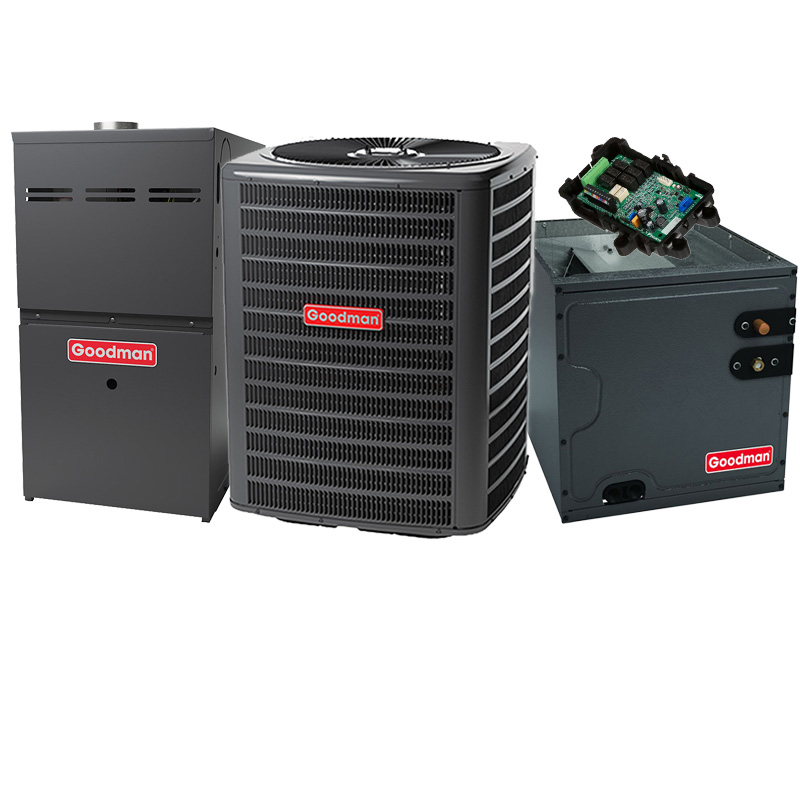
Goodman 2 Ton 14 SEER2 60000 BTU 80% Two-Stage Gas Furnace With R32 Air Conditioner Condenser And Coil System – Upflow
View on AC Direct see your lowest price →Check current price on AC Direct →
Key features
- Two-stage 60,000 BTU gas furnace rated at 80% AFUE for steady, lower-stress heating cycles
- 14 SEER2 cooling efficiency meets current federal minimum standards for most U.S. regions
- R-32 refrigerant with a lower global-warming potential than R-410A
- Matched condenser, evaporator coil, and furnace sold as a system to protect warranty eligibility
- Upflow cabinet configuration for basement or utility-closet installations with overhead duct runs
- Value-tier pricing typically 15 to 25 percent below comparable Trane, Lennox, and Carrier systems
About this system
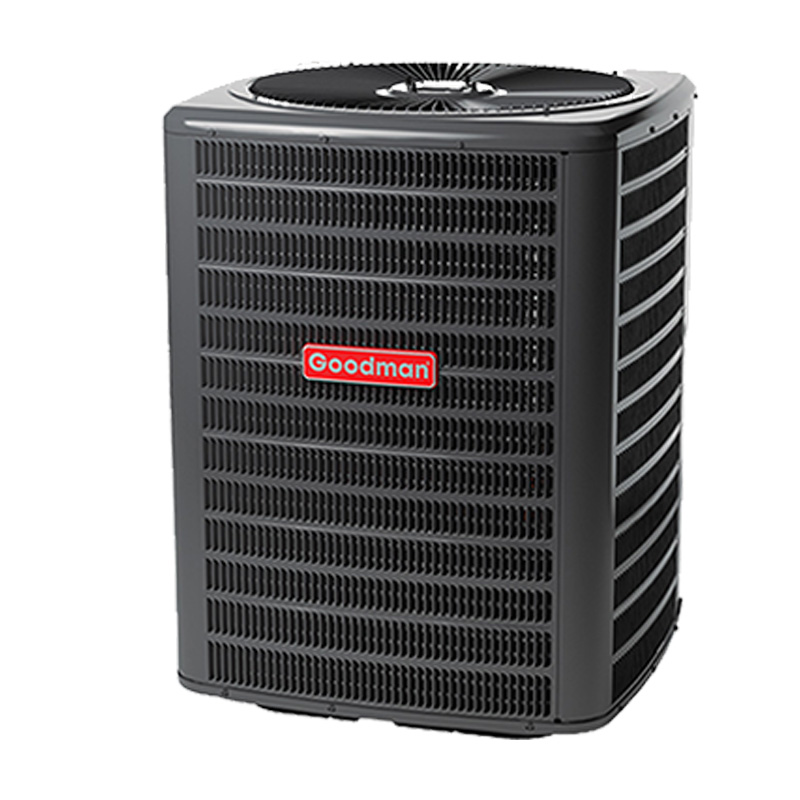
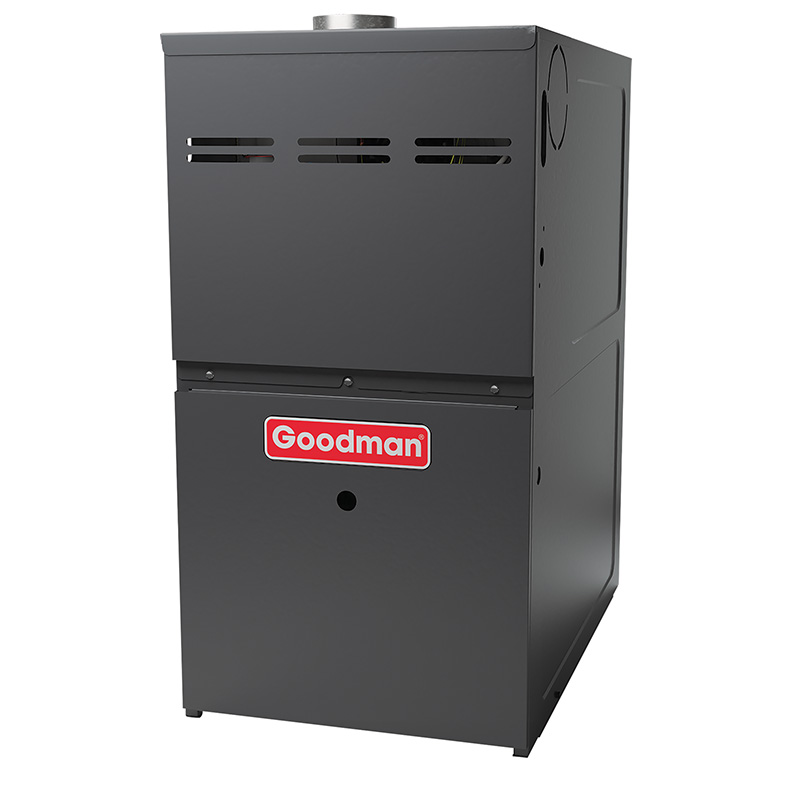
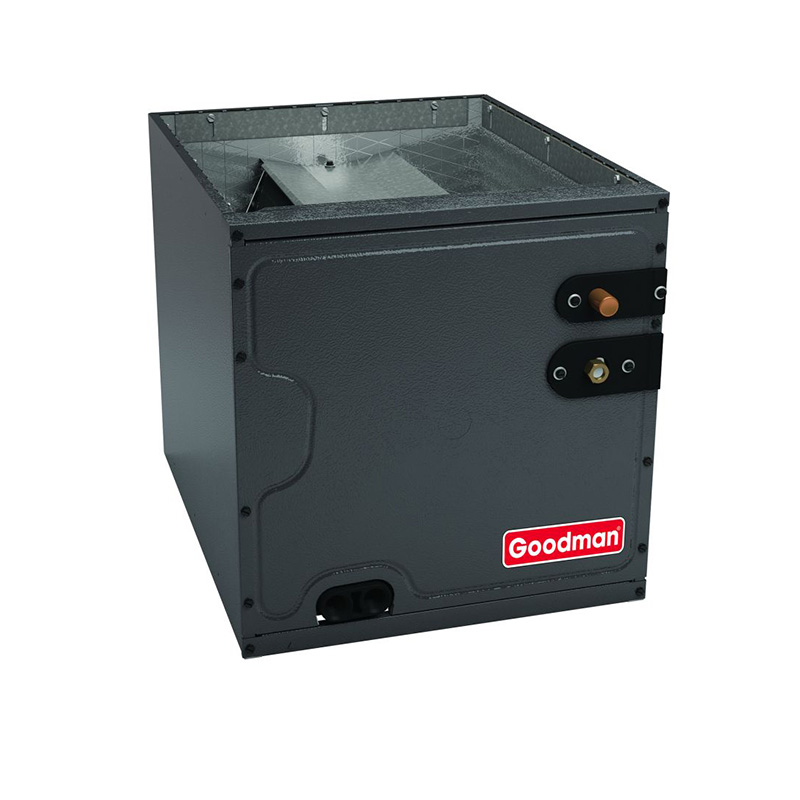
This Goodman bundle pairs a 2-ton, 14 SEER2 R-32 air conditioner condenser and matching evaporator coil with a 60,000 BTU, 80% AFUE two-stage gas furnace in an upflow configuration. The result is a complete heating and cooling system sized for smaller homes, conditioned spaces up to roughly 900 to 1,100 square feet depending on local climate and insulation, or as a zone unit in a larger multi-system setup. Buying the condenser, coil, and furnace together as a matched set matters because manufacturers and contractors alike confirm that mismatched components are a leading cause of early efficiency loss and warranty complications.
The two-stage furnace is a meaningful upgrade over a single-stage model at this price tier. It runs on a lower fire the majority of the time, which smooths out temperature swings, reduces short-cycling, and puts less mechanical stress on the heat exchanger. The 14 SEER2 rating on the cooling side sits at the federal minimum for most Northern U.S. regions and just above it in some Southern ones, so it is honest entry-level efficiency rather than a strong efficiency story. R-32 refrigerant is a lower global-warming-potential alternative to the R-410A it replaces, and technicians working with it need proper certification and equipment. The upflow cabinet orientation suits the most common residential installation scenario where the furnace sits in a basement or utility closet with supply air pushed up through floor registers.
This Goodman bundle gives budget-conscious homeowners a complete, code-compliant heating and cooling system at a price point premium brands rarely touch. The two-stage furnace and matched coil are genuine advantages at this tier, but buyers should go in clear-eyed: long-term reliability depends heavily on who installs it and how well it is maintained, and Goodman's track record shows more owner-reported repair costs after year seven than premium competitors.
Overall score is the average of the five ratings above.
What we like
- Matched system protects warranty coverage and reduces early compatibility problems
- Two-stage furnace operation reduces short-cycling and improves comfort over single-stage alternatives at similar prices
- R-32 refrigerant is a forward-looking choice with lower environmental impact than R-410A
- Entry price is typically 15 to 25 percent below equivalent Carrier, Trane, and Lennox configurations
- Upflow design suits the most common residential duct layout, keeping installation straightforward for qualified technicians
Trade-offs
- 14 SEER2 is minimum-tier efficiency; energy bills will be higher over the system's life compared to 16 SEER2 or above units
- 80% AFUE furnace means one in five BTUs of gas is lost up the flue, a real cost in colder climates where a 96% AFUE unit would pay back the price difference
- Goodman compressors average 10 to 14 years in owner-reported data, shorter than the 15 to 20 years commonly cited for premium-brand compressors
- Dual-run capacitor failures and evaporator coil leaks are documented recurring issues, and repair costs that accumulate after year seven can erode the upfront savings
What homeowners and pros say about Goodman
Homeowners who chose Goodman equipment for its affordability tend to land in one of two camps. Those with straightforward installs done by experienced technicians often report years of trouble-free service and point to the lower purchase price as a clear win. Those who run into problems, however, frequently cite costs that pile up after the seven-year mark, a pattern consistent with Goodman’s ConsumerAffairs rating of roughly 2.5 out of 5, a score pulled down by repair-cost complaints on that complaint-heavy platform. On Google dealer review pages, where the full range of customer experience is better represented, Goodman-installed systems average around 3.8 out of 5, with affordability cited as the most frequent reason buyers chose the brand.
HVAC technicians who service Goodman equipment regularly point to dual-run capacitor failures as the most predictable maintenance event, typically a low-cost fix in the 300 to 600 dollar range but one that comes up more often than with premium brands. Evaporator coil leaks show up in a meaningful share of long-term owner reviews, and compressor lifespan averaging 10 to 14 years falls noticeably short of the 15 to 20 years pros associate with Trane, Lennox, and Carrier compressors. A smaller share of owners report refrigerant leaks within the first year, which technicians generally attribute to installation or initial charge issues rather than a manufacturing defect. For this specific two-stage furnace and 14 SEER2 R-32 cooling bundle, the message from the field is consistent: the equipment can serve its owner well, but the quality of the installation and the diligence of routine maintenance will shape the outcome more than the brand name on the cabinet.
Sources: ConsumerAffairs Goodman owner reviews, AHRI Directory of Certified Product Performance, U.S. DOE appliance and equipment efficiency standards, Goodman product specification sheets.
What it costs to run
At 14 SEER2, cooling this 2-ton system for a typical 1200-hour cooling season at the U.S. average electricity rate of $0.17/kWh works out to roughly $350 per year in cooling, about $15 less per year than a minimum-efficiency 13.4 SEER2 unit of the same size. Your real cost depends on your climate and local rate.
Method: (24,000 BTU/hr ÷ 14 SEER2) × 1200 hours ÷ 1000 × $0.17/kWh. Rate source: U.S. EIA average; cooling hours: moderate-climate estimate.
How it compares
| Brand | Comparable model | SEER2 | Stage | Price position |
|---|---|---|---|---|
| Goodman | 2 Ton 14 SEER2 / 60K BTU 80% Two-Stage Bundle (this system) | 14 | Two-stage furnace, single-stage cooling | Value pick |
| Carrier | Comfort 14 Series (24ACC4) | 14 | Single-stage | Typically 15 to 25 percent more than this Goodman bundle |
| Trane | XR14 Series | 14 | Single-stage | Typically 15 to 25 percent more than this Goodman bundle |
| Lennox | Merit ML14XC1 | 14 | Single-stage | Typically 15 to 25 percent more than this Goodman bundle |
Competitor rows are comparable single-stage units at similar efficiency; price is relative position, not a quote.
Questions about this system
Does this system qualify for the federal energy efficiency tax credit?
The 25C tax credit requires a minimum of 15 SEER2 for split-system air conditioners and 97% AFUE or 80% AFUE with an ECM blower motor for furnaces in most categories. At 14 SEER2 and standard 80% AFUE, this system is unlikely to qualify for the cooling credit, and you should verify furnace motor specs with your contractor before assuming any credit applies.
What is the warranty on this Goodman system?
Goodman typically offers a 10-year parts limited warranty when the equipment is registered within a set window after installation by a licensed contractor. Failure to register or use an unlicensed installer often drops coverage to five years, so registration and contractor documentation matter significantly with Goodman products.
Can I install this system myself to save money?
No. Handling R-32 refrigerant requires EPA 608 certification, gas line work requires a licensed plumber or HVAC technician in most jurisdictions, and unlicensed installation voids Goodman's extended warranty. Beyond legality, Goodman's own reliability record is heavily dependent on correct installation, so cutting corners here carries real financial risk.
R-32 is new to me. Will any HVAC technician be able to service it?
R-32 requires certified technicians with appropriate equipment because it is mildly flammable, classified A2L. It is becoming common in new equipment, and most established HVAC companies are already equipped to handle it, but it is worth confirming with your service provider before committing to this system, particularly in rural areas.
Is a 2-ton, 60,000 BTU system the right size for my home?
Two tons of cooling capacity is typically appropriate for homes between roughly 900 and 1,200 square feet, though insulation quality, ceiling height, window area, and local climate all shift that range. A proper Manual J load calculation by your installer is the only reliable way to confirm sizing, and an undersized or oversized system will underperform regardless of brand.
Specifications
| Cooling capacity | 2 Ton |
| Efficiency | 14 SEER2 |
| Furnace output | 60000 BTU |
| Configuration | Upflow |
| Refrigerant | R-32 |