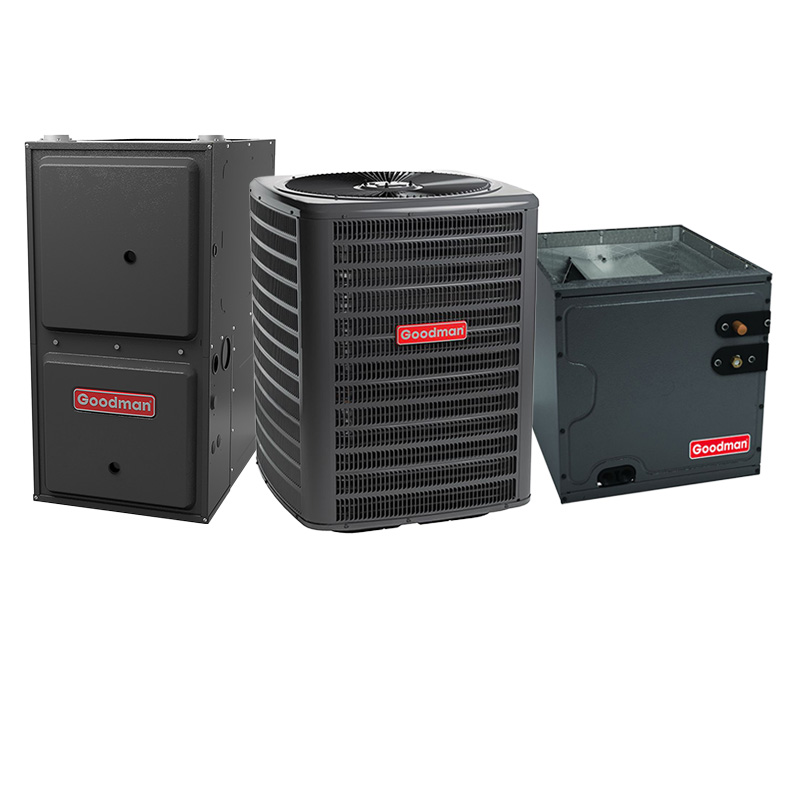
Goodman R32 2 Ton 14 SEER2 80000 BTU 80% Two Stage 9-Speed ECM Gas Furnace and Air Conditioner System – Upflow
View on AC Direct see your lowest price →Check current price on AC Direct →
Key features
- Two-stage 80,000 BTU furnace reduces temperature swings and short cycling
- 9-speed ECM blower motor adjusts airflow for consistent comfort and quieter operation
- R-32 refrigerant with lower global warming potential than R-410A
- 14 SEER2 efficiency meets current federal minimum standards for most U.S. regions
- 80% AFUE heating efficiency converts four out of five BTUs of gas to usable heat
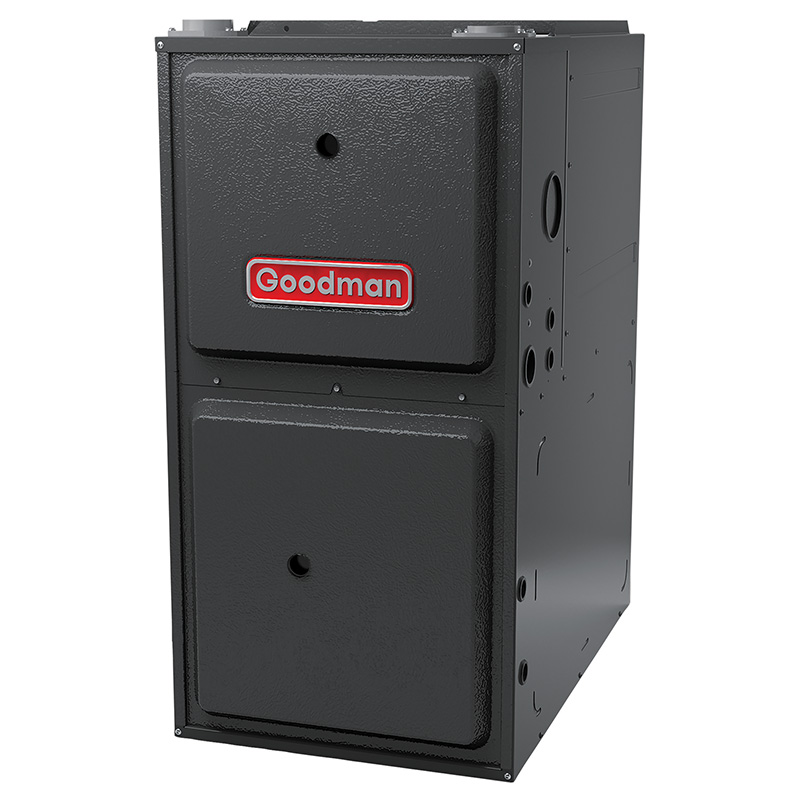
- Upflow configuration designed for basement or closet installations with overhead ductwork
About this system
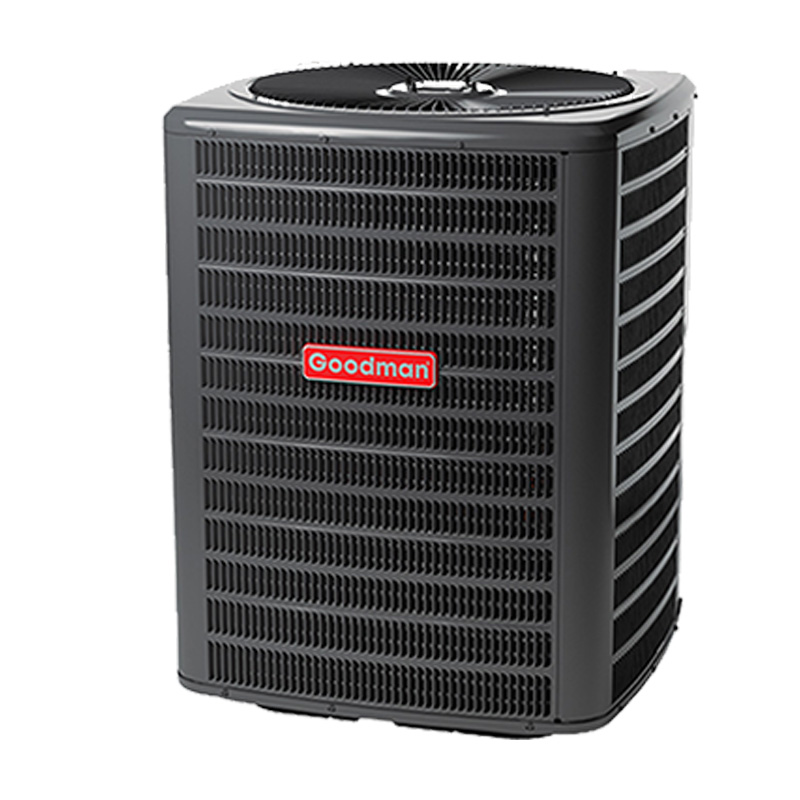
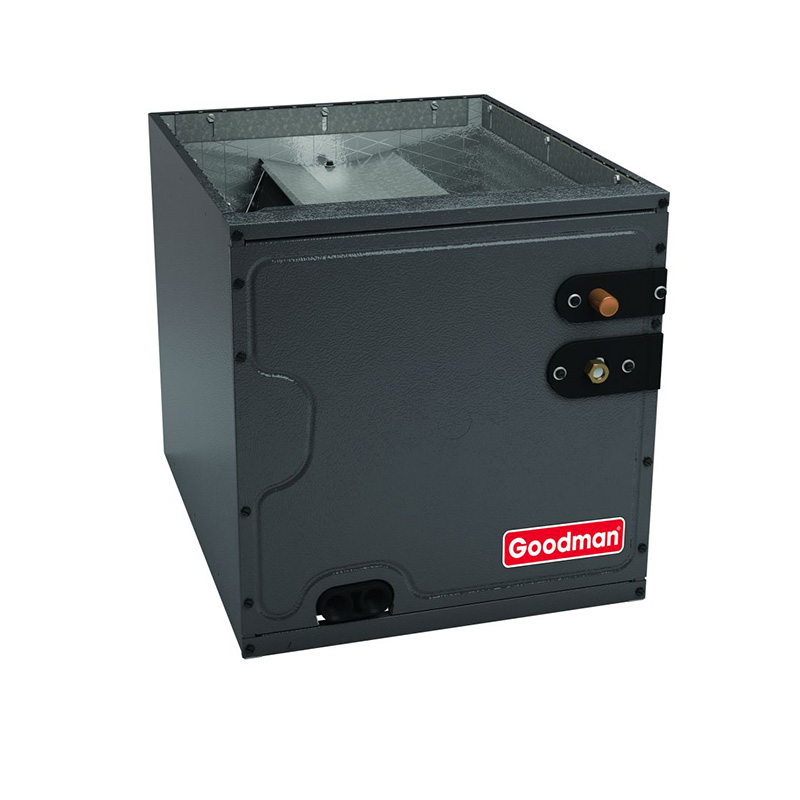
This Goodman bundle pairs a 2-ton, 14 SEER2 R-32 air conditioner with an 80,000 BTU, 80% AFUE two-stage gas furnace in an upflow configuration. The 14 SEER2 rating sits at the current federal minimum efficiency floor for most U.S. climate zones, so it meets the legal baseline without reaching into mid-efficiency or high-efficiency territory. The two-stage furnace is the standout spec here: it runs on a lower fire on mild days and steps up only when the load demands it, which translates to more consistent indoor temperatures and less on-off cycling compared to a single-stage unit. The 9-speed ECM blower motor complements that staged operation by modulating airflow rather than blasting at full speed every cycle.
R-32 refrigerant is a meaningful forward-looking detail. It carries a lower global warming potential than the R-410A it replaces and is increasingly the industry standard, so parts and refrigerant availability should remain solid for the life of this equipment. The upflow configuration routes conditioned air upward into overhead ductwork, making it the right fit for homes with the furnace in a basement, utility closet, or main-floor mechanical room feeding ducts in the ceiling or floor above. Buyers replacing an existing upflow system will find this a straightforward mechanical match.
This system is positioned for homeowners who want better-than-entry-level comfort features, specifically two-stage heating and a variable-speed blower, without paying for a premium brand nameplate. It suits moderate-load cooling climates where 14 SEER2 keeps operating costs reasonable, and homes in the 1,000 to 1,400 square foot range with good insulation and standard duct sizing for a 2-ton load.
This Goodman system delivers genuine two-stage heating and a variable-speed blower at a price point well below comparable Carrier, Trane, or Lennox packages, making it a legitimate value option for budget-conscious buyers. The 14 SEER2 rating is the legal minimum, not an efficiency achievement, and Goodman's documented track record of capacitor failures, evaporator coil leaks, and compressor lifespans shorter than premium brands means long-term costs deserve a place in your budget math. The quality of the installation will likely matter more to how this system performs and lasts than the equipment itself.
Overall score is the average of the five ratings above.
What we like
- Two-stage furnace operation provides more even heat distribution than single-stage units at this price
- 9-speed ECM blower improves humidity control and reduces operating noise compared to PSC motors
- R-32 refrigerant is a future-ready choice with better environmental profile than R-410A
- Priced roughly 15 to 25 percent below comparable Carrier, Trane, and Lennox bundles
- Upflow design is a direct mechanical replacement for most existing upflow gas furnace systems
Trade-offs
- 14 SEER2 is the federal minimum efficiency floor, so energy savings are modest versus higher-SEER2 alternatives
- 80% AFUE means 20% of gas burned is exhausted as waste heat, a real gap versus 90%+ condensing furnaces
- Documented failure modes include dual-run capacitor failures, evaporator coil leaks, and compressor lifespans averaging 10 to 14 years versus 15 to 20 for premium brands
- ConsumerAffairs rating of approximately 2.5 out of 5 reflects a pattern of rising repair costs after year 7, which should factor into total cost of ownership
What homeowners and pros say about Goodman
Homeowners who research Goodman before buying consistently land on the same two data points: a ConsumerAffairs rating of roughly 2.5 out of 5 and Google dealer review scores of around 3.8 out of 5. The gap between those numbers tells a story. The ConsumerAffairs channel skews toward people who had problems, and the recurring complaint there is repair costs climbing after the seven-year mark. The Google dealer scores, drawn from a broader cross-section of buyers, reflect a more common experience where the equipment does its job and the affordability relative to Trane or Carrier is the dominant takeaway. Neither number is fabricated, and neither should be ignored.
HVAC professionals who work on Goodman equipment regularly point to dual-run capacitor failures as the most predictable service call, typically a low-cost fix but one that tends to happen. Evaporator coil leaks show up in a real share of owner accounts, and technicians note that compressors in Goodman systems average roughly 10 to 14 years of useful life compared to 15 to 20 years in Carrier or Trane equipment. For this specific bundle, the two-stage furnace and ECM blower are genuine comfort upgrades over bare-minimum single-stage packages, but the underlying brand reliability calculus remains the same. Pros who recommend Goodman typically do so for clients with tighter budgets and shorter planning horizons, and they almost universally condition that recommendation on using a skilled installer, because with this brand more than most, the installation quality is what separates a solid ten-year run from a frustrating one.
Sources: ConsumerAffairs Goodman owner reviews, AHRI Directory of Certified Product Performance, U.S. DOE appliance and equipment efficiency standards, Goodman product specification sheets.
What it costs to run
At 14 SEER2, cooling this 2-ton system for a typical 1200-hour cooling season at the U.S. average electricity rate of $0.17/kWh works out to roughly $350 per year in cooling, about $15 less per year than a minimum-efficiency 13.4 SEER2 unit of the same size. Your real cost depends on your climate and local rate.
Method: (24,000 BTU/hr ÷ 14 SEER2) × 1200 hours ÷ 1000 × $0.17/kWh. Rate source: U.S. EIA average; cooling hours: moderate-climate estimate.
How it compares
| Brand | Comparable model | SEER2 | Stage | Price position |
|---|---|---|---|---|
| Goodman | R-32 2-Ton 14 SEER2 / 80,000 BTU 80% Two-Stage ECM Bundle | 14 | Two-stage | Value pick |
| Carrier | Comfort 14 Series (24ACC4 / 59SC5) | 14 | Single-stage | Typically 15 to 25 percent more than this Goodman bundle |
| Trane | XR14 / S8X1 80% Furnace Package | 14 | Single-stage | Typically 15 to 25 percent more than this Goodman bundle |
| Lennox | Merit 14ACX / ML180 Furnace Package | 14 | Single-stage | Typically 15 to 25 percent more than this Goodman bundle |
Competitor rows are comparable single-stage units at similar efficiency; price is relative position, not a quote.
Questions about this system
Is 14 SEER2 going to cost me significantly more to run than a higher-efficiency unit?
At 14 SEER2 you are at the minimum legal efficiency for most regions, so a 16 or 18 SEER2 system will use less electricity per cooling hour. The actual dollar difference depends on your local utility rate and how many cooling hours your climate produces, but in a moderate climate with a 2-ton load the annual gap versus a 16 SEER2 unit is typically modest enough that the lower purchase price often offsets it over several years. In high-cooling-hours climates like Texas or Florida, a higher SEER2 rating earns back more of its premium.
Why does this furnace have 80% AFUE instead of 90% or higher, and does that matter?
An 80% AFUE furnace vents combustion gases through a standard metal flue rather than requiring the PVC condensate drain piping that 90%+ condensing furnaces need. If your existing system is 80% AFUE with a B-vent or metal chimney liner, swapping in another 80% unit is simpler and cheaper to install. If you are in a cold climate and your current setup could support a high-efficiency furnace, the long-term fuel savings from a 96% AFUE unit can be substantial, and it is worth pricing the comparison before committing.
What are the most common repairs I should budget for with a Goodman system?
The single most reported failure point across Goodman equipment is the dual-run capacitor, a repair that typically runs in the 300 to 600 dollar range and is straightforward for any HVAC technician. Evaporator coil leaks appear in a meaningful share of owner reviews and are more expensive to address. Compressor failures tend to occur earlier than with premium brands, with an average lifespan of 10 to 14 years versus 15 to 20 for Trane or Carrier compressors.
Does R-32 refrigerant affect what I pay for service or recharging if there is a leak?
R-32 is becoming broadly available as the industry moves away from R-410A, so access to refrigerant is not a concern. A small minority of Goodman owners have reported refrigerant leaks within the first year, and in most cases these trace back to installation issues or an improper factory charge rather than a defect in the refrigerant itself. Make sure your installer pressure-tests the system and verifies charge at startup.
How much does installer quality actually affect how this system performs and lasts?
HVAC technicians consistently cite install quality as the dominant factor in Goodman system longevity, more so than with premium brands that have tighter factory tolerances. Proper refrigerant charge, correct duct sizing for a 2-ton load, accurate thermostat calibration, and a clean startup sequence all directly affect efficiency, comfort, and how long the compressor and coil last. Spending money on a licensed, experienced installer rather than the lowest bid is arguably the highest-return decision you can make with this equipment.
Specifications
| Cooling capacity | 2 Ton |
| Efficiency | 14 SEER2 |
| Furnace output | 80000 BTU |
| Configuration | Upflow |
| Refrigerant | R-32 |