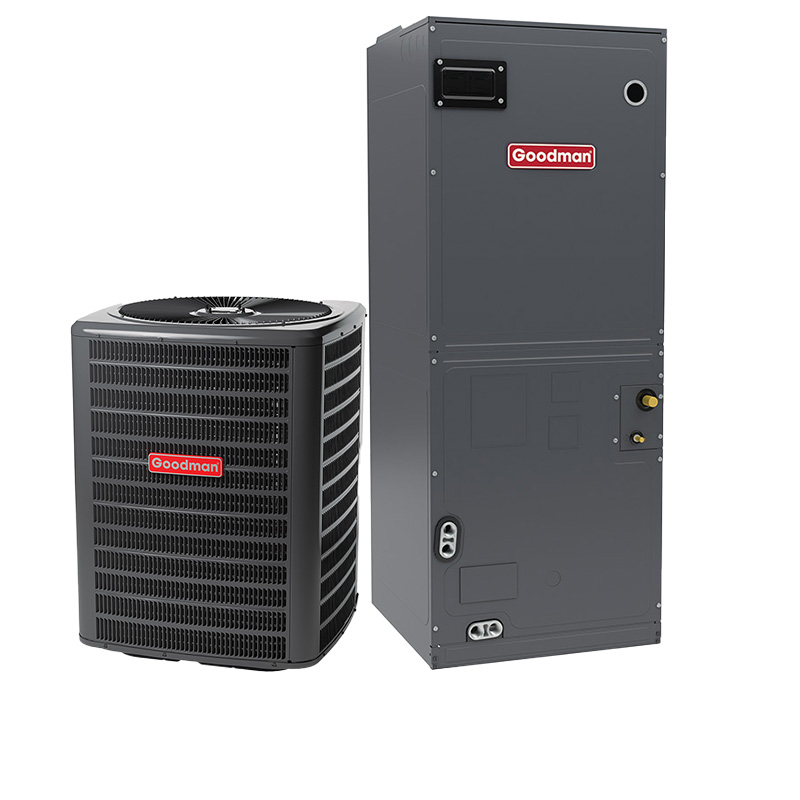
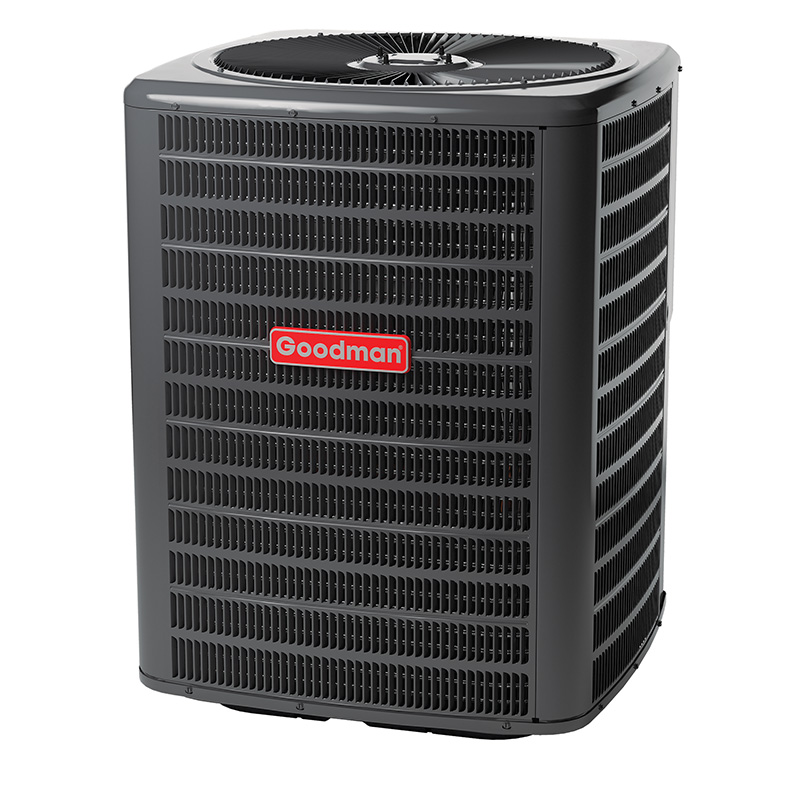
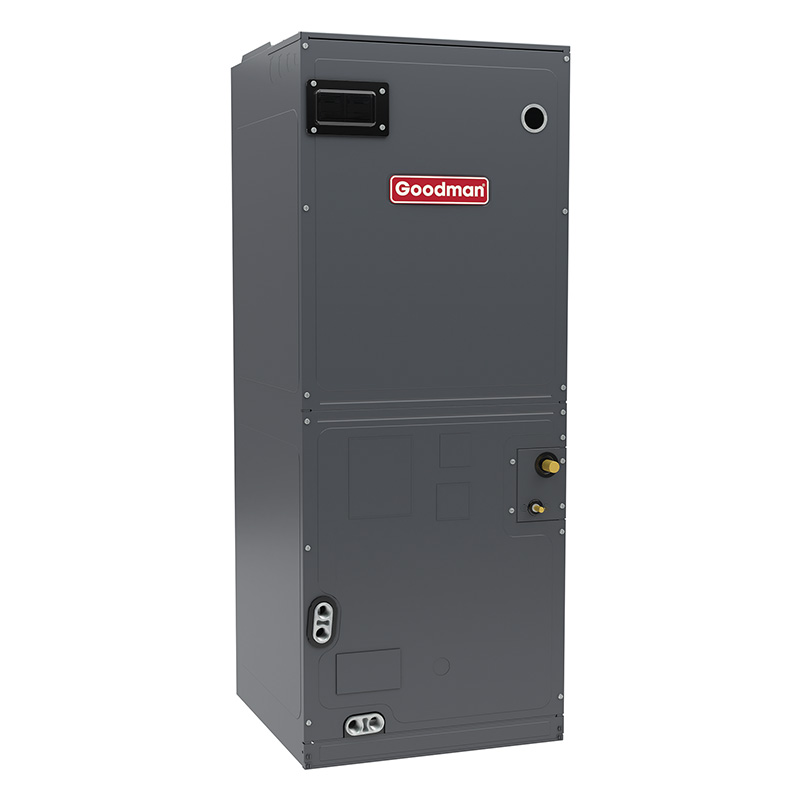
Goodman R32 2 Ton 15.2 SEER2 Cooling Only Split System
View on AC Direct see your lowest price →Check current price on AC Direct →
Key features
- 15.2 SEER2 efficiency rating, meeting current federal minimums for most U.S. regions
- R-32 refrigerant with lower global warming potential than legacy R-410A
- 2-ton (approximately 24,000 BTU/h) capacity for smaller to mid-size cooling loads
- Cooling-only split system configuration, compatible with existing or new air handlers
- Single-stage compressor operation for straightforward, proven mechanical design
- Goodman's 10-year parts limited warranty when registered within 60 days of install
About this system
The Goodman R-32 2-ton cooling-only split system is a straightforward, single-stage air conditioner aimed at homeowners who want reliable warm-weather comfort without stretching into premium-brand pricing. At 15.2 SEER2, it clears the federal minimum efficiency threshold for most U.S. climate zones and sits comfortably in the entry-to-mid tier, meaning running costs will be noticeably lower than older 13 SEER equipment but not as lean as 18+ SEER2 variable-speed systems. The 2-ton capacity is the right fit for roughly 900 to 1,300 square feet of well-insulated living space, though actual sizing should always be confirmed with a Manual J load calculation.
The switch to R-32 refrigerant is a practical long-term positive. R-32 has a global warming potential about 68 percent lower than the R-410A it replaces, and as the industry moves away from R-410A, parts and recharge supply for R-32 systems will only become easier to source. For a cooling-only unit, this configuration is common in mild climates, sunbelt additions, or homes that already have a separate heating system. There is no gas furnace or heat pump component to manage, which keeps the installation scope simpler and the equipment footprint smaller.
This system is a sensible budget option for homeowners who need reliable single-stage cooling and are willing to invest in a quality installation. Goodman's pricing advantage is real, but so are the documented trade-offs in long-term reliability compared to premium brands. At 15.2 SEER2 you get compliant, functional efficiency without the operating-cost gains of higher-tier equipment.
Overall score is the average of the five ratings above.
What we like
- Purchase price typically 15 to 25 percent below comparable Carrier, Trane, and Lennox equipment
- R-32 refrigerant is a forward-looking choice as the industry phases out R-410A
- 15.2 SEER2 meets current federal standards and improves on aging 13 SEER systems
- Cooling-only design keeps installation simpler and reduces component count
- Dual-run capacitor failures, the most common documented issue, are a low-cost repair in the $300 to $600 range
Trade-offs
- Compressor lifespan averages 10 to 14 years versus 15 to 20 years for premium brands
- Evaporator coil leaks appear in a meaningful share of owner reports, which can be a costly mid-life repair
- A minority of owners report refrigerant leaks within the first year, typically traced to installation or initial charge issues
- ConsumerAffairs rating sits around 2.5 out of 5, with recurring complaints about repair costs after roughly year 7
What homeowners and pros say about Goodman
Homeowners who track Goodman online paint a divided picture. On Google dealer reviews, the brand averages around 3.8 out of 5 across locations, and affordability is the most repeated reason people choose it. On ConsumerAffairs, the score drops to roughly 2.5 out of 5, a channel weighted toward unhappy customers, where the pattern that emerges most clearly is repair costs climbing after about year seven. For this specific 2-ton cooling-only unit, the concerns most worth weighing are the documented failure modes: dual-run capacitor failures are the most commonly reported problem and are relatively inexpensive to fix, but evaporator coil leaks also appear with enough frequency to warrant attention, and compressor lifespan tends to average 10 to 14 years rather than the 15 to 20 years owners report from Trane, Carrier, and Lennox equipment. A minority of owners also report refrigerant leaks within the first year, and HVAC technicians consistently attribute those to installation or initial charge errors rather than factory defects.
Among HVAC professionals, Goodman has a consistent reputation as a system whose longevity is more install-dependent than most. Technicians who install it carefully and set the refrigerant charge precisely tend to see it perform adequately for its price point. Those who rush the job or skip the Manual J sizing step see callbacks early. The R-32 refrigerant on this model is viewed positively in the trade as a sensible transition away from R-410A, and the single-stage design is straightforward to service. The practical takeaway is that this system rewards buyers who hire experienced installers and budget for a capacitor replacement somewhere in the middle years, and it is less forgiving of cut-rate installation than a premium brand might be.
Sources: ConsumerAffairs Goodman owner reviews, AHRI Directory of Certified Product Performance, U.S. DOE appliance and equipment efficiency standards, Goodman product specification sheets.
What it costs to run
At 15.2 SEER2, cooling this 2-ton system for a typical 1200-hour cooling season at the U.S. average electricity rate of $0.17/kWh works out to roughly $322 per year in cooling, about $43 less per year than a minimum-efficiency 13.4 SEER2 unit of the same size. Your real cost depends on your climate and local rate.
Method: (24,000 BTU/hr ÷ 15.2 SEER2) × 1200 hours ÷ 1000 × $0.17/kWh. Rate source: U.S. EIA average; cooling hours: moderate-climate estimate.
How it compares
| Brand | Comparable model | SEER2 | Stage | Price position |
|---|---|---|---|---|
| Goodman | R-32 Cooling-Only Split System | 15.2 | Single-stage | Value pick |
| Carrier | Comfort 24ACC6 Series | 15.2 | Single-stage | Typically 15 to 25 percent more than Goodman |
| Trane | XR15 Series | 15.0 to 16.0 | Single-stage | Typically 15 to 25 percent more than Goodman |
| Lennox | Merit ML14XC1 Series | 15.2 | Single-stage | Typically 15 to 25 percent more than Goodman |
Competitor rows are comparable single-stage units at similar efficiency; price is relative position, not a quote.
Questions about this system
Will this unit work with my existing air handler or furnace coil?
It can, but compatibility depends on coil size, refrigerant type, and metering device. Because this system uses R-32 rather than R-410A, confirm with your installer that the indoor coil is rated for R-32 before purchasing. Mismatched components affect both efficiency and warranty coverage.
How does the R-32 refrigerant affect service and recharge costs compared to R-410A?
R-32 is increasingly available and is the direction the industry is heading, so supply is not a concern. R-32 operates at similar pressures to R-410A and does not require different service equipment in most cases, though technicians should verify their gauges and tools are rated for R-32 before working on the system.
What is the most likely repair this system will need, and what does it cost?
Based on documented owner experience, dual-run capacitor failure is the most common issue and typically runs $300 to $600 to diagnose and replace. Evaporator coil leaks are a less frequent but higher-cost repair, and refrigerant leaks in the first year are sometimes reported and usually point to installation or charge problems rather than a defective unit.
Is 2 tons the right size for my home?
Two tons handles roughly 900 to 1,300 square feet under average insulation and ceiling height conditions, but climate zone, window area, and home orientation all shift that range. Oversizing is a common mistake that causes short cycling and poor humidity removal, so ask your installer to perform a Manual J load calculation before ordering.
Does registering the warranty actually matter, and what does the 10-year coverage include?
Yes, registration within 60 days of installation is required to receive the full 10-year parts limited warranty. Without registration it typically drops to a shorter base coverage. The warranty covers parts but not labor, so factor in labor costs when comparing total repair exposure against a brand that bundles labor coverage.
Specifications
| Cooling capacity | 2 Ton |
| Efficiency | 15.2 SEER2 |
| Refrigerant | R-32 |