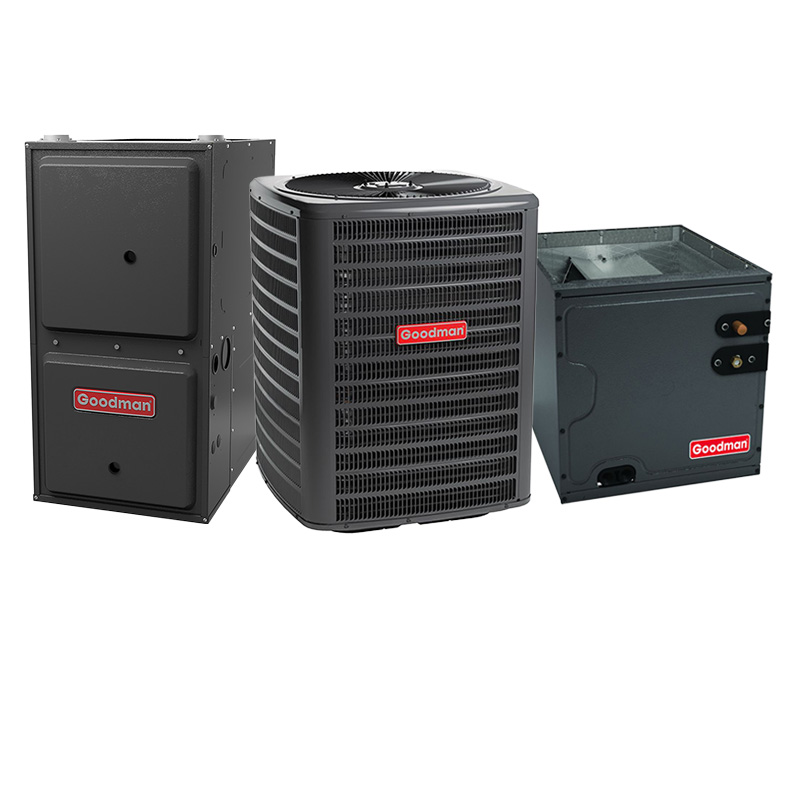
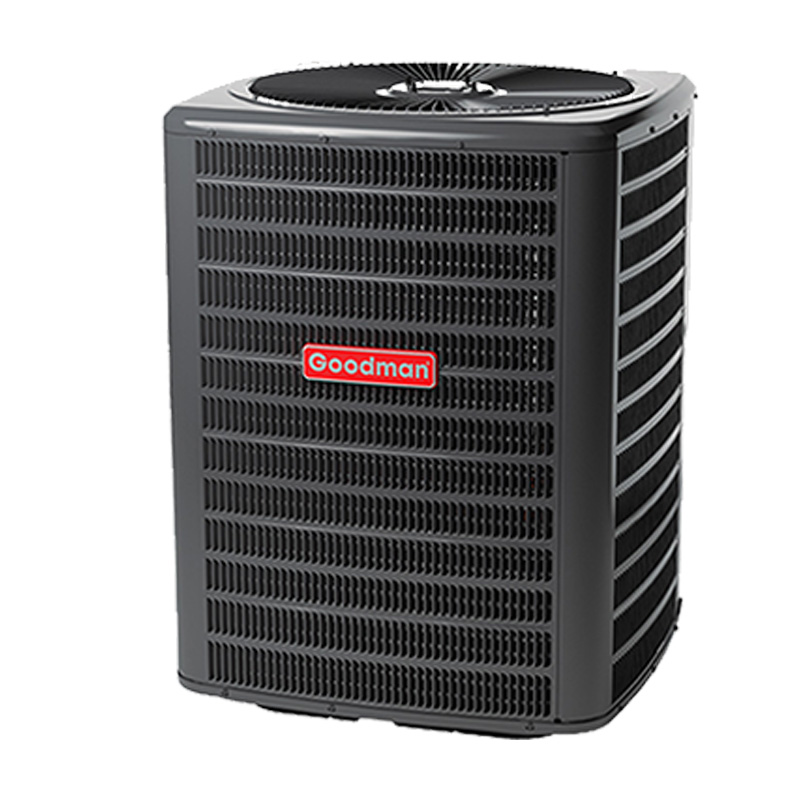
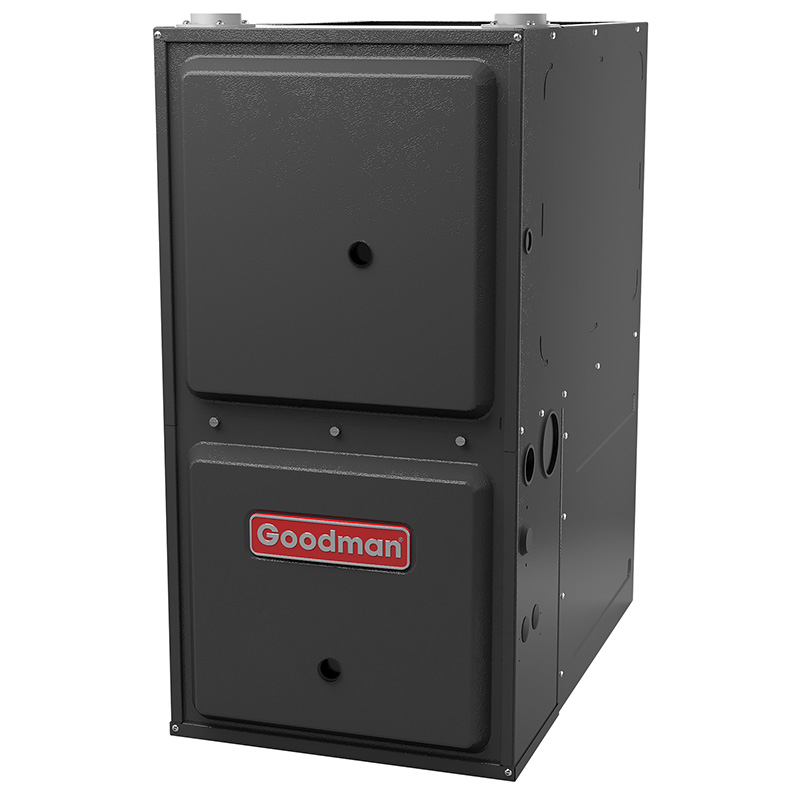
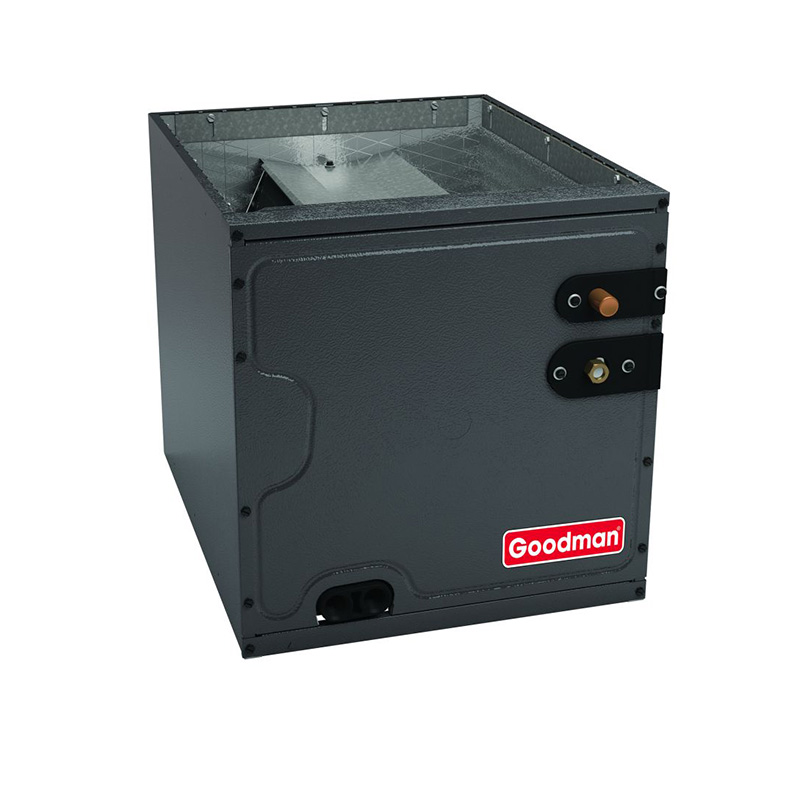
Goodman R32 3.5 Ton 13.4 SEER2 80000 BTU 80% Multi-Speed ECM Gas Furnace and Air Conditioner System – Downflow
View on AC Direct see your lowest price →Check current price on AC Direct →
Key features
- 3.5-ton cooling capacity paired with 80,000 BTU, 80% AFUE gas furnace
- 13.4 SEER2 efficiency rating meets current federal minimums for most U.S. regions
- Downflow cabinet orientation for installations above crawlspaces or on upper floors
- Multi-speed ECM blower motor reduces fan energy use versus single-speed PSC motors
- R-32 refrigerant with lower global-warming potential than R-410A
- Factory-matched system designed for compatibility and simplified commissioning
About this system
The Goodman R-32 3.5-ton, 13.4 SEER2 split system pairs a downflow gas furnace rated at 80,000 BTU and 80% AFUE with a mid-efficiency central air conditioner using the newer R-32 refrigerant. This combination is sized for homes in the 1,800 to 2,400 square-foot range, depending on climate zone, insulation quality, and local heat gain. The downflow configuration means conditioned air exits the bottom of the cabinet, making it the right choice for homes where the air handler sits in a closet above a crawlspace or on an upper floor above living space — not a universal fit, so confirm your duct orientation before ordering.
At 13.4 SEER2 and 80% AFUE, this system sits at the regulatory baseline for many U.S. regions. It will meet minimum federal efficiency standards but will not deliver the energy savings of a two-stage or variable-speed system. The multi-speed ECM blower motor is a genuine advantage over single-speed PSC motors — it ramps airflow more precisely, reduces short-cycling noise, and uses meaningfully less electricity during fan-only operation. R-32 refrigerant carries a lower global-warming potential than the R-410A it replaces, and its higher energy density can support slightly better heat-transfer efficiency over time, though the real-world comfort difference at this SEER2 tier is modest.
This Goodman bundle delivers solid baseline efficiency and a modern refrigerant at a price that is typically 15 to 25 percent below comparable Carrier, Trane, or Lennox systems, making it a reasonable choice for budget-conscious homeowners who prioritize upfront cost. The ECM motor and R-32 refrigerant are genuine upgrades, but the 80% AFUE furnace and 13.4 SEER2 rating leave efficiency on the table for anyone in a climate with extreme heating or cooling seasons. Long-term ownership costs depend heavily on installation quality and on whether you budget for the capacitor replacements and potential coil issues that show up with some regularity in Goodman units after year seven.
Overall score is the average of the five ratings above.
What we like
- Purchase price is typically 15 to 25 percent lower than comparable Trane, Carrier, or Lennox systems
- Multi-speed ECM blower motor improves airflow control and cuts fan operating costs versus PSC motors
- R-32 refrigerant has a lower environmental impact and is positioned for long-term regulatory stability
- Factory-matched coil and furnace combination simplifies system design and warranty alignment
- Downflow configuration directly serves homes that need it, avoiding costly duct modifications
Trade-offs
- 80% AFUE furnace wastes 20 cents of every heating dollar, a real cost in colder climates where 95%+ units pay back the premium
- Compressor lifespan tends to average 10 to 14 years versus 15 to 20 years for premium-brand compressors
- Dual-run capacitors are the most commonly reported failure point, and evaporator coil leaks appear in a meaningful share of owner reviews
- 13.4 SEER2 is a baseline rating — homes with high summer cooling loads will see noticeably higher utility bills than they would with a 16+ SEER2 system
What homeowners and pros say about Goodman
Homeowners who post about Goodman systems online tend to cluster at the extremes: those who got a clean install and have had uneventful ownership for several years, and those who ran into repair costs sooner than expected and are vocal about it. Goodman’s ConsumerAffairs rating sits at roughly 2.5 out of 5, which reflects the complaint-heavy nature of that platform but also surfaces a real pattern: repair costs climbing noticeably after year seven, particularly around capacitor failures and coil-related refrigerant loss. Google dealer reviews tell a different story, averaging around 3.8 out of 5 across locations, with affordability as the most consistent praise. The gap between those two scores largely reflects whether the reviewer is talking about price at purchase or service experience later.
HVAC technicians are candid about Goodman: it is a serviceable product whose longevity is disproportionately tied to installation quality. Compressor lifespan averaging 10 to 14 years versus 15 to 20 for premium brands is a genuine trade-off at this price point, not a dealbreaker for every buyer but worth factoring into a long-term cost comparison. The dual-run capacitor is widely known among service techs as the first thing to watch on a Goodman condenser — a low-cost repair when caught early, but a symptom of the component-cost decisions built into the value-tier price. For a downflow R-32 bundle at this efficiency level, Goodman competes well on day-one cost; the honest question is how that calculation holds up over a 12-year ownership horizon.
Sources: ConsumerAffairs Goodman owner reviews, AHRI Directory of Certified Product Performance, U.S. DOE appliance and equipment efficiency standards, Goodman product specification sheets.
What it costs to run
At 13.4 SEER2, cooling this 3.5-ton system for a typical 1200-hour cooling season at the U.S. average electricity rate of $0.17/kWh works out to roughly $639 per year in cooling, about $0 less per year than a minimum-efficiency 13.4 SEER2 unit of the same size. Your real cost depends on your climate and local rate.
Method: (42,000 BTU/hr ÷ 13.4 SEER2) × 1200 hours ÷ 1000 × $0.17/kWh. Rate source: U.S. EIA average; cooling hours: moderate-climate estimate.
How it compares
| Brand | Comparable model | SEER2 | Stage | Price position |
|---|---|---|---|---|
| Goodman | R-32 3.5-Ton 13.4 SEER2 80K BTU 80% Downflow Bundle | 13.4 | Multi-speed | Value pick |
| Carrier | Comfort Series (24ACC6 / 58TP 80% furnace bundle) | 13.4–14.0 | Single-stage | Typically 15 to 25 percent more than Goodman |
| Trane | XR13c / S8X1 80% furnace bundle | 13.4–14.0 | Single-stage | Typically 15 to 25 percent more than Goodman |
| Lennox | Merit Series (14ACX / ML180 80% furnace bundle) | 13.4–14.3 | Single-stage | Typically 15 to 25 percent more than Goodman |
Competitor rows are comparable single-stage units at similar efficiency; price is relative position, not a quote.
Questions about this system
Is a downflow furnace the right configuration for my home?
Downflow means heated and cooled air exits through the bottom of the unit, which is correct when your ductwork runs below the air handler — common in homes with a first-floor closet installation above a crawlspace or basement duct system. If your ducts exit from the top or sides, you need an upflow or horizontal unit. Confirm your existing configuration with your installer before purchasing.
Does R-32 refrigerant require special handling or different service costs?
R-32 does require technicians to use specific recovery equipment and follow updated handling procedures because it is mildly flammable (A2L classification). Most licensed HVAC companies are already equipped and certified for R-32 service, but it is worth confirming with your service contractor. Refrigerant cost differences at the residential service level are minimal right now.
What is the real-world difference between the multi-speed ECM blower and a standard single-speed motor?
An ECM motor uses roughly 60 to 70 percent less electricity during fan-only operation compared to a PSC motor, and it ramps speed gradually rather than switching on at full blast, which reduces startup noise and improves humidity control in cooling mode. Over a full year of operation, the energy savings on the fan alone are measurable, typically reducing annual fan operating costs by $100 to $200 depending on usage patterns.
What are the most common repairs I should budget for with this Goodman system?
Dual-run capacitors are the most frequently reported failure on Goodman condensing units — a straightforward repair that typically runs $300 to $600 including a service call. Evaporator coil leaks are a second documented concern, showing up in a meaningful share of long-term owner reviews and representing a more expensive repair. Budgeting for a capacitor replacement somewhere in years three through eight is a reasonable precaution.
How does the 80% AFUE furnace compare to a 96% AFUE unit in annual heating costs?
An 80% AFUE furnace converts 80 cents of every fuel dollar into heat; a 96% unit converts 96 cents. For a home spending $1,200 per year on natural gas heat, the difference is roughly $190 per year in wasted fuel. In a cold climate with high heating loads, that gap compounds quickly, and a high-efficiency furnace often pays back its price premium within five to eight years — worth modeling before committing to this system.
Specifications
| Cooling capacity | 3.5 Ton |
| Efficiency | 13.4 SEER2 |
| Furnace output | 80000 BTU |
| Configuration | Downflow |
| Refrigerant | R-32 |