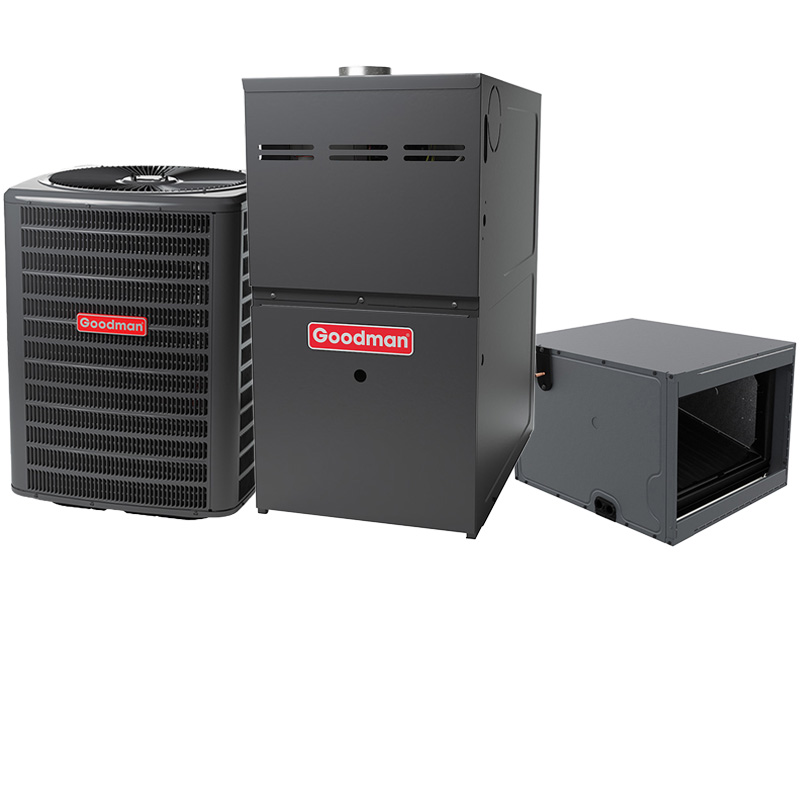
Goodman R32 3.5 Ton 13.6 SEER2 80000 BTU 80% Multi-Speed ECM Gas Furnace and Air Conditioner System – Horizontal
View on AC Direct see your lowest price →Check current price on AC Direct →
Key features
- 3.5-ton cooling capacity paired with 80,000 BTU gas heat in a single matched system
- 13.6 SEER2 efficiency rating meets current federal minimums for most U.S. regions
- R-32 refrigerant with lower global warming potential than legacy R-410A
- Multi-speed ECM blower motor for improved humidity control and reduced fan energy use
- Horizontal cabinet orientation suited to attic and crawl-space installations
- 80% AFUE furnace section, a mid-efficiency rating appropriate for moderate heating climates
About this system
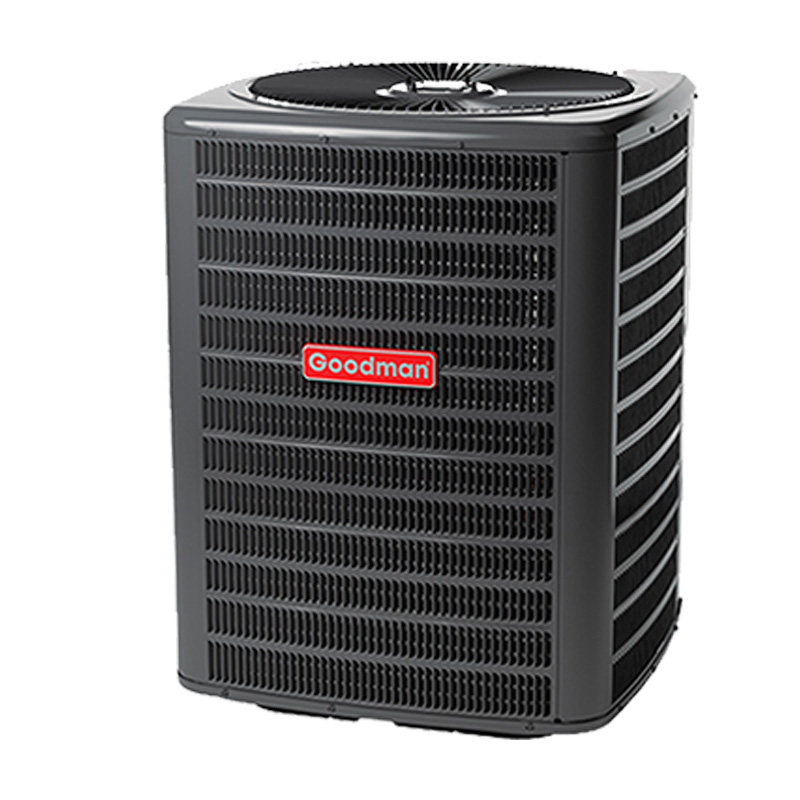
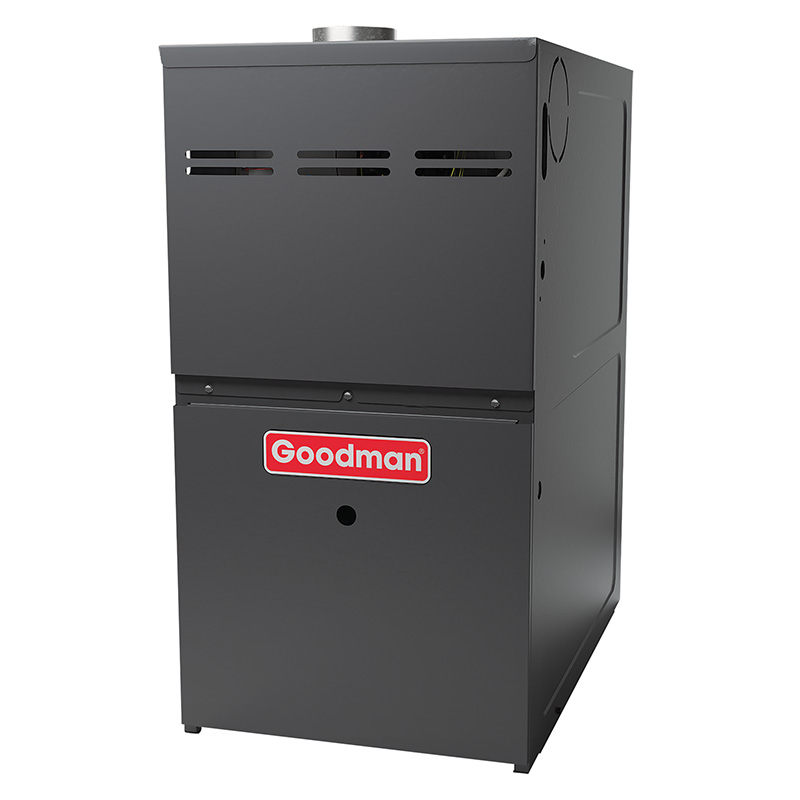
This Goodman R-32 package pairs a 3.5-ton, 13.6 SEER2 air conditioner with an 80,000 BTU, 80% AFUE multi-speed ECM gas furnace in a horizontal configuration, making it a practical choice for homes that rely on attic or crawl-space installations where vertical cabinet access is limited. The 13.6 SEER2 rating meets the current federal minimum for most U.S. climate regions, so it clears the efficiency bar without reaching into the premium tier. R-32 refrigerant carries a lower global warming potential than the R-410A it replaces and is increasingly the industry standard, which should ease future service access.
The multi-speed ECM blower motor is one of the more meaningful specs here. Unlike a single-speed motor that runs full blast or nothing, the ECM adjusts airflow to match demand, which improves humidity control, reduces hot and cold spots, and cuts blower electricity use compared to a standard PSC motor. The horizontal orientation does narrow the installer pool slightly, since not every technician works in attic or side-discharge configurations daily, and proper setup matters considerably for a brand like Goodman, where install quality has a documented influence on long-term reliability. At 80% AFUE, the furnace is a mid-efficiency unit, meaning roughly one dollar in five of your gas spend exits as exhaust rather than heat, which is worth considering if you heat heavily or live in a cold climate.
This Goodman horizontal system delivers a solid entry-level package at a price that runs meaningfully below comparable Carrier, Trane, and Lennox equipment, with the ECM blower motor adding practical comfort value. The trade-offs are real: 80% AFUE leaves heating efficiency on the table, 13.6 SEER2 is the floor rather than the ceiling, and Goodman's reliability record carries known weak points that buyers should weigh before committing. If budget is the primary driver and you hire an experienced installer, it earns its place; if you plan to stay in the home 15 or more years, the total cost calculation gets closer.
Overall score is the average of the five ratings above.
What we like
- Priced roughly 15 to 25 percent below comparable Carrier, Trane, and Lennox systems, lowering upfront cost
- Multi-speed ECM motor improves comfort and humidity management beyond what a basic single-speed system offers
- R-32 refrigerant is increasingly standard, making future service parts more accessible
- Horizontal configuration is purpose-built for attic and crawl-space installs where other orientations do not fit
- Goodman's wide dealer and parts network means technicians and components are generally easy to source
Trade-offs
- 80% AFUE means 20% of gas heat is lost as exhaust, which adds up in cold climates or high-usage households
- 13.6 SEER2 is the minimum efficiency tier, not a mid-grade or high-efficiency choice
- Goodman's documented failure modes include dual-run capacitor failures, evaporator coil leaks, and compressor lifespans that average shorter than premium brands
- Horizontal installs require technicians comfortable with that configuration, and install quality has an outsized effect on how long this brand performs
What homeowners and pros say about Goodman
Owner feedback on Goodman systems, reflected in a ConsumerAffairs score of roughly 2.5 out of 5, skews toward people who had problems, which is typical of that platform. The recurring theme in those reviews is repair costs that climb after about year seven, a pattern consistent with Goodman’s documented compressor lifespan of 10 to 14 years versus the 15 to 20 years more commonly reported for premium brands. Dual-run capacitor failures are the most frequently mentioned repair, generally a manageable fix in the 300 to 600 dollar range, but evaporator coil leaks also surface in enough owner accounts to be worth noting as a real risk rather than an outlier. A smaller share of owners report refrigerant leaks within the first year, which technicians generally attribute to installation or charge problems rather than factory defects, underscoring how much install quality shapes the ownership experience for this brand.
On dealer-facing review platforms, Goodman earns a more measured around 3.8 out of 5 across Google dealer reviews, where affordability is the praise that shows up most consistently. HVAC professionals who work with Goodman regularly tend to acknowledge that the equipment performs adequately when it is installed correctly and serviced on schedule, and that the lower upfront price creates room in the project budget to invest in quality installation labor. For this specific horizontal system, technicians note that attic and crawl-space installs add variables including drainage slope, condensate management, and airflow balance that require attention regardless of brand, and that those details matter more with a value-tier product than with equipment that carries more engineering margin. The honest takeaway is that this Goodman system can deliver reliable years of service with the right installer and realistic expectations, but it is not the unit to pair with the lowest bidder.
Sources: ConsumerAffairs Goodman owner reviews, AHRI Directory of Certified Product Performance, U.S. DOE appliance and equipment efficiency standards, Goodman product specification sheets.
What it costs to run
At 13.6 SEER2, cooling this 3.5-ton system for a typical 1200-hour cooling season at the U.S. average electricity rate of $0.17/kWh works out to roughly $630 per year in cooling, about $9 less per year than a minimum-efficiency 13.4 SEER2 unit of the same size. Your real cost depends on your climate and local rate.
Method: (42,000 BTU/hr ÷ 13.6 SEER2) × 1200 hours ÷ 1000 × $0.17/kWh. Rate source: U.S. EIA average; cooling hours: moderate-climate estimate.
How it compares
| Brand | Comparable model | SEER2 | Stage | Price position |
|---|---|---|---|---|
| Goodman | R-32 Multi-Speed ECM Gas Furnace and AC System (this unit) | 13.6 | Multi-speed | Value pick |
| Carrier | Comfort Series (24ACC6 / 58CVA pairing) | 13.4 to 14.3 | Single-stage | Typically 15 to 25 percent more than this Goodman system |
| Trane | XR13 / XB80 pairing | 13.4 to 14.0 | Single-stage | Typically 15 to 25 percent more than this Goodman system |
| Lennox | Merit Series (14ACX / ML180 pairing) | 13.4 to 14.4 | Single-stage | Typically 15 to 25 percent more than this Goodman system |
Competitor rows are comparable single-stage units at similar efficiency; price is relative position, not a quote.
Questions about this system
Is 80% AFUE good enough, or should I pay more for a 96% furnace?
For homes in the southern U.S. or mild climates where the furnace runs only a few months a year, 80% AFUE is often a reasonable trade-off against upfront cost. In colder regions where the furnace runs hard from October through April, upgrading to a 96% AFUE unit typically pays back the cost difference in fuel savings within several years, and the higher-efficiency units also vent with PVC rather than metal flue, which can simplify some installations.
What does the horizontal configuration actually mean, and does it limit my installer options?
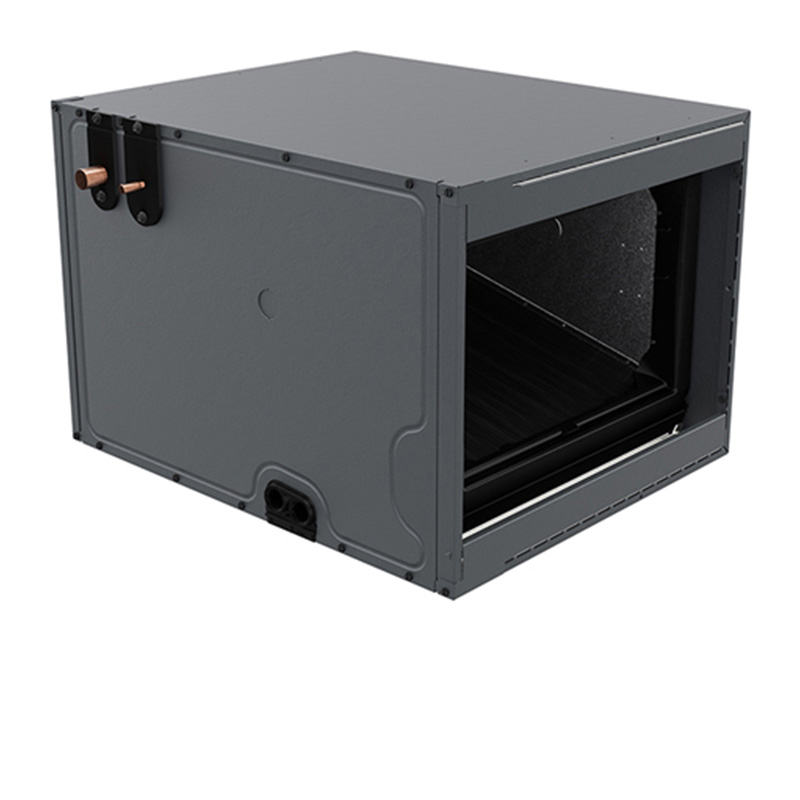
Horizontal means the air handler cabinet is oriented on its side, with airflow moving lengthwise rather than vertically, which is standard for attic platforms and certain crawl-space setups. Most experienced HVAC technicians have worked with horizontal configurations, but it is worth confirming when getting quotes, since an installer unfamiliar with horizontal systems can introduce issues that affect airflow, drainage, and long-term performance.
What are the most common repairs I should budget for over the first 10 years?
Based on Goodman's documented failure patterns, dual-run capacitors are the most frequent service call and typically cost between 300 and 600 dollars to diagnose and replace. Evaporator coil leaks appear in a meaningful share of owner reports and are more expensive to address. A small minority of owners report refrigerant leaks within the first year, which usually points to an installation or charge issue rather than a manufacturing defect.
Does this system come with R-32 refrigerant pre-charged, or does the installer add it on-site?
Split systems like this one are not pre-charged from the factory. The refrigerant is added by the installing technician after the line set is run and the system is leak-tested and evacuated. Because a minority of early refrigerant leak reports trace back to install or charge issues, it is worth asking your installer to document the charge amount and perform a standing pressure test before startup.
How does Goodman's warranty work, and are there conditions I need to meet?
Goodman typically offers a 10-year parts warranty when the system is registered within a set window after installation, which drops to a shorter period if registration is missed. The warranty covers parts but not labor, so any repair during the warranty period still carries a technician service fee. Confirm registration requirements with your installer at the time of setup to avoid losing coverage.
Specifications
| Cooling capacity | 3.5 Ton |
| Efficiency | 13.6 SEER2 |
| Furnace output | 80000 BTU |
| Configuration | Horizontal |
| Refrigerant | R-32 |