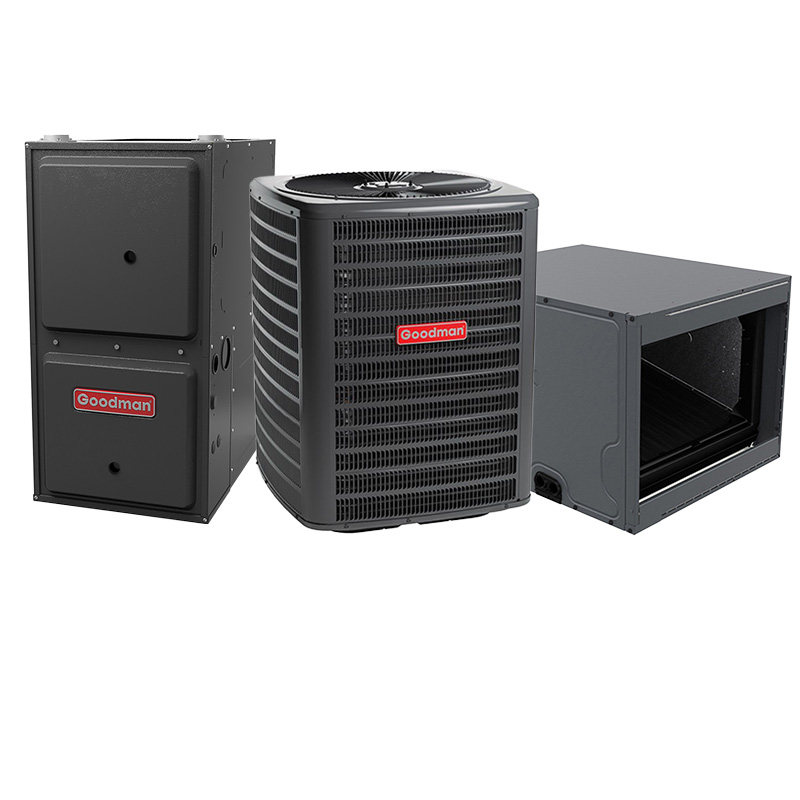
Goodman R32 3.5 Ton 13.6 SEER2 80000 BTU 80% Two Stage 9-Speed ECM Gas Furnace and Air Conditioner System – Horizontal
View on AC Direct see your lowest price →Check current price on AC Direct →
Key features
- 3.5-ton R-32 cooling at 13.6 SEER2, meeting federal minimums for most U.S. climate regions
- 80,000 BTU two-stage gas furnace at 80% AFUE for reduced temperature swings and short-cycling
- Nine-speed ECM blower motor cuts fan electricity use versus standard PSC motors
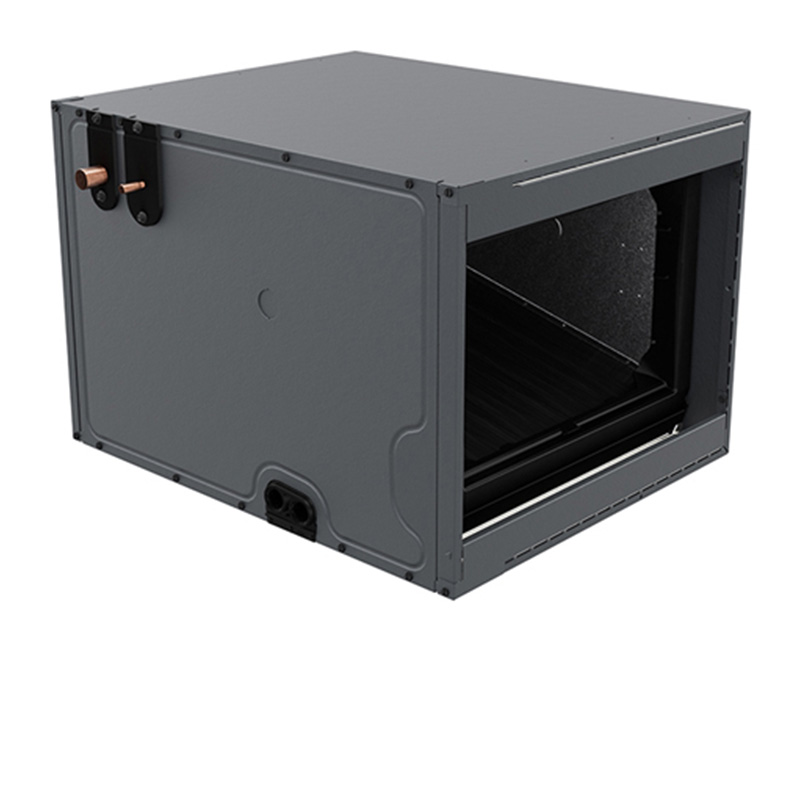
- Horizontal cabinet design built for crawl spaces, low attics, and manufactured-home pads
- R-32 refrigerant with lower global-warming potential than legacy R-410A systems
- Factory-matched system simplifies load calculations and equipment compatibility verification
About this system
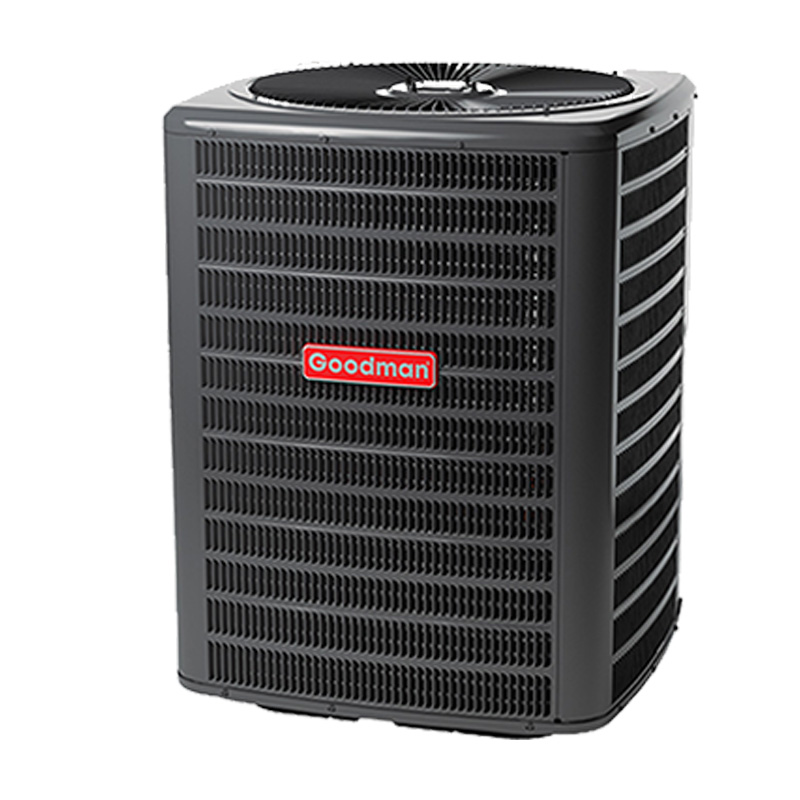
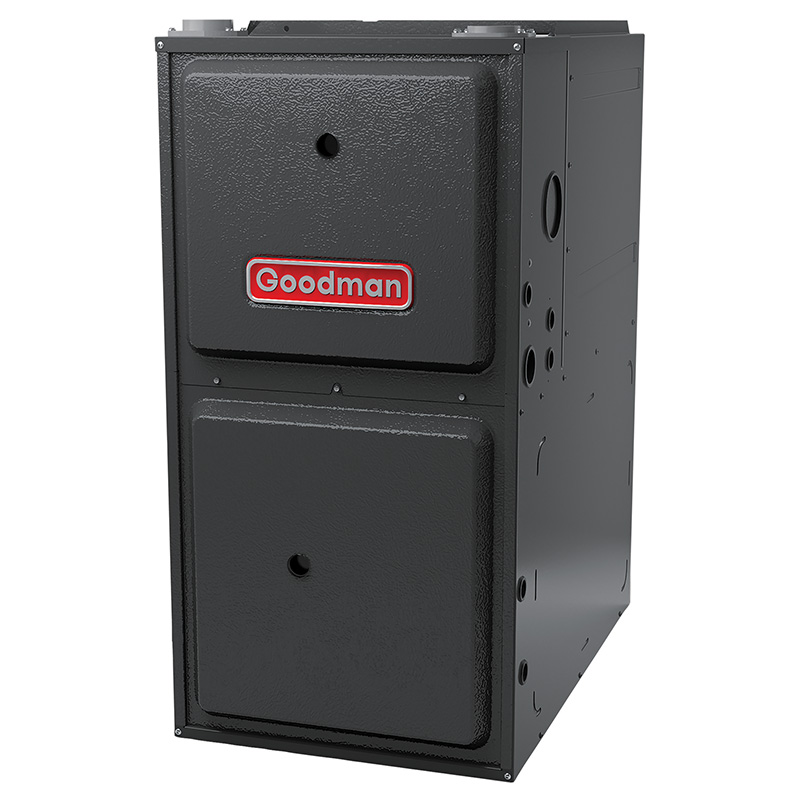
This Goodman horizontal package combines a 3.5-ton R-32 air conditioner rated at 13.6 SEER2 with an 80,000 BTU, 80% AFUE two-stage gas furnace in a single horizontal cabinet. The horizontal configuration is purpose-built for tight spaces where a vertical unit simply will not fit, including crawl spaces, low attic platforms, and some manufactured-home installations. R-32 refrigerant carries a lower global-warming potential than R-410A, and it is now the industry direction as R-410A is phased out, so parts availability should remain reasonable over the system’s expected lifespan.
The two-stage heating and the nine-speed ECM blower motor are the features that separate this unit from entry-level single-stage alternatives. Two-stage heating means the furnace runs at a lower fire rate during mild weather, reducing temperature swings and short-cycling. The ECM motor adjusts airflow incrementally, which lowers blower electricity consumption compared with a standard PSC motor and gives the system a better chance of maintaining even temperatures room to room. At 13.6 SEER2, this unit clears the federal minimum efficiency standard for most regions but sits at the lower end of today’s mid-efficiency range, so operating costs will be higher than a 16 or 18 SEER2 alternative over the same number of cooling hours.
Who benefits most? Homeowners replacing an older package unit in a crawl space or similar horizontal-only location, working with a tight upfront budget, and planning to condition roughly 1,800 to 2,400 square feet in a climate with moderate cooling seasons. Those with high cooling loads, long hot summers, or plans to stay in the home 15-plus years should price out a higher-efficiency unit before committing here.
This Goodman horizontal package is a workable budget option for homeowners who need a horizontal configuration and cannot stretch to a premium brand, accepting that a 13.6 SEER2 rating means higher monthly operating costs and that Goodman's long-term reliability leans heavily on installation quality and prompt capacitor maintenance. The two-stage furnace and ECM blower add real comfort value at this price point, but buyers should budget for a capacitor replacement somewhere in years four through eight and keep an eye on the evaporator coil for signs of refrigerant loss.
Overall score is the average of the five ratings above.
What we like
- Priced roughly 15 to 25 percent below comparable Carrier, Trane, and Lennox horizontal package units
- Two-stage heating reduces temperature swings compared with single-stage alternatives at the same efficiency tier
- Nine-speed ECM blower lowers fan energy consumption and improves airflow consistency
- R-32 refrigerant is the emerging industry standard, supporting parts availability going forward
- Factory-matched system reduces guesswork on equipment compatibility during installation
Trade-offs
- 13.6 SEER2 is near the low end of current mid-efficiency offerings, resulting in higher cooling operating costs over time
- Dual-run capacitors are the most frequently documented failure point and typically need replacement in years four through eight at a cost of roughly 300 to 600 dollars
- Compressor lifespan averages 10 to 14 years versus 15 to 20 years for premium-brand compressors, a real long-term cost consideration
- A minority of owners report refrigerant leaks within the first year, most often traced to installation or initial charge issues rather than a factory defect
What homeowners and pros say about Goodman
Homeowners and HVAC professionals share a fairly consistent picture of Goodman equipment. On ConsumerAffairs, Goodman scores around 2.5 out of 5, a figure that reflects the complaint-heavy nature of that channel but also a real pattern: repair costs that feel manageable in the early years tend to climb noticeably after the seven-year mark. Google dealer reviews paint a somewhat warmer picture at roughly 3.8 out of 5 across hundreds of location-level reviews, where affordability is the praise that comes up most often and dissatisfaction is usually tied to a specific installation experience rather than the equipment itself. For this horizontal package, those dual data points suggest the unit can perform acceptably when set up correctly, but buyers should not assume a smooth decade-plus run without any attention.
Among the failure modes that show up consistently in owner feedback, dual-run capacitors are the standout concern, with failures typically appearing in years four through eight and repair bills running in the 300 to 600 dollar range. A meaningful share of owners also report evaporator coil leaks over the system’s life, and compressor longevity is a documented gap between Goodman and premium brands, with Goodman compressors averaging roughly 10 to 14 years versus 15 to 20 years for Trane or Lennox. First-year refrigerant leaks, while a minority occurrence, are worth noting because they are almost always linked to installation quality or initial charge errors rather than a factory problem. Experienced HVAC technicians consistently say that a well-installed Goodman outperforms a poorly installed premium unit, making contractor selection at least as important as the equipment choice itself for this horizontal configuration.
Sources: ConsumerAffairs Goodman owner reviews, AHRI Directory of Certified Product Performance, U.S. DOE appliance and equipment efficiency standards, Goodman product specification sheets.
What it costs to run
At 13.6 SEER2, cooling this 3.5-ton system for a typical 1200-hour cooling season at the U.S. average electricity rate of $0.17/kWh works out to roughly $630 per year in cooling, about $9 less per year than a minimum-efficiency 13.4 SEER2 unit of the same size. Your real cost depends on your climate and local rate.
Method: (42,000 BTU/hr ÷ 13.6 SEER2) × 1200 hours ÷ 1000 × $0.17/kWh. Rate source: U.S. EIA average; cooling hours: moderate-climate estimate.
How it compares
| Brand | Comparable model | SEER2 | Stage | Price position |
|---|---|---|---|---|
| Goodman | R-32 Horizontal Two-Stage 9-Speed ECM Package | 13.6 | Two-stage | Value pick |
| Carrier | WeatherMaster 48XC (single-stage package series) | 14.0 | Single-stage | Typically 15 to 25 percent more than this Goodman |
| Trane | Precedent XR14 (packaged unit series) | 14.0 | Single-stage | Typically 15 to 25 percent more than this Goodman |
| Lennox | LRP14 (packaged rooftop/horizontal series) | 14.0 | Single-stage | Typically 15 to 25 percent more than this Goodman |
Competitor rows are comparable single-stage units at similar efficiency; price is relative position, not a quote.
Questions about this system
Why is the horizontal configuration more expensive or harder to service than a standard upflow unit?
Horizontal package units are installed on their side in confined spaces like crawl spaces or low attic platforms, which limits a technician's working room and can make routine tasks such as capacitor or coil inspection more time-consuming. Labor costs for service calls are often higher than for a vertical unit in an open mechanical room, so budget accordingly when comparing total ownership costs.
Does R-32 refrigerant require any special handling or certifications compared with R-410A?
Yes. R-32 is mildly flammable and classified A2L under ASHRAE standards, so technicians must hold the appropriate certifications and use compatible recovery equipment. Most licensed HVAC contractors are already trained for A2L refrigerants as the industry transitions away from R-410A, but confirm your installer has the right equipment before scheduling work.
What does the nine-speed ECM blower actually do for comfort, and is it reliable?
The ECM motor adjusts fan speed in small increments to match the system's current heating or cooling demand, which smooths out temperature swings and reduces the on-off bluntness of a single-speed PSC motor. ECM motors are generally more durable than PSC motors, though they carry a higher replacement cost if they do fail, typically several hundred dollars more in parts alone.
How likely is a capacitor failure, and what does it actually cost to fix?
Dual-run capacitor failure is the single most commonly reported repair on Goodman equipment. It typically surfaces between years four and eight, and most technicians charge in the 300 to 600 dollar range for parts and labor. The fix is straightforward for a qualified technician and rarely requires a full system shutdown for more than a day.
The system is listed without an AFUE figure in some places. What is the actual furnace efficiency?
The furnace in this package is rated at 80% AFUE, meaning 80 cents of every dollar spent on gas converts to usable heat. That meets federal minimums for most northern U.S. climate zones but is well below 90% or 96% AFUE condensing furnaces, so homeowners in colder climates with high heating demand should compare the long-term gas savings of a higher-AFUE unit against the higher upfront cost before deciding.
Specifications
| Cooling capacity | 3.5 Ton |
| Efficiency | 13.6 SEER2 |
| Furnace output | 80000 BTU |
| Configuration | Horizontal |
| Refrigerant | R-32 |