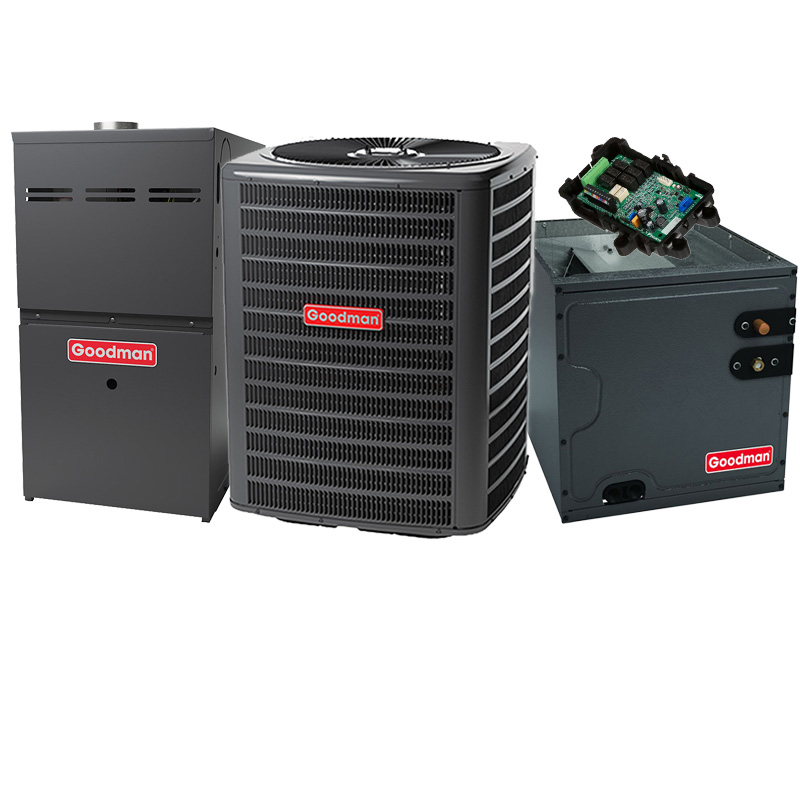
Goodman 3.5 Ton 14 SEER2 100000 BTU 80% Two-Stage Gas Furnace With R32 Air Conditioner Condenser And Coil System – Upflow
View on AC Direct see your lowest price →Check current price on AC Direct →
Key features
- 3.5-ton cooling capacity with 14 SEER2 efficiency rating
- 100,000 BTU two-stage gas furnace at 80% AFUE
- R-32 refrigerant with lower global warming potential than R-410A
- Upflow furnace configuration for basement or ground-level closet installs
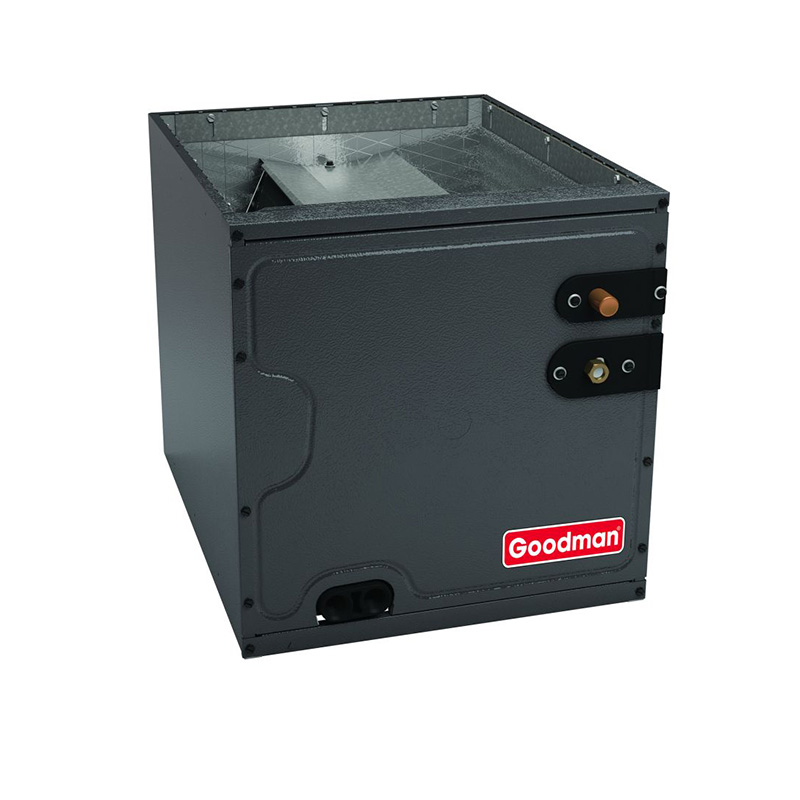
- Matched coil included, reducing component mismatch risk
- Two-stage heating provides quieter operation and more even heat distribution
About this system
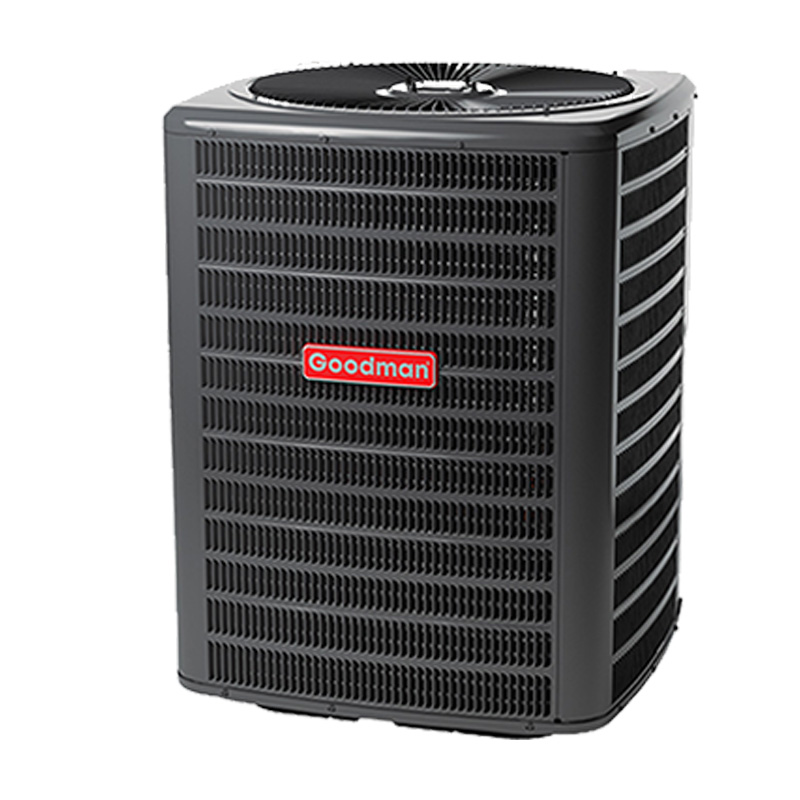
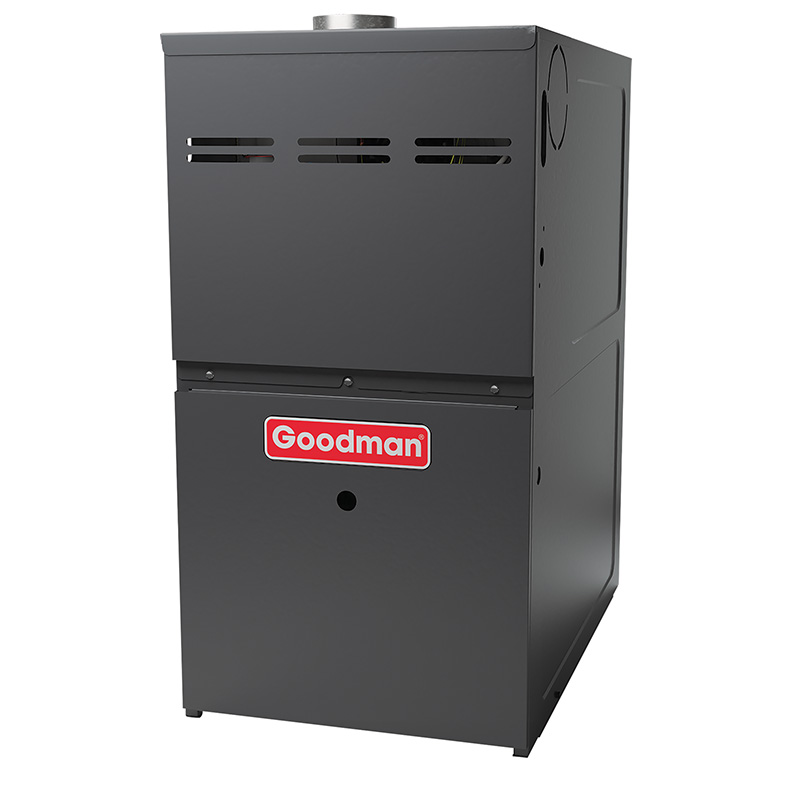
This Goodman bundle pairs a 3.5-ton, 14 SEER2 R-32 condensing unit with a matched evaporator coil and a 100,000 BTU 80% AFUE two-stage gas furnace in an upflow configuration. The package targets homes in the 1,800 to 2,600 square foot range that need both cooling and heating replaced at the same time and where budget is a real constraint. Buying the coil, condenser, and furnace together from a single manufacturer simplifies warranty tracking and reduces the risk of mismatched components.
The 14 SEER2 rating sits at the federal minimum efficiency tier for most U.S. climate zones, so operating costs will be higher than a 16 or 18 SEER2 system over the equipment’s lifetime. The two-stage furnace is a meaningful upgrade over single-stage: running on low fire most of the time means quieter operation, more even temperatures room to room, and reduced short-cycling. R-32 refrigerant carries a lower global warming potential than the R-410A it replaces and is increasingly the industry standard, though it does require technicians certified to handle its mildly flammable classification. The upflow furnace suits basements and closets where supply air exits the top of the unit.
This Goodman system delivers reliable whole-home comfort at a price point noticeably below Carrier, Trane, and Lennox equivalents, making it a reasonable choice when upfront cost is the deciding factor. The two-stage furnace adds genuine comfort value, but the 14 SEER2 cooling efficiency is entry-level, and Goodman's documented repair history after year seven means you should budget for maintenance. Installation quality will do more to determine how long this system lasts than any spec on the sheet.
Overall score is the average of the five ratings above.
What we like
- Upfront cost runs 15 to 25 percent below comparable Trane, Lennox, and Carrier bundles
- Two-stage furnace reduces short-cycling and improves room-to-room temperature consistency
- Matched coil, condenser, and furnace from one manufacturer simplifies warranty claims
- R-32 refrigerant is lower GWP and increasingly supported by certified technicians
- 80% AFUE furnace meets code in most regions and is widely serviceable
Trade-offs
- 14 SEER2 is minimum-tier efficiency; energy bills will be higher than with a mid- or high-efficiency condenser
- Dual-run capacitor failures and evaporator coil leaks are documented recurring issues in owner reviews
- Compressor longevity averages 10 to 14 years, shorter than the 15 to 20 years reported for premium brands
- Overall performance is heavily dependent on installer quality; a poor charge or refrigerant leak in year one is a documented risk
What homeowners and pros say about Goodman
Homeowners who choose Goodman equipment most often cite the lower upfront cost as the deciding factor, and that sentiment shows up consistently in Google dealer reviews, where the brand averages around 3.8 out of 5 stars across hundreds of location-level reviews. Affordability is the dominant praise. The picture on ConsumerAffairs is noticeably different, where Goodman sits at roughly 2.5 out of 5, and that channel skews heavily toward people reporting problems. The recurring theme in those complaints is repair costs climbing after approximately year seven, which aligns with the documented compressor lifespan of 10 to 14 years, shorter than the 15 to 20 years more commonly reported for premium-tier brands.
HVAC technicians who work on Goodman equipment regularly will tell you the dual-run capacitor is the part they replace most often on these systems, typically a quick and relatively inexpensive fix in the 300 to 600 dollar range. More consequential are evaporator coil leaks, which appear in a meaningful share of owner reviews and carry a higher repair cost. A minority of owners also report refrigerant leaks in the first year, something technicians generally attribute to installation errors or an improper charge rather than a factory defect in the unit itself. For this particular system, with its R-32 refrigerant and two-stage furnace, the message from the trade is consistent: a careful, experienced installer matters as much as the equipment brand on the side of the cabinet.
Sources: ConsumerAffairs Goodman owner reviews, AHRI Directory of Certified Product Performance, U.S. DOE appliance and equipment efficiency standards, Goodman product specification sheets.
What it costs to run
At 14 SEER2, cooling this 3.5-ton system for a typical 1200-hour cooling season at the U.S. average electricity rate of $0.17/kWh works out to roughly $612 per year in cooling, about $27 less per year than a minimum-efficiency 13.4 SEER2 unit of the same size. Your real cost depends on your climate and local rate.
Method: (42,000 BTU/hr ÷ 14 SEER2) × 1200 hours ÷ 1000 × $0.17/kWh. Rate source: U.S. EIA average; cooling hours: moderate-climate estimate.
How it compares
| Brand | Comparable model | SEER2 | Stage | Price position |
|---|---|---|---|---|
| Goodman | 3.5T 14 SEER2 R-32 with 100K BTU 80% Two-Stage Furnace (this system) | 14 | Two-stage furnace / single-stage cooling | Value pick |
| Carrier | Comfort 14 Series (CA14NA / 58SB or 58CV furnace bundle) | 14 | Single-stage | Typically 15 to 25 percent more than this Goodman bundle |
| Trane | XR14c with S8X1 80% furnace | 14 | Single-stage | Typically 15 to 25 percent more than this Goodman bundle |
| Lennox | Merit 14ACX with ML180 80% furnace | 14 | Single-stage | Typically 15 to 25 percent more than this Goodman bundle |
Competitor rows are comparable single-stage units at similar efficiency; price is relative position, not a quote.
Questions about this system
Is 14 SEER2 going to cost me significantly more to run than a higher-efficiency unit?
Yes, meaningfully so in warm climates. A 16 or 18 SEER2 system will use noticeably less electricity per cooling hour, and the gap adds up over a full summer. If you are in a region with long, hot summers, the lifetime energy savings from a higher-efficiency unit can offset the higher purchase price within five to eight years.
What is the warranty on this Goodman system and what does it actually cover?
Goodman typically offers a 10-year parts warranty when the equipment is registered within a specified window after installation, and a limited lifetime warranty on the heat exchanger. Labor is not covered, which is important because labor often represents the larger portion of a repair bill. Confirm registration requirements with your installer at the time of commissioning.
My technician mentioned R-32 requires special handling. Is that a problem for future service calls?
R-32 is classified as mildly flammable (A2L), so technicians need specific certification and equipment to work with it safely. It is now common enough that most established HVAC companies in populated areas have certified staff, but if you are in a rural area you should confirm this with local contractors before purchasing.
What are the most common repairs I should expect and roughly what do they cost?
The most frequently reported failure on Goodman equipment is the dual-run capacitor, which typically runs 300 to 600 dollars including labor and is a straightforward fix. Evaporator coil leaks are also documented in owner reviews and are more expensive to address. After roughly year seven, some owners report repair frequency increasing, so a service agreement or a dedicated repair fund is worth considering.
Does the upflow configuration limit where I can install the furnace?
Upflow means conditioned air exits the top of the furnace and feeds a supply plenum above it, which works well in a basement, a main-floor utility closet, or a crawl-space installation where ductwork runs overhead. It is not the right configuration for attic or horizontal applications; those require a different furnace orientation, so confirm your existing duct layout before ordering.
Specifications
| Cooling capacity | 3.5 Ton |
| Efficiency | 14 SEER2 |
| Furnace output | 100000 BTU |
| Configuration | Upflow |
| Refrigerant | R-32 |