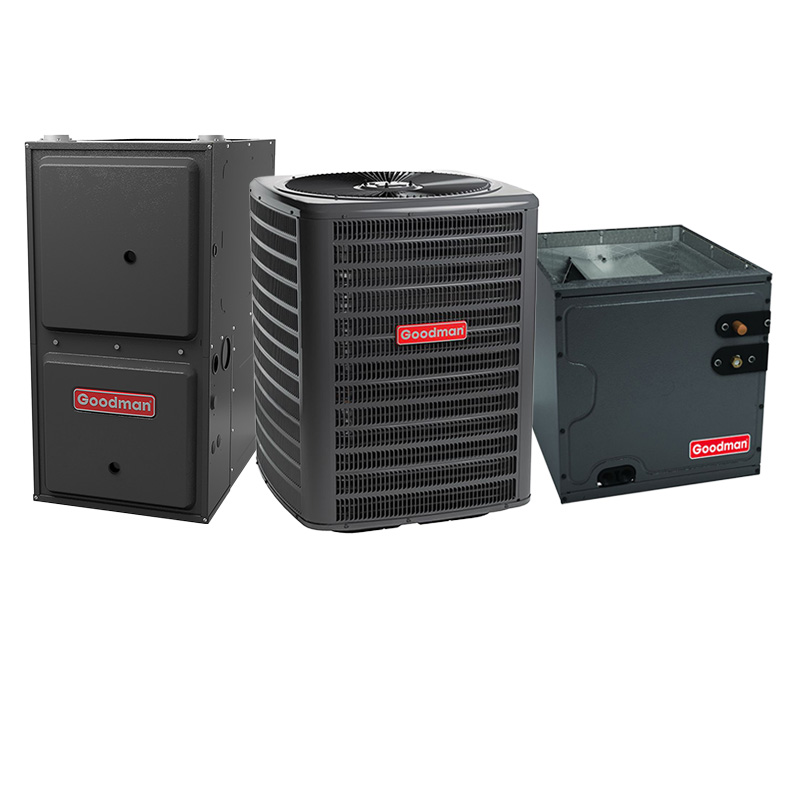
Goodman R32 3.5 Ton 13.8 SEER2 100000 BTU 80% Two Stage 9-Speed ECM Gas Furnace and Air Conditioner System – Upflow
View on AC Direct see your lowest price →Check current price on AC Direct →
Key features
- 3.5-ton cooling capacity with 13.8 SEER2 efficiency rating
- 100,000 BTU two-stage gas furnace at 80% AFUE
- Nine-speed ECM variable blower motor for quieter, more consistent airflow
- R-32 refrigerant with lower global warming potential than R-410A
- Upflow configuration for basement or first-floor mechanical room installs
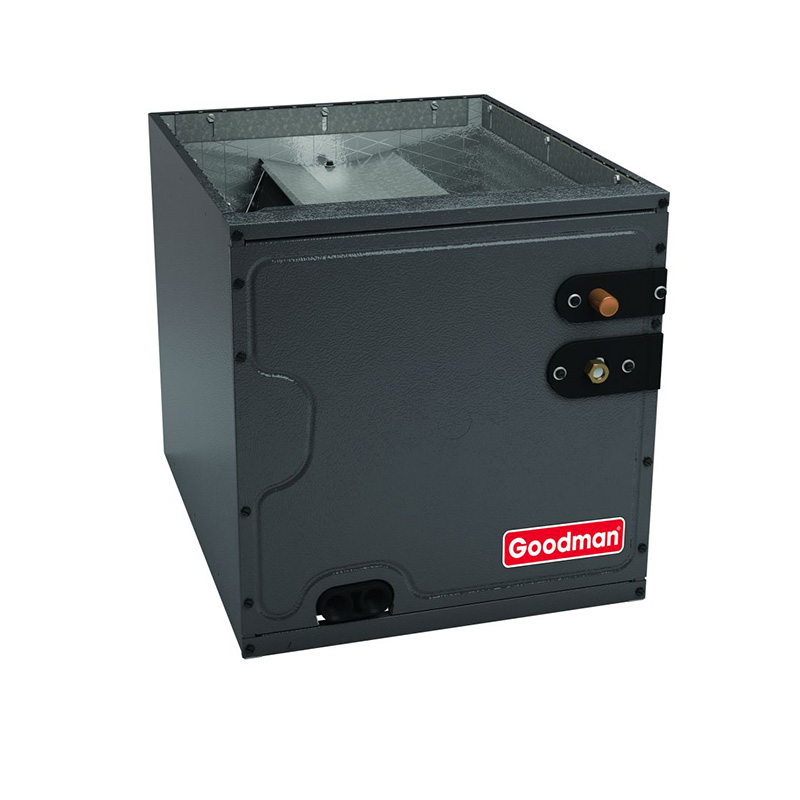
- Factory-matched system designed for straightforward coil and lineset pairing
About this system
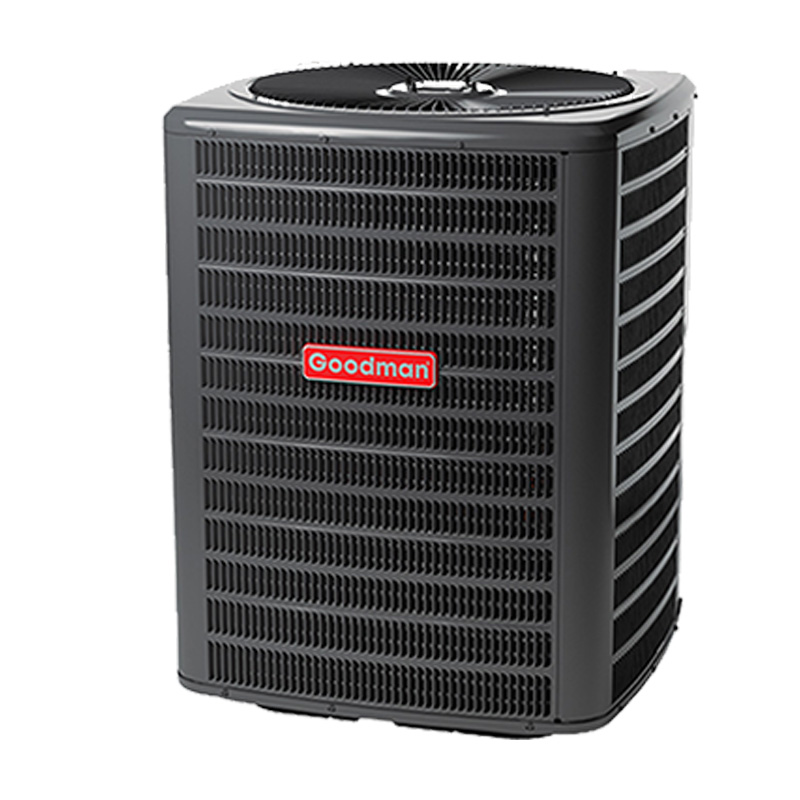
This Goodman bundle pairs a 3.5-ton R-32 air conditioner rated at 13.8 SEER2 with a 100,000 BTU, 80% AFUE two-stage gas furnace in an upflow configuration. The combination is sized for larger homes, typically in the 1,800 to 2,400 square foot range depending on climate and insulation, where a smaller system would struggle to keep up on the hottest and coldest days. R-32 refrigerant carries a lower global warming potential than the R-410A it replaces, which also means lower refrigerant costs if a top-off is ever needed.
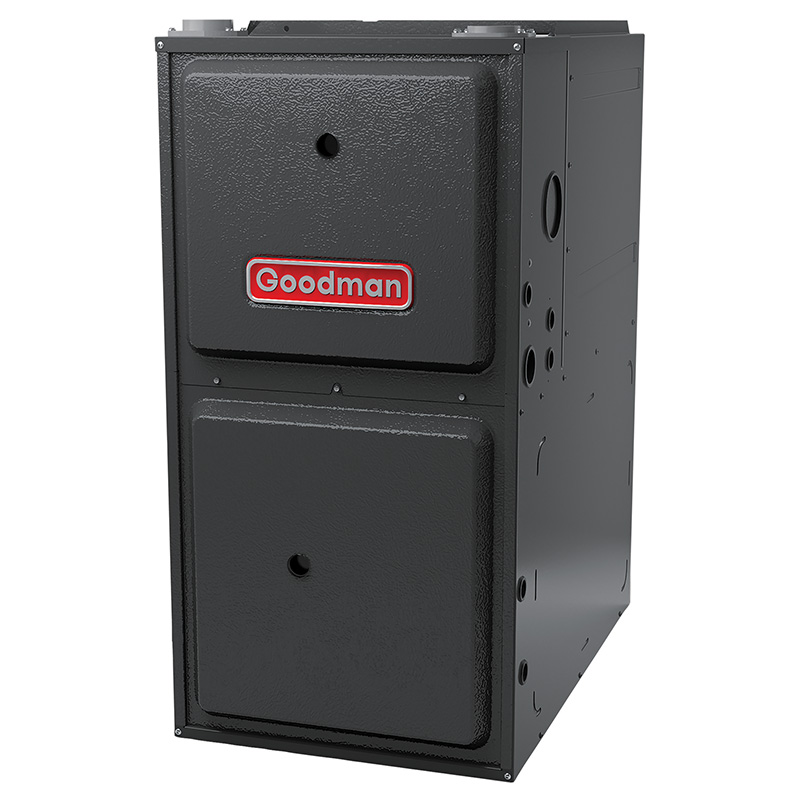
The two-stage furnace and nine-speed ECM blower motor are the real workhorses here. Two-stage heating lets the system run on a lower fire most of the time, only stepping up to full output when temperatures drop sharply, which cuts cycling and improves comfort over a single-stage setup. The ECM motor adjusts airflow in small increments, helping to manage humidity in cooling mode and reduce operating noise compared to a standard PSC motor. The upflow orientation suits homes where the air handler sits in a basement or a first-floor mechanical closet with ductwork above it.
At 13.8 SEER2, efficiency sits right at the new federal minimum for most northern regions and just at or slightly above it for many southern ones, so this is a code-compliant entry point rather than a high-efficiency choice. Buyers prioritizing long-term energy savings should compare the monthly operating cost difference against systems rated 16 SEER2 or higher before committing.
This Goodman bundle delivers a functional, code-compliant system at a price point typically 15 to 25 percent below comparable Carrier, Trane, or Lennox packages. The two-stage furnace and ECM blower add genuine comfort upgrades over single-stage entry-level alternatives, but long-term ownership costs depend heavily on install quality and awareness of Goodman's documented weak points. Buyers who want budget-friendly upfront costs and can accept a potentially shorter compressor lifespan than premium brands will find reasonable value here.
Overall score is the average of the five ratings above.
What we like
- Priced significantly below Carrier, Trane, and Lennox at similar efficiency tiers
- Two-stage furnace reduces temperature swings and lowers fuel use during mild cold
- Nine-speed ECM motor improves humidity control and lowers blower noise
- R-32 refrigerant is less expensive to handle than R-410A if service is needed
- Factory-matched bundle simplifies equipment selection and coil compatibility
Trade-offs
- Compressor lifespan averages 10 to 14 years versus 15 to 20 years for premium brands
- Evaporator coil leaks appear in a meaningful share of owner reports over time
- Dual-run capacitors fail more often than competing brands, though repairs typically run $300 to $600
- 13.8 SEER2 is at the efficiency floor, meaning higher monthly energy bills compared to 16+ SEER2 systems
What homeowners and pros say about Goodman
Homeowners who chose Goodman equipment largely echo what the ratings suggest: the upfront savings are real and frequently cited as the deciding factor, but satisfaction can diverge sharply after the first several years. On Google dealer reviews, Goodman installations tend to cluster around 3.8 out of 5, with affordability and quick turnaround as the most common compliments. The picture on ConsumerAffairs is more cautious, sitting around 2.5 out of 5, driven largely by owners who report repair costs climbing after roughly year seven, which aligns with the brand’s documented compressor lifespan of 10 to 14 years compared to 15 to 20 for premium-tier brands.
HVAC technicians who work on Goodman equipment regularly point to two recurring issues with this product line: dual-run capacitor failures, which are common but relatively affordable to fix at $300 to $600 per visit, and evaporator coil leaks that show up in a meaningful share of older units. A smaller number of owners report refrigerant leaks in the first year, which technicians typically attribute to installation or initial charge errors rather than a factory defect. The consistent message from experienced installers is that Goodman equipment performs closer to its rated life when the install is done carefully, with proper refrigerant charge, correct airflow, and good electrical connections, making contractor selection arguably as important as the equipment choice itself.
Sources: ConsumerAffairs Goodman owner reviews, AHRI Directory of Certified Product Performance, U.S. DOE appliance and equipment efficiency standards, Goodman product specification sheets.
What it costs to run
At 13.8 SEER2, cooling this 3.5-ton system for a typical 1200-hour cooling season at the U.S. average electricity rate of $0.17/kWh works out to roughly $621 per year in cooling, about $18 less per year than a minimum-efficiency 13.4 SEER2 unit of the same size. Your real cost depends on your climate and local rate.
Method: (42,000 BTU/hr ÷ 13.8 SEER2) × 1200 hours ÷ 1000 × $0.17/kWh. Rate source: U.S. EIA average; cooling hours: moderate-climate estimate.
How it compares
| Brand | Comparable model | SEER2 | Stage | Price position |
|---|---|---|---|---|
| Goodman | R-32 3.5 Ton 13.8 SEER2 / 100K BTU 80% Two-Stage Bundle | 13.8 | Two-stage | Value pick |
| Carrier | Comfort 14 (CA14NA / 58TP) bundled system | ~14 | Single-stage | Typically 15 to 25 percent more than Goodman |
| Trane | XR14 / S8X1 bundled system | ~14 | Single-stage | Typically 15 to 25 percent more than Goodman |
| Lennox | Merit 14ACX / ML180 bundled system | ~14 | Single-stage | Typically 15 to 25 percent more than Goodman |
Competitor rows are comparable single-stage units at similar efficiency; price is relative position, not a quote.
Questions about this system
Is 3.5 tons the right size for my house, or should I go up to 4 tons?
Tonnage should be determined by a Manual J load calculation based on your home's square footage, insulation, window area, and climate zone, not rules of thumb alone. Oversizing a system causes short cycling, poor humidity removal, and extra wear on the equipment, so have your contractor run the numbers before ordering.
What does 80% AFUE mean for my heating bills compared to a 96% furnace?
An 80% AFUE furnace converts 80 cents of every dollar of gas into heat, with 20 cents lost through the flue. A 96% AFUE unit loses only 4 cents per dollar, which can translate to meaningful savings in colder climates with long heating seasons. In mild climates with short winters, the payback period on the higher-efficiency unit stretches out considerably.
What is the warranty on this Goodman system and what do I need to do to activate it?
Goodman typically offers a 10-year parts warranty when the equipment is registered within a set window after installation, often 60 days. Failing to register usually drops coverage to a shorter base period, so registration immediately after install is important. The compressor and heat exchanger often carry separate coverage terms, so review the warranty card specific to these model numbers.
How serious is the capacitor failure issue, and is it something I should budget for?
Dual-run capacitor failure is the most commonly reported repair on Goodman equipment and usually shows up as the system failing to start or the condenser fan stopping. It is generally a straightforward, low-cost fix in the $300 to $600 range when caught quickly, but it is worth keeping that repair fund available, particularly after year five.
Does R-32 refrigerant require any special handling or certifications that my HVAC tech might not have?
R-32 is classified as a mildly flammable refrigerant (A2L), which means technicians need specific training and equipment to handle it safely. Most licensed HVAC contractors in markets where R-32 equipment is being sold are already getting certified, but it is worth confirming your installer is qualified before scheduling service, particularly for any future repairs involving the refrigerant circuit.
Specifications
| Cooling capacity | 3.5 Ton |
| Efficiency | 13.8 SEER2 |
| Furnace output | 100000 BTU |
| Configuration | Upflow |
| Refrigerant | R-32 |