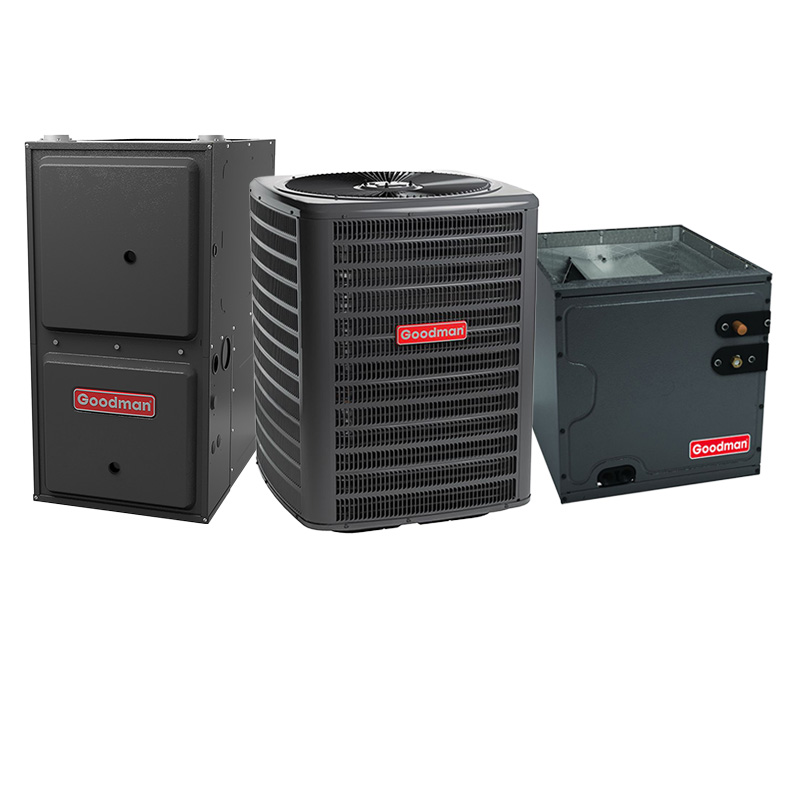
Goodman R32 3.5 Ton 13.8 SEER2 120000 BTU 80% Two Stage 9-Speed ECM Gas Furnace and Air Conditioner System – Upflow
View on AC Direct see your lowest price →Check current price on AC Direct →
Key features
- 3.5-ton, 13.8 SEER2 two-stage air conditioner using R-32 refrigerant
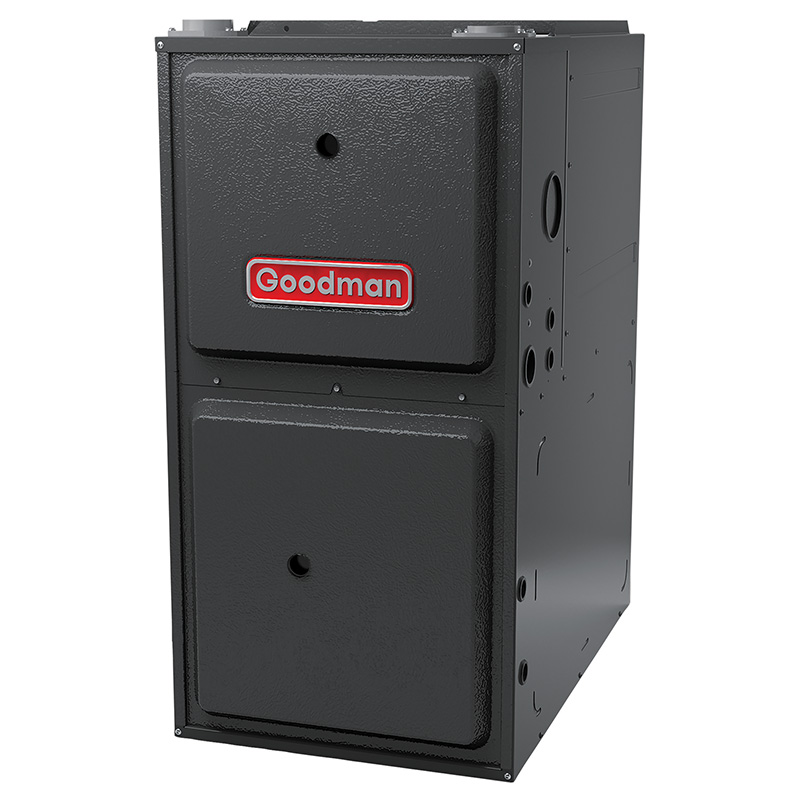
- 120,000 BTU upflow gas furnace at 80% AFUE
- Nine-speed ECM variable-speed blower motor for quieter, more efficient airflow
- Two-stage compressor reduces short-cycling and improves dehumidification on mild days
- R-32 refrigerant with lower global-warming potential than R-410A
- Upflow configuration suits basement or ground-level closet installations
About this system
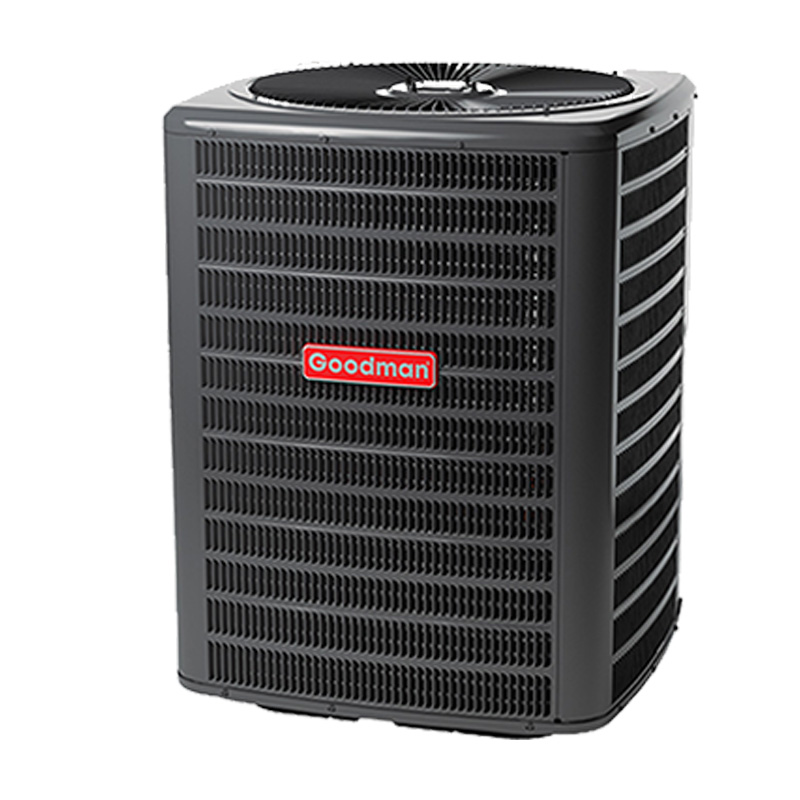
This Goodman bundle pairs a 3.5-ton R-32 split air conditioner rated at 13.8 SEER2 with a 120,000 BTU upflow gas furnace running at 80% AFUE. The combination is sized for homes in the 1,800 to 2,600 square-foot range, depending on climate zone, ceiling height, and insulation quality. R-32 refrigerant carries a lower global-warming potential than the R-410A it replaces, and it operates at slightly different pressures, so technicians working on this system will need to be familiar with the newer refrigerant and use compatible tools and recovery equipment.
The two-stage cooling compressor and nine-speed ECM blower motor are the real selling points here. Two-stage operation lets the system run at a reduced capacity on mild days rather than short-cycling at full blast, which improves humidity removal, evening out comfort noticeably compared to single-stage equipment. The variable-speed ECM motor uses significantly less electricity than a standard PSC blower and runs quieter at lower speeds. For an upflow installation, the furnace sits in a basement or ground-level closet and blows conditioned air upward through the duct system, the most common residential configuration in the northern and central United States.
At 80% AFUE, roughly one in five BTUs of natural gas is lost up the flue rather than heating your home. That is the entry-level efficiency tier for modern furnaces. Homeowners in cold climates who run their heat heavily from October through April will likely find that the incremental cost of stepping up to a 96% or higher AFUE unit pays back over time, but for moderate-heat climates or homes where cooling costs dominate, this furnace tier is a reasonable fit.
This Goodman system delivers genuine two-stage comfort and an ECM blower at a price point that undercuts comparable Carrier, Trane, and Lennox equipment by 15 to 25 percent. The trade-off is a brand history that shows more post-year-7 repair events and a shorter average compressor lifespan than premium competitors. Whether that gap matters depends heavily on how well it is installed and whether you keep up with seasonal maintenance.
Overall score is the average of the five ratings above.
What we like
- Two-stage cooling noticeably improves humidity control versus single-stage units at this price tier
- Nine-speed ECM blower reduces electricity use and noise compared to standard PSC motors
- R-32 refrigerant is more environmentally friendly and increasingly supported by service technicians
- Priced 15 to 25 percent below comparable Trane, Carrier, and Lennox systems, lowering the upfront investment
- Upflow configuration is straightforward for most residential duct layouts, giving installers a wide pool of qualified contractors
Trade-offs
- Dual-run capacitors are the most commonly reported failure point, typically around years 4 to 7, adding 300 to 600 dollars per service call
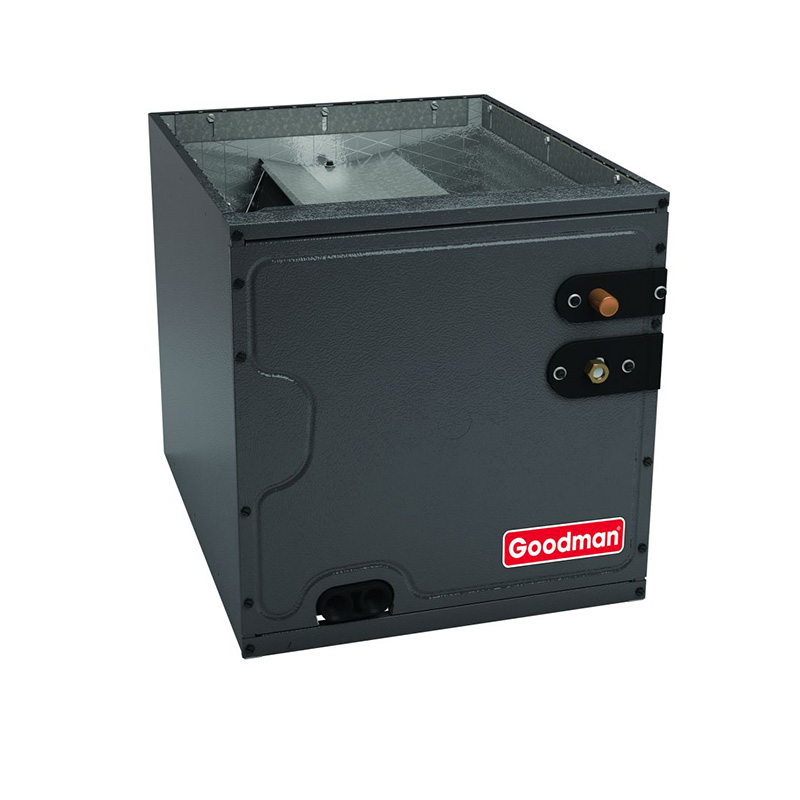
- Evaporator coil leaks appear in a meaningful share of owner reviews, a potential costly repair outside the warranty window
- Average compressor lifespan of 10 to 14 years trails the 15 to 20 years reported for premium brands
- 80% AFUE furnace loses 20 percent of fuel up the flue, making it a less efficient choice for homeowners in colder climates with long heating seasons
What homeowners and pros say about Goodman
Homeowners who praise Goodman on Google dealer reviews, where the brand sits around 3.8 out of 5 across hundreds of dealer locations, most often point to the affordable purchase price and the fact that the equipment works as expected when installed correctly. Affordability is the most consistent theme in positive feedback, and many owners report years of trouble-free operation when a skilled technician handles the setup. That last point matters: HVAC professionals consistently note that Goodman performance leans harder on installation quality than premium brands do, meaning a rushed or low-bid install can turn a cost-effective purchase into a repair headache.
The rougher side of the picture shows up on ConsumerAffairs, where Goodman scores around 2.5 out of 5 on a platform that attracts frustrated owners. The recurring complaint is repair costs that climb after roughly year 7. The most commonly documented failure is the dual-run capacitor, a relatively inexpensive fix in the 300 to 600 dollar range but one that recurs for some owners. Evaporator coil leaks appear in a meaningful share of reviews, and compressor longevity averages 10 to 14 years versus the 15 to 20 years owners report from premium brands. A small share of owners also report refrigerant leaks within the first year, a pattern that technicians typically attribute to install or initial charge issues rather than a manufacturing defect. For this specific two-stage R-32 system, the newer refrigerant adds a layer of service complexity worth factoring in when choosing an installer.
Sources: ConsumerAffairs Goodman owner reviews, AHRI Directory of Certified Product Performance, U.S. DOE appliance and equipment efficiency standards, Goodman product specification sheets.
What it costs to run
At 13.8 SEER2, cooling this 3.5-ton system for a typical 1200-hour cooling season at the U.S. average electricity rate of $0.17/kWh works out to roughly $621 per year in cooling, about $18 less per year than a minimum-efficiency 13.4 SEER2 unit of the same size. Your real cost depends on your climate and local rate.
Method: (42,000 BTU/hr ÷ 13.8 SEER2) × 1200 hours ÷ 1000 × $0.17/kWh. Rate source: U.S. EIA average; cooling hours: moderate-climate estimate.
How it compares
| Brand | Comparable model | SEER2 | Stage | Price position |
|---|---|---|---|---|
| Goodman | R-32 3.5 Ton 13.8 SEER2 Two-Stage with 9-Speed ECM | 13.8 | Two-stage | Value pick |
| Carrier | Performance 14 (24ACC4) Series | 13.8-14 | Single-stage | Typically 15 to 25 percent more than this Goodman system |
| Trane | XR14c Series | 14 | Single-stage | Typically 15 to 25 percent more than this Goodman system |
| Lennox | Merit ML14XC1 Series | 14 | Single-stage | Typically 15 to 25 percent more than this Goodman system |
Competitor rows are comparable single-stage units at similar efficiency; price is relative position, not a quote.
Questions about this system
Do I need a specially certified technician to work on an R-32 system, and will local HVAC companies be familiar with it?
R-32 is classified as mildly flammable, so technicians need specific training and compatible recovery equipment. Adoption is growing rapidly, but you should confirm that your installer and any future service technicians have R-32 experience before committing to this system, particularly if you live in a rural area with fewer service options.
Is 80% AFUE good enough for a cold-climate home, or should I upgrade the furnace?
In climates with mild winters or where cooling costs outweigh heating costs, 80% AFUE is workable. In the northern U.S. where you run heat five or more months a year, the fuel savings from a 96% or higher AFUE furnace often pay back the cost difference within five to eight years, making an upgrade worth considering.
What does two-stage cooling actually mean for day-to-day comfort compared to a single-stage unit?
A two-stage compressor runs at a lower capacity setting on mild days rather than cycling fully on and off. This means the system runs longer at lower intensity, which removes more moisture from the air and maintains steadier temperatures, reducing the clammy feeling that single-stage units can leave during shoulder-season humidity.
Goodman's ConsumerAffairs score is low. Should I be worried about long-term reliability?
Goodman carries roughly a 2.5 out of 5 on ConsumerAffairs, a platform where dissatisfied owners are more likely to post, so the score skews negative. Google dealer reviews land around 3.8 out of 5. The documented pattern is that repair frequency tends to climb after year 7, particularly capacitors and occasionally coil leaks, so budgeting for a service contract or maintaining an emergency repair fund is a reasonable precaution.
Is a 3.5-ton system the right size for my home, and what happens if it is oversized?
Proper sizing depends on a Manual J load calculation that factors in your climate zone, insulation, window area, and ceiling height. A 3.5-ton unit oversized for a given home will short-cycle, reducing humidity removal and increasing wear on the compressor and capacitors. Ask your contractor to perform or show you a load calculation before finalizing the equipment size.
Specifications
| Cooling capacity | 3.5 Ton |
| Efficiency | 13.8 SEER2 |
| Furnace output | 120000 BTU |
| Configuration | Upflow |
| Refrigerant | R-32 |