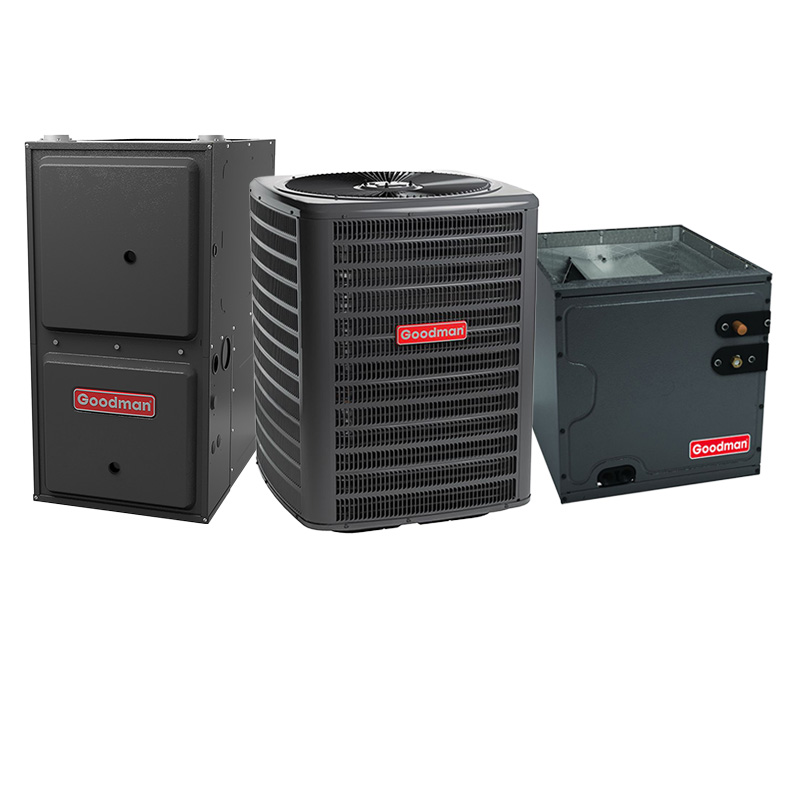
Goodman R32 3.5 Ton 13.8 SEER2 80000 BTU 80% Two Stage 9-Speed ECM Gas Furnace and Air Conditioner System – Upflow
View on AC Direct see your lowest price →Check current price on AC Direct →
Key features
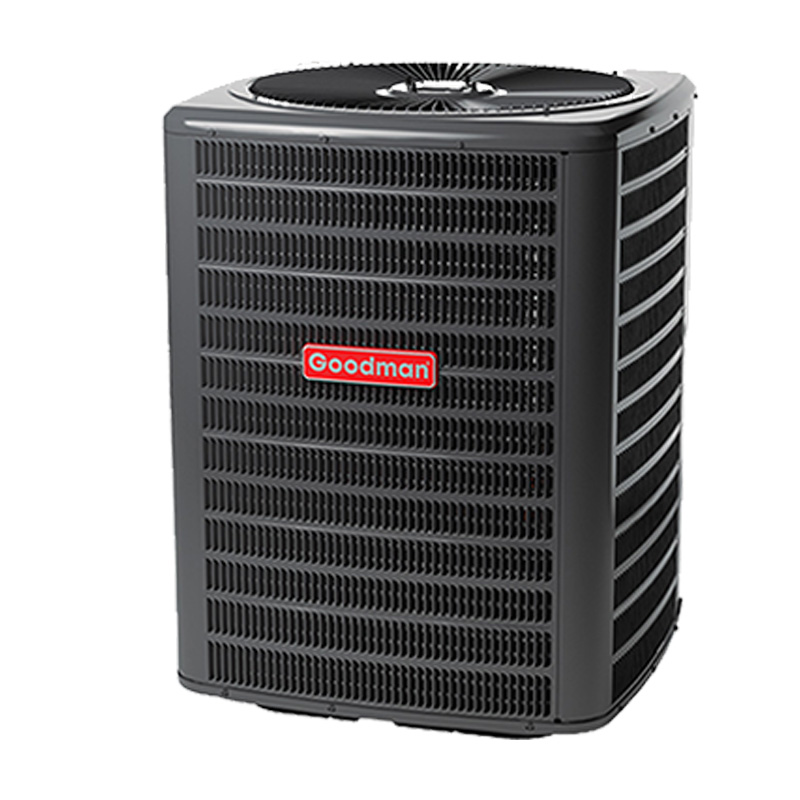
- 3.5-ton R-32 air conditioner rated at 13.8 SEER2, meeting current federal minimum efficiency standards
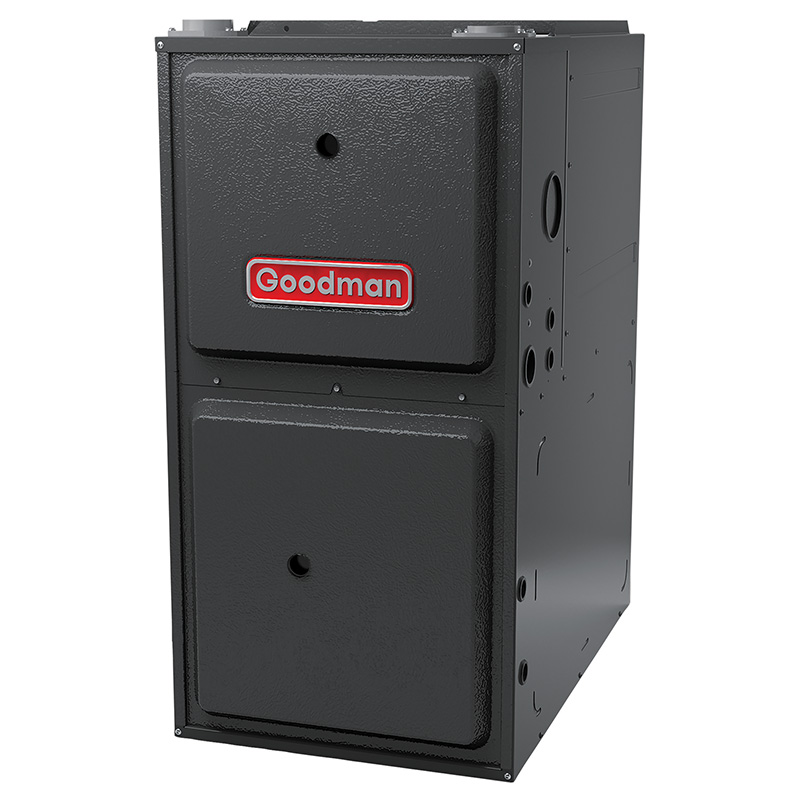
- 80,000 BTU two-stage gas furnace at 80% AFUE for smoother temperature control on most heating days
- Nine-speed ECM blower motor reduces fan electricity consumption compared with standard PSC motors
- R-32 refrigerant offers lower global-warming potential than legacy R-410A systems
- Upflow cabinet design for basement or ground-level closet installations with overhead ductwork
- Factory-matched system qualifies as a complete split-system bundle, simplifying permitting and AHRI certification
About this system
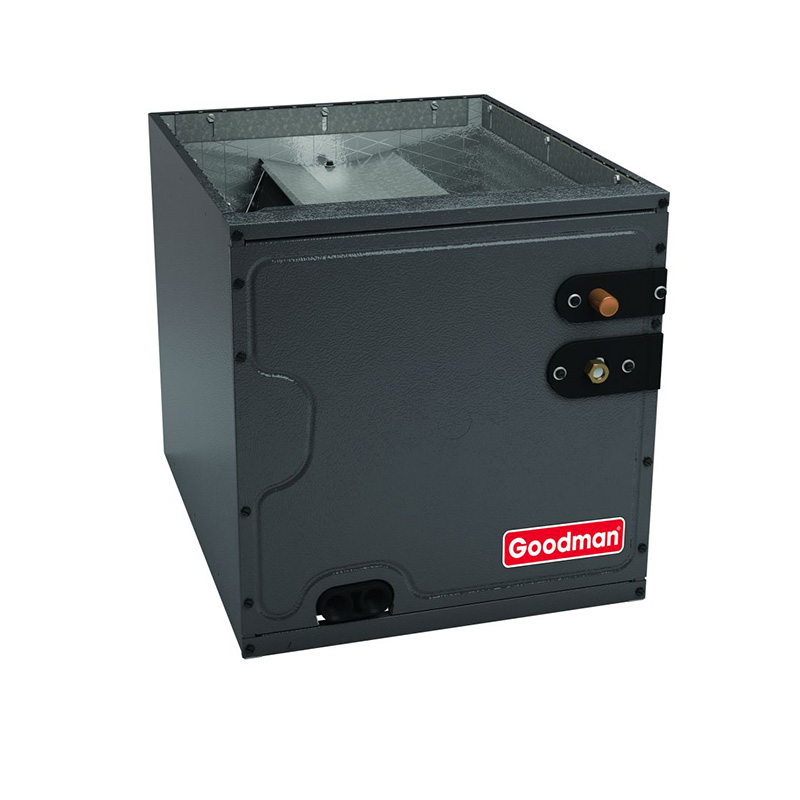
This Goodman bundle pairs a 3.5-ton R-32 central air conditioner rated at 13.8 SEER2 with an 80,000 BTU, 80% AFUE two-stage gas furnace in an upflow configuration. The combination is sized for homes roughly in the 1,800 to 2,400 square-foot range, depending on local climate, insulation quality, and layout. R-32 refrigerant carries a lower global-warming potential than the R-410A it replaces, and it operates at slightly higher efficiency per pound, which is part of why this system clears the federal minimum efficiency thresholds for most U.S. regions.
The two-stage furnace and the nine-speed ECM blower motor are the functional highlights here. Two-stage heating means the furnace runs at a reduced capacity most of the time and only ramps to full output on the coldest days, which smooths out temperature swings and tends to reduce short-cycling. The ECM (electronically commutated motor) blower is significantly more efficient than a standard PSC motor and can trim annual fan electricity costs noticeably over the life of the system. At 80% AFUE, however, roughly one dollar in five of your gas spend exits through the flue, so homeowners in cold climates with long heating seasons may want to weigh a 96% or 97% AFUE unit before committing.
Upflow configuration means the furnace pulls return air from the bottom and discharges conditioned air upward, which suits the most common residential basement or closet installations with ductwork running through a floor system above. Buyers should confirm their existing duct layout matches before ordering, as converting a horizontal or downflow system adds installation cost and complexity.
This Goodman system offers a reasonable entry point for homeowners who want two-stage comfort and an ECM blower without paying premium-brand prices, and the R-32 refrigerant future-proofs the refrigerant side for years to come. The 13.8 SEER2 rating is solidly baseline rather than high-efficiency, and Goodman's documented repair history after year seven means long-term ownership costs can erode some of the upfront savings. It is a sensible choice when budget is the primary constraint and a skilled installer is in the picture.
Overall score is the average of the five ratings above.
What we like
- Priced roughly 15 to 25 percent below comparable Trane, Carrier, and Lennox bundles at similar efficiency
- Two-stage furnace reduces short-cycling and improves comfort compared with single-stage alternatives
- Nine-speed ECM motor is a real efficiency and comfort upgrade over a standard fixed-speed blower
- R-32 refrigerant has lower environmental impact and is widely expected to remain available long-term
- Factory-matched bundle simplifies AHRI certification and can streamline the permitting process
Trade-offs
- 80% AFUE leaves meaningful efficiency gains on the table versus 96-97% two-stage alternatives, especially in cold climates
- 13.8 SEER2 is near the federal minimum and will cost more to operate annually than 16+ SEER2 systems
- Dual-run capacitors and evaporator coil leaks are the most commonly reported failure points, and repair frequency tends to climb after year seven based on owner accounts
- Compressor lifespan averages 10 to 14 years versus 15 to 20 years for premium-brand compressors, which affects total cost of ownership math
What homeowners and pros say about Goodman
Homeowners who post about Goodman equipment tend to fall into two camps that mirror the brand’s split ratings: those who got a clean install and sailed through the first several years with minimal issues, and those who hit component problems after the system aged past the seven-year mark. The brand’s ConsumerAffairs score sits at roughly 2.5 out of 5, a channel that skews toward dissatisfied owners, and the recurring complaint there is repair bills accumulating in the later years of ownership. Google dealer reviews average closer to 3.8 out of 5, where affordability consistently comes up as the reason people chose Goodman in the first place. Neither number is alarming on its own, but together they suggest a brand that delivers on its core promise of lower upfront cost while requiring owners to stay on top of maintenance.
HVAC technicians are generally straightforward about the failure patterns they see in the field. Dual-run capacitor failures are the most routine Goodman service call, and most pros consider it a minor repair in the 300 to 600 dollar range that is common across value-tier brands. More consequential are the evaporator coil leaks that appear in a notable share of owner accounts, and the compressor lifespan reality: Goodman compressors average roughly 10 to 14 years in service versus the 15 to 20 years technicians typically see from Trane, Carrier, or Lennox. For this specific bundle, the two-stage furnace and ECM blower are genuine comfort upgrades over single-stage alternatives at this price point, but pros consistently emphasize that install quality matters more with Goodman than it does with premium brands. A sloppy charge, an undersized line set, or poor duct static pressure can accelerate the failure timeline regardless of what the spec sheet says.
Sources: ConsumerAffairs Goodman owner reviews, AHRI Directory of Certified Product Performance, U.S. DOE appliance and equipment efficiency standards, Goodman product specification sheets.
What it costs to run
At 13.8 SEER2, cooling this 3.5-ton system for a typical 1200-hour cooling season at the U.S. average electricity rate of $0.17/kWh works out to roughly $621 per year in cooling, about $18 less per year than a minimum-efficiency 13.4 SEER2 unit of the same size. Your real cost depends on your climate and local rate.
Method: (42,000 BTU/hr ÷ 13.8 SEER2) × 1200 hours ÷ 1000 × $0.17/kWh. Rate source: U.S. EIA average; cooling hours: moderate-climate estimate.
How it compares
| Brand | Comparable model | SEER2 | Stage | Price position |
|---|---|---|---|---|
| Goodman | R-32 3.5-Ton 13.8 SEER2 / 80K BTU 80% Two-Stage Bundle (this system) | 13.8 | Two-stage | Value pick |
| Carrier | Performance 14 Series (24PAA / 58TP80) | 14.0 | Single-stage | Typically 15 to 25 percent more than this Goodman bundle |
| Trane | XR14c / S8X1 80% Series | 13.8-14.0 | Single-stage | Typically 15 to 25 percent more than this Goodman bundle |
| Lennox | Merit 14ACX / ML180 Series | 14.0 | Single-stage | Typically 15 to 25 percent more than this Goodman bundle |
Competitor rows are comparable single-stage units at similar efficiency; price is relative position, not a quote.
Questions about this system
Is 13.8 SEER2 going to cost me significantly more to run than a higher-efficiency unit?
Yes, meaningfully so in warm climates with long cooling seasons. A 16 SEER2 system uses roughly 13 to 15 percent less electricity for the same cooling output, which can add up to hundreds of dollars a year on a 3.5-ton unit running a full summer. In mild climates with short cooling seasons the gap narrows, but efficiency is a real operating-cost trade-off at this rating.
Will my existing R-410A line set work with this R-32 system?
Possibly, but it is not automatic. R-32 operates at higher pressures than R-410A, so your installer needs to verify that the existing line set material, diameter, and fittings meet manufacturer and local code requirements for R-32. Many installers recommend replacing or thoroughly flushing and pressure-testing old line sets rather than reusing them.
What are the most common repairs I should budget for over a 10-year ownership window?
Based on documented Goodman failure patterns, dual-run capacitor replacement is the most frequent call, typically costing between 300 and 600 dollars and usually a straightforward fix. Evaporator coil leaks show up in a meaningful share of owner reviews and are a more significant repair. After roughly year seven, overall repair frequency tends to increase, so setting aside a service fund is practical advice.
Does Goodman's warranty actually cover parts and labor, or just parts?
Goodman's registered warranty covers parts only; labor costs are the homeowner's responsibility. Registration within a set window after installation is required to access the full warranty term. Because labor often exceeds parts cost on a major repair, factor that exposure into your total cost-of-ownership comparison against brands that offer labor coverage through dealer programs.
The listing says upflow configuration. Can this furnace be converted to horizontal for an attic or crawlspace installation?
This specific unit is rated for upflow only. Installing it horizontally or in a downflow application would require a different cabinet configuration and is not supported by the manufacturer. If your installation requires horizontal or downflow, you need to spec a different model, and mixing configurations can void the warranty and create safety issues.
Specifications
| Cooling capacity | 3.5 Ton |
| Efficiency | 13.8 SEER2 |
| Furnace output | 80000 BTU |
| Configuration | Upflow |
| Refrigerant | R-32 |