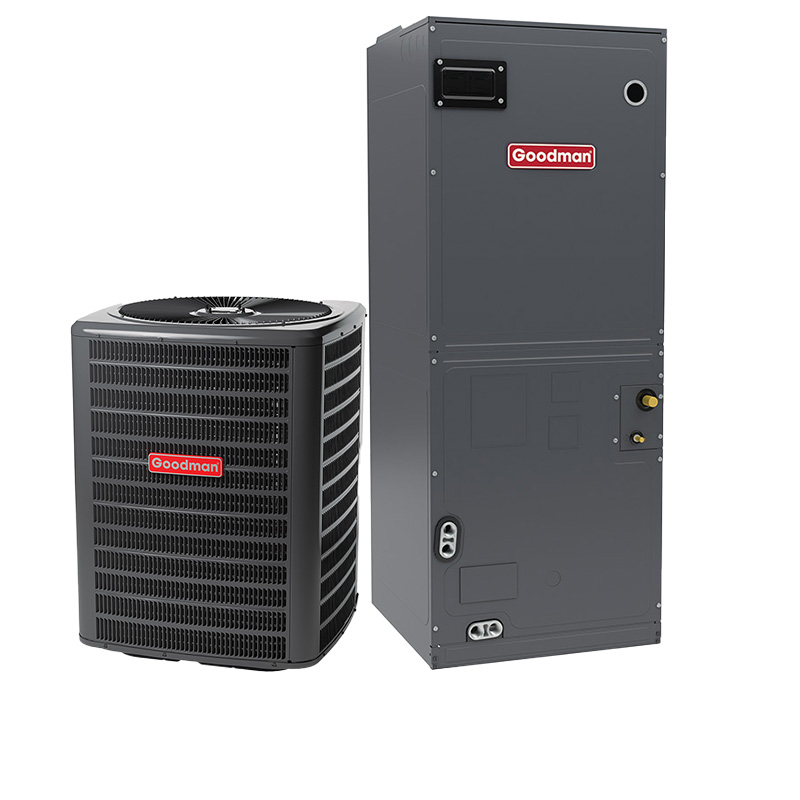
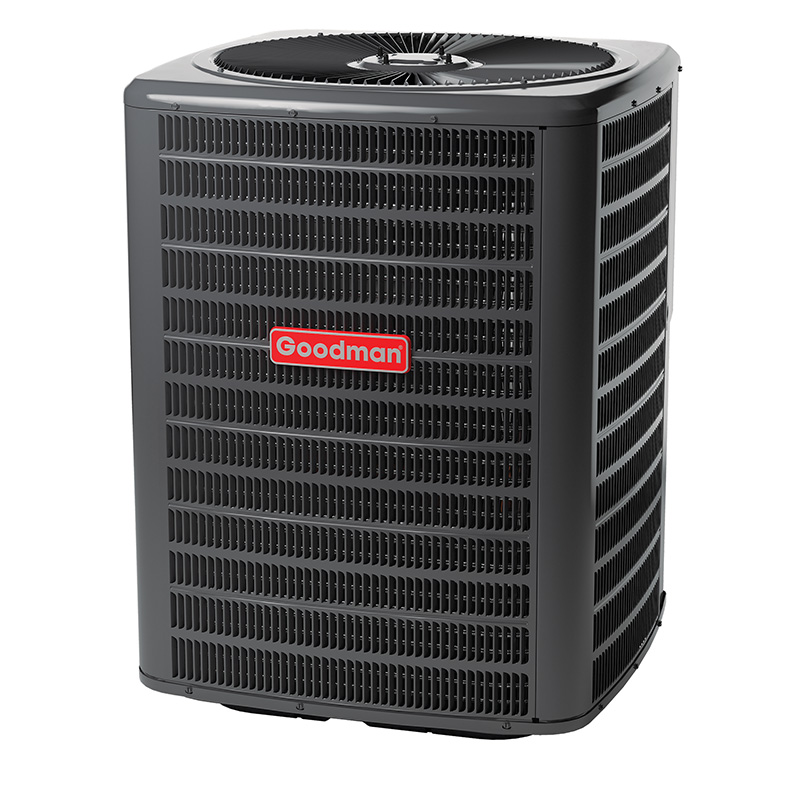
Goodman R32 3.5 Ton 15.2 SEER2 Cooling Only Split System
View on AC Direct see your lowest price →Check current price on AC Direct →
Key features
- 3.5-ton capacity, suited for roughly 1,800 to 2,200 sq ft depending on load calculation
- 15.2 SEER2 efficiency rating, meeting modern federal minimums with room to spare
- R-32 refrigerant with approximately 68 percent lower global warming potential than R-410A
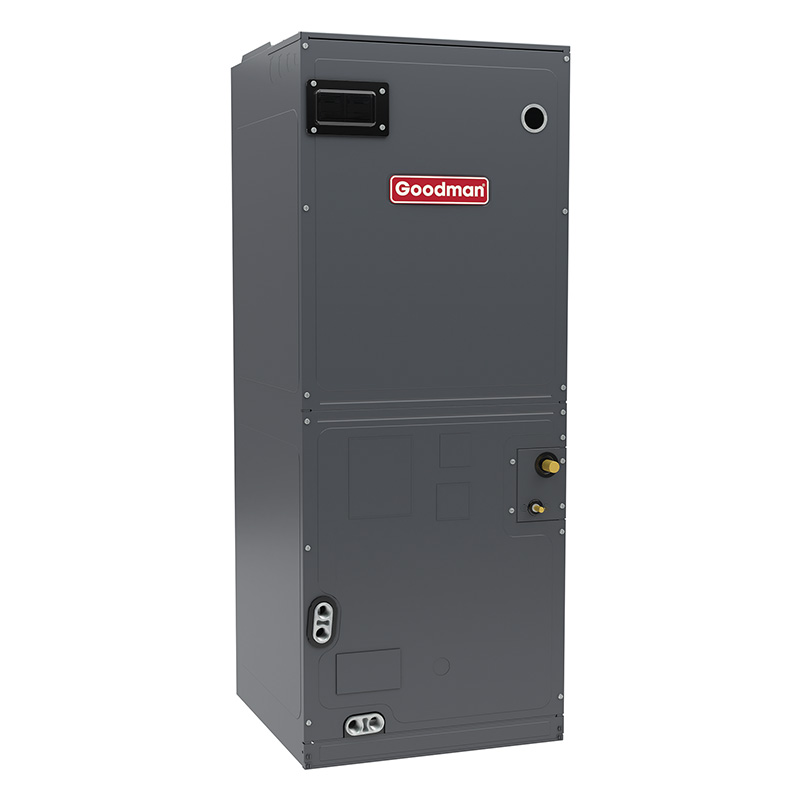
- Cooling-only split system design, pairs with an existing air handler or furnace
- Single-stage compressor operation for straightforward installation and service
- Priced approximately 15 to 25 percent below comparable Carrier, Trane, and Lennox units
About this system
The Goodman R-32 3.5-ton cooling-only split system is sized for homes in the 1,800 to 2,200 square foot range, depending on climate zone, insulation quality, and ceiling height. At 15.2 SEER2, it clears the federal minimum efficiency threshold in all U.S. regions by a meaningful margin without crossing into the premium-efficiency price tier, making it a practical pick for homeowners who want lower utility bills than a baseline unit delivers but are not ready to spend up for a 17 or 18 SEER2 system. The cooling-only configuration suits climates where a separate gas or electric furnace already handles heating, or where heat is simply not needed.
R-32 refrigerant is a notable spec here. Compared with the older R-410A it replaces, R-32 has a global warming potential roughly two-thirds lower, transfers heat more efficiently, and uses a smaller refrigerant charge to do the same work. On the practical side, R-32 systems require technicians who are properly certified for mildly flammable refrigerants, so confirming that your installer is qualified before scheduling is worth doing. As with all Goodman equipment, how this system performs over its lifespan depends heavily on correct installation, proper refrigerant charge, and adequate airflow across the evaporator coil.
This Goodman system delivers honest mid-tier efficiency at a value price point, and it will cool reliably for a decade or more when installed correctly by a qualified R-32 technician. The trade-off is a compressor lifespan and reliability track record that trails premium brands, along with documented failure modes that make a parts-and-labor extended warranty worth factoring into the total cost.
Overall score is the average of the five ratings above.
What we like
- Purchase price runs 15 to 25 percent below comparable Trane, Carrier, and Lennox equipment
- 15.2 SEER2 is a meaningful step above minimum-efficiency units and will reduce monthly cooling costs
- R-32 refrigerant is more environmentally responsible and slightly more efficient than R-410A
- Single-stage systems are simpler to service and parts are widely available through HVAC supply houses
- Cooling-only configuration keeps the system focused and avoids unnecessary complexity for all-electric or gas-heat homes
Trade-offs
- Compressor lifespan averages 10 to 14 years versus 15 to 20 years typical of premium-brand compressors
- Dual-run capacitor failures are the most commonly reported issue and, while inexpensive to fix, add to the long-term service cost picture
- A meaningful share of owner reviews cite evaporator coil leaks, which can be a costly mid-life repair
- R-32 installation requires a certified technician, limiting your service options compared with older R-410A equipment
What homeowners and pros say about Goodman
Homeowners who post about Goodman equipment on review platforms tend to cluster at the extremes. On ConsumerAffairs, where the platform skews heavily toward frustrated owners, Goodman sits at roughly 2.5 out of 5, with the recurring complaint being repair costs that start climbing around year seven. The specific failure modes that appear most often are dual-run capacitor failures, which are relatively inexpensive to fix but annoying, and evaporator coil leaks, which are not. A smaller share of owners describe refrigerant leaks within the first year, something HVAC technicians consistently attribute to installation error or an improper initial charge rather than a manufacturing defect. On Google dealer reviews, where the pool includes satisfied customers alongside dissatisfied ones, Goodman-installed systems average around 3.8 out of 5, with affordability cited most often as the reason buyers chose the brand.
HVAC professionals tend to hold a more nuanced view of Goodman than either the angry online reviews or the brand’s own marketing would suggest. Many techs will install Goodman without hesitation for price-sensitive customers, noting that a well-installed Goodman will outperform a poorly installed premium unit every time. The caution they consistently raise is compressor longevity: Goodman compressors tend to average 10 to 14 years in the field, compared with 15 to 20 years that experienced installers associate with Trane, Carrier, and Lennox. For a buyer planning to sell the home in eight years, that gap may not matter much. For someone planning a 20-year stay, the lifetime cost of ownership calculation gets closer than the upfront price difference implies. On this R-32 system specifically, pros also note the importance of confirming your installer is current on A2L refrigerant handling before the job starts.
Sources: ConsumerAffairs Goodman owner reviews, AHRI Directory of Certified Product Performance, U.S. DOE appliance and equipment efficiency standards, Goodman product specification sheets.
What it costs to run
At 15.2 SEER2, cooling this 3.5-ton system for a typical 1200-hour cooling season at the U.S. average electricity rate of $0.17/kWh works out to roughly $564 per year in cooling, about $75 less per year than a minimum-efficiency 13.4 SEER2 unit of the same size. Your real cost depends on your climate and local rate.
Method: (42,000 BTU/hr ÷ 15.2 SEER2) × 1200 hours ÷ 1000 × $0.17/kWh. Rate source: U.S. EIA average; cooling hours: moderate-climate estimate.
How it compares
| Brand | Comparable model | SEER2 | Stage | Price position |
|---|---|---|---|---|
| Goodman | R-32 3.5 Ton 15.2 SEER2 Cooling Only Split System | 15.2 | Single-stage | Value pick |
| Carrier | Comfort 24ACC6 Series | 15.2 | Single-stage | Typically 15 to 25 percent more than Goodman |
| Trane | XR15 Series | 15.0 to 15.6 | Single-stage | Typically 15 to 25 percent more than Goodman |
| Lennox | Merit ML14XC1 Series | 15.2 | Single-stage | Typically 15 to 25 percent more than Goodman |
Competitor rows are comparable single-stage units at similar efficiency; price is relative position, not a quote.
Questions about this system
Do I need a special technician to install or service an R-32 system, and will that be hard to find?
Yes. R-32 is classified as mildly flammable (A2L), so technicians need specific training and, in most jurisdictions, certification to handle it. R-32 qualified techs are increasingly common as the industry transitions away from R-410A, but in rural areas you may want to confirm availability before purchasing.
What air handler or furnace can I pair this cooling-only unit with?
Any compatible 3.5-ton air handler or upflow furnace with a matching evaporator coil will work, provided the coil is rated for R-32 refrigerant. Goodman's own matching air handlers and cased coils are the straightforward choice, but a qualified installer can confirm compatibility with other brands.
What are the most likely repairs I should budget for over the life of this system?
Based on documented owner experience, dual-run capacitor failure is the most common issue and typically costs between $300 and $600 to repair. Evaporator coil leaks show up in a meaningful share of reviews and are more expensive to address. A small percentage of owners report refrigerant leaks in the first year, which usually points to an installation or initial charge issue rather than a product defect.
Is 15.2 SEER2 efficient enough to see a noticeable difference on my electricity bill compared with my old system?
If your current system is 10 to 13 SEER (the old scale), the answer is yes, you will likely see a meaningful reduction in cooling-season electricity use. If your old system was already 14 to 15 SEER, the savings will be more modest and payback time will be longer.
How does Goodman's warranty on this system compare with premium brands?
Goodman typically offers a 10-year parts warranty when the unit is registered within a set window after installation, which is competitive on paper with Carrier and Trane. However, labor is not covered by the manufacturer, so factor in the cost of a parts-and-labor extended warranty from your installer if minimizing out-of-pocket repair costs over the system's life is a priority.
Specifications
| Cooling capacity | 3.5 Ton |
| Efficiency | 15.2 SEER2 |
| Refrigerant | R-32 |