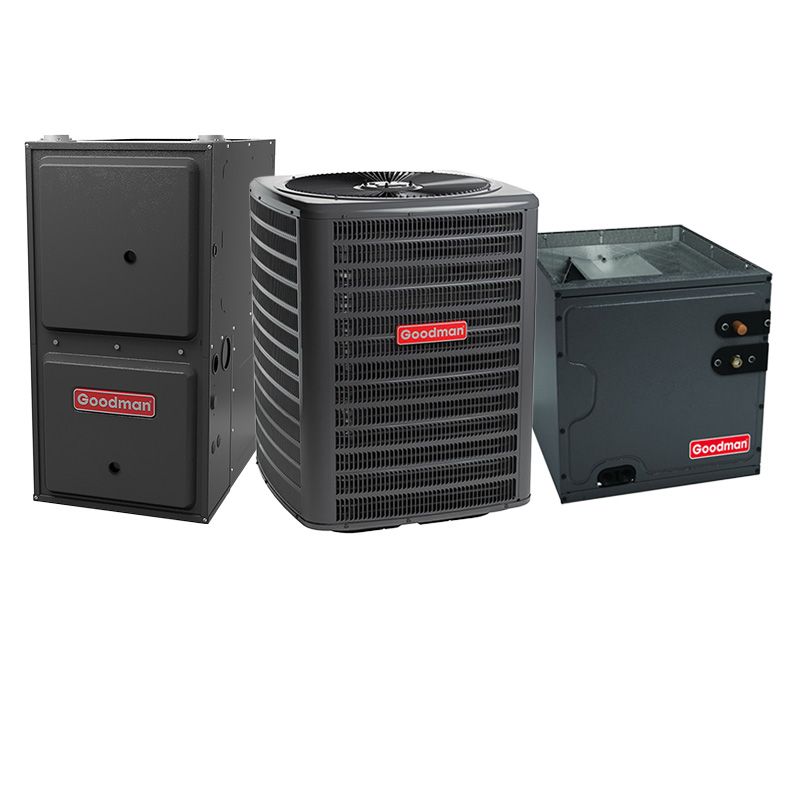
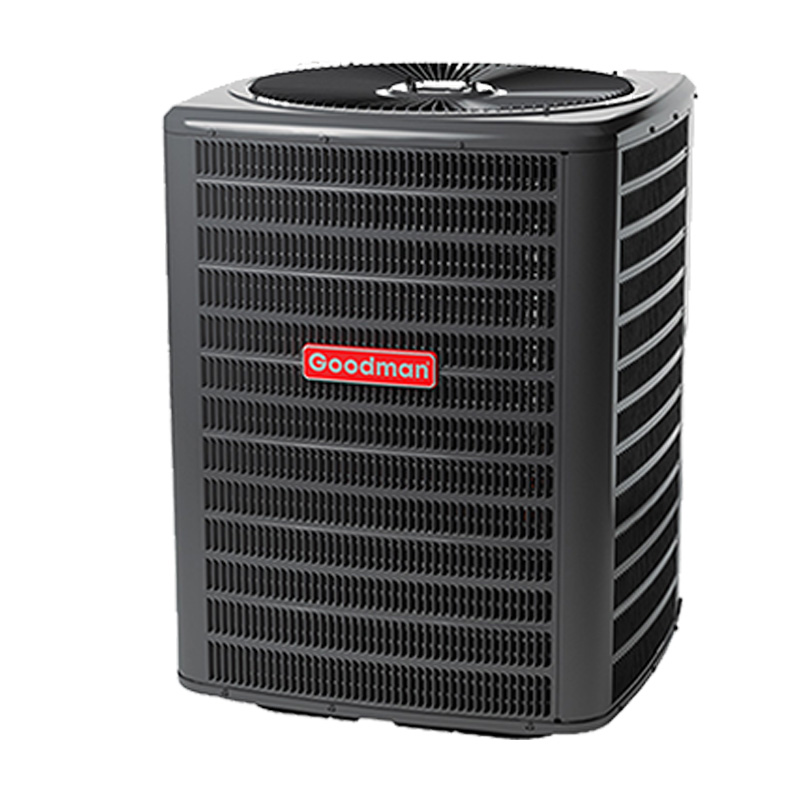
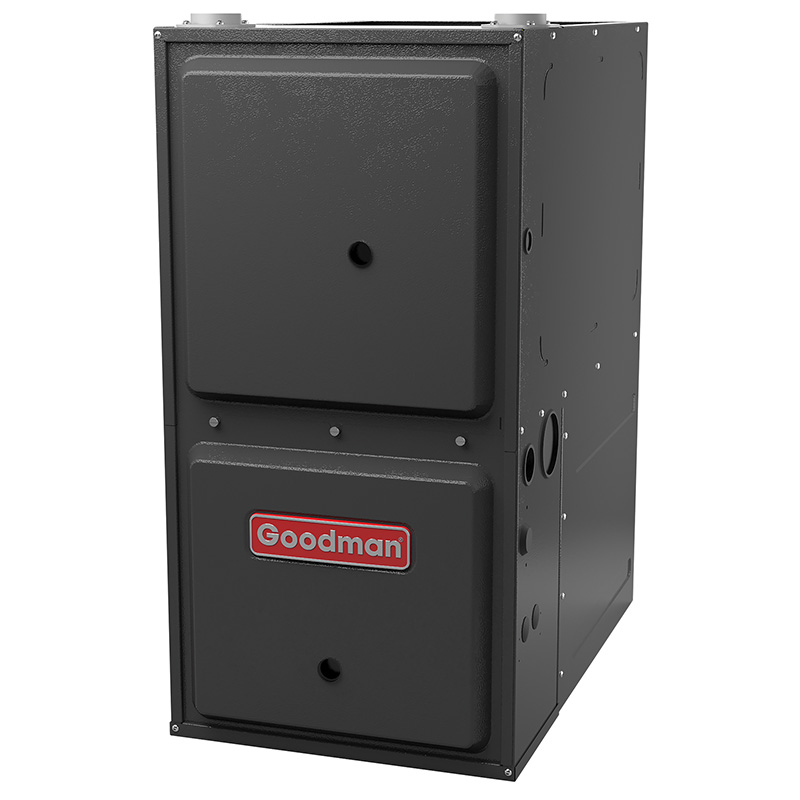
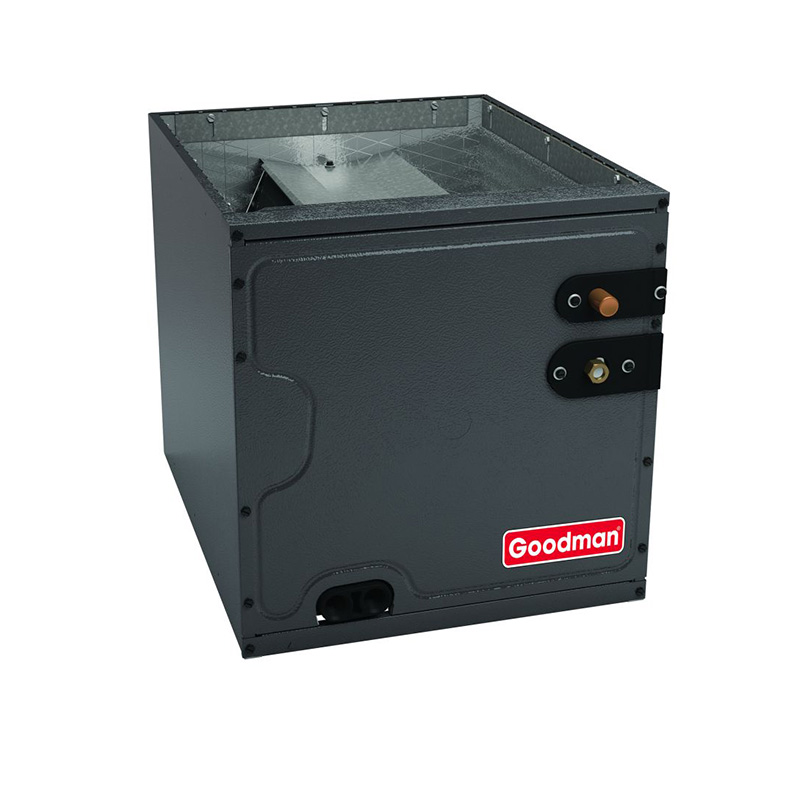
Goodman R32 3 Ton 14 SEER2 100000 BTU 80% Multi-Speed ECM Gas Furnace and Air Conditioner System – Downflow
View on AC Direct see your lowest price →Check current price on AC Direct →
Key features
- 3-ton cooling capacity with 14 SEER2 efficiency rating
- 100,000 BTU 80% AFUE multi-speed ECM gas furnace
- Downflow air discharge for floor-level duct systems
- R-32 refrigerant with lower global warming potential than R-410A
- ECM blower motor reduces airflow noise and blower energy use
- Factory-matched system designed to work as a tested, rated combination
About this system
This Goodman bundle pairs a 3-ton, 14 SEER2 R-32 air conditioner with a 100,000 BTU, 80% AFUE multi-speed ECM gas furnace in a downflow configuration. Downflow means the furnace discharges conditioned air downward through floor-level ductwork, making it the right fit for homes where the air handler sits in a closet on the main floor or in a garage with duct runs beneath the subfloor. The 3-ton cooling capacity is generally appropriate for homes in the 1,400 to 1,900 square foot range, though actual sizing should always come from a Manual J load calculation done by your installer.
The 14 SEER2 rating sits at the federal minimum efficiency threshold for most U.S. climate zones, which means you are not paying a premium for extra efficiency but you are also not getting meaningful energy savings over a system you may be replacing from the last decade. The multi-speed ECM blower motor is a genuine advantage over single-speed units at this price tier: it ramps airflow to match demand, which reduces temperature swings, lowers blower electricity use, and moves air more quietly at lower speeds. R-32 refrigerant carries a lower global warming potential than the R-410A it replaces and is becoming the industry standard, so servicing this system should not become an issue as R-410A is phased out. This package suits buyers who need a reliable workhorse at a budget-conscious price point and are not chasing top-tier efficiency ratings.
This Goodman system delivers solid baseline performance at a price that undercuts major premium brands by 15 to 25 percent, making it a reasonable choice for budget-conscious homeowners who prioritize upfront cost over long-term repair risk. The ECM blower motor and R-32 refrigerant are genuine forward-looking features at this price tier, but buyers should go in knowing that Goodman compressors historically average 10 to 14 years versus the 15 to 20 years seen in premium equipment, and that repair costs tend to climb after year seven. Install quality will have more to do with how this system performs than the brand name on the cabinet.
Overall score is the average of the five ratings above.
What we like
- Priced 15 to 25 percent below comparable Trane, Lennox, and Carrier systems
- ECM multi-speed blower improves comfort and reduces blower electricity use compared to single-speed motors
- R-32 refrigerant is future-ready as R-410A is phased out industry-wide
- Factory-matched pairing means efficiency and warranty ratings are fully validated
- Downflow configuration is purpose-built for homes with floor duct systems, simplifying installation in the right application
Trade-offs
- 80% AFUE is the lower efficiency tier for gas furnaces; condensing 96%+ units return significantly more of each fuel dollar as heat
- 14 SEER2 is minimum-threshold efficiency, so monthly cooling bills will not be lower than a mid-efficiency replacement
- Compressor lifespan averages 10 to 14 years, shorter than the 15 to 20 years typical of premium brands
- Documented owner reports of dual-run capacitor failures and evaporator coil leaks mean budgeting for repairs after year seven is a realistic expectation
What homeowners and pros say about Goodman
On Google dealer review pages, where scores for Goodman installers cluster around 3.8 out of 5, the most consistent praise is straightforward: the price is competitive and most systems cool and heat without drama through the early years. Technicians who install Goodman regularly note that the brand performs best when the installing contractor does thorough startup work, including verifying refrigerant charge and airflow, because the equipment tolerates shortcuts less gracefully than some premium lines. The multi-speed ECM blower in this furnace gets specific credit from HVAC professionals for delivering noticeably quieter operation than single-speed alternatives at the same price tier.
The less flattering picture emerges on ConsumerAffairs, where Goodman’s rating sits around 2.5 out of 5. That channel skews toward owners who had a bad enough experience to seek out a review site, so the score is not a balanced sample, but the failure themes are consistent enough to take seriously. Dual-run capacitor failures appear repeatedly and are generally described as an annoying but affordable fix, typically falling in the 300 to 600 dollar range. Evaporator coil leaks and refrigerant issues are mentioned often enough to suggest they are not outliers. The compressor lifespan concern is structural: Goodman compressors average 10 to 14 years in real-world reports, versus the 15 to 20 years owners of premium brands more commonly see. For this specific downflow system, the honest takeaway is that the upfront savings are real, but they are best realized by buyers who budget for likely mid-life repairs and prioritize a skilled installation from the start.
Sources: ConsumerAffairs Goodman owner reviews, AHRI Directory of Certified Product Performance, U.S. DOE appliance and equipment efficiency standards, Goodman product specification sheets.
What it costs to run
At 14 SEER2, cooling this 3-ton system for a typical 1200-hour cooling season at the U.S. average electricity rate of $0.17/kWh works out to roughly $525 per year in cooling, about $23 less per year than a minimum-efficiency 13.4 SEER2 unit of the same size. Your real cost depends on your climate and local rate.
Method: (36,000 BTU/hr ÷ 14 SEER2) × 1200 hours ÷ 1000 × $0.17/kWh. Rate source: U.S. EIA average; cooling hours: moderate-climate estimate.
How it compares
| Brand | Comparable model | SEER2 | Stage | Price position |
|---|---|---|---|---|
| Goodman | 3-Ton 14 SEER2 R-32 / 100K BTU 80% ECM Downflow Bundle | 14 | Multi-speed | Value pick |
| Carrier | Comfort 24ACC636A003 / 58CV Gas Furnace | 14 | Single-stage | Roughly 20 to 25 percent more than this Goodman bundle |
| Trane | XR14c / S8X1 80% Gas Furnace | 14 | Single-stage | Typically 20 to 30 percent more than this Goodman bundle |
| Lennox | Merit ML14XC1 / ML180 Gas Furnace | 14 | Single-stage | Generally 15 to 25 percent more than this Goodman bundle |
Competitor rows are comparable single-stage units at similar efficiency; price is relative position, not a quote.
Questions about this system
Is a downflow furnace the right configuration for my house?
Downflow furnaces discharge air through the bottom of the cabinet into ductwork that runs beneath the unit, which is typical in homes where the air handler is in a closet or garage with under-floor ducts. If your existing ductwork runs through an attic above the unit or through sidewall registers, you likely need an upflow or horizontal configuration instead. Your installer should confirm the correct orientation before ordering.
What does 14 SEER2 actually mean for my monthly electric bill?
SEER2 is a standardized measure of seasonal cooling efficiency; 14 SEER2 is the federal minimum for most regions. If you are replacing a system from the 2000s or early 2010s rated at 10 to 12 SEER, you will see a modest reduction in cooling costs. If your existing system is already 14 to 16 SEER, do not expect meaningful savings from this upgrade.
What are the most likely repairs I should budget for over time?
Based on documented owner experience with Goodman equipment, dual-run capacitor failure is the most common service call and typically costs between 300 and 600 dollars including labor. Evaporator coil leaks show up in a meaningful share of reviews after several years of use. A small number of owners have reported refrigerant leaks in the first year, which usually traces back to the installation rather than the equipment itself.
Why does this furnace have an 80% AFUE rating instead of 90% or higher?
80% AFUE means 80 cents of every dollar of gas becomes usable heat; the other 20 cents exits through the flue. High-efficiency condensing furnaces reach 95 to 98% AFUE by capturing heat from exhaust gases, but they require a PVC condensate drain and different venting. The 80% unit is simpler to install in homes with existing metal flue venting and carries a lower upfront cost, though your annual gas bills will be higher than with a condensing furnace.
Does R-32 refrigerant cost more to recharge or service than R-410A?
R-32 availability is growing quickly as the industry transitions away from R-410A, and current service costs are broadly comparable. R-32 also requires a smaller charge by weight to do the same cooling work, which can marginally reduce material cost per service call. Any certified HVAC technician with the proper equipment can handle R-32, but confirm your service provider has transitioned their equipment before scheduling a repair.
Specifications
| Cooling capacity | 3 Ton |
| Efficiency | 14 SEER2 |
| Furnace output | 100000 BTU |
| Configuration | Downflow |
| Refrigerant | R-32 |