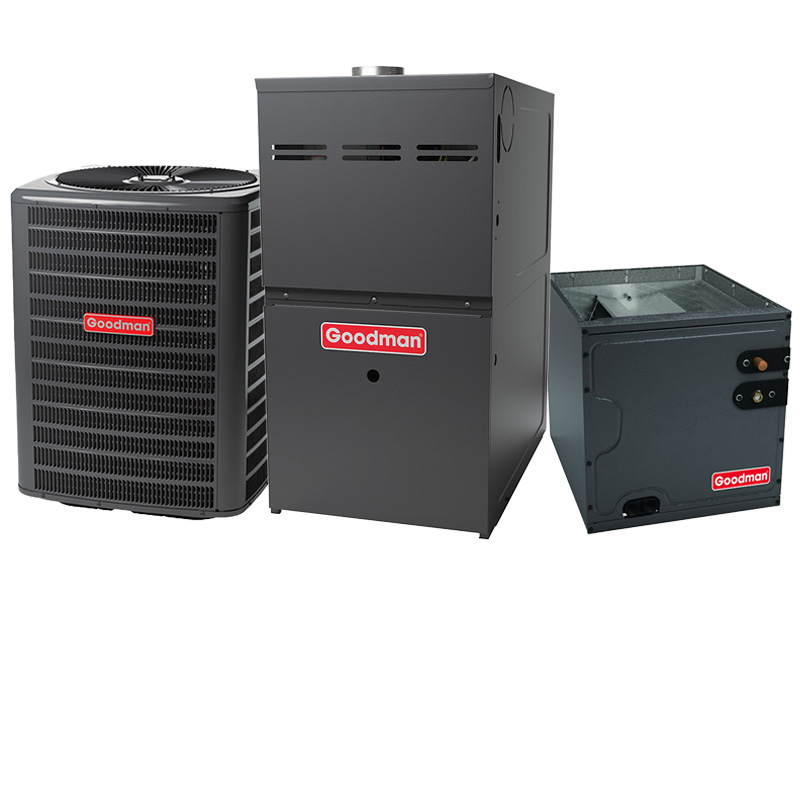
Goodman R32 3 Ton 14 SEER2 100000 BTU 80% Multi-Speed ECM Gas Furnace and Air Conditioner System – Upflow
View on AC Direct see your lowest price →Check current price on AC Direct →
Key features
- 3-ton cooling capacity, suited for approximately 1,500 to 2,200 sq ft depending on climate and insulation
- 14 SEER2 efficiency rating meets current federal minimum standards for most U.S. regions
- 100,000 BTU 80% AFUE gas furnace delivers straightforward heating with no secondary heat exchanger complexity
- Multi-speed ECM blower motor reduces electricity use and improves airflow consistency versus single-speed motors
- R-32 refrigerant has a lower global warming potential than R-410A and typically requires a smaller charge volume
- Upflow configuration is compatible with standard basement or closet installations discharging air into overhead ductwork
About this system
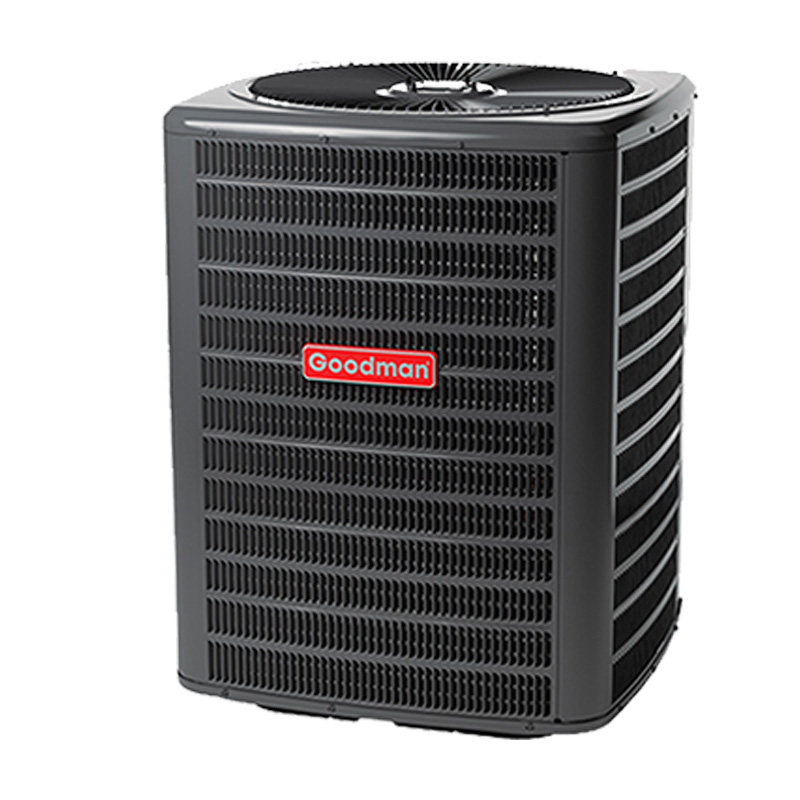
This Goodman package pairs a 3-ton, 14 SEER2 R-32 air conditioner with a 100,000 BTU 80% AFUE multi-speed ECM upflow gas furnace, making it a straightforward replacement or new-construction choice for homes in the 1,500 to 2,200 square foot range in moderate to hot climates. The 14 SEER2 rating sits at the current federal minimum efficiency floor for many regions, so it will keep you compliant without paying a premium for efficiency you may not fully recoup in energy savings. R-32 refrigerant is a step forward from R-410A on environmental impact, carrying a lower global warming potential and requiring a smaller refrigerant charge to do the same job.
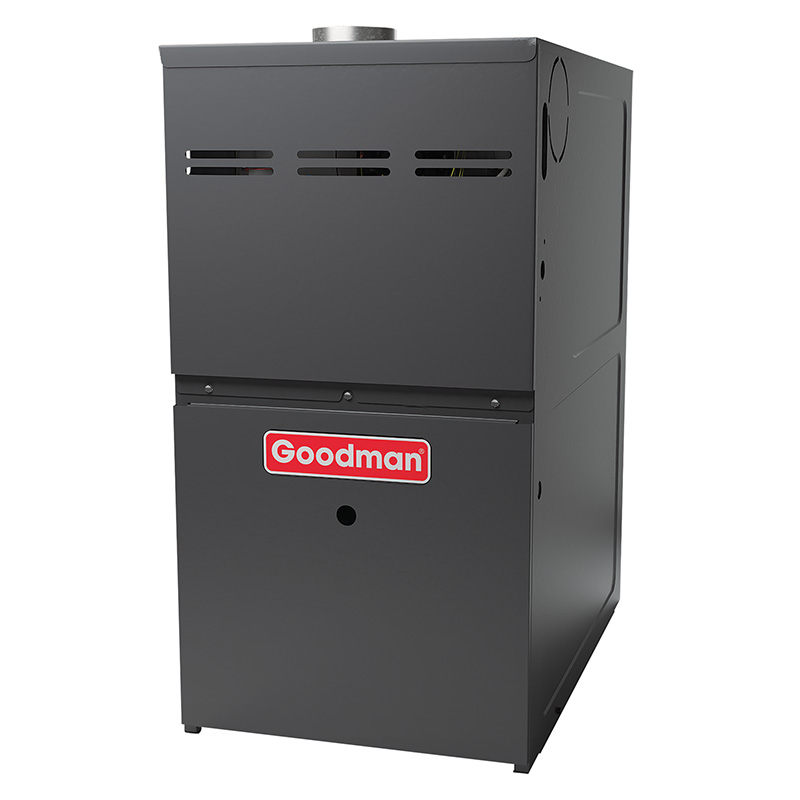
The multi-speed ECM blower motor is the component worth paying attention to here. Unlike a basic single-speed furnace, the ECM motor ramps airflow up and down to match demand, which translates to quieter operation, more even temperature distribution across rooms, and meaningfully lower blower electricity consumption over a heating season. The upflow configuration means the unit pulls return air from the bottom and discharges conditioned air upward, the standard orientation for basement or crawlspace installations with ductwork running through the floor system above. Buyers who need a downflow or horizontal unit will need a different configuration.
This system suits homeowners who want a dependable, code-compliant system at a realistic budget, are not chasing top-tier efficiency ratings, and plan to use a licensed installer whose workmanship will largely determine how many years of trouble-free service they get. It is not the right fit for buyers prioritizing maximum long-term efficiency, premium quiet operation, or the longest possible compressor life without periodic maintenance.
This Goodman system offers an honest entry point into a code-compliant, functional HVAC package at a price that is reliably 15 to 25 percent below comparable Carrier, Trane, or Lennox equipment. The ECM blower adds real value over a budget single-speed furnace, but buyers should go in knowing that compressor longevity tends to run shorter than premium brands and that capacitor replacements are a likely maintenance cost within the first decade. Installer quality will matter more here than on higher-tier equipment, so choosing a reputable contractor is not optional.
Overall score is the average of the five ratings above.
What we like
- Purchase price is consistently 15 to 25 percent below comparable Carrier, Trane, and Lennox systems
- Multi-speed ECM motor improves comfort and cuts blower electricity use compared to single-speed alternatives
- R-32 refrigerant is a more environmentally responsible choice than the outgoing R-410A
- 14 SEER2 rating satisfies federal minimums in all U.S. climate zones, avoiding compliance risk
- Upflow design matches the most common residential duct layout, simplifying installation in most homes
Trade-offs
- Compressor life averages 10 to 14 years versus 15 to 20 years on premium-brand compressors
- Dual-run capacitors are the most frequently reported failure, typically needed within the first 7 to 10 years at a cost of roughly $300 to $600
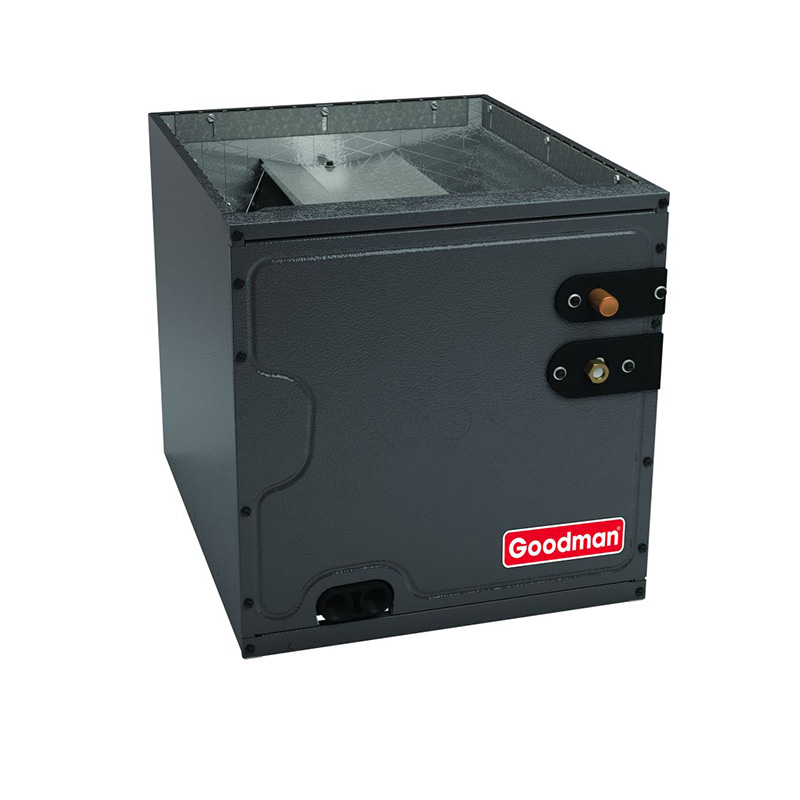
- Evaporator coil leaks appear in a notable share of owner reviews, a more involved repair than a capacitor swap
- 80% AFUE means 20 cents of every heating dollar goes up the flue, a real gap versus 95% or 96% AFUE alternatives in cold climates
What homeowners and pros say about Goodman
Homeowners who have lived with Goodman equipment share a divided experience that shows up clearly in the brand’s ratings. On ConsumerAffairs, Goodman scores around 2.5 out of 5, a platform where frustrated owners are far more likely to post than satisfied ones, and the recurring complaint is repair bills that start adding up after roughly year seven. Google dealer reviews tell a somewhat different story, averaging around 3.8 out of 5 across hundreds of reviews per location, where the most common praise is straightforward: the price made the decision easier. For this specific system, that affordability gap versus Carrier, Trane, and Lennox is real and consistent at 15 to 25 percent.
HVAC technicians who work on Goodman equipment regularly point to a few specific patterns worth knowing before you buy. Dual-run capacitors are the most commonly replaced component, a repair that typically runs $300 to $600 and is considered a routine call rather than a catastrophic failure. More consequential are evaporator coil leaks, which appear in a notable share of owner accounts and carry a higher repair cost and more downtime. On the compressor side, Goodman units tend to average 10 to 14 years of compressor life, a meaningful step below the 15 to 20 years that premium-brand compressors routinely deliver. Technicians consistently emphasize that installation quality closes much of the reliability gap, so the contractor choice carries real weight with this brand.
Sources: ConsumerAffairs Goodman owner reviews, AHRI Directory of Certified Product Performance, U.S. DOE appliance and equipment efficiency standards, Goodman product specification sheets.
What it costs to run
At 14 SEER2, cooling this 3-ton system for a typical 1200-hour cooling season at the U.S. average electricity rate of $0.17/kWh works out to roughly $525 per year in cooling, about $23 less per year than a minimum-efficiency 13.4 SEER2 unit of the same size. Your real cost depends on your climate and local rate.
Method: (36,000 BTU/hr ÷ 14 SEER2) × 1200 hours ÷ 1000 × $0.17/kWh. Rate source: U.S. EIA average; cooling hours: moderate-climate estimate.
How it compares
| Brand | Comparable model | SEER2 | Stage | Price position |
|---|---|---|---|---|
| Goodman | R-32 3-Ton 14 SEER2 / 100,000 BTU 80% AFUE Multi-Speed ECM Upflow System | 14 | Single-stage | Value pick |
| Carrier | Comfort Series (24ACC6 condensing unit paired with 58TP 80% furnace) | 14-15 | Single-stage | Typically 15 to 25 percent more than this Goodman system |
| Trane | XR14c condensing unit paired with S8X1 80% furnace | 14 | Single-stage | Typically 15 to 25 percent more than this Goodman system |
| Lennox | Merit Series (14ACX condensing unit paired with ML180 80% furnace) | 14 | Single-stage | Typically 15 to 25 percent more than this Goodman system |
Competitor rows are comparable single-stage units at similar efficiency; price is relative position, not a quote.
Questions about this system
Is 14 SEER2 going to be legal in my state or will I need a higher efficiency unit?
14 SEER2 currently meets the federal minimum for most of the U.S., but some states and climate zones have already moved to higher minimums. Check your local jurisdiction before purchasing, and confirm with your installer, because compliance requirements can affect equipment eligibility for rebates as well.
What does R-32 refrigerant mean for me as a homeowner, and can any technician service it?
R-32 has a lower global warming potential than R-410A and is becoming standard in new equipment. It does require technicians to be familiar with its slightly different handling procedures, including its mildly flammable classification, but any certified HVAC technician with current training should be equipped to work with it. Confirm this with your service contractor before scheduling.
How real is the risk of an evaporator coil leak, and what would it cost?
Evaporator coil leaks appear in a meaningful share of Goodman owner reviews, though they are not universal. When they do occur, repairs can range from a few hundred dollars for a recharge to over a thousand dollars if the coil needs replacement, and with R-32 the refrigerant cost component is worth discussing with your contractor upfront.
The multi-speed ECM blower sounds good, but how much does it actually reduce my electricity bill?
ECM motors typically consume 60 to 75 percent less electricity than a standard single-speed PSC blower when running at lower speeds. In a climate where the fan runs eight or more months a year, the savings are real and measurable, though the exact dollar figure depends on your local utility rates and how many hours the system runs.
Does Goodman's warranty cover parts and labor, and what are the conditions?
Goodman's standard limited warranty covers parts for ten years on registered equipment, but it does not include labor costs, which can easily exceed the part cost on a compressor or coil repair. Registration is typically required within a set window after installation to activate the full term, so keep your paperwork and register the unit promptly after install.
Specifications
| Cooling capacity | 3 Ton |
| Efficiency | 14 SEER2 |
| Furnace output | 100000 BTU |
| Configuration | Upflow |
| Refrigerant | R-32 |