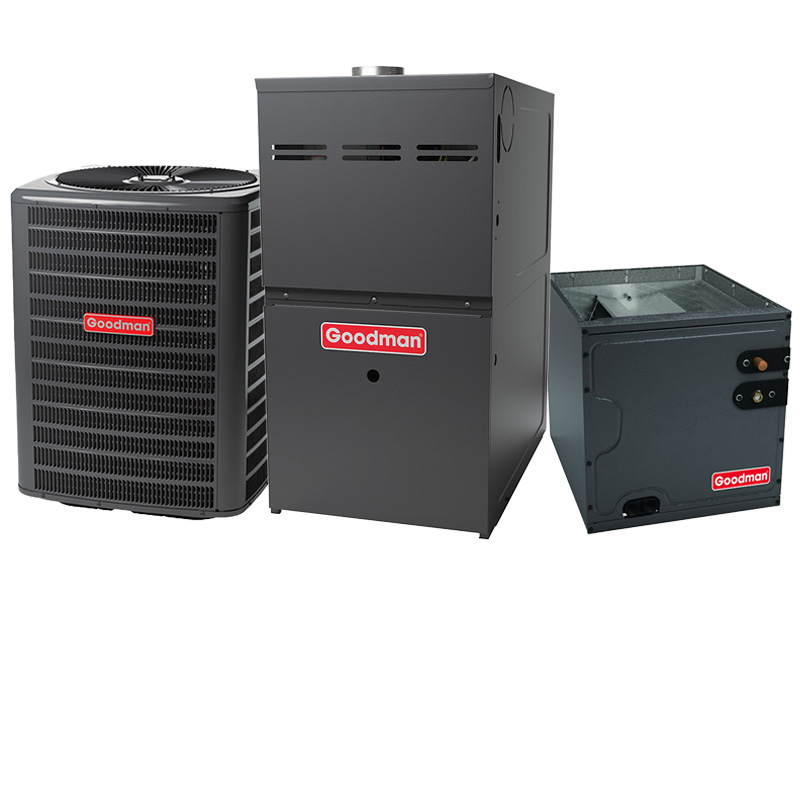
Goodman R32 3 Ton 14 SEER2 60000 BTU 80% Multi-Speed ECM Gas Furnace and Air Conditioner System – Upflow
View on AC Direct see your lowest price →Check current price on AC Direct →
Key features
- 3-ton cooling capacity rated at 14 SEER2, meeting current federal minimum efficiency standards
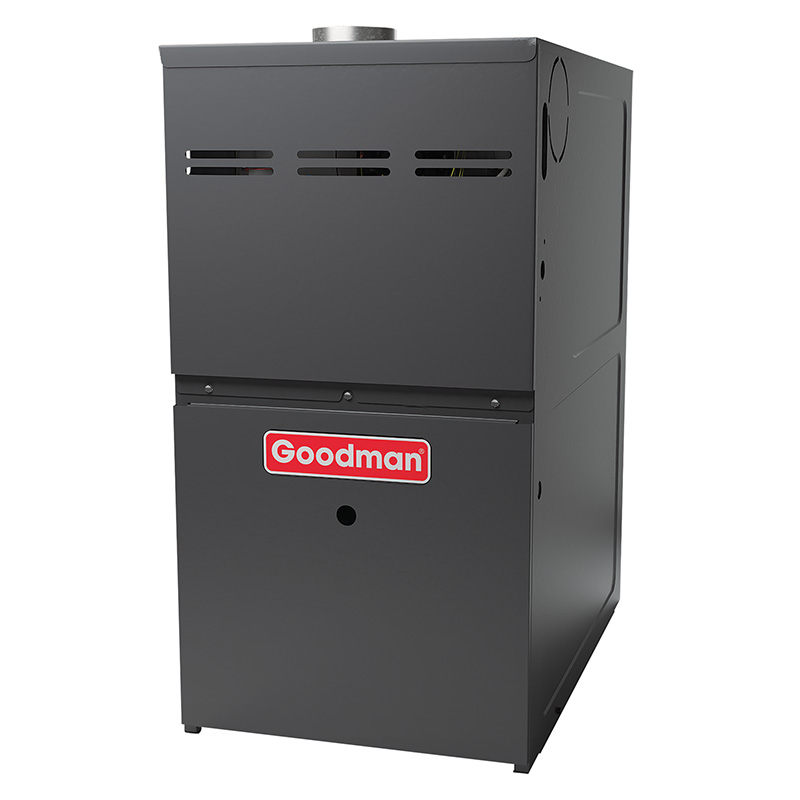
- 60,000 BTU gas furnace with 80% AFUE single-stage heating
- Multi-speed ECM blower motor improves humidity control and lowers blower electricity use versus single-speed motors
- R-32 refrigerant with lower global-warming potential than R-410A
- Upflow configuration designed for basement or closet installations with overhead duct systems
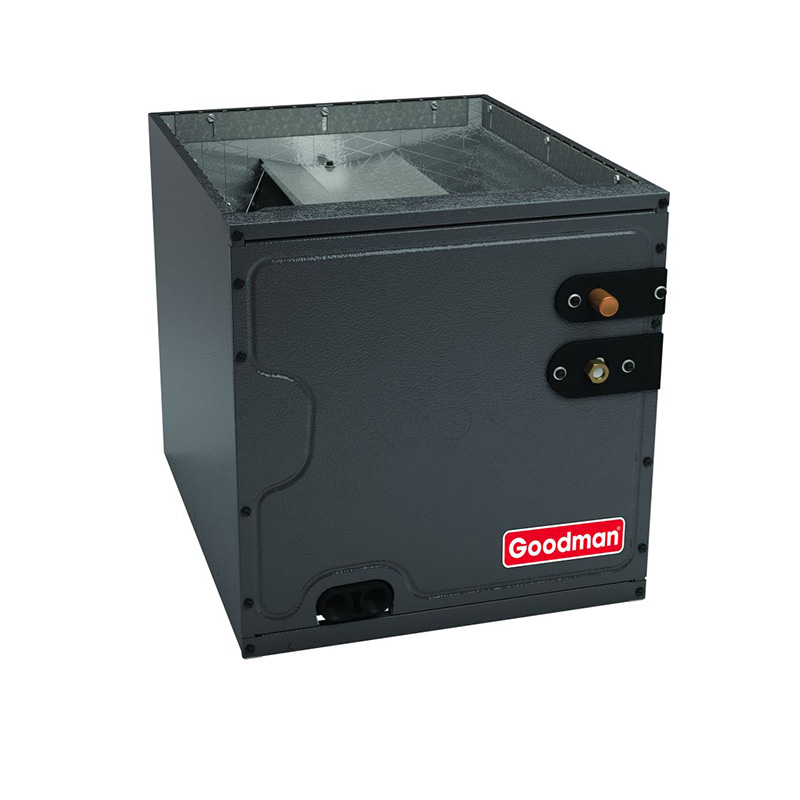
- Factory-matched split system, simplifying equipment selection and coil compatibility verification
About this system
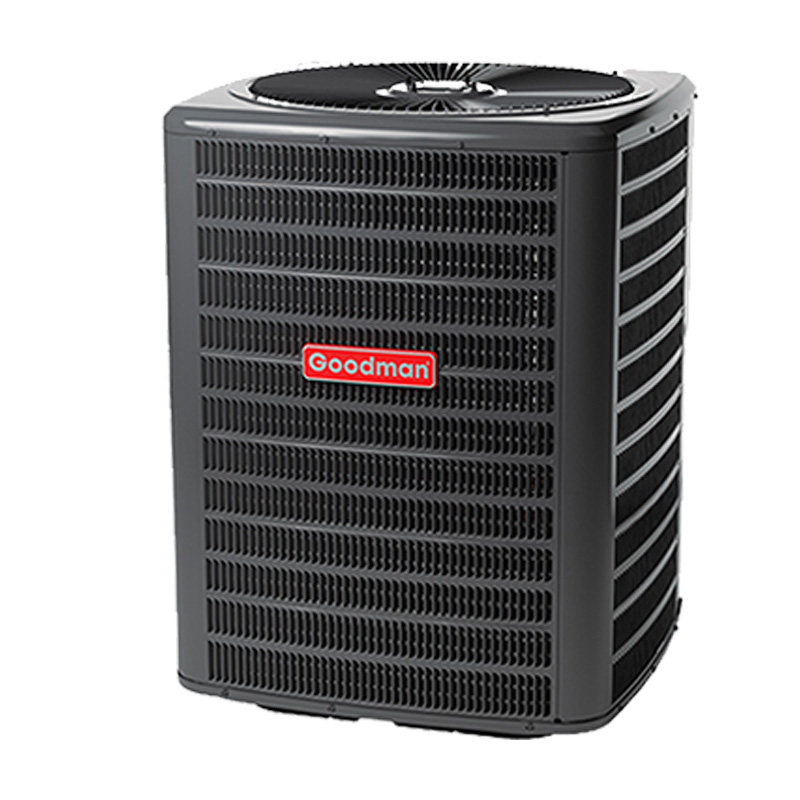
This Goodman upflow package pairs a 3-ton, 14 SEER2 air conditioner using R-32 refrigerant with a 60,000 BTU, 80% AFUE multi-speed ECM gas furnace. The 14 SEER2 rating sits at the current federal minimum efficiency threshold for most U.S. climate zones, so you are getting a code-compliant system without paying for efficiency tiers you may never recoup in energy savings. R-32 is a lower-global-warming-potential refrigerant replacing the older R-410A, and its adoption across the industry means parts and service availability will only improve over time. The upflow configuration suits homes where the air handler sits in a basement, utility closet, or mechanical room with ductwork running overhead.
The multi-speed ECM blower motor is a meaningful upgrade over single-speed PSC motors. It ramps airflow up and down based on demand, which improves humidity control in summer, reduces the abrupt on-off cycling that wears duct connections, and cuts blower electricity use compared to a fixed-speed unit. This is a good fit for budget-conscious homeowners replacing an aging system in a 1,200 to 1,800 square foot home in a moderate climate, or contractors outfitting a rental or light-commercial space where upfront cost matters more than top-tier longevity. It is not the right choice for buyers who want premium build quality or who plan to hold the home for 20-plus years without budgeting for possible mid-life repairs.
This Goodman bundle delivers a code-compliant, functional HVAC system at a price point that is genuinely hard to match from name-brand competitors. The ECM motor and R-32 refrigerant are real forward-looking features, but Goodman's documented repair history after year seven and a compressor lifespan that trails premium brands mean the total cost of ownership picture is not as clean as the sticker price suggests. Buyers who prioritize upfront savings and are comfortable budgeting for possible mid-life repairs will find solid value here; those seeking a set-and-forget system for the long haul should weigh the trade-offs carefully.
Overall score is the average of the five ratings above.
What we like
- Purchase price runs roughly 15 to 25 percent below comparable Carrier, Trane, and Lennox systems
- Multi-speed ECM blower improves summer humidity management compared to single-speed alternatives
- R-32 refrigerant is lower-GWP and increasingly well-supported by the HVAC service industry
- Factory-matched components reduce the guesswork of coil and condenser compatibility
- 14 SEER2 efficiency meets current federal standards across all U.S. climate zones
Trade-offs
- Dual-run capacitors are the most frequently reported failure point, typically requiring a 300 to 600 dollar service call within the first decade
- Evaporator coil leaks appear in a meaningful share of owner reviews and can be costly to address after the parts warranty period
- Compressor lifespan averages 10 to 14 years, noticeably shorter than the 15 to 20 years seen in premium-brand equipment
- A minority of owners report refrigerant leaks in the first year, usually tied to install quality or initial charge, underscoring how heavily performance depends on the installing technician
What homeowners and pros say about Goodman
Homeowners who post about Goodman systems tend to cluster at the extremes. The brand scores around 2.5 out of 5 on ConsumerAffairs, a channel that skews toward frustrated owners, where the recurring theme is repair bills that start climbing after roughly year seven. The specific failures that come up most often are dual-run capacitor replacements, evaporator coil leaks, and compressors that give out closer to the 10-to-14-year mark rather than the 15-to-20-year range owners of Carrier or Trane equipment more commonly report. A smaller but notable group describes refrigerant leaks in the first year, which technicians and owners alike generally attribute to install problems rather than factory defects.
On the dealer and contractor side, Google reviews across Goodman-installing shops average closer to 3.8 out of 5, and the most consistent praise is straightforward: the price is genuinely lower and the equipment does the job when it is installed correctly. HVAC professionals who work on these units frequently point out that Goodman’s performance ceiling is set largely by the quality of the installation rather than the equipment itself. That means a careful, experienced installer with a properly charged system and correct airflow settings can produce results that satisfy a homeowner for a decade or more, while a rushed or imprecise install of the same hardware can produce the complaint-thread experience. For this specific R-32 upflow system, where refrigerant charge accuracy is especially important during the transition from R-410A, that installer variable deserves serious weight.
Sources: ConsumerAffairs Goodman owner reviews, AHRI Directory of Certified Product Performance, U.S. DOE appliance and equipment efficiency standards, Goodman product specification sheets.
What it costs to run
At 14 SEER2, cooling this 3-ton system for a typical 1200-hour cooling season at the U.S. average electricity rate of $0.17/kWh works out to roughly $525 per year in cooling, about $23 less per year than a minimum-efficiency 13.4 SEER2 unit of the same size. Your real cost depends on your climate and local rate.
Method: (36,000 BTU/hr ÷ 14 SEER2) × 1200 hours ÷ 1000 × $0.17/kWh. Rate source: U.S. EIA average; cooling hours: moderate-climate estimate.
How it compares
| Brand | Comparable model | SEER2 | Stage | Price position |
|---|---|---|---|---|
| Goodman | This R-32 3-Ton 14 SEER2 80% ECM System | 14 | Single-stage | Value pick |
| Carrier | Comfort Series (24ACC6 condenser with 58TP furnace) | 14-15 | Single-stage | Typically 15 to 25 percent more than this Goodman system |
| Trane | XR14c / S8X1 furnace | 14 | Single-stage | Typically 15 to 25 percent more than this Goodman system |
| Lennox | Merit Series (ML14XC1 condenser with ML180 furnace) | 14 | Single-stage | Typically 15 to 25 percent more than this Goodman system |
Competitor rows are comparable single-stage units at similar efficiency; price is relative position, not a quote.
Questions about this system
Will this 3-ton unit be the right size for my home?
Tonnage should be determined by a Manual J load calculation, not square footage alone. Factors including insulation level, window area, ceiling height, and local climate all affect the correct size. An oversized system will short-cycle and leave humidity problems behind; an undersized one will run continuously on peak days. Ask your installer to perform or provide a load calculation before ordering.
The specs show 80% AFUE. Is that efficient enough, and does it qualify for federal tax credits?
80% AFUE is the baseline efficiency tier for gas furnaces and is adequate in mild to moderate heating climates. In cold northern climates, a 96% or higher AFUE unit will often pay back the cost difference over time. For federal energy tax credits under current IRS rules, gas furnaces generally need to reach 97% AFUE to qualify, so this 80% unit likely does not qualify for that credit.
What does using R-32 refrigerant mean for service and future costs?
R-32 has a lower global-warming potential than R-410A and is the direction the industry is heading, so technician familiarity and parts availability will grow over time. Service costs for refrigerant-related work should be comparable to R-410A systems in most markets. If a leak is found early, Goodman's documented history suggests it is more likely an install or charge issue than a refrigerant-specific problem.
What are the most likely repairs I should budget for over the life of this system?
The most commonly reported failure on Goodman condensing units is the dual-run capacitor, a relatively inexpensive fix typically running 300 to 600 dollars including labor. Evaporator coil leaks are a second documented concern and can be more expensive, particularly after the parts warranty expires. Setting aside a few hundred dollars per year in a maintenance reserve is a reasonable approach.
How important is installer quality with a Goodman system specifically?
Technicians consistently flag install quality as the single biggest factor in how long a Goodman system lasts. Proper refrigerant charge, correct airflow calibration on the ECM motor, and tight leak-free line set connections are especially critical. The minority of owners who report refrigerant leaks in the first year typically trace the problem back to installation rather than the equipment itself, so choosing an experienced, licensed installer is worth prioritizing.
Specifications
| Cooling capacity | 3 Ton |
| Efficiency | 14 SEER2 |
| Furnace output | 60000 BTU |
| Configuration | Upflow |
| Refrigerant | R-32 |