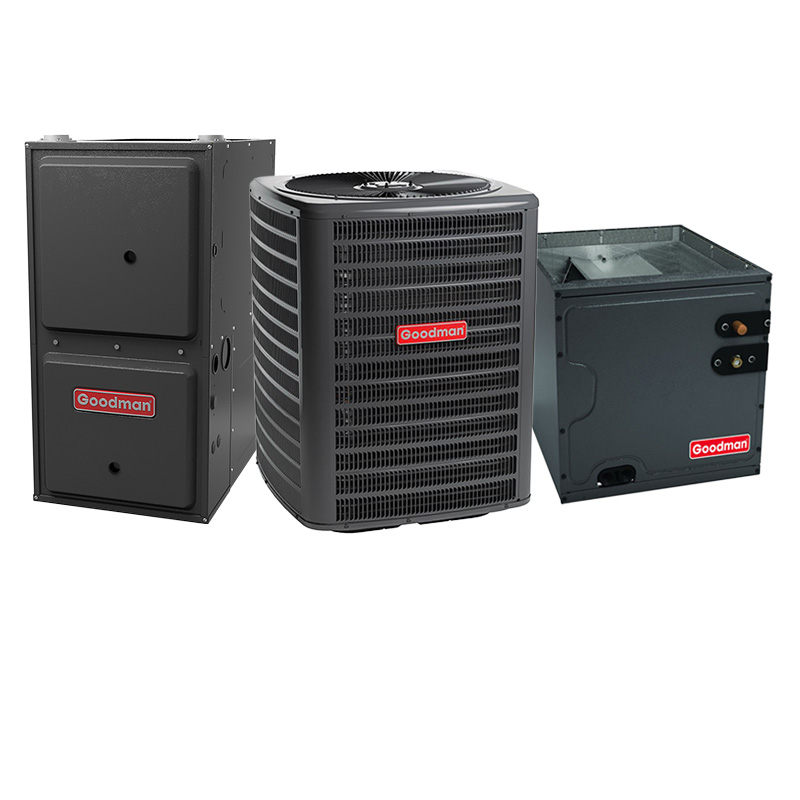
Goodman R32 3 Ton 14 SEER2 80000 BTU 80% Two Stage 9-Speed ECM Gas Furnace and Air Conditioner System – Upflow
View on AC Direct see your lowest price →Check current price on AC Direct →
Key features
- 3-ton cooling capacity with 14 SEER2 efficiency rating
- 80,000 BTU two-stage gas furnace at 80% AFUE
- Nine-speed ECM blower motor for reduced fan energy and better humidity control
- R-32 refrigerant with lower global warming potential than R-410A
- Upflow configuration for basement or ground-level air handler installations
- Factory-matched system tested together for airflow and refrigerant compatibility
About this system
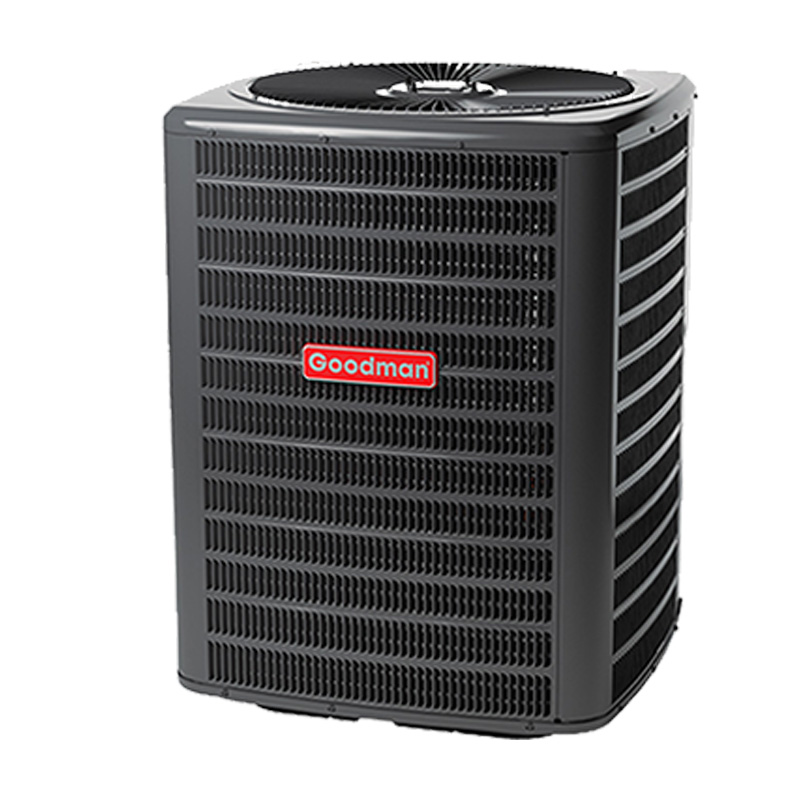
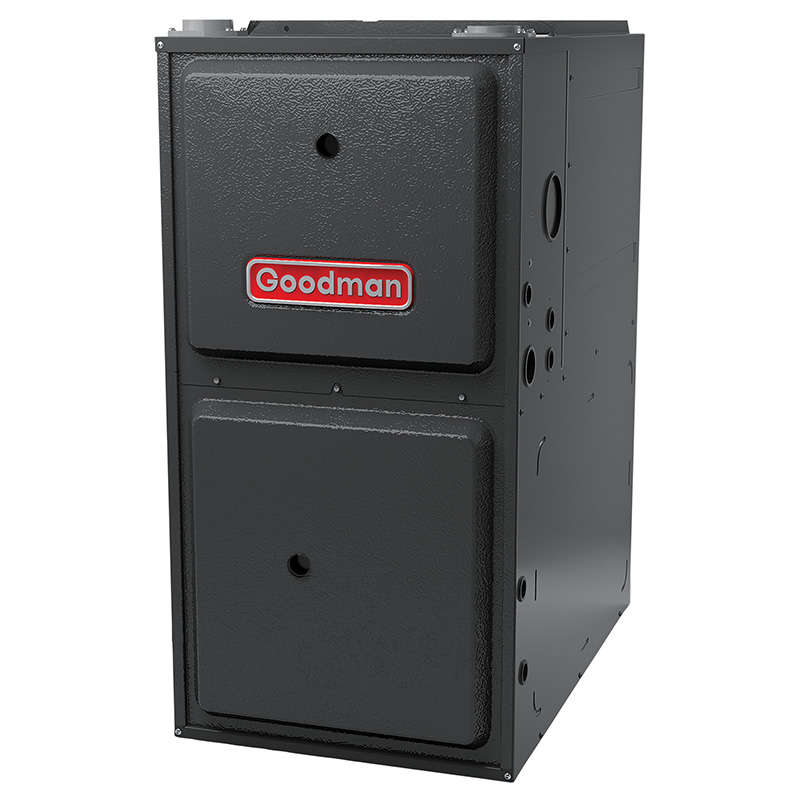
This Goodman bundle pairs a 3-ton, 14 SEER2 R-32 air conditioner with an 80,000 BTU, 80% AFUE two-stage gas furnace in an upflow configuration, making it a straightforward replacement candidate for homes with a basement or utility closet where air flows upward through the duct system. The 14 SEER2 rating sits at the federal minimum efficiency threshold for most U.S. climate zones, so operating costs will be moderate rather than low, but the equipment cost itself is considerably more accessible than premium alternatives. R-32 refrigerant carries a lower global warming potential than the older R-410A it replaces, and it requires only a single-stage compressor on the cooling side while the furnace uses two stages for more consistent heat output on milder days.
The nine-speed ECM blower motor is the headline feature worth paying attention to. ECM motors consume significantly less electricity than standard PSC motors during continuous fan operation, and the variable speed airflow helps with humidity control in summer and temperature evenness in winter. Two-stage furnace heat means the system runs on a lower flame for most of the heating season, cycling less aggressively and holding room temperature more steadily. Together, these features push day-to-day comfort and energy use beyond what the SEER2 number alone suggests. That said, a 14 SEER2 system remains a budget-tier efficiency choice, and homeowners in climates with long, hot summers or high electricity rates may find the upgrade cost to a 16 or 18 SEER2 unit pays back over time.
Goodman prices this class of equipment 15 to 25 percent below comparable systems from Trane, Lennox, and Carrier, which is the primary appeal. The trade-off is a brand track record that includes some well-documented weak points, and performance that depends heavily on the quality of the installing contractor. This system suits budget-conscious buyers in moderate climates who prioritize lower upfront cost and plan to stay on top of annual maintenance.
This Goodman bundle offers a practical, budget-friendly entry point into a two-stage comfort system with a modern ECM motor, and the factory-matched pairing removes some guesswork on sizing. The 14 SEER2 rating is the legal minimum, compressor and coil longevity trail premium brands by a meaningful margin, and long-term costs depend on both install quality and a maintenance routine that catches capacitor and coil issues early.
Overall score is the average of the five ratings above.
What we like
- Priced 15 to 25 percent below comparable Trane, Lennox, and Carrier systems, lowering the upfront barrier significantly
- Nine-speed ECM blower cuts fan electricity use and improves humidity management compared to single-speed PSC motors
- Two-stage furnace operation reduces temperature swings and furnace cycling on moderate winter days
- R-32 refrigerant has lower environmental impact than R-410A and is increasingly supported by technicians
- Factory-matched system simplifies contractor selection of compatible coil and air handler components
Trade-offs
- 14 SEER2 is the federal minimum efficiency floor, meaning higher monthly cooling costs compared to 16 or 18 SEER2 alternatives in hot climates
- Compressor lifespan averages 10 to 14 years in owner reports, roughly 3 to 6 years shorter than premium-brand compressors
- Dual-run capacitor failures and evaporator coil leaks are documented recurring issues that can generate repair costs after year 7
- Brand performance leans heavily on install quality, and a poor installation is harder to recover from at this price tier than with premium equipment
What homeowners and pros say about Goodman
Homeowners who have purchased Goodman equipment and left reviews tend to split along a familiar line. On Google dealer reviews, where the audience includes buyers who had a smooth install and are broadly satisfied, Goodman scores around 3.8 out of 5, and affordability is the single most common reason for praise. On ConsumerAffairs, a channel that draws a higher proportion of people who experienced problems, the brand sits around 2.5 out of 5, and the recurring complaint is that repair costs begin to accumulate after roughly year seven, eating into the upfront savings. Neither data point tells the whole story on its own, but together they suggest a realistic picture: the system often performs acceptably for the first several years, then requires more attention than premium alternatives as it ages.
HVAC technicians who work on Goodman equipment regularly point to a few specific failure modes worth knowing before you buy. Dual-run capacitor failures are the most common service call they see on these units, a repair that is usually quick and costs somewhere in the $300 to $600 range, but one that recurs if the underlying electrical environment or system load is not addressed. Evaporator coil leaks appear in a meaningful share of owner reports and can be a more involved repair. Compressor longevity tends to average 10 to 14 years on Goodman equipment, which is real but shorter than the 15 to 20 years technicians associate with Carrier, Trane, and Lennox compressors. Technicians also note that a small minority of owners have reported refrigerant leaks within the first year, which they attribute more to installation workmanship than to the equipment itself. The consistent advice from the trade is to invest in a skilled, licensed contractor and a service agreement rather than trying to recover the savings through DIY maintenance.
Sources: ConsumerAffairs Goodman owner reviews, AHRI Directory of Certified Product Performance, U.S. DOE appliance and equipment efficiency standards, Goodman product specification sheets.
What it costs to run
At 14 SEER2, cooling this 3-ton system for a typical 1200-hour cooling season at the U.S. average electricity rate of $0.17/kWh works out to roughly $525 per year in cooling, about $23 less per year than a minimum-efficiency 13.4 SEER2 unit of the same size. Your real cost depends on your climate and local rate.
Method: (36,000 BTU/hr ÷ 14 SEER2) × 1200 hours ÷ 1000 × $0.17/kWh. Rate source: U.S. EIA average; cooling hours: moderate-climate estimate.
How it compares
| Brand | Comparable model | SEER2 | Stage | Price position |
|---|---|---|---|---|
| Goodman | 3-Ton 14 SEER2 R-32 Two-Stage with 80K BTU 80% Two-Stage ECM Furnace (this system) | 14 | Two-stage | Value pick |
| Carrier | Performance Series 24ACC636A003 with 59TP6 Furnace | 14-15 | Two-stage | 15 to 25 percent higher than this system |
| Trane | XR15 condenser with S8X2 furnace | 15 | Two-stage | 20 to 30 percent higher than this system |
| Lennox | EL16XC1 condenser with ML196E furnace | 16 | Two-stage | 25 to 35 percent higher than this system |
Competitor rows are comparable single-stage units at similar efficiency; price is relative position, not a quote.
Questions about this system
Will my existing upflow ductwork and air handler cabinet work with this system?
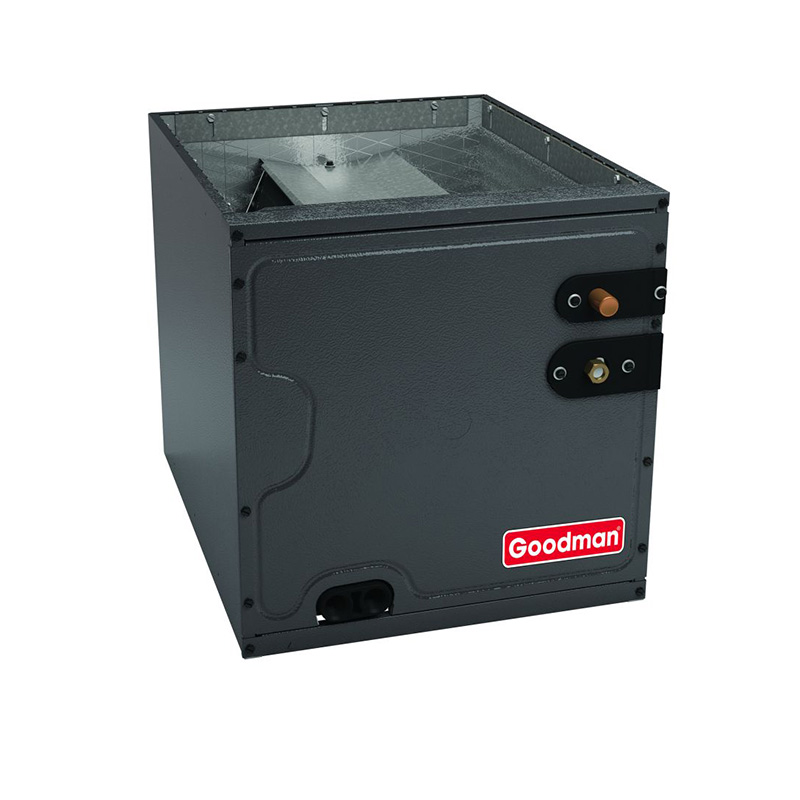
The upflow configuration is designed for standard vertical installations where the furnace sits below the coil and air exits through the top into the supply plenum. You should verify that the cabinet width and coil size match your existing plenum dimensions, and have your installer confirm that the R-32 line set and metering device are compatible before ordering.
The specs show 14 SEER2, but what does that actually mean for my electric bill compared to my older system?
If you are replacing a system rated at 10 to 13 SEER or SEER2, you will see a measurable reduction in cooling-season electricity use. However, 14 SEER2 is the minimum efficiency tier, so buyers who expect to live in the home long-term and run central air heavily through summer may find the upgrade cost to a 16 or 18 SEER2 system pays back within five to eight years of lower utility bills.
What is the most common repair this system will need, and how expensive is it?
Dual-run capacitor failure is the most frequently reported issue on Goodman systems of this type, typically showing up after several years of use. Capacitor replacement is usually a straightforward repair in the $300 to $600 range when caught early. Evaporator coil leaks are a less common but more expensive problem that owners have also reported, so annual refrigerant and coil checks are worth building into your maintenance schedule.
Does this come with a warranty, and what does it actually cover?
Goodman typically offers a 10-year parts warranty when the system is registered within a set window after installation, covering components including the compressor and heat exchanger. The warranty does not cover labor, refrigerant, or diagnostic costs, which can be significant if a repair is needed outside a service contract. Confirm current warranty terms directly with Goodman at time of purchase, as they can vary by model and registration status.
Is R-32 refrigerant readily available, and will it cost more to service than R-410A?
R-32 availability is growing as the industry transitions away from R-410A, and most HVAC distributors now stock it. Service cost should be comparable to R-410A in most markets, and because R-32 systems require a smaller refrigerant charge by weight than R-410A systems of the same capacity, a recharge may cost slightly less in some cases. Ask your service contractor to confirm they are certified and equipped to handle R-32 before booking any refrigerant work.
Specifications
| Cooling capacity | 3 Ton |
| Efficiency | 14 SEER2 |
| Furnace output | 80000 BTU |
| Configuration | Upflow |
| Refrigerant | R-32 |